
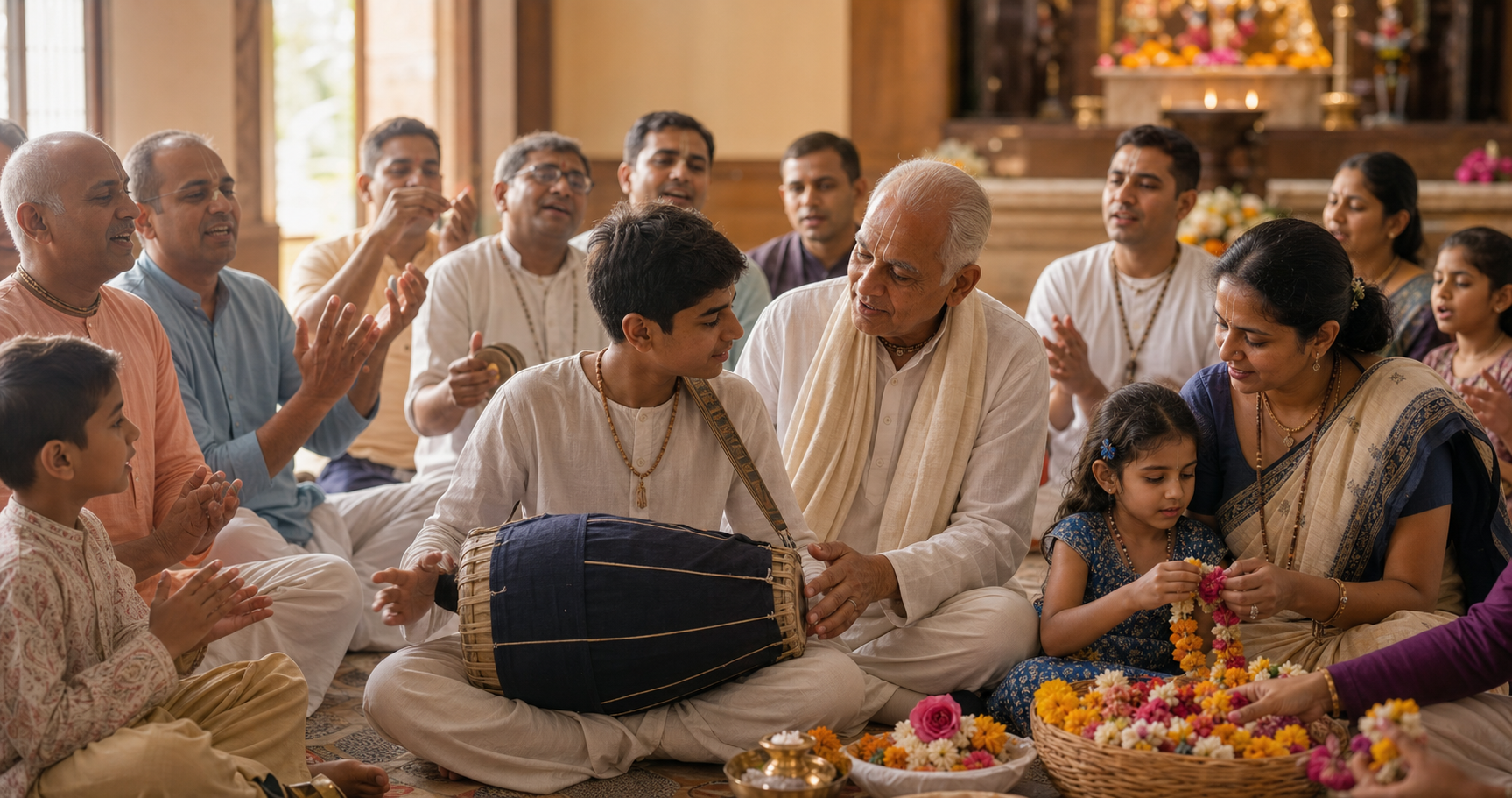
You can keep a temple calendar full and still fail to pass on a living tradition. The warning sign is not that younger devotees prefer a different kirtan melody or ask difficult questions. It is that they can attend programs for years without learning why the practices matter, being trusted with consequential service, or seeing a credible path into responsibility.
If you are a parent, elder, educator, or community organizer, your task is to preserve Srila Prabhupada’s devotional standards without treating every habit of the founding generation as an eternal rule. That requires a careful distinction: transmit the spiritual center intact, then give the next generation meaningful room to build around it.
Name the inheritance before you try to preserve it
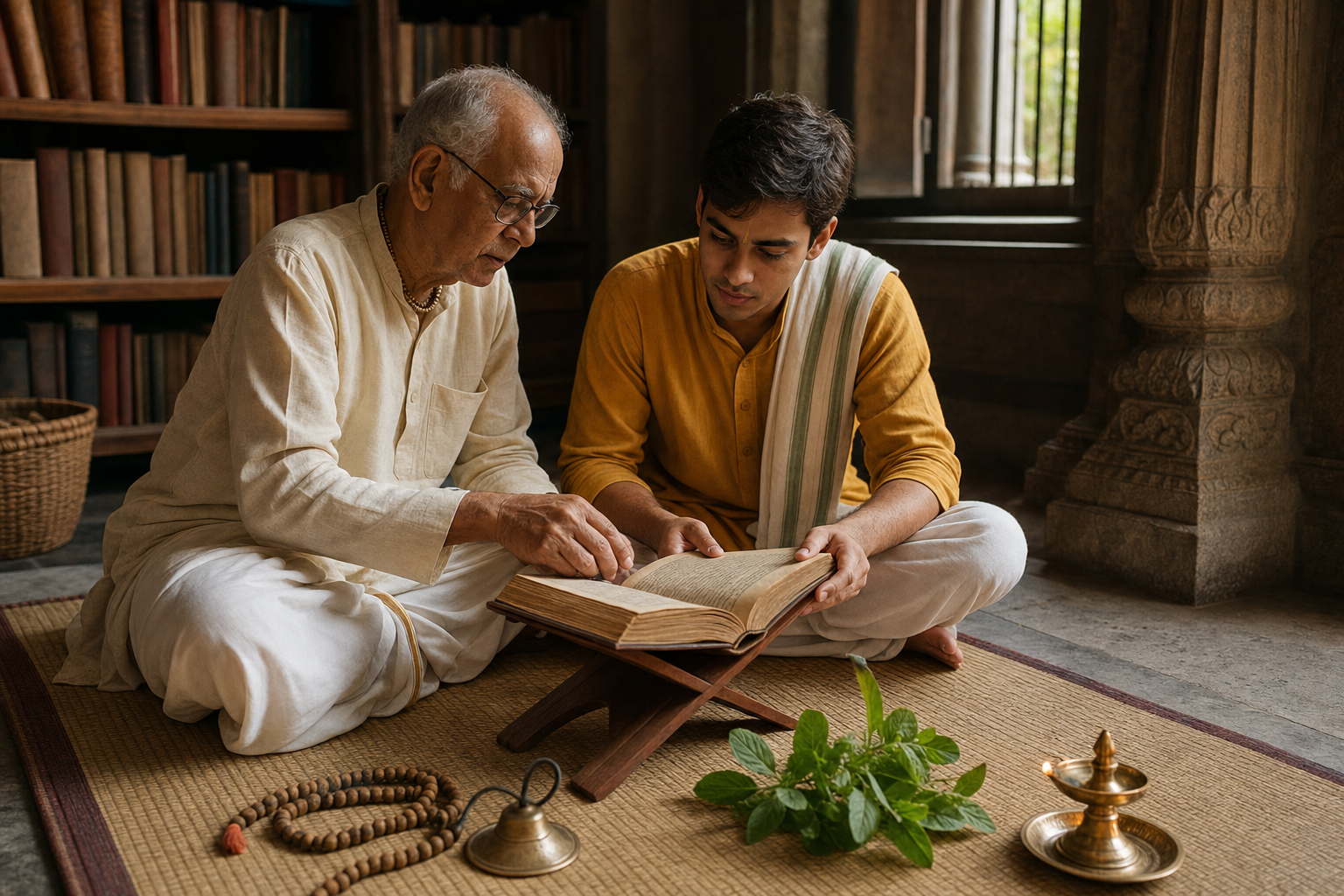
A community cannot transmit what it has never clearly named. The path Prabhupada made accessible joins chanting, scriptural study, and selfless service. These are not decorative features of community life. They form a repeatable discipline through which a person remembers Sri Krishna, learns how to live, and places personal ability in service.
The difficulty begins when a community confuses a principle with the format that once carried it. Kirtan is a spiritual practice; a particular melody is a format. Study of the Bhagavad-Gita is formative; a particular classroom arrangement is a format. Seva is indispensable; assigning every service exactly as it was assigned in an earlier decade is not. The format still matters, but it should serve the principle rather than quietly replace it.
| Load-bearing inheritance | Expression that may be adapted under sound guidance |
|---|---|
| Chanting and remembrance of Sri Krishna | Melody, language mix, gathering format, and ways of helping newcomers participate |
| Study of the Bhagavad-Gita and lineage teachings | Lectures, guided reading, discussion circles, and age-appropriate teaching |
| Selfless service and disciplined conduct | Temple service, hospitality, local service projects, administration, and suitable forms of outreach |
| Prasadam and devotional hospitality | Festival meals, family gatherings, newcomer welcome, and community distribution |
Write a short community covenant before the next dispute about innovation. It should state the aim of the community, the practices members are expected to sustain, the standards of conduct leaders must model, who settles doctrinal or ritual questions, and where local experimentation is welcome. Then ask the same question whenever a disagreement arises: is a load-bearing principle at risk, or are we arguing about a changeable format?
If the principle is at risk, defend it plainly. If the disagreement concerns format, permit a bounded experiment and review whether it strengthened devotion, learning, service, and trust. This distinction keeps fidelity from hardening into nostalgia and keeps creativity from becoming dilution.
Transfer responsibility in stages, not merely tasks
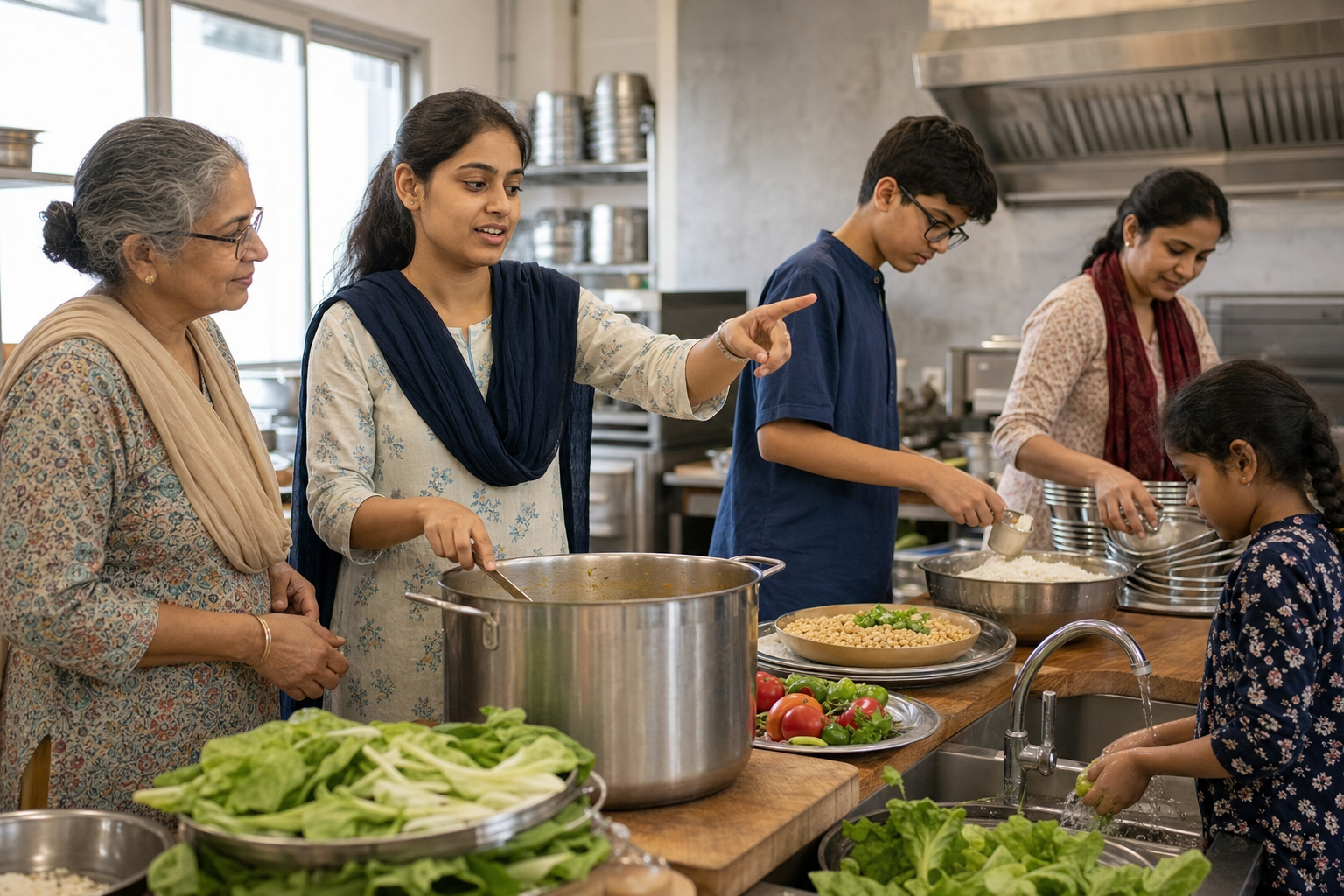
In a 1971 letter to Sridama, Srila Prabhupada wrote, "I have built the skyscraper skeleton" and asked his followers to fill its spaces in good taste without departing from a high standard. The metaphor grants both permission and a boundary. A skeleton establishes the load-bearing structure, but an unfinished building still requires judgement, skill, and work from those who inherit it.
That image rules out two common errors. The museum approach treats every inherited arrangement as untouchable, leaving younger devotees as visitors in somebody else’s achievement. The blank-canvas approach keeps Prabhupada as an inspiring name while allowing the practices and standards he established to become optional. A serious succession culture accepts neither.
Use a visible progression for each recurring responsibility:
- Observe: Let the learner see the service performed properly and hear why each important choice is made.
- Assist: Give the learner a defined portion of the work while an experienced practitioner remains responsible for the whole.
- Lead within a boundary: Let the learner coordinate a kirtan, study session, hospitality duty, or service initiative with the standard and decision limits stated beforehand.
- Review: Discuss what preserved the purpose, what weakened it, and what should change next time.
- Teach forward: Ask the new leader to help form another practitioner rather than becoming the next person who alone knows how the work is done.
Do not create a youth committee that can decorate a room but cannot influence a program, lead a suitable service, or propose an accountable improvement. That is participation without stewardship. Younger members need decisions with real consequences, while elders need an agreed way to intervene when a doctrinal, ethical, or devotional boundary is crossed.
A useful intergenerational division of labor lets an earlier generation consolidate shared principles and durable institutions while later generations develop diverse forms of practice, culture, and outreach within those standards. Treat this as a sequence of stewardship, not a hierarchy of human worth. The aim is continuity with maturation.
Make guru-shishya formation visible between major events
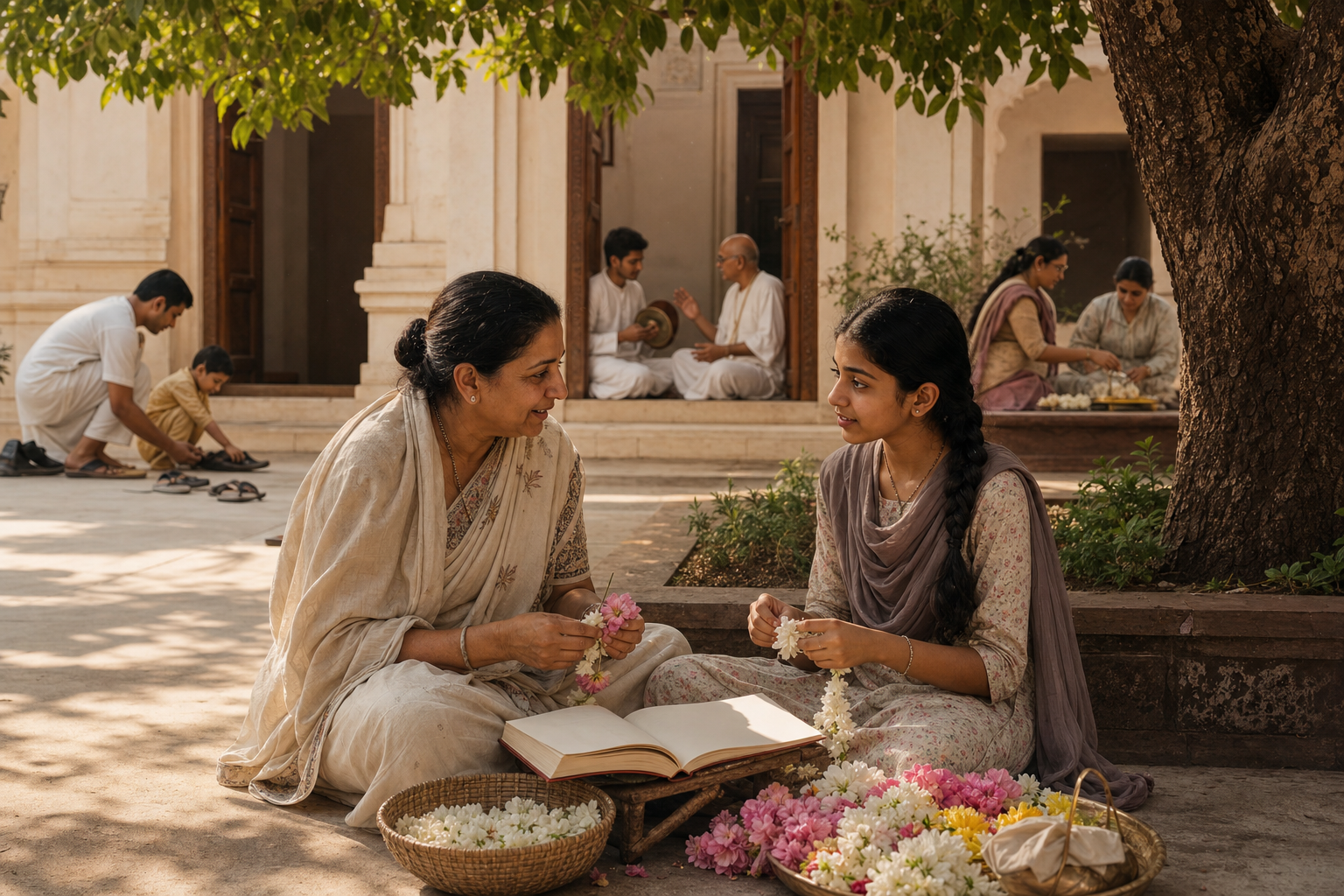
Festivals can inspire a young person, but ordinary repetition forms one. Teaching, study, and lived example carry spiritual heritage between generations. If formation appears only on a lecture schedule, the community may communicate ideas while failing to transmit judgement, devotional disposition, and responsibility.
Attach formation to every enduring service. The learner should encounter a model to observe, an explanation of the meaning, an opportunity to practise, and a review in which correction can be received without humiliation. A handover note can preserve procedures, but procedures alone cannot convey bhava. Personal memory can convey bhava, but memory alone becomes fragile when only one elder holds it. Use both.
For a study circle, do not teach only how long to speak. Show how a passage is selected, how the Bhagavad-Gita remains central, how questions are welcomed, and how a speaker distinguishes lineage teaching from personal opinion. For kirtan, teach more than a tune: explain the prayerful purpose, the local devotional standard, and how the leader helps the congregation participate. For a service project, teach reliability, respectful communication, and accountability alongside enthusiasm.
Agree in advance which mistakes require immediate intervention and which should be discussed after the service. Sacred or safety-critical duties may require correction in the moment. Matters of presentation or technique can usually wait for a private review. This protects the standard without making public embarrassment the community’s main teaching method.
An elder does not have to disappear to make room. The role can change from sole performer to standard-bearer, teacher, and reviewer. Nor should a younger devotee have to imitate an elder’s personality to be considered faithful. What must be inherited is the discipline, understanding, character, and Krishna-centered purpose that made the service valuable.
Practise dharmic unity without erasing Vaishnava identity
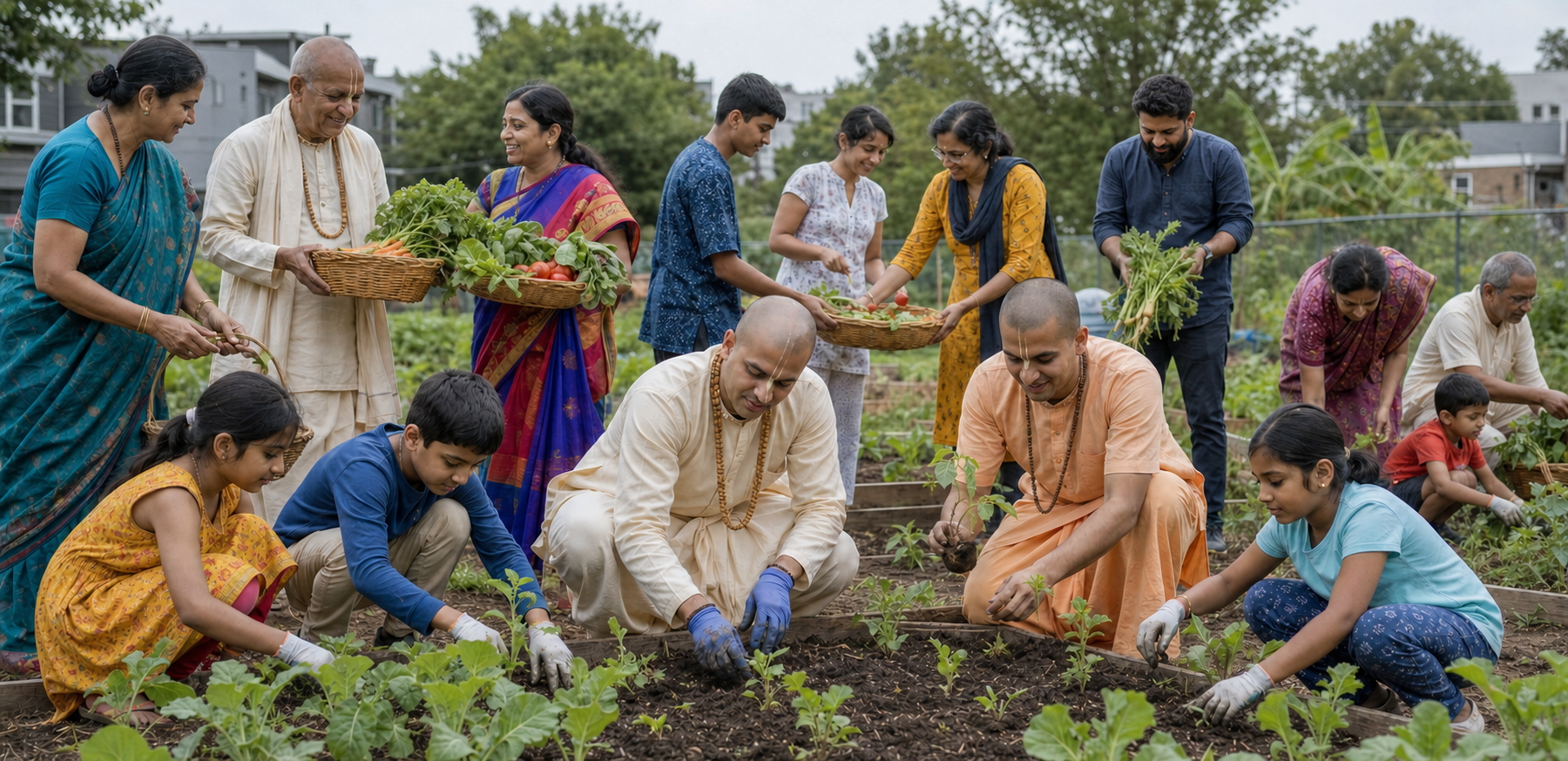
Intergenerational bhakti communities in a diaspora do not live behind sealed walls. Young people meet Hindu, Buddhist, Jain, Sikh, secular, and other religious viewpoints at school, at work, and in public life. Telling them that every path is identical will not prepare them for those encounters. Neither will teaching them that respect requires silence about their own tradition.
A Vaishnava community can speak clearly about devotion to Sri Krishna while recognizing a shared dharmic commitment to disciplined practice, compassion, remembrance, and service. Buddhist mindfulness, Jain ahimsa and vrata, and Sikh naam simran and seva offer genuine points of encounter. They should not be relabeled as interchangeable versions of the same doctrine. Unity becomes more credible when each tradition is allowed to remain intelligible in its own terms.
When you organize a dharmic gathering, use a simple discipline:
- Describe Krishna-centered bhakti accurately instead of reducing it to a generic spirituality.
- Invite participants from other traditions to explain their own practices rather than having somebody else speak for them.
- Choose a shared ethical or service concern where cooperation is real.
- Name similarities as points of resonance, not proof that doctrinal differences are meaningless.
- Give young participants a role in preparation, presentation, hospitality, and follow-through.
Kirtan, study circles, seva, and prasadam can provide welcoming points of entry across cultures and generations. Hospitality does not require doctrinal vagueness. In fact, a guest is more likely to understand the community when its hosts can explain both what they offer and why they practise it.
Key takeaways for your next community meeting
- Define the load-bearing practices and standards before debating which formats may change.
- Give younger devotees consequential service with stated boundaries, guidance, and a real review afterward.
- Make the formation of a successor part of every senior responsibility.
- Judge innovation by whether it deepens Krishna-centered remembrance, scriptural understanding, service, conduct, and community trust.
- Use dharmic cooperation to cultivate precise understanding and shared seva, not to flatten distinct traditions.
- Preserve procedures in writing while transmitting devotional judgement through personal example.
At your next planning meeting, choose a recurring service that depends too heavily on an elder. Name its spiritual purpose and operating standard, invite a younger practitioner to assist and then lead within clear limits, and set a time for honest review. Begin while the knowledge can still be observed, questioned, and corrected.
Prabhupada’s legacy remains living when the next generation receives more than a finished building to admire. It must receive the foundation, the tools, the trust to complete meaningful work, and the duty to hand that inheritance forward.
References
- DharmaRenaissance Blog – Inspiring Unity in Bhakti: Hare Krishna in Italy and the Timeless Dharmic Path
- DharmaRenaissance Blog – Honoring the Fading Acarya: Guiding New Generations Toward Unified Dharma in Naperville
