

If you heard that ISKCON Brisbane reached its 2025 book-distribution benchmark early, the useful question is not how loudly to celebrate. It is what the achievement can teach you about building spiritual outreach that lasts.
Whether you volunteer at a temple, organise a Dharmic association, or want more people to engage seriously with the Bhagavad Gita, Brisbane offers a practical model: begin with an honest baseline, make progress visible, equip volunteers for respectful conversations, and give interested readers somewhere to continue. A distribution target can focus the work. It cannot replace the work that follows.
Read the Brisbane milestone correctly
At national strategic-planning meetings in Melbourne on 11-12 October, ISKCON leaders adopted an Australian goal of increasing 2025 book distribution by 20 percent over 2024. Brisbane reached that growth threshold with more than two months remaining in the year.
The distinction between a percentage and an absolute total matters. The achievement does not mean that Brisbane distributed 20 percent of Australia’s books. It means that the centre met the national year-on-year growth benchmark locally. Without an absolute count, the result also cannot tell you how Brisbane’s distribution volume compared with that of another centre.
What the milestone does show is that a clear target can organise attention. Volunteers know what the collective effort is trying to achieve. Leaders can see whether activity is moving in the intended direction. Reaching the threshold early then creates room to identify which practices helped, support volunteers who carried the work, and strengthen weak points before the next planning cycle.
Keep the claim proportionate. Distribution is an output: a book entered someone’s life. Spiritual literacy is an outcome: a person opened the book, understood something, reflected on it, asked questions, or changed how they approached action and responsibility. The first can be counted immediately. The second requires patient follow-through.
A repeatable operating model for a local centre
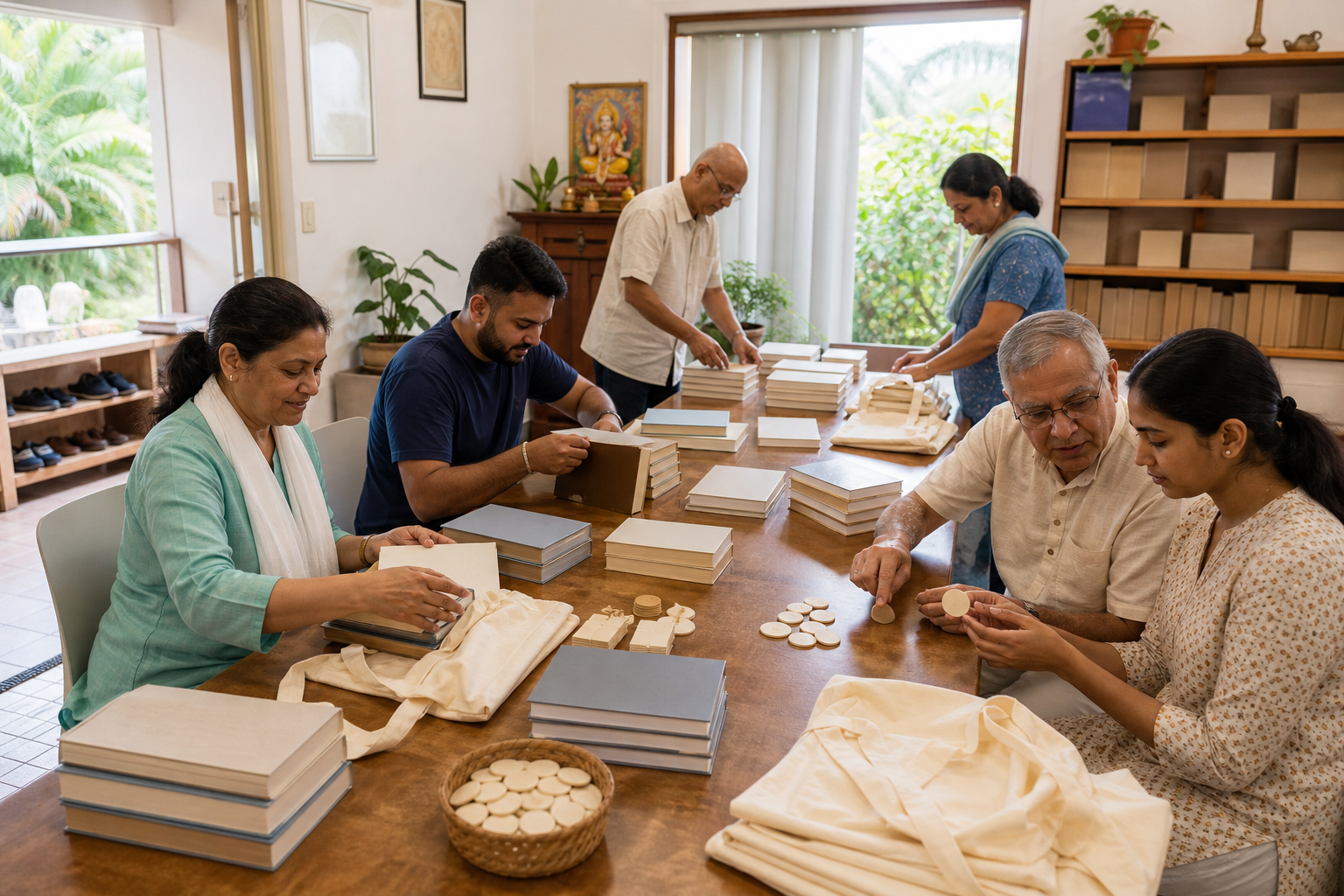
If you want to learn from Brisbane, do not copy the headline percentage in isolation. Copy the discipline that makes a growth target useful.
- Define what counts. Decide whether your distribution total includes books offered freely, sponsored by donors, placed at events, or otherwise circulated. Write the definition down so that volunteers do not count the same activity differently.
- Choose a completed baseline. The Australian plan compared 2025 with 2024. Using a finished period prevents a moving denominator from making progress look better or worse than it is.
- State the scope beside the target. Record the centre, period, books, and distribution channels covered. A percentage without a scope is easy to celebrate and hard to learn from.
- Make progress visible. A shared sheet can show the baseline, target, current total, and remaining gap. Update it after each distribution activity rather than reconstructing the year from memory.
- Record field knowledge as well as totals. Note the questions people ask, languages requested, settings that produce thoughtful conversations, and explanations volunteers find difficult. Those observations tell you what training and material are needed next.
- Review methods while they are still fresh. When a centre reaches its threshold early, it should document what volunteers actually did, not merely preserve the final number. That is the knowledge another centre can adapt.
The scoreboard should serve the seva, not turn volunteers into competitors. Publish collective progress, recognise different kinds of contribution, and avoid ranking people whose circumstances and available time differ. Someone who organises books, prepares multilingual material, welcomes a new reader, or facilitates a discussion may be sustaining the same outreach through a less visible role.
Transparent tracking also improves accountability. When a centre can explain what it counted, which period it compared, and what happened after distribution, supporters can distinguish a meaningful result from an impressive-looking percentage.
Turn a handed-over book into a reading relationship

A Bhagavad Gita placed in someone’s hands is an invitation, not a completed encounter. Many readers need context before an unfamiliar scripture becomes approachable. That is why distribution and reader support should be designed as one process.
- Begin with the person’s question. Ask what drew their interest rather than delivering the same speech to everyone. Duty, ethical action, meditation, purpose, and spiritual practice provide different entrances into the text.
- Match language and depth to the reader. A clearly labelled multilingual summary can help someone decide whether to begin, while the full text remains available for deeper study. Track language requests so future outreach reflects the public you actually meet.
- Offer a definite next step. A regular reading circle, youth gathering, temple programme, or community discussion gives the reader somewhere to bring questions. A vague invitation to visit sometime is easy to forget.
- Keep public engagement respectful. Explain what the book teaches and why it matters without cornering someone into debate. A freely chosen conversation is more consistent with spiritual service than pressure disguised as enthusiasm.
- Close the learning loop. Ask returning readers which passages raised questions, which explanations helped, and what prevented them from continuing. Use those answers to improve volunteer preparation and reading support.
Centres can then place distribution totals beside indicators of continuity: participation in reading circles, youth involvement, recurring questions, requested languages, and volunteers who remain engaged. These measures do not prove inner transformation, which cannot be reduced to a dashboard. They do reveal whether the centre has created conditions in which reading and reflection can continue.
Dharmic unity requires respect, not sameness
Book distribution can open a wider Dharmic conversation because Hindu, Buddhist, Jain, and Sikh communities recognise the importance of disciplined practice, wisdom, service, and ethical responsibility. That family resemblance should never be used to pretend that their scriptures, metaphysics, teachers, or forms of worship are interchangeable.
Good outreach is confident about its own grounding and accurate about neighbouring traditions. Present the Bhagavad Gita on its own terms. If a Buddhist, Jain, or Sikh visitor relates a teaching to another tradition, listen before supplying the comparison. At a collaborative event, invite people from each community to describe their own path instead of asking one speaker to flatten several traditions into a generic spirituality.
Accessibility is practical as well as philosophical. Multilingual introductions, context-sensitive dialogue, youth participation, and collaborative community events can welcome people who would not enter through a standard public-distribution encounter. Each method removes a different barrier: language, unfamiliarity, age, or uncertainty about whether questions are welcome.
This is where samatva becomes more than a slogan. Harmony does not demand that everyone use the same vocabulary or reach the same doctrinal conclusion. It asks participants to meet one another without contempt, practise seva without coercion, and let serious engagement with wisdom deepen mutual respect.
Key takeaways for volunteers and centre leaders
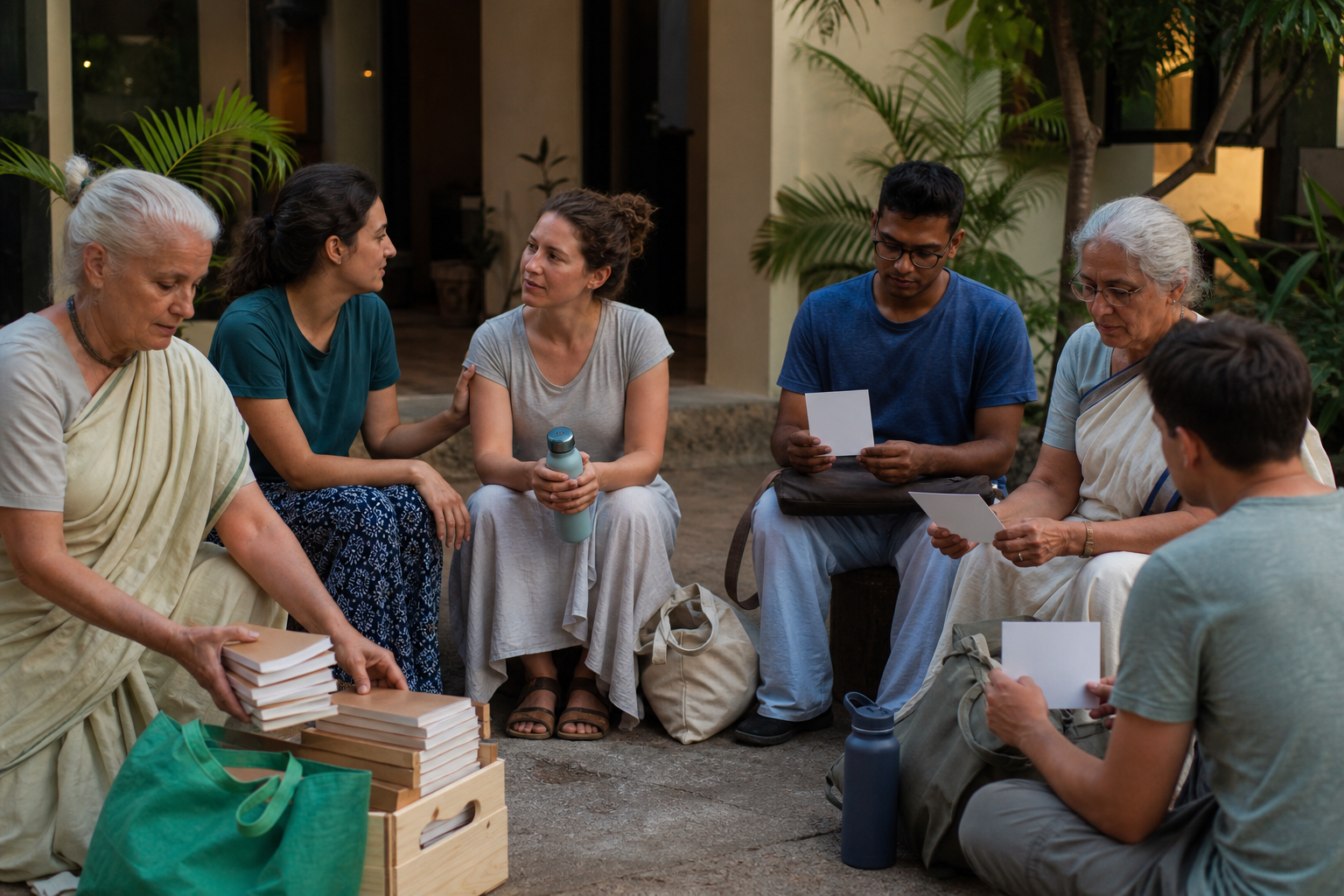
- Brisbane met a national benchmark of 20 percent year-on-year growth before the end of 2025; the result should be read as a growth milestone, not an absolute measure of cultural impact.
- A useful target needs a defined baseline, scope, counting rule, current total, and visible gap.
- Book distribution measures reach. Reading circles, questions, requested languages, and continued participation reveal whether support exists beyond the initial handover.
- Volunteer learning belongs beside the numerical total. Record what people ask and where conversations stall while the experience is still fresh.
- Dharmic unity becomes credible when outreach welcomes collaboration without erasing real differences among Hinduism, Buddhism, Jainism, and Sikhism.
- The strongest next step is a specific invitation to read, ask, and return.
If you help run an ISKCON centre or another Dharmic group, put one question on the next planning agenda: what happens after someone accepts a book? Preserve the clarity that made the 2024-to-2025 comparison useful, then build an equally deliberate path into continued reading. That is how an early distribution milestone can become durable spiritual culture.
References
