
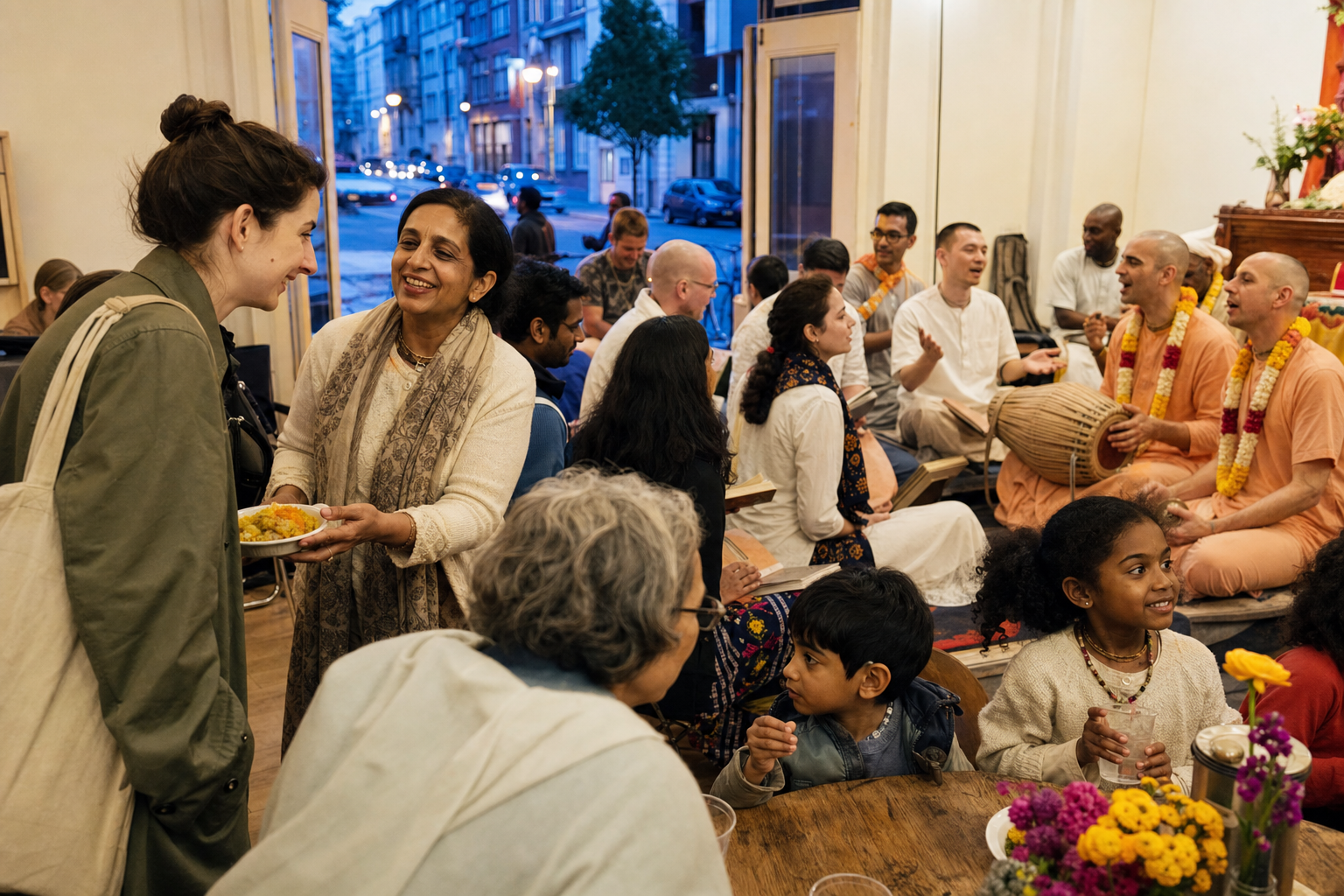
If you are trying to find an ISKCON community in an unfamiliar city, or deciding whether a nearby centre deserves your time, do not judge it only by the size of its temple, the scale of its festival, or the polish of its social media. Ask a more useful question: can a newcomer move from first contact to understood practice, meaningful service, and durable relationships?
That is the practical test of global outreach. A strong ISKCON community does not merely stage isolated programs. It creates connected doorways into Gaudiya Vaishnava life: public celebration, accessible teaching, prasada and food service, recurring temple programs, personal association, and digital contact. You can use those doorways both to find your place and to see where a local community needs help.
Outreach works when its different doors connect

Johor Bahru offers a compact example of this community pattern. Devotees across the area maintain multiple temples, regular festivals, Rathayatras, book distribution, and Hare Krishna Food for Life. These activities are not interchangeable. Each meets a person at a different stage of interest.
- Festivals and Rathayatras create recognition. They allow someone to encounter kirtan, deities, prasada, and devotees in a public setting without first making a private religious commitment.
- Books create continuity. A procession can awaken curiosity, but a clear presentation of philosophy gives that curiosity somewhere to go. Distribution becomes more useful when the recipient also knows where questions can be asked.
- Food for Life makes service visible. It presents devotional culture through hospitality and practical care. It also gives volunteers a way to participate before they are ready for formal study or temple worship.
- Temples make participation repeatable. A recurring program lets a visitor return, learn names, understand the practices, and gradually accept responsibility.
- Digital media removes the distance of the first approach. A live ISKCON media presence in New York City can reach people who are distant, hesitant, homebound, or simply unsure what they will encounter at a temple.
The decisive feature is the handoff between these doors. After a festival, can a visitor find the next recurring gathering? Does a book contain or accompany a usable local contact? Can a Food for Life volunteer learn why prasada and seva matter? Does an online viewer know how to enter a real conversation? If those links are missing, a community may be busy without becoming easier to join.
A global tradition still needs a local shape
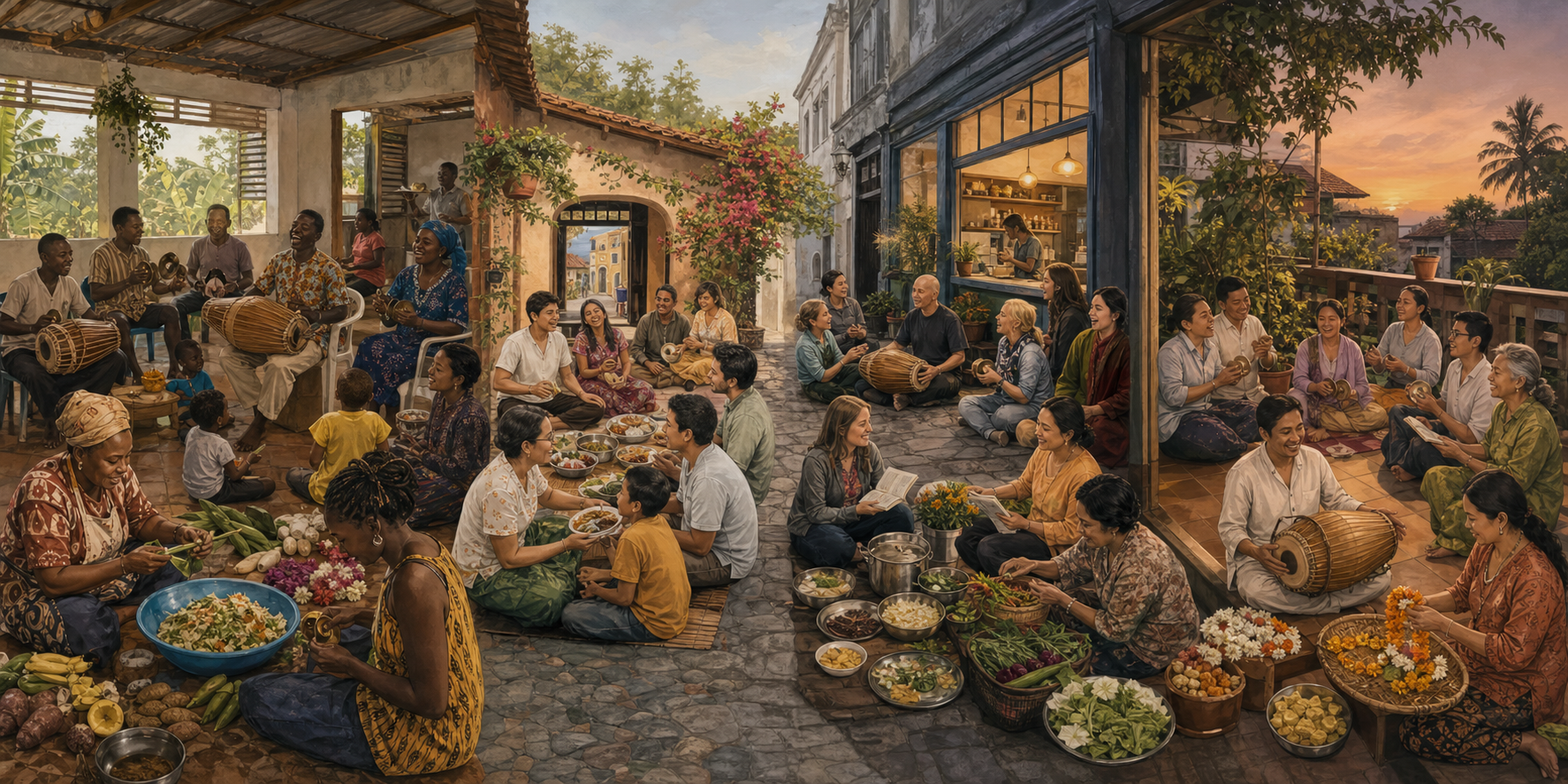
Johor Bahru sits at the southern end of Peninsular Malaysia and borders Singapore through a busy causeway. Its temples are spread through the wider area rather than represented by a single location. That setting illustrates an important point: global belonging does not require every community to look operationally identical.
The Hare Krishna maha-mantra, Vaishnava teaching, deity worship, prasada, and seva give the movement a recognizable devotional centre. Access to that centre must still account for local language, travel patterns, work schedules, family life, and the way people in a particular place gather. A program can preserve its siddhanta while explaining unfamiliar practices patiently and arranging participation around local realities.
Adaptation and dilution are not the same thing. Dilution removes the substance. Adaptation removes avoidable friction around the substance. Translation, clear directions, newcomer guidance, and locally workable program times make a tradition intelligible; they do not change what the tradition teaches.
If you are assessing a community, notice whether local culture is treated as a living context or merely as an obstacle. You should be able to recognize the devotional core without feeling that every social habit from another country has been turned into a spiritual requirement. If you are helping with outreach, identify which barriers are genuinely philosophical and which are only logistical, linguistic, or social. Work on the latter first.
Choose the doorway that matches your present readiness
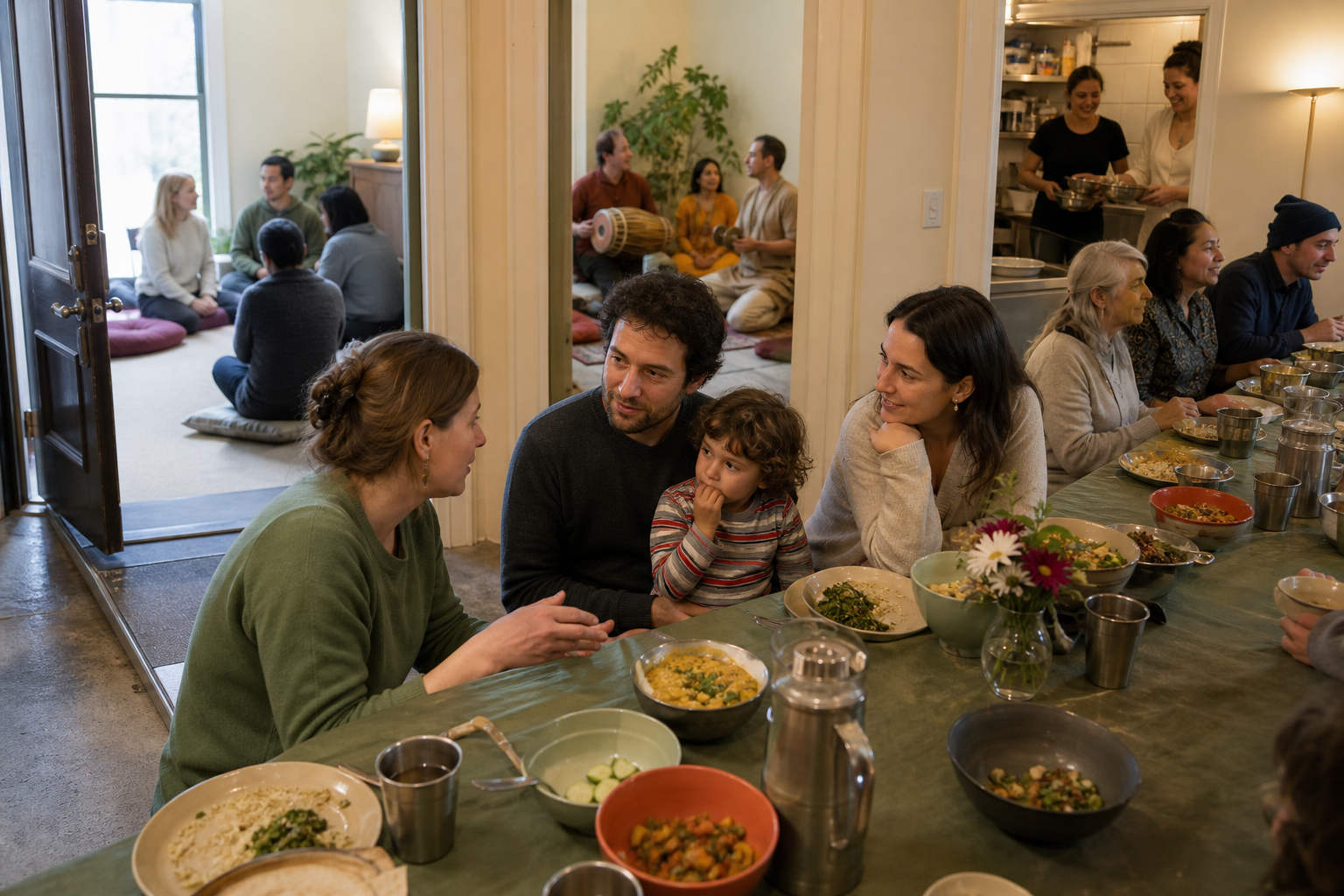
You do not need to enter community life through the most formal door. Begin where you can participate honestly, then take a deliberate next step instead of remaining indefinitely at the edge.
- If you want to observe before speaking, start with a public festival, Rathayatra, or livestream. Before leaving, locate the community’s recurring program and current contact channel.
- If your main need is intellectual clarity, begin with a book and ask which gathering allows questions. Reading without association can leave basic terms or practices misunderstood; association without study can leave you dependent on impressions.
- If service is your natural entry, ask about Food for Life, prasada preparation, festival setup, cleaning, transport, or welcoming visitors. Choose a defined responsibility you can complete reliably.
- If you are seeking regular spiritual practice, attend a recurring temple program rather than waiting for the next major celebration. Repetition reveals the actual character of a community more clearly than its largest day of the year.
- If distance or hesitation is the obstacle, use digital media as a threshold, not a permanent substitute for association. Ask a question, introduce yourself to a local contact, or identify a physical gathering you can realistically attend.
Every doorway should lead somewhere. After a festival, ask about study. After receiving a book, ask where it is discussed. After serving food, learn the devotional understanding behind the service. After watching online, make contact with a person. After attending the temple, accept a modest form of seva. That movement from consumption to participation is how a global institution becomes your local community.
A practical test for judging and strengthening outreach
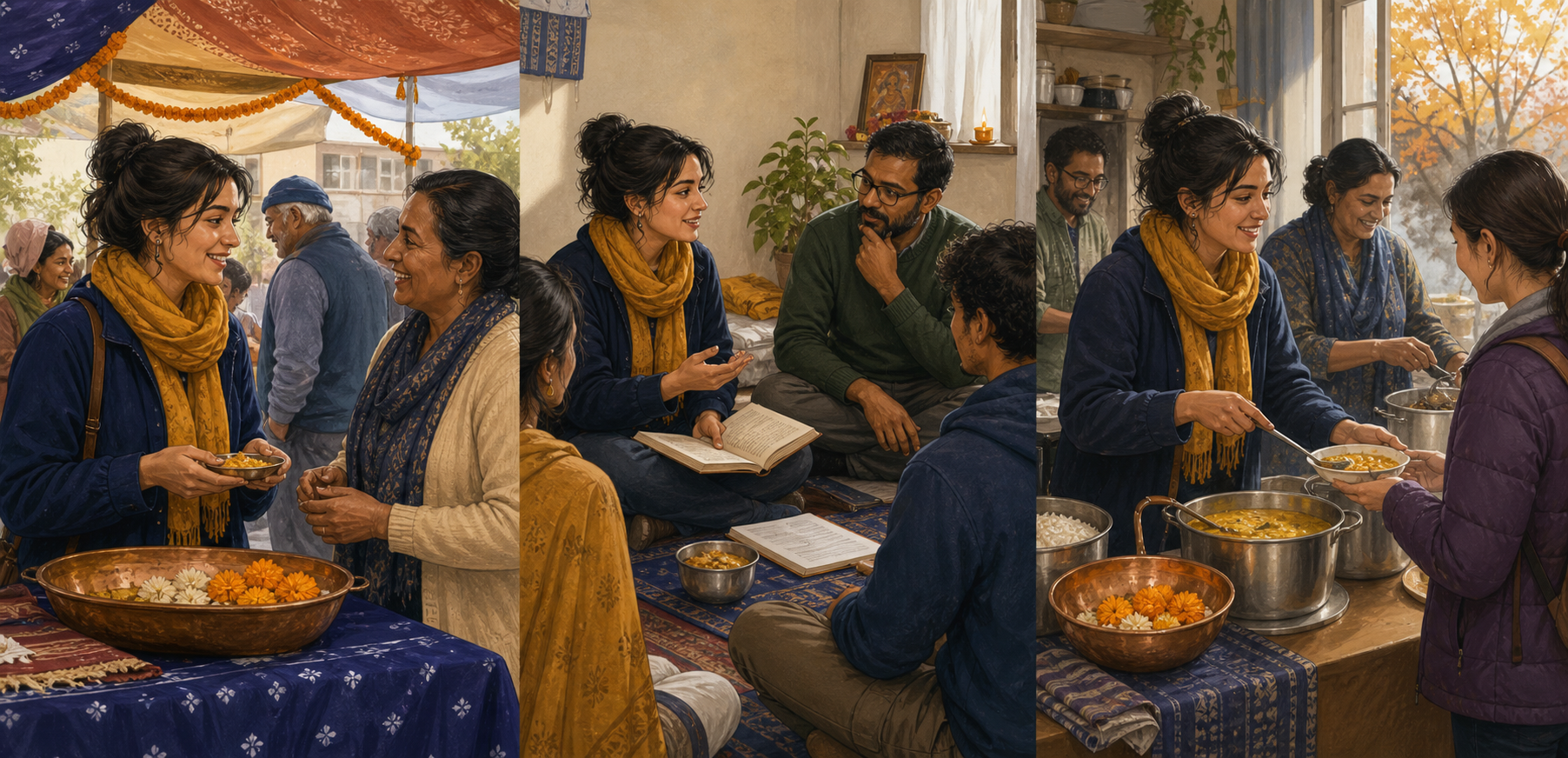
If you are visiting a community
Look beyond whether people are friendly during your first visit. Warmth matters, but a healthy community also makes participation understandable and repeatable.
- Check recurrence. Is there a dependable program beyond special festivals, and can newcomers find its time and location without insider knowledge?
- Check the next step. When a public event ends, is there a clear invitation to study, serve, attend worship, or speak with someone?
- Check for substance. Are teachings explained and questions welcomed, or are books and slogans offered without a path to understanding them?
- Check the dignity of service. Food outreach should treat recipients as people rather than as numbers, scenery, or religious targets.
- Check local intelligibility. Can a visitor understand what is happening, what participation is optional, and whom to approach for help?
- Check operational trust. Before making a significant donation or placing a child or vulnerable adult in a program, verify the local arrangements for supervision, safeguarding, and financial accountability. Devotional respect should strengthen due diligence, not replace it.
Do not mistake one impressive event for a complete community. Return to an ordinary program. Notice whether people are remembered, whether service is shared, whether questions receive thoughtful answers, and whether commitments are actually kept.
If you want to help the outreach mature
- Find the missing connection. Before proposing another event, trace what currently happens after a festival, book distribution effort, food program, temple visit, or broadcast. The weakest handoff is often the best place to serve.
- Accept a bounded responsibility. Reliable transport, accurate program information, newcomer welcome, book follow-up, or cleanup may strengthen the community more than an ambitious project with no long-term owner.
- Make information usable. Keep the address, program time, language, contact method, and basic expectations current. A newcomer should not need private connections merely to find the door.
- Connect physical and digital participation. Every broadcast should point toward conversation or local association. Every physical event should give visitors a current way to remain in touch, with their consent.
- Equip people to answer the next question. Volunteers do not need to pretend to know everything. They do need to know whom to approach when a visitor asks about philosophy, worship, service, donations, or family participation.
- Review return paths, not just turnout. After an activity, ask whether newcomers found the next program, received answers, returned, or took up service. A crowd demonstrates reach; a working return path demonstrates community formation.
Key takeaways
- Strong ISKCON outreach connects public celebration, teaching, service, temple life, and digital access instead of treating them as separate projects.
- Global consistency should preserve the devotional core while local adaptation removes linguistic, logistical, and social barriers.
- Your best entry point may be a festival, book, service opportunity, temple program, or broadcast, but it should lead toward association and participation.
- A healthy community offers recurring programs, intelligible guidance, dignified service, accountable operations, and a clear next step for newcomers.
- If you want to help, strengthen the weakest handoff before adding another activity.
If you are looking for a community, choose a program you can realistically attend and leave with the answer to one practical question: what is the next recurring gathering for someone new? Then take a modest step into study, service, or association.
If you already help organize outreach, follow the newcomer’s path from first encounter to second contact. The most valuable improvement may not be a larger event. It may be a clearer bridge from curiosity to belonging.
References
