
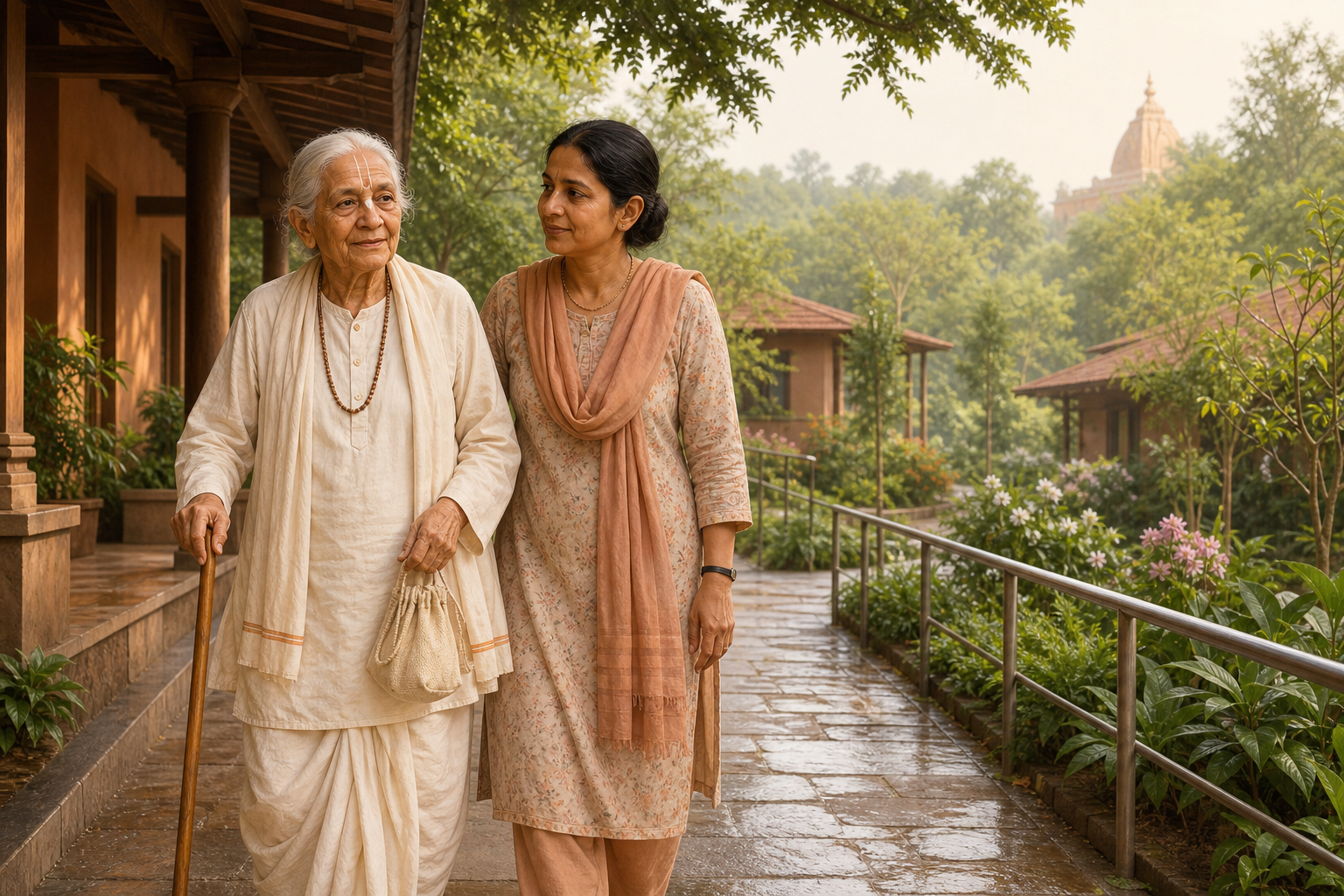
If you are wondering whether Govardhan Ecovillage could be the right home for an ageing parent, guru-sevaka, or senior devotee, the peaceful setting is only the beginning of the decision. You need to know whether the residence can support the elder’s actual daily needs while preserving the devotional life that gives those days meaning.
The right question is therefore not simply, “Is this a spiritual place?” It is: “Can this person live here safely, willingly, and devotionally as their needs change?” That sharper question will help you distinguish a good cultural fit from a complete care plan.
What is known about the residence, and what still needs asking
A residential elder-care facility at Govardhan Ecovillage has been inaugurated by HH Radhanath Swami for senior Vaishnavas who devoted their lives to service within Srila Prabhupada’s ISKCON. Its purpose is not merely to provide rooms. It is meant to honour those elders, meet practical needs, and let bhakti, contemplation, satsanga, and community belonging remain part of ordinary life.
That is a meaningful commitment. Many conventional care arrangements can accommodate religious observance as an optional activity, but a residence rooted in a familiar devotional community begins from a different premise: spiritual practice belongs near the centre of life, including later life.
Yet the phrase “elder-care residence” does not, by itself, tell you the level of assistance available. It does not establish whether a resident must be largely independent, whether staff help with bathing or mobility, whether medicines can be administered, or whether nursing, memory, rehabilitation, palliative, or emergency care is available. Do not infer any of those capabilities from a serene campus, a devotional identity, or the word “care.” Ask for the present scope in writing.
This distinction protects both the elder and the institution. A residence can be excellent at supporting one level of need and unsafe for another. Clarity is not a sign of mistrust; it is how a family prevents a loving placement from failing when assistance is needed at night, after a fall, during illness, or following a change in cognition.
Match the elder’s needs to the actual level of care

Begin with function, not age. Two elders of similar age may need entirely different arrangements. One may manage personal care and medicines independently but want companionship and easier access to satsanga. Another may need help transferring from bed, using the toilet, remembering medicines, or reaching activities safely.
Prepare a one-page needs profile before contacting the residence. Divide every item into three columns: “required now,” “likely to be needed if health changes,” and “preferred but optional.” Then record whether the residence provides it, whether the family must arrange it separately, or whether it is unavailable.
Questions to take to the management
- Daily activities: Does staff assistance cover bathing, dressing, toileting, eating, walking, wheelchair use, and transfers between a bed and chair? Which tasks are included routinely, and which require an outside attendant?
- Medicines and clinical care: Who stores, reminds, dispenses, or administers medicines? Is any qualified clinical professional available on site or on call? What happens after hours?
- Emergencies: Who evaluates an urgent problem, who contacts the family, how is transport arranged, and which medical facility ordinarily receives the resident?
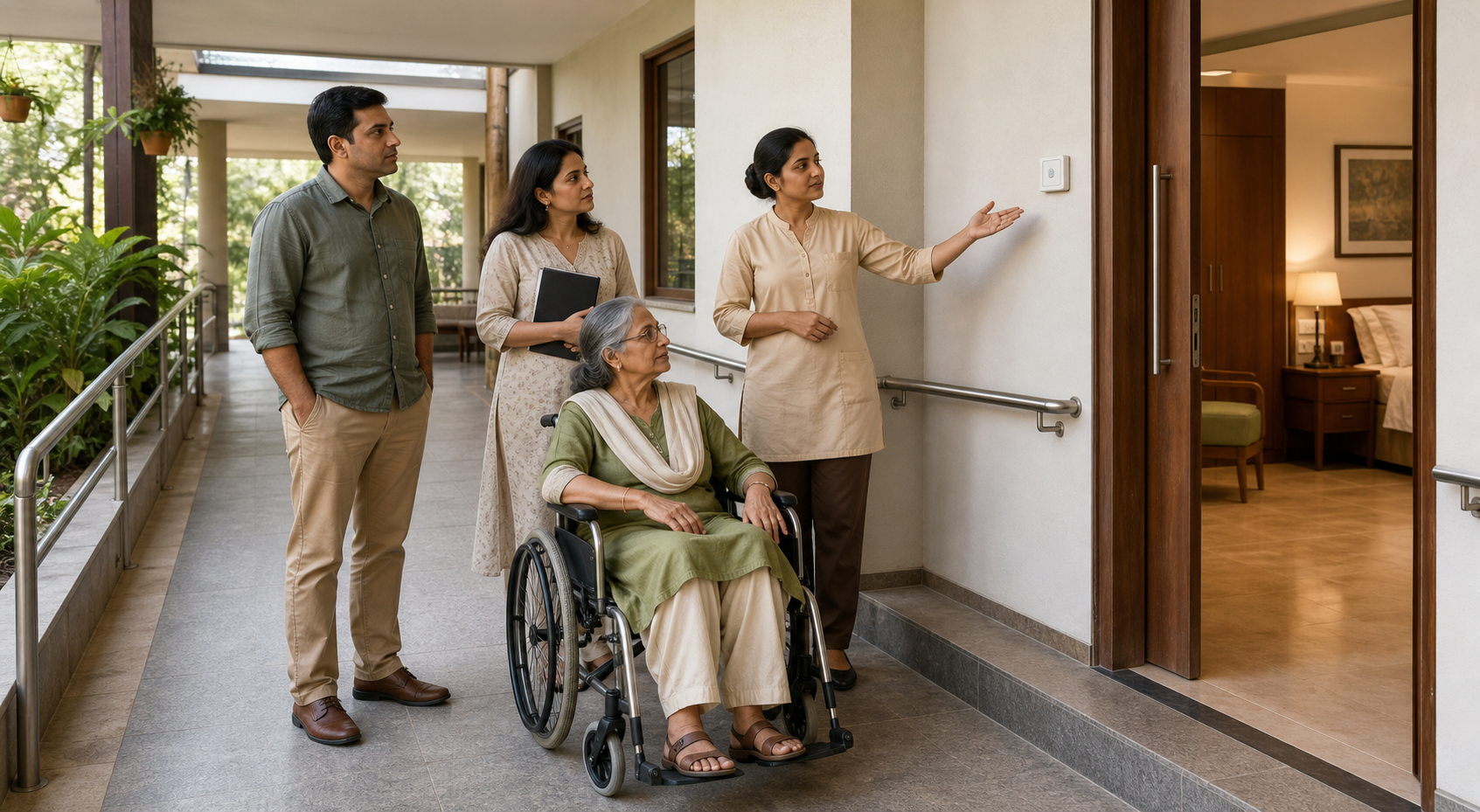
- Mobility and access: Can the elder travel safely between their room, dining areas, devotional gatherings, toilets, and outdoor spaces? Check steps, slopes, handrails, lighting, floor surfaces, and accessible bathrooms against that person’s abilities.
- Cognition: Can the residence support memory loss, disorientation, wandering, nighttime confusion, or difficulty following instructions? If not, what changes would require a transfer elsewhere?
- Food and personal routine: Can the elder’s dietary restrictions, meal assistance, fasting practices, sleep pattern, and established devotional routine be accommodated without compromising health?
- Family participation: What can relatives or designated devotees help with? Are there clear rules for visits, outside attendants, appointments, overnight support, and communication with staff?
- Costs and transitions: What do fees include, what is billed separately, what deposits or notice terms apply, and what happens if the elder’s needs exceed the residence’s capacity? Obtain the terms before paying or ending an existing arrangement.
A useful answer identifies both a service and the person responsible for it. “We will help” is too vague for medication, transfers, emergencies, or personal care. “This staff role handles it during these hours, and this is the process outside those hours” is an answer you can plan around.
If the elder already has significant medical, mobility, cognitive, psychiatric, or palliative needs, bring a current care summary from the appropriate qualified professional. A devotional environment can support well-being, but it cannot substitute for clinical capacity. Do not interrupt existing treatment or professional support until the replacement arrangement has been confirmed.
Test spiritual continuity in an ordinary day
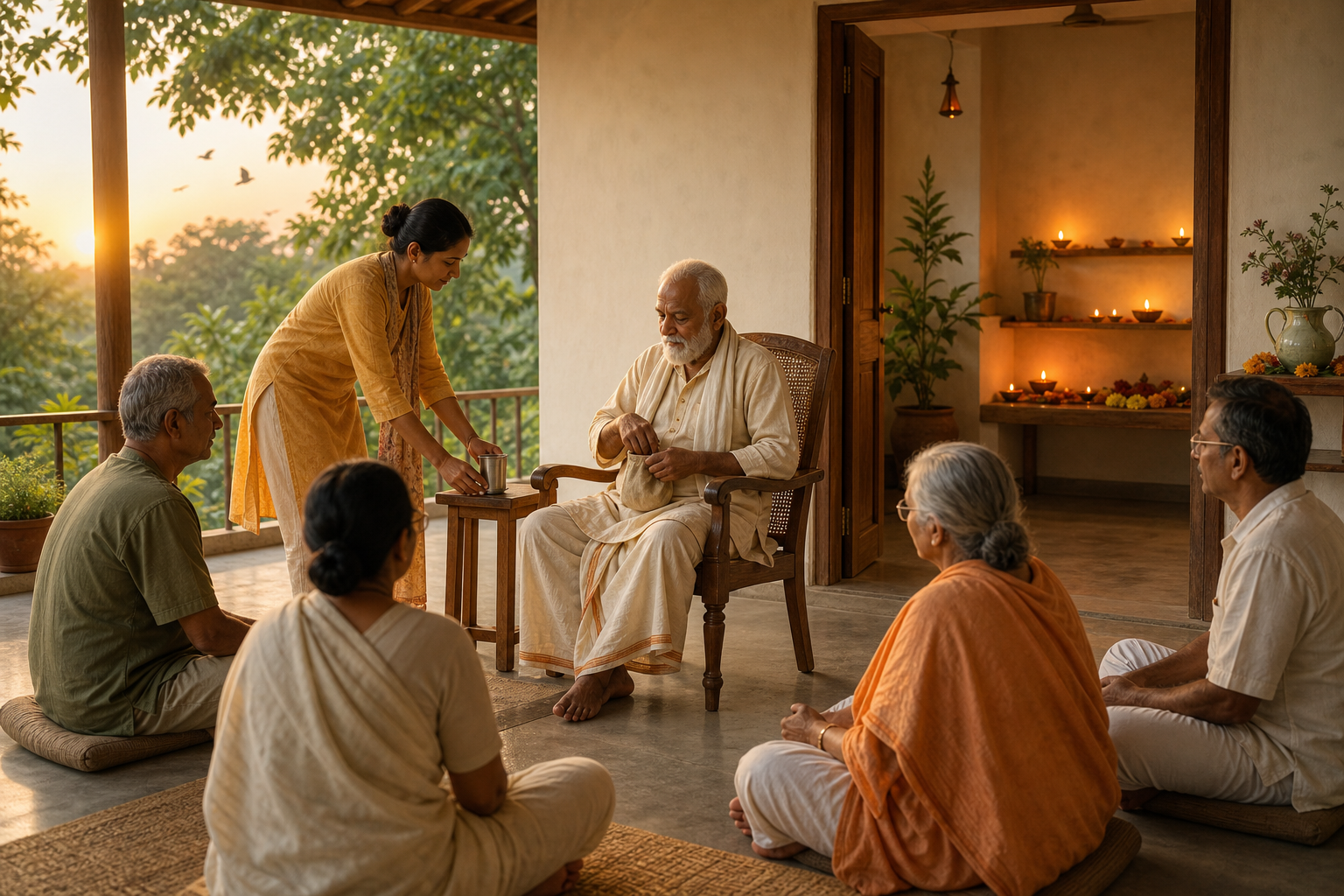
Spiritual care is more than placing a temple or prayer hall near a residential building. It depends on whether the elder can actually participate, maintain a personal practice, form relationships, and receive help without being reduced to a passive recipient.
Ask for the normal daily and weekly devotional rhythm. Then compare it with the elder’s established practice rather than assuming that every Vaishnava wants the same schedule or form of participation. A senior devotee may value congregational satsanga, quiet contemplation, personal chanting, service suited to reduced strength, or simply the ability to hear and remember Krishna in familiar company.
- Request an ordinary-day visit if visits are available. A ceremonial occasion cannot show how residents are helped when the day is quiet and staff are handling routine needs.
- Trace the elder’s likely route from the room to meals and gatherings. A programme has little practical value if pain, distance, stairs, poor hearing, fatigue, or lack of assistance prevents participation.
- Ask whether residents may choose when to join communal activities and when to practise privately. Devotional continuity should preserve agency, not turn participation into a test of conformity.
- Notice how staff address residents and explain assistance. Respect appears in small acts: seeking consent before helping, allowing time for an answer, protecting privacy, and speaking to the elder rather than only to relatives.
- Speak with the elder privately after the visit. Ask what felt natural, what felt tiring, and what they would miss from their present life. Their hesitation may reveal a mismatch that a family focused on logistics has overlooked.
The intended Govardhan model places practical support inside a continuing life of bhakti and satsanga. Your task is to determine how that purpose becomes a lived routine for this particular elder. The relevant measure is not the number of activities on a schedule; it is whether the resident can take part with dignity and genuine choice.
Keep the elder’s agency at the centre of the decision
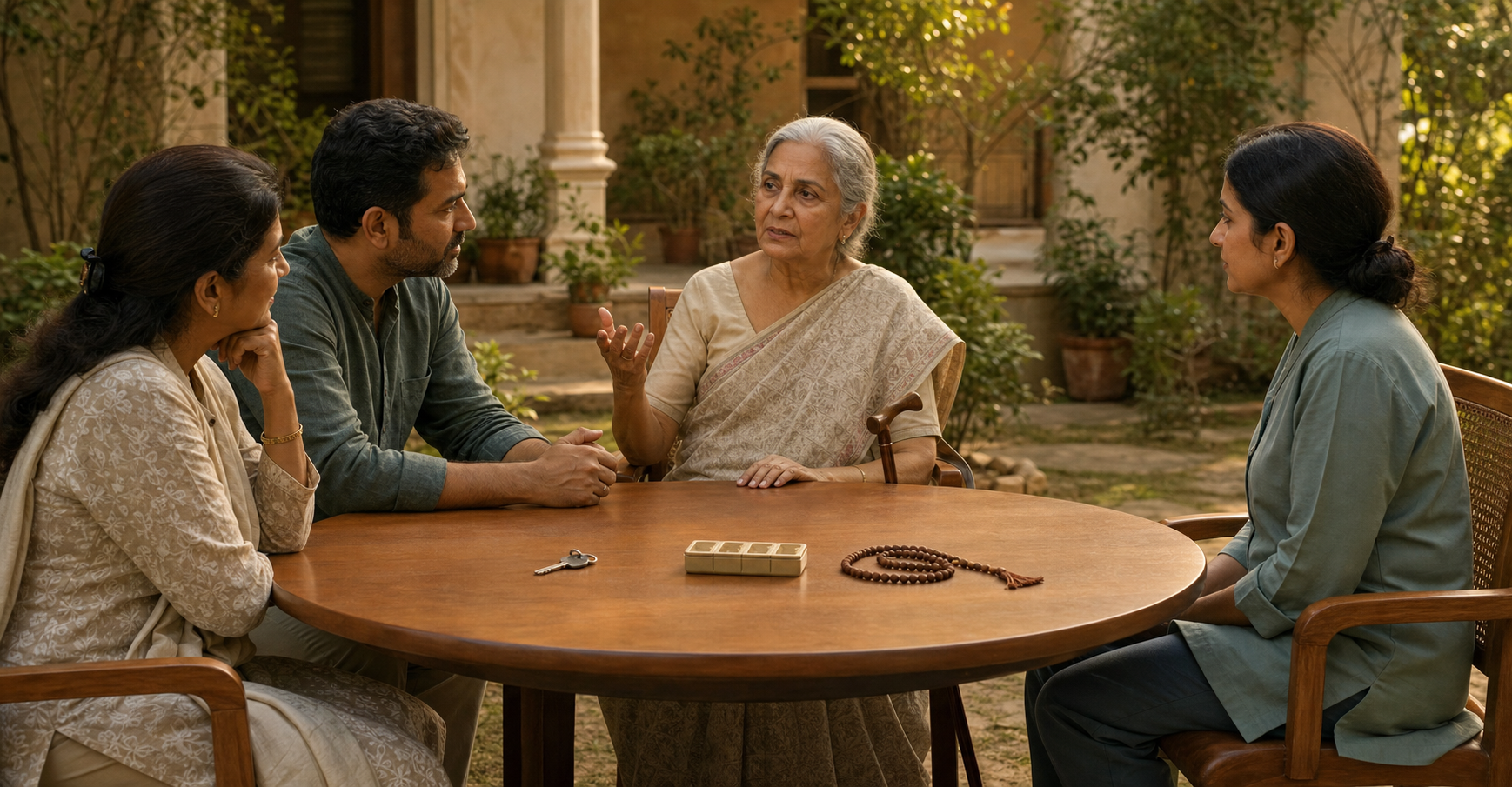
Families can approach elder care as an act of seva and still make the mistake of deciding around the elder rather than with them. A beautiful environment chosen without meaningful consent can feel like displacement. If the elder can make the decision, their willingness is indispensable. If decision-making capacity is limited, use the appropriate professional and legal process while giving serious weight to the person’s known wishes, relationships, habits, and spiritual commitments.
A practical decision process looks like this:
- Write the needs profile with the elder wherever possible. Mark each item as a must-have, a preference, or a deal-breaker.
- Ask the residence to identify what it provides directly, what an outside provider may supply, and what it cannot support.
- Resolve every gap by naming a responsible person. Do not leave transport, appointments, medicines, emergency decisions, or personal assistance under the heading “family will manage.”
- Let the elder assess the spiritual and social fit. The family’s admiration for Govardhan cannot substitute for the resident’s sense of belonging.
- Agree on what would trigger a new care review. A plan that works at admission may cease to work after a change in mobility, cognition, continence, eating, or medical stability.
- Confirm the transition process before moving. The family should know what happens if needs increase, who helps locate another arrangement, and how records, medicines, belongings, and devotional items will move with the resident.
Moving an elder into a community residence also does not transfer the entire duty of care to the institution. Decide who will call, visit, attend medical consultations, review bills, replenish personal items, and respond during an emergency. When several relatives or devotees are involved, appoint one primary contact and one backup so staff are not forced to reconcile conflicting instructions.
The larger dharmic significance lies here. Hindu, Buddhist, Jain, and Sikh communities all recognise compassion, service, respect for elders, and communal responsibility as serious moral obligations. Those values become operational only when institutions define the boundaries of care, families remain present, competent professionals handle professional tasks, and elders retain a voice.
Govardhan Ecovillage can therefore prompt other temples and sanghas to examine their own responsibilities. A community does not need to begin by constructing a residence. It can map isolated elders, organise dependable visits and transport, make gatherings accessible, create respite support for family caregivers, and publish a clear referral path for needs volunteers cannot safely meet. Volunteer seva is valuable, but it should complement rather than impersonate medical, nursing, legal, or financial expertise.
Key takeaways
- Govardhan’s residence has a clear devotional purpose: honouring senior Vaishnavas and supporting continued bhakti, satsanga, contemplation, and belonging.
- A devotional identity does not establish a particular level of medical, nursing, mobility, memory, or emergency care. Verify each required service directly.
- Assess the elder by present function and likely changes, not by age or a general label such as “senior.”
- Inspect how spiritual life works on an ordinary day, including access, choice, hearing, mobility, fatigue, personal practice, and respectful assistance.
- Record care responsibilities, fees, exclusions, emergency procedures, and transition terms in writing before making an irreversible move or payment.
- Keep the elder’s consent and preferences at the centre, and keep the family involved after placement.
If you are considering Govardhan Ecovillage for someone you love or revere, make your next step concrete: prepare the one-page needs profile, ask management to complete the matching care scope, and let the elder judge the lived devotional fit. A dharmic decision joins reverence with responsibility; it requires both.
References
