
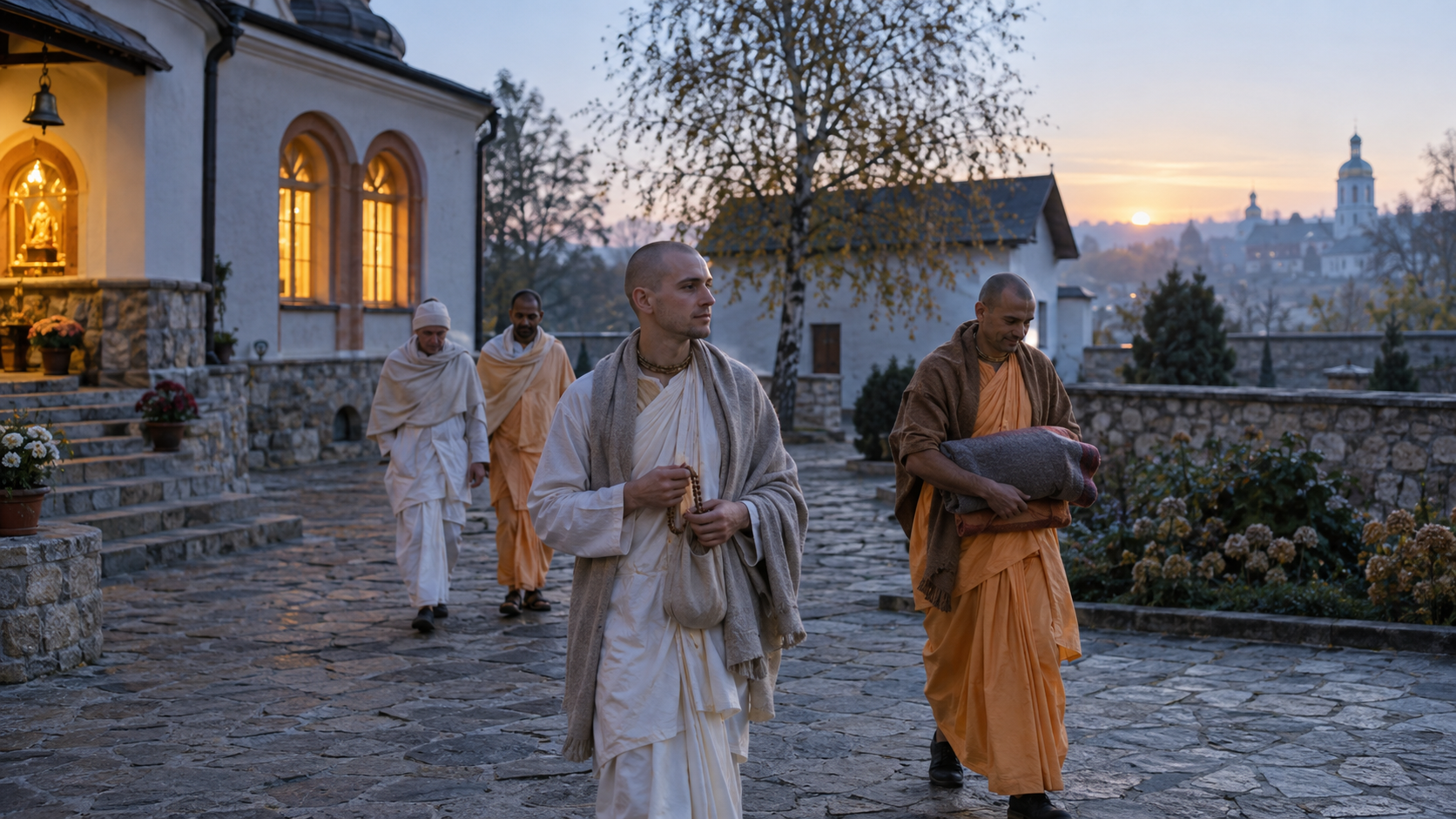
If you are considering brahmachari life in ISKCON Ukraine, the difficult question is not whether you admire renunciation. It is whether a particular ashram can help you become steadier in devotion, more truthful in conduct, and more useful in service.
You therefore need more than an inspiring image of monastic life. You need to understand what brahmacharya is meant to train, inspect the actual daily routine, and ask practical questions before changing your residence, finances, legal position, or personal commitments.
Understand the purpose before judging the appearance
Brahmacharya has a wider meaning in Dharmic thought than simply being unmarried. It points toward disciplined conduct, the careful direction of one’s energy, and freedom from habits that scatter the mind. In a residential ISKCON setting, a brahmachari is ordinarily an unmarried male devotee who accepts celibacy, communal discipline, devotional practice, study, and seva as an integrated way of life.
That distinction matters. Celibacy by itself does not make a person spiritually mature. Neither do simple clothing, a demanding schedule, public preaching, or visible austerity. Those forms have value when they support remembrance of Krishna, honest self-examination, dependable service, and respectful dealings with other people.
The most useful way to approach brahmachari life in ISKCON Ukraine is therefore as a form of training rather than an identity to acquire. Ask what the discipline is training you to do when enthusiasm fades. Can you keep your commitments without needing attention? Can you receive correction without resentment? Can you perform ordinary service carefully? Can you remain honest about temptation, fatigue, doubt, and ambition?
This also protects you from two opposite errors. The first is romanticising the ashram as an escape from work, relationships, disappointment, or confusion. The second is dismissing renunciation as passivity. A functioning brahmachari ashram is neither a hiding place nor a spiritual costume. Its value lies in sustained practice under guidance and in service that benefits a devotional community.
Read the daily rhythm as a training system
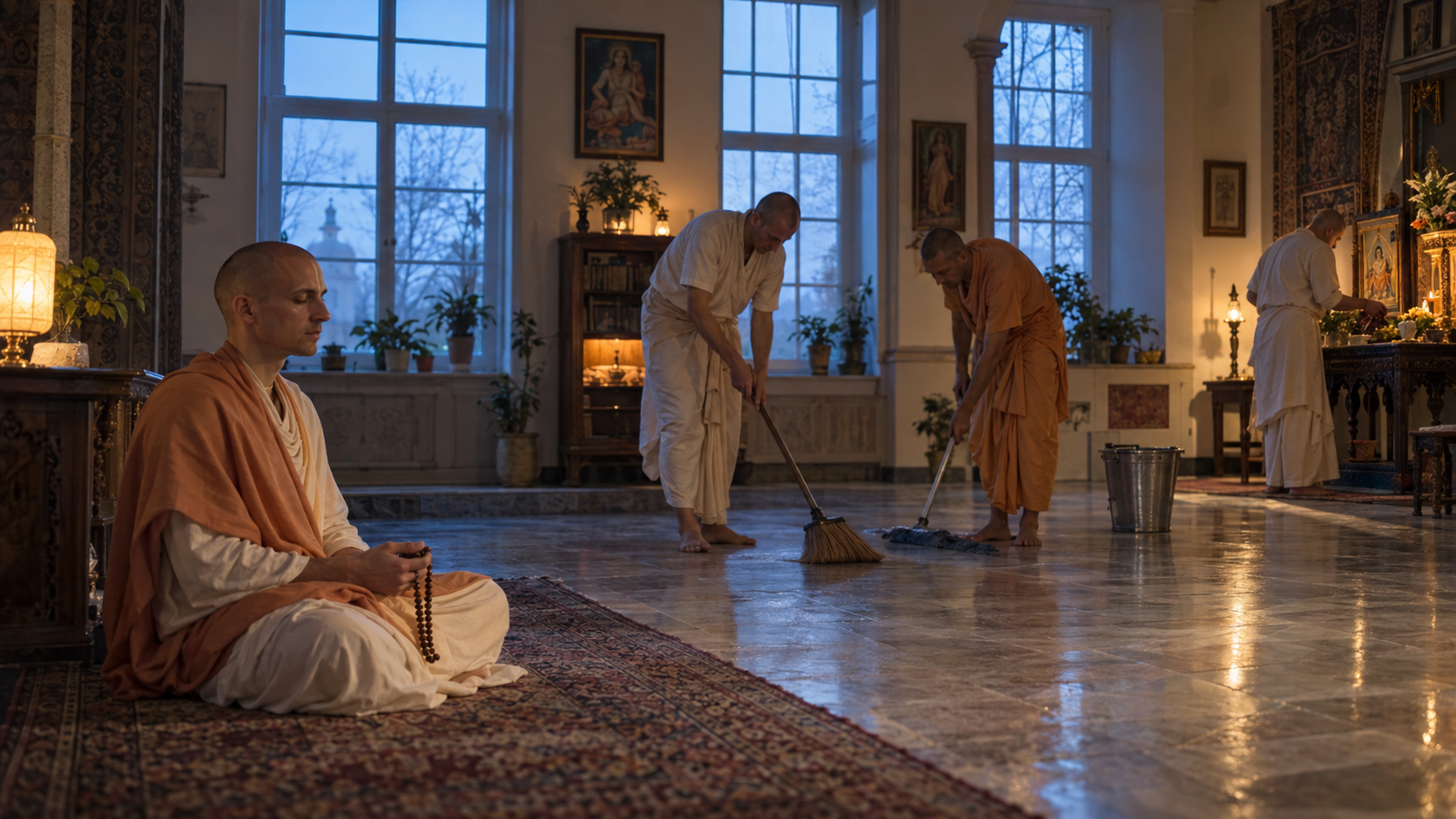
A temple schedule usually joins personal spiritual practice with collective worship, scriptural learning, practical service, meals, rest, and community responsibilities. The exact timetable can differ by temple and can change with local needs. Do not build your decision around a schedule copied from another centre or remembered from a short festival visit.
Ask the Ukrainian community you are considering for its current weekday and festival schedules. Then look beyond the starting time of the first programme. You need to know how the entire day works: when personal practice happens, how seva is assigned, whether study receives protected time, when residents eat and rest, and how unexpected work is handled.
- Morning practice: Which programmes are required, and what happens when illness, travel, or late service makes attendance difficult?
- Study: Is there a planned curriculum, guided reading, discussion, or only occasional listening?
- Seva: Who assigns it, how often does it change, and how are ability, health, language, and experience considered?
- Rest: Is sufficient sleep treated as part of sustainable discipline, or is chronic exhaustion praised as devotion?
- Guidance: Does each resident have a dependable senior person with whom he can speak privately?
- Correction: Are mistakes addressed clearly and respectfully, with a way to ask questions or appeal a decision?
Observe the gaps between formal programmes. A polished ceremony tells you less about ashram culture than the way residents speak during routine work, respond to delays, share limited facilities, and treat a newcomer who cannot yet contribute much. Courtesy under inconvenience is a better sign of training than intensity displayed in public.
If you visit, keep a private record of what you actually do each day: practice, study, service, meals, rest, travel, and unstructured time. The point is not to score the community. It is to compare the life you imagined with the life being offered. If the routine consistently leaves no room for study, health, or honest conversation, ask about that before making a longer commitment.
Celibacy needs honest boundaries and trusted guidance
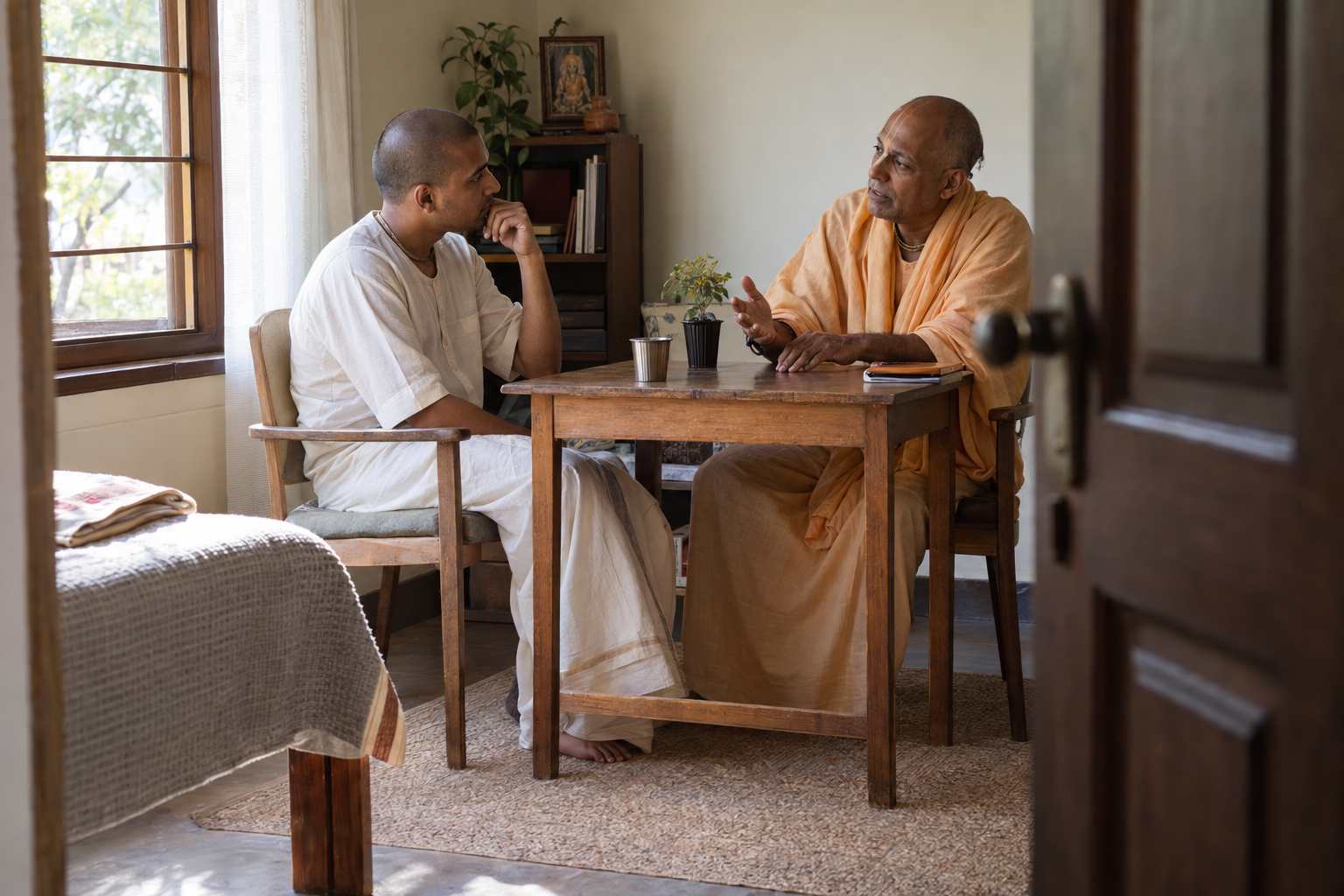
Celibacy is not sustained by embarrassment, denial, or a dramatic promise. It requires an environment that reduces avoidable stimulation while making honest conversation possible. A resident should know whom to approach when sexual thoughts, loneliness, attachment, shame, or confusion become persistent. Silence can make a manageable difficulty secretive and isolating.
Ask how the ashram handles phones, private internet use, entertainment, friendships, communication with family, travel, and interactions outside the temple. The important issue is not whether every boundary is severe. It is whether expectations are explicit, applied consistently, and connected to a recognisable spiritual purpose.
You should also be able to distinguish guidance from control. Spiritual discipline may limit personal convenience, but it should not require deception, humiliation, or the surrender of your ability to seek help. A mature mentor can hear an uncomfortable truth without turning it into gossip or using it to make a resident dependent.
If celibate life repeatedly produces serious distress, compulsive behaviour, depression, or an inability to function, do not treat greater secrecy as the cure. Speak with an appropriate senior devotee and seek qualified medical or mental-health care when needed. Devotional practice can support health, but it is not a substitute for professional treatment.
Leaving the brahmachari ashram or deciding that another ashrama is more suitable should not automatically be read as spiritual defeat. The relevant question is which form of life allows you to practise honestly and accept responsibility. Remaining for the sake of reputation can be less truthful than changing course carefully.
Ask about ordinary needs before making an extraordinary promise
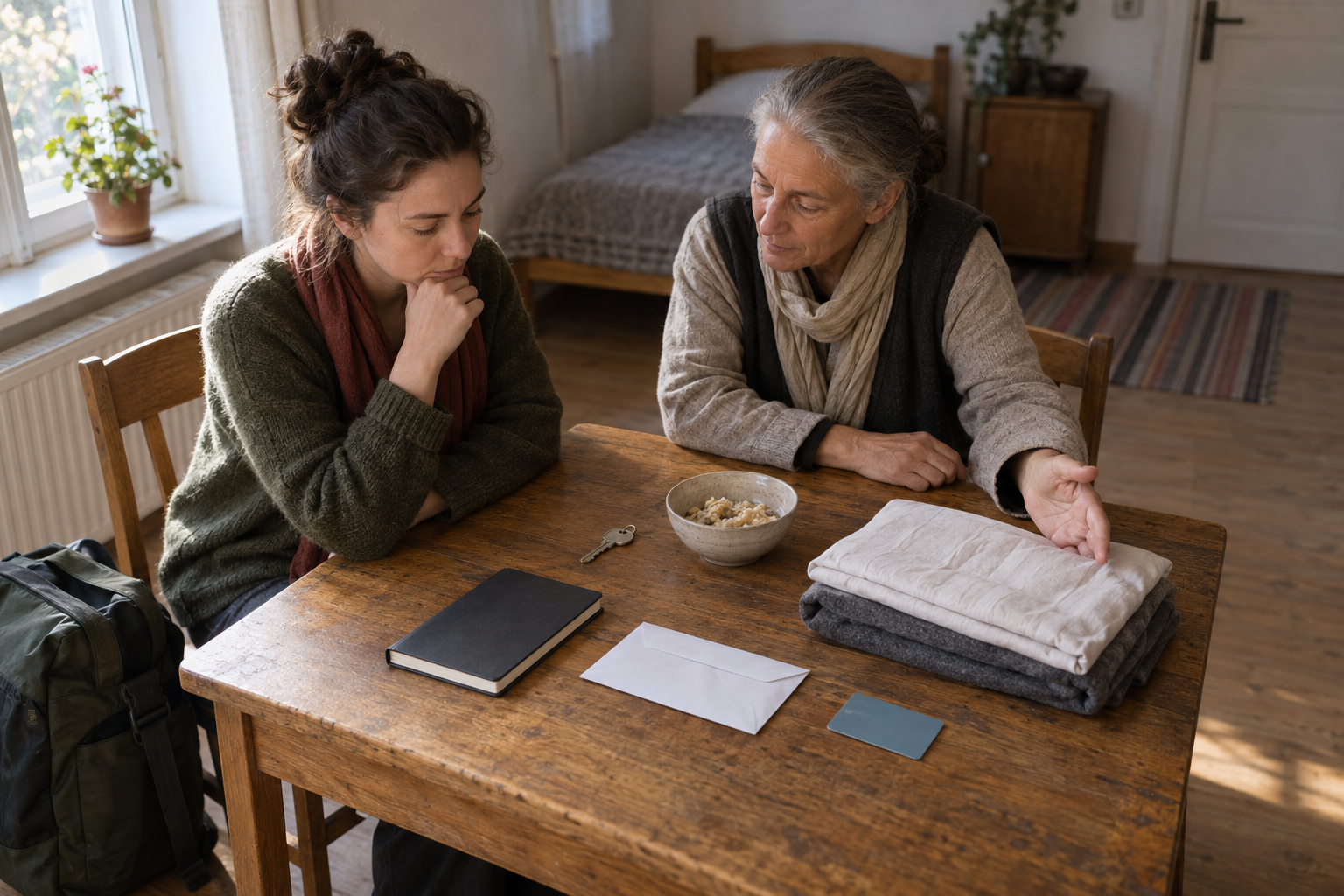
A serious spiritual decision still has practical consequences. This becomes especially important if joining the community would involve international travel, relocation, uncertain legal status, disrupted employment, or distance from family. Good intentions do not resolve immigration rules, civic obligations, medical needs, or emergency travel.
Before agreeing to reside in an ashram, ask for direct answers to these questions:
- Who decides whether a newcomer may reside in the ashram, and is there an initial trial arrangement?
- What expenses does the temple cover, and which personal costs remain your responsibility?
- May you retain personal funds, identification, travel documents, and direct access to family?
- What accommodation, food, clothing, transport, and medical support are actually available?
- What languages are used for instruction, administration, worship, and everyday communication?
- What legal or immigration status would you need, and who is qualified to advise you about it?
- How are illness, disability, exhaustion, interpersonal conflict, and allegations of misconduct handled?
- Is there a confidential route to raise a concern outside the immediate chain of authority?
- What notice or process applies if you decide to leave?
- Can you speak privately with a current resident and, if possible, someone who previously lived there?
These are basic discernment questions for any residential religious community. Clear answers do not weaken surrender; they help you understand what you are consenting to. Vague assurances such as “Krishna will arrange” should not replace information about housing, healthcare, documents, money, or emergency plans.
Keep your identification accessible and know how you would contact family, obtain medical help, and leave safely if circumstances changed. If immigration, residency, military, or other civic obligations may apply to you, consult a qualified Ukrainian lawyer or the relevant public authority. A temple representative’s reassurance is not a substitute for legal advice.
Do not promise permanence merely to demonstrate sincerity. If the community permits it, begin with a defined visit or trial period. Agree in advance on what you will practise, which services you will perform, who will guide you, and when the arrangement will be reviewed. During that review, assess conduct rather than mood: punctuality, truthfulness, capacity for service, quality of practice, physical health, and your response to correction.
If you are evaluating this life for a son, brother, or friend, avoid both ridicule and blind approval. Ask him to explain the routine, supervision, finances, legal position, and exit plan in his own words. Respect for a spiritual vocation includes helping the person enter it with open eyes.
Key takeaways
- Brahmachari life is a discipline for directing the mind and conduct toward bhakti; celibacy is one part of that training, not proof of maturity.
- Ask the specific ISKCON community for its current schedule and expectations. Do not assume that practice at one temple describes another.
- Look for protected time for spiritual practice and study, meaningful seva, adequate rest, honest mentoring, and respectful correction.
- Verify arrangements for money, identification, healthcare, legal status, family contact, grievances, emergencies, and departure before relocating.
- Use a defined trial period when possible, and judge the experience by the qualities it cultivates rather than by novelty or hardship.
Your next step is simple: send the community your practical questions, request its current daily schedule, and arrange separate conversations with a leader and a resident. If the answers are clear and the life strengthens honest practice, continue carefully. If basic questions are discouraged, pause before making commitments that are harder to reverse.
References

Leave a Reply
You must be logged in to post a comment.