
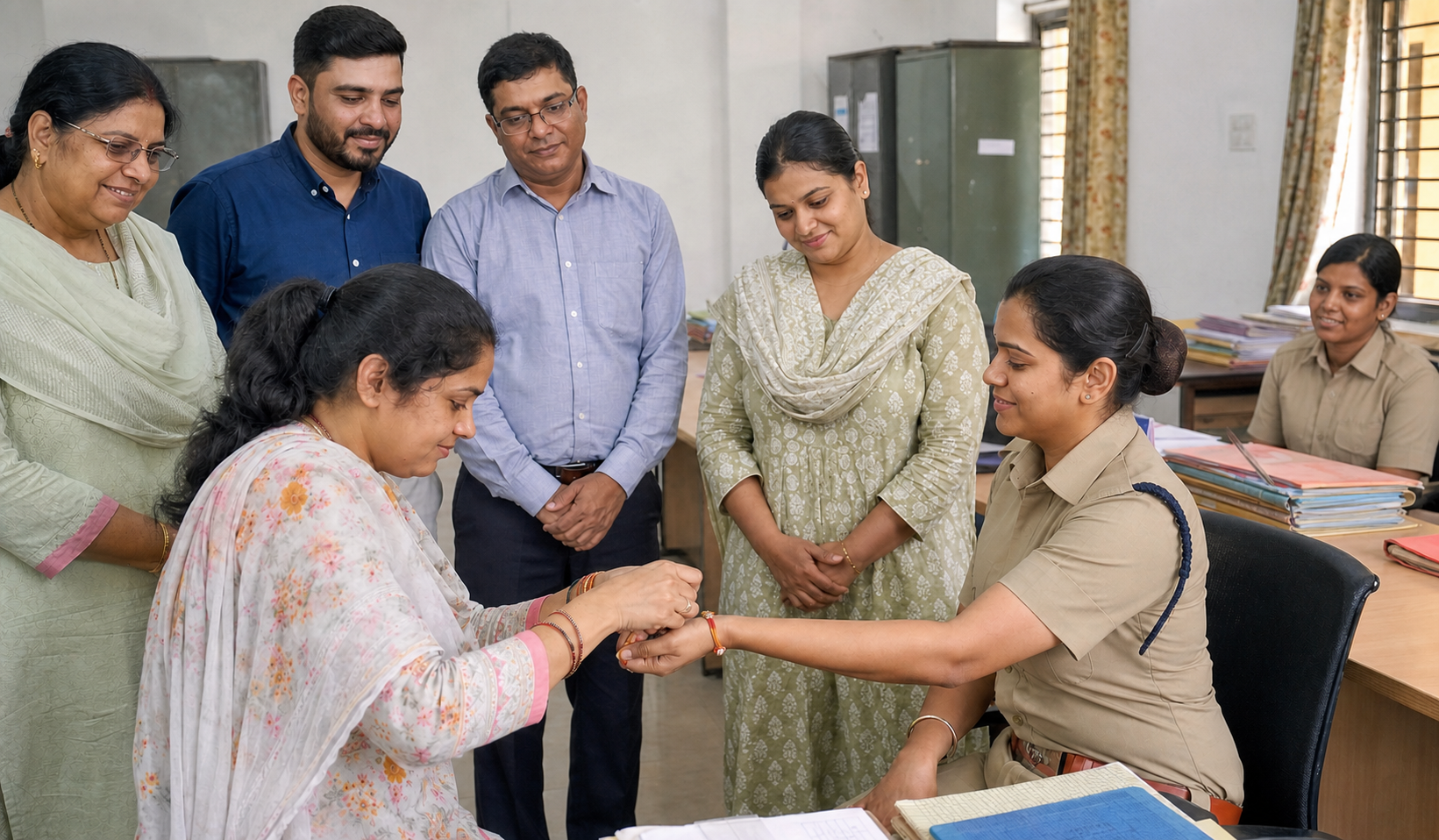
If you are deciding whether your mandal or Hindu association should take Rakshabandhan into a police station, administrative office, or public meeting, the real question is not whether the gesture will look respectful. It is whether everyone will understand what the thread is being asked to mean.
The Hindu Janajagruti Samiti outreach offers a useful model: centre the visit on gratitude for public service and cultural awareness, while guarding against entitlement, partisan signalling, and publicity without consent. With those boundaries in place, a familiar family observance can become a disciplined form of civic engagement.
The civic meaning begins with service, not access
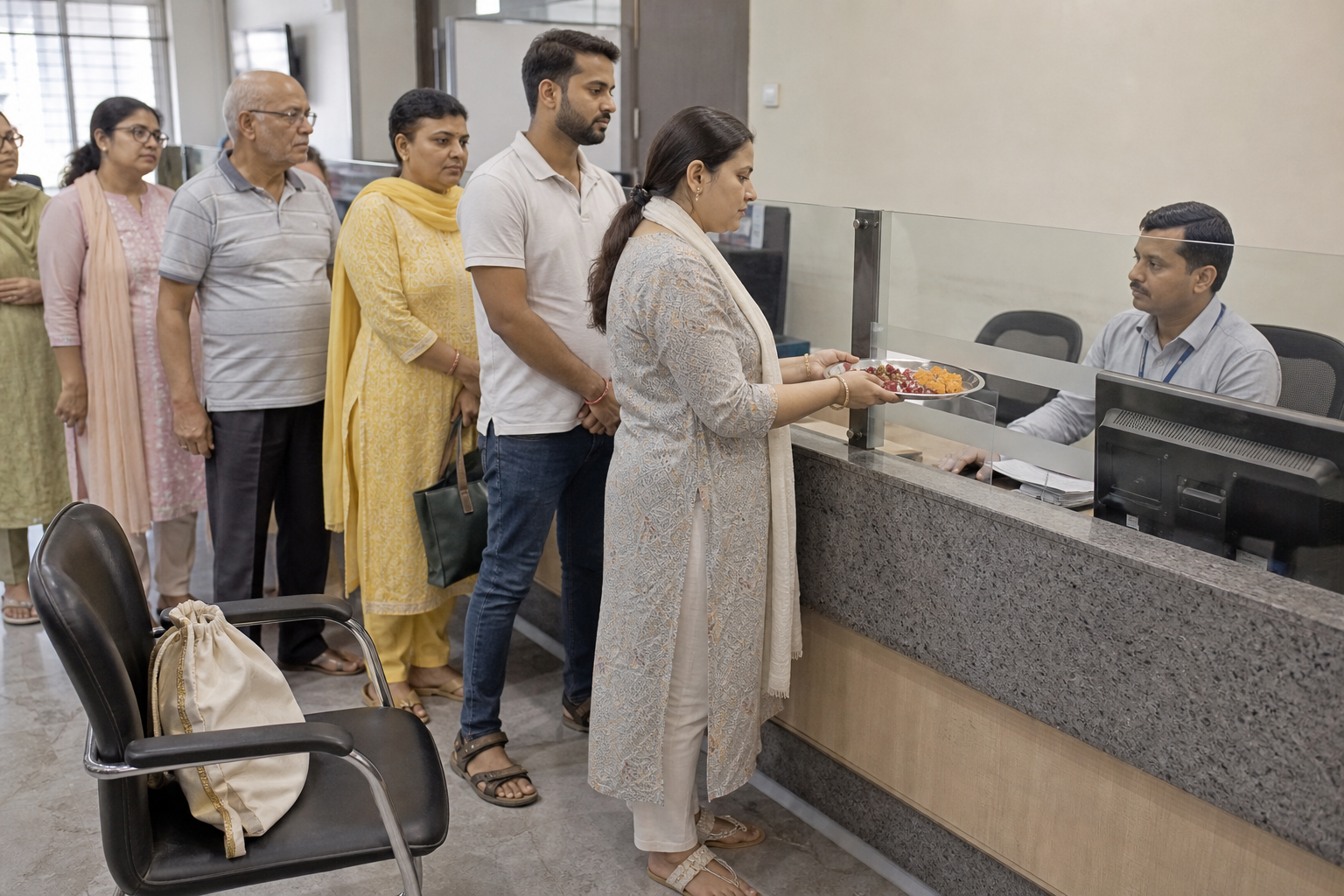
Hindu Janajagruti Samiti (HJS) marked Rakshabandhan across various states by tying rakhis to administrative officials, police personnel, leaders, and citizens. The stated purposes were to honour service and promote cultural awareness.
That choice of recipients changes the social setting of the ritual. Rakshabandhan carries the language of raksha, or protection, and bandhan, a bond. Within a family, the observance expresses affection and responsibility through an existing relationship. In a civic setting, it can recognise the protective duties associated with public service.
The distinction matters. A rakhi offered to a police officer or administrator should not imply private access, political endorsement, or an expectation of favourable treatment. Public servants remain responsible to the law and to every citizen. The thread honours that responsibility; it does not create an exemption from it.
If you organise such a visit, make this meaning explicit before the rakhi is tied. A useful purpose statement is: “We are observing Rakshabandhan by thanking public servants for their responsibilities and sharing the cultural meaning of the festival. We are not seeking an endorsement or special access.” If your team cannot comfortably say that, the purpose is not yet clear enough.
What separates civic outreach from a photo opportunity
A photograph records that a meeting occurred. It does not establish that cultural understanding grew, that service was meaningfully recognised, or that a civic relationship became healthier. Those outcomes depend on how the visit is framed.
Test the proposed outreach against four questions:
- Is the purpose intelligible? The organiser, recipient, and ordinary reader should be able to describe the visit in substantially the same way.
- Is participation voluntary? No official, employee, citizen, or member of the delegation should be pressured to wear a rakhi or appear in a photograph.
- Is the symbolism reciprocal? Recognition of protective service should be accompanied by a citizen’s commitment to lawful cooperation, public responsibility, and honest accountability.
- Will the caption remain truthful? Public communication should say that the visit took place and why. It should not turn ceremonial participation into a claim of institutional or political endorsement.
The last test catches a common weakness in cultural outreach. A respectful encounter can be distorted later by an exaggerated caption. “Members offered rakhis to public servants in recognition of their service” describes an event. “The administration supports our organisation” makes a different claim and requires separate evidence.
Before requesting a meeting, describe the intended outcome without using the words “coverage,” “visibility,” or “publicity.” If nothing meaningful remains, redesign the visit. Cultural advocacy should produce understanding first; public attention is secondary.
How to organise a respectful Rakshabandhan civic visit

The ritual itself is simple. The institutional setting is not. Administrative offices and police facilities have schedules, security requirements, chains of responsibility, and rules about photography. Treating those boundaries as part of the planning protects both the recipient and the dignity of the observance.
- Fix the purpose before choosing recipients. Decide whether the visit is primarily an expression of gratitude, an explanation of Rakshabandhan, or both. Do not add unrelated demands after the appointment has been accepted.
- Approach the authorised office. Request permission through the normal channel. State who will attend, what the ceremony involves, whether any photography is proposed, and whether material will be published.
- Assign clear roles within the delegation. One person can introduce the purpose, another can explain the cultural meaning, and an authorised person can handle photographs if permission has been given. A crowd without roles creates confusion and can burden a working office.
- Prepare a plain-language explanation. Describe the rakhi as a voluntary symbol of care, protection, and responsibility. Avoid claiming that every Hindu family, region, or sampradaya observes the festival in exactly the same way.
- Ask before tying the rakhi. Consent should precede physical contact. If a recipient prefers not to wear it, offer the rakhi respectfully by hand or omit the gesture. Acceptance of the meeting is not automatic consent to every part of the ceremony.
- Keep petitions and grievances in their proper channel. Do not use a ceremonial visit to surprise an official with a demand. If your group has a public issue to raise, submit it through the relevant process or request a separate meeting with a clear agenda.
- Publish only what was authorised. Confirm permission before identifying recipients, displaying faces, or presenting an institutional setting. Use captions that distinguish attendance from endorsement.
- Close the civic loop. Send a brief note of thanks and retain the agreed purpose statement with your records. If you plan future engagement, make it lawful and substantive: public-safety awareness, cultural-literacy work, citizen education, or another activity appropriate to the institution.
If political leaders are among the recipients, clarity becomes even more important. Identify their public role accurately, keep party campaigning separate from the observance, and do not imply that one leader speaks for an entire administration or community. A cultural gesture does not need an inflated political claim to possess value.
Gratitude and accountability must remain together
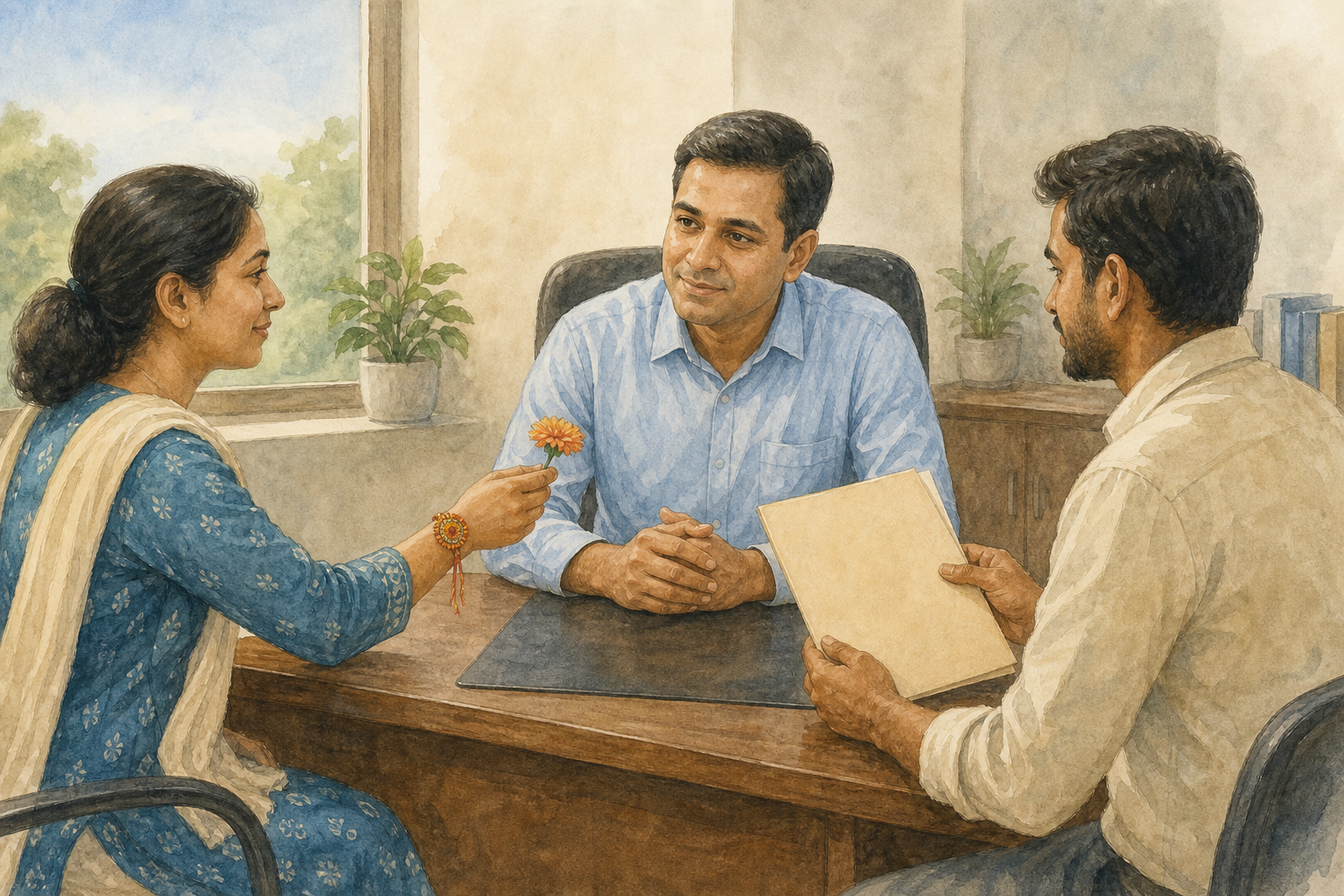
Honouring police personnel or administrators does not require pretending that public institutions are beyond criticism. In fact, the meaning of public service depends on accountability. We honour an office because it carries duties toward the public, not because authority is automatically right in every instance.
This gives organisers a practical boundary. Do not ask someone with an unresolved grievance to participate in a celebratory image. Do not use the rakhi to soften legitimate scrutiny. Do not frame criticism of an official action as disrespect toward Rakshabandhan itself. A sacred symbol loses civic credibility when it is used as a shield against questions.
The same balance applies to citizens. A public language of protection cannot mean that responsibility travels in only one direction. Citizens can recognise difficult service while still expecting impartial conduct, and they can uphold their own duties without surrendering the right to question power. That is a more durable bond than ceremonial praise alone.
You can evaluate the outreach after the visit without reducing it to attendance or photographs. Ask whether recipients understood the purpose, whether consent was respected, whether public descriptions remained accurate, and whether any later engagement stayed within legitimate civic channels. These questions measure the quality of the encounter rather than its spectacle.
Key takeaways for organisers and participants
- HJS extended Rakshabandhan into civic life by approaching officials, police personnel, leaders, and citizens across various states.
- The strongest civic interpretation is recognition of service joined to public responsibility, not a claim to personal access or favourable treatment.
- A responsible visit needs an agreed purpose, institutional permission, voluntary participation, and honest public captions.
- Petitions, complaints, and political campaigning should not be concealed inside a ceremonial appointment.
- Gratitude does not cancel accountability. A dharmic gesture should strengthen truthful civic conduct on both sides.
If you are planning a Rakshabandhan outreach, begin with the purpose statement and consent protocol, then send both with the meeting request. Proceed when the office and your delegation understand the same boundaries. If publicity or political messaging starts to overtake the purpose, postpone the visit. Protecting the dignity of the rakhi matters more than completing an event on schedule.
References
- Hindu Jagruti Samiti — HJS celebrates Rakshabandhan with leaders, police, and citizens across states
