
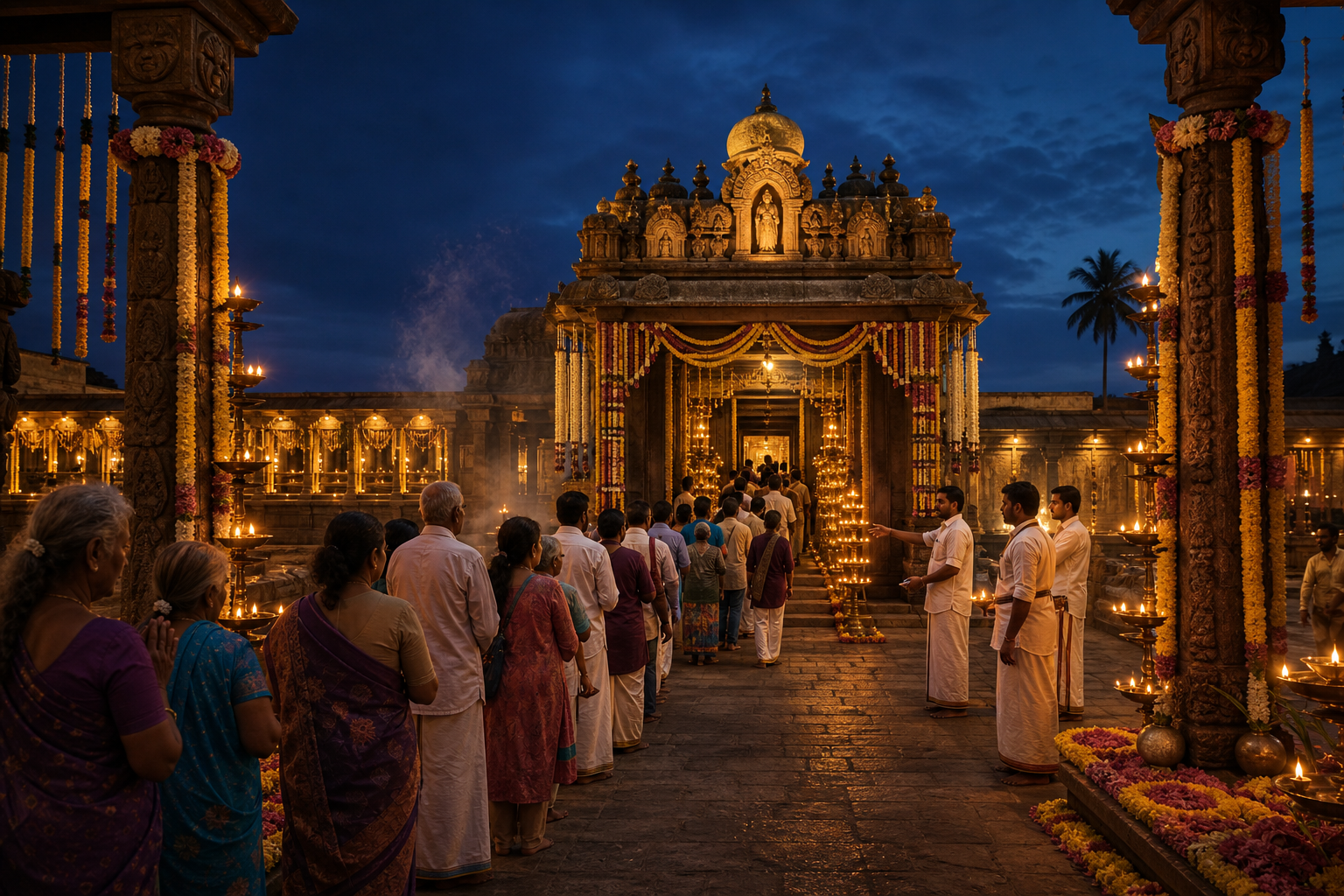
You may be deciding whether to fast at home, join a pre-dawn temple queue, or do both. The right choice does not begin with the hardest austerity. It begins with the correct local tithi, an observance your body can safely sustain, and enough quiet in the day to remember Vishnu.
Once those three things are aligned, Vaikuntha Ekadashi becomes much easier to plan. Its regional names, calendar months, temple gateways, and fasting customs are different expressions of one devotional centre: drawing nearer to Hari through bhakti, restraint, ethical conduct, and grace.
Key takeaways for planning the day
- Confirm the tithi in a Panchang calculated for your location, then confirm the temple’s own festival schedule before arranging travel.
- Choose a form of upavasa that supports remembrance of Vishnu without disregarding age, pregnancy, illness, medication, or other health needs.
- Make japa, Vishnu Sahasranama, Bhagavad-Gita study, kirtana, seva, and careful conduct the substance of the vrata. Food restraint is a means, not the entire observance.
- Treat passage through the Vaikuntha Dwaram or Sorga Vasal as a sacred symbol of entering divine proximity, not as a mechanical substitute for devotion and dharmic living.
- Expect regional vocabulary to change: Margazhi, Dhanu Masam, Paush, Mukkoti Ekadashi, Vaikuntha Dwaram, and Sorga Vasal can all help you locate the tradition being followed.
Confirm the tithi before choosing your fast or temple
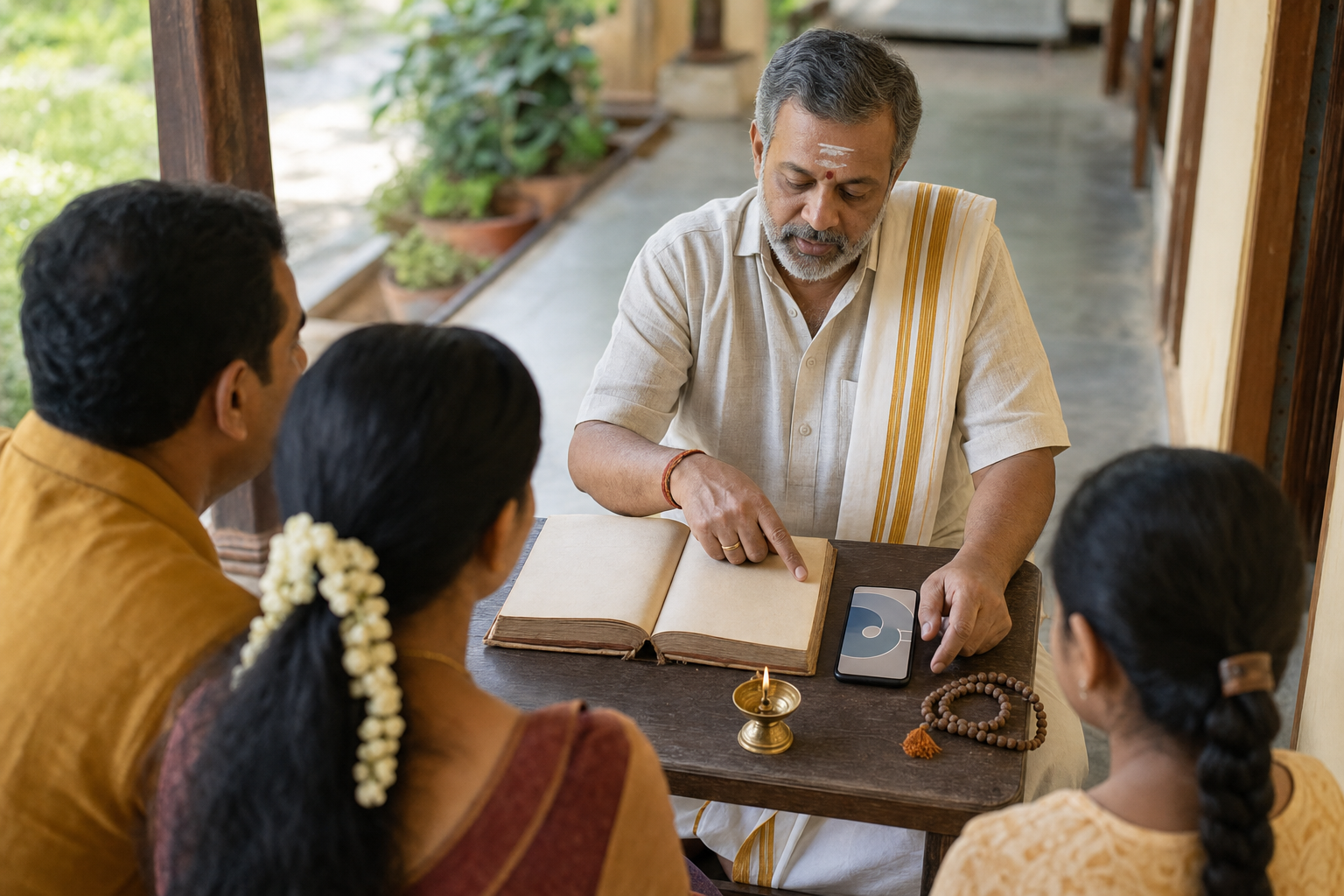
Vaikuntha Ekadashi is fixed by the lunar tithi, not by a permanent date in the civil calendar. A date copied from an old poster or a social-media graphic may therefore be wrong for your location or for the sampradaya followed by the temple you intend to visit. Regional calendars also place the observance within different named months: Margazhi in Tamil reckoning, Dhanu Masam in Malayalam reckoning, and Paush in several other calendars.
The Gregorian year can be especially misleading. In Tamil Nadu, Vaikunta Ekadasi was observed on both January 10 and December 30 in 2025. That did not create two competing festivals. It showed how a recurring sacred calendar can place observances near both ends of one Gregorian year.
Use a simple confirmation sequence before committing to a fast or pilgrimage:
- Check a Panchang prepared for the city where you will actually observe the vrata. Note the local Ekadashi tithi rather than relying only on the printed civil date.
- Check the temple’s own notice or contact its administration. Ask which date it will open the Vaikuntha Dwaram or Sorga Vasal and whether darshan begins before dawn.
- Ask which sampradaya or regional calendar the temple follows if its date differs from one used in your household.
- If you are fasting, confirm how your family or temple tradition completes the vrata. Follow one coherent tradition rather than assembling rules from unrelated calendars.
A difference between a household calendar and a temple notice is not automatically a theological dispute. It may arise from locality, tithi timing, or sampradaya practice. For a temple visit, follow that temple’s announced schedule. For home worship, remain consistent with the Panchang and tradition your household has deliberately chosen.
Build the vrata around remembrance, not dietary severity
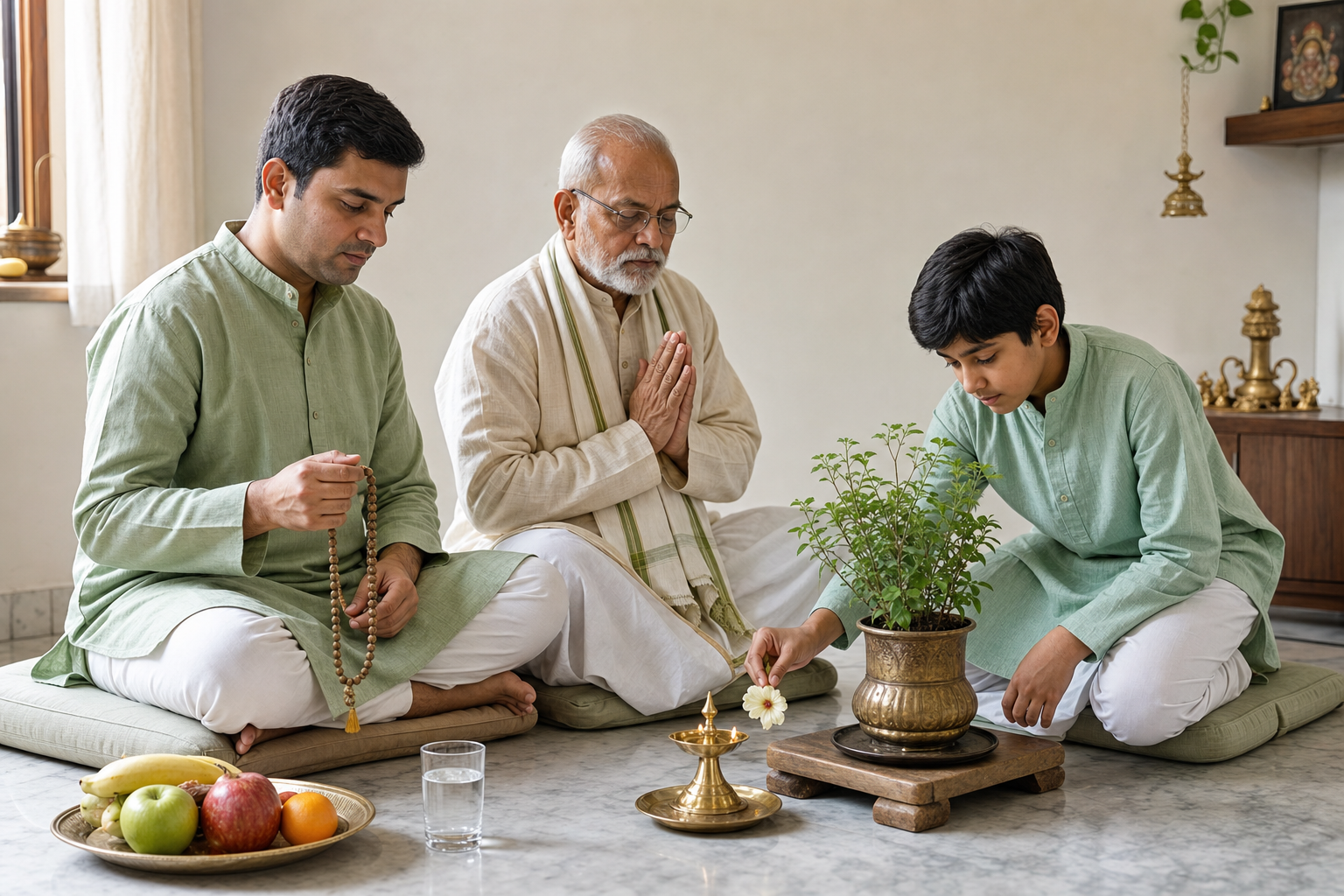
Upavasa carries the sense of dwelling near the Divine. That meaning gives you a practical test for every decision: does this restraint create more room for remembrance, or has managing the fast displaced the worship itself? Vaikuntha Ekadashi generally builds upon familiar Ekadashi disciplines rather than imposing one additional universal rule that every devotee must follow identically.
Some devotees undertake a stringent fast. Others use phalahara, milk, or a light sattvic meal. The appropriate form depends on health, life stage, personal capacity, and the discipline received through one’s family or sampradaya. Elders, children, pregnant people, and anyone with a health condition should not treat severe food or fluid restriction as a test of devotion. Choose a gentler observance and seek guidance from the relevant healthcare professional when fasting could conflict with medical needs. Spiritual discipline is not a substitute for medical care.
A workable home observance can be arranged around five anchors:
- Set a clear sankalpa. Name the restraint you will observe and the devotional practice it is meant to support.
- Give the morning to Vishnu remembrance. Light a deepa, offer tulasi where that is your practice, and begin nama japa or recitation without turning the household into a rush.
- Choose a manageable body of sacred reading. Vishnu Sahasranama and the Bhagavad-Gita are widely used on the day; attentive recitation is more valuable than racing through a larger quantity.
- Connect restraint with conduct. Guard speech, avoid needless conflict, practise ahimsa, and make room for annadana, seva, generosity, or reconciliation.
- Join kirtana or a night vigil if your health and responsibilities permit. If they do not, conclude the evening with focused prayer rather than forcing wakefulness that makes the rest of the vrata unsafe or inattentive.
This structure keeps the day recognisably devotional even when a full fast is not possible. Vishnu Sahasranama, Bhagavad-Gita recitation, kirtana, japa, contemplation, and jagaran all direct the senses toward Hari instead of making abstention an end in itself.
Children can participate without being given an adult austerity. Let them light a lamp with supervision, offer tulasi, join a short chant, listen to the meaning of the gateway, or help with a small act of service. This passes on cultural memory through participation rather than pressure. The same principle applies to an intergenerational household: shared prayer can remain common even when each person follows a different level of dietary restraint.
Treat the sacred gateway as a passage in practice
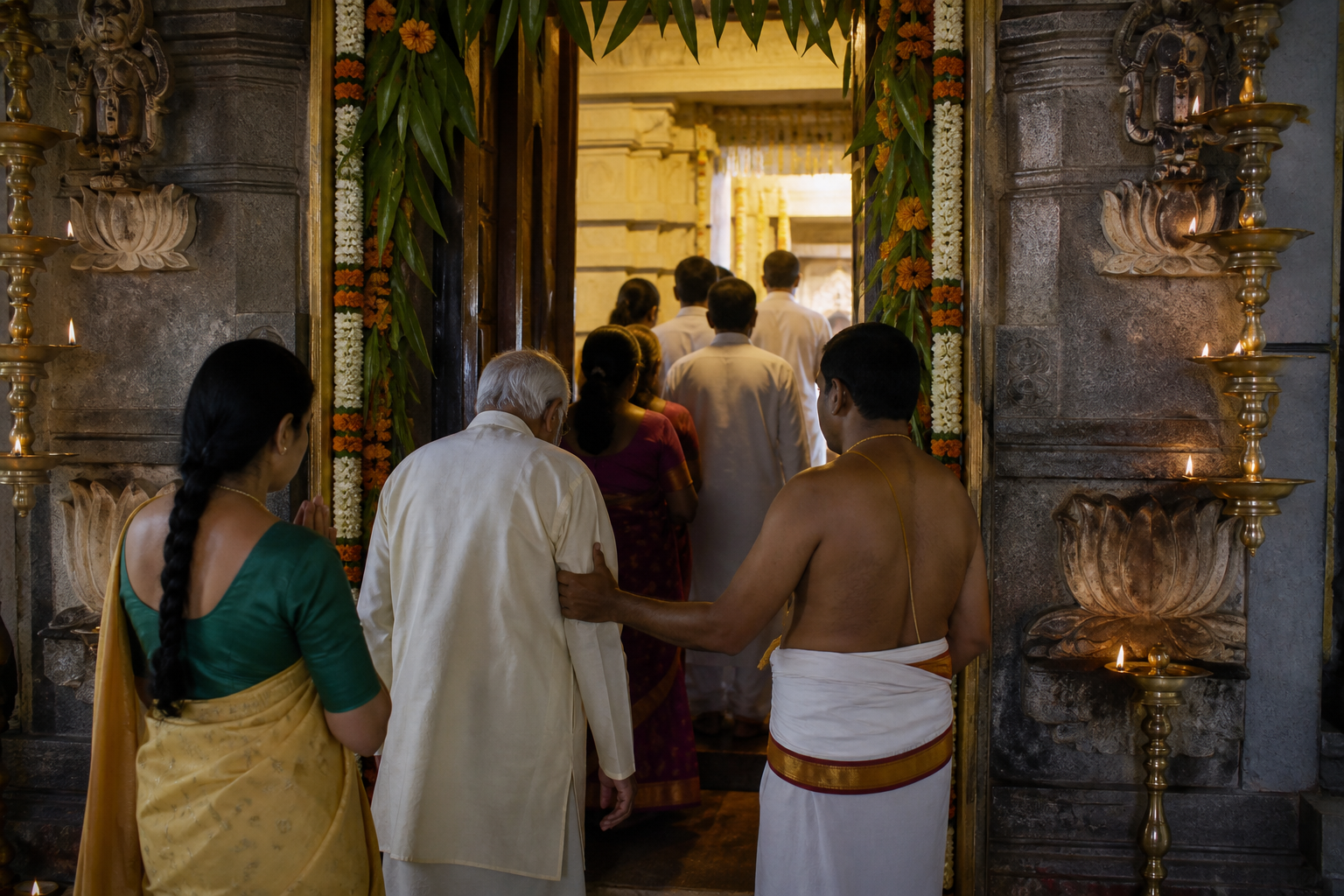
In many Sri Vaishnava and other Vishnu temples, the ceremonial entrance is called the Vaikuntha Dwaram; in Tamil usage it is often called the Sorga Vasal. Passing through it represents the devotee’s aspiration to enter Vaikuntha and draw nearer to Vishnu’s grace. Its full meaning lies in the movement it asks of you inwardly: from distraction toward remembrance, from self-importance toward humility, and from private austerity toward seva.
The doorway therefore complements prayer and conduct. It is not a shortcut that makes japa, compassion, or ethical discipline unnecessary. Temple darshan, collective chanting, contemplation, and service belong to the same devotional movement symbolised by the gate.
If you plan to attend a temple, remove avoidable uncertainty before you arrive:
- Confirm the opening time and the specific darshan session. Festival schedules and processions can change by temple and year.
- Arrive early if the temple advises it. Pre-dawn worship is common, and significant footfall can produce long, disciplined queues.
- Wear modest clothing, follow the queue system, keep the precinct quiet, and observe the temple’s instructions rather than importing customs from another shrine.
- Carry your vrata through the waiting period. Chant quietly, protect the serenity of the line, and make space for elders, families, and others who may need assistance.
- If crowding, prolonged standing, or lost sleep would present a health risk, choose an accessible darshan session or worship at home. Missing a particular queue is not the same as missing Vishnu remembrance.
- Leave the precinct as carefully as you entered it. Avoid litter and respect any measures protecting trees, water, and the temple environment.
Your choice of temple can reflect circumstance rather than status. The 500-year-old Panduranga Vittaleshwara Temple at Vittalapuram offers an intimate historic setting in which Tamil Vaishnava observance meets Panduranga devotion associated with Vithoba. Its Margazhi celebration is marked by vigil, bhajans, early darshan, and the ceremonial gateway.
A neighbourhood shrine can support an equally coherent observance. Chennai’s Periyar Nagar Shiva Vishnu Temple is a medium-sized, tree-shaded temple with shrines for both Shiva and Vishnu, focused Vishnu worship, chanting, and extended darshan for Vaikuntha Ekadashi. A large pilgrimage centre may offer grand collective ritual; a local temple may offer a calmer setting for a family, an elder, or someone combining darshan with home worship. Choose the place where you can participate responsibly.
Read regional names without mistaking them for rival festivals
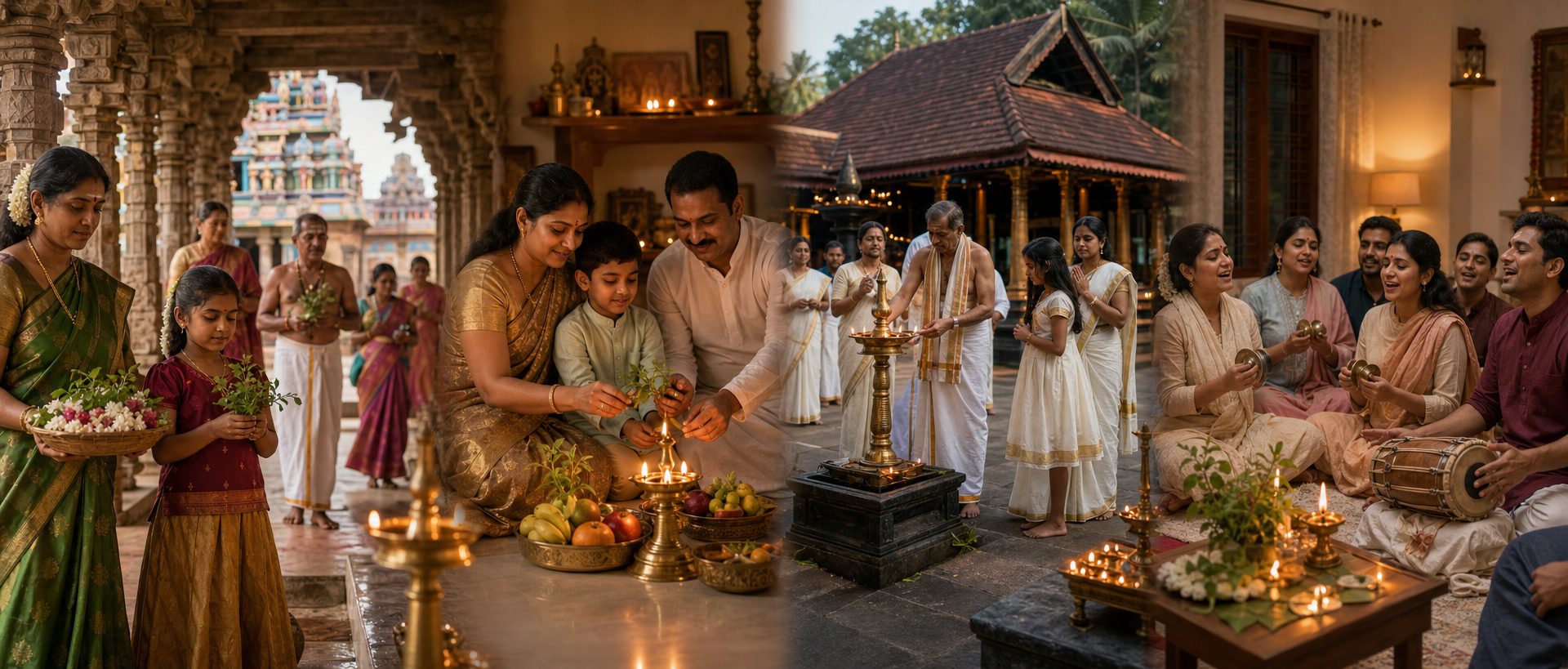
The quickest way to understand a regional notice is to separate three questions: Which calendar month is being named? What local name is used for the Ekadashi? What does the temple call its ceremonial entrance? Once you do that, unfamiliar vocabulary becomes practical guidance rather than evidence of contradiction.
| Calendar or regional setting | Words you may encounter | What you should verify |
|---|---|---|
| Tamil tradition | Margazhi or Margali; Vaikunta Ekadasi; Sorga Vasal | Temple date, pre-dawn opening, vigil, and local darshan arrangements |
| Malayalam calendar | Dhanu Masam | The locally calculated tithi and the temple’s own programme |
| Andhra Pradesh, Telangana, and Karnataka calendars cited for the observance | Paush; Vaikunta or Mukkoti Ekadashi | Which regional or sampradaya calendar the household or temple is following |
| West Bengal and several North Indian calendars | Paush Month | The local date and the form of Vishnu worship customary at the chosen temple |
| Sri Vaishnava temple usage | Vaikuntha Dwaram | When the ceremonial passage opens and how the queue is organised |
The common centre remains Vishnu bhakti expressed through restraint, recitation, darshan, and service. Regional language tells you how a community has received and embodied that centre. It should not be used to rank one locality’s devotion above another’s.
The wider dharmic comparison also needs precision. Hindus observe Vaikuntha Ekadashi through vrata, bhakti, and remembrance of Vishnu. Buddhist Uposatha and Jain Posadha or Upavas have their own frameworks of ethical renewal and self-mastery. Sikh practice gives central place to Simran, honest living, and seva rather than ritual fasting. These paths can share values of restraint, mindfulness, compassion, and inner clarity without becoming interchangeable rites.
When your next Vaikuntha Ekadashi approaches, make three preparations early: save the location-specific Panchang entry, confirm the temple schedule directly, and write down the form of vrata you can actually sustain. Then let the day move toward its proper destination: not the achievement of having endured a festival, but a steadier nearness to Vishnu that remains visible in how you speak, serve, and live afterward.
References
- DharmaRenaissance Blog — Vaikuntha Ekadashi Upavasam: The Purana Legend, Profound Fasting Benefits, and Dharmic Unity
- DharmaRenaissance Blog — Vaikunta Ekadashi 2025 (Mukkoti Ekadashi): Sacred date, regional calendars, rituals, and meaning
- DharmaRenaissance Blog — Vaikunta Ekadasi 2025 at Vittalapuram: Sacred Margazhi Vigil at a 500-Year-Old Vishnu Temple
- DharmaRenaissance Blog — Periyar Nagar Shiva Vishnu Temple, Chennai: Sacred Vaikunta Ekadashi and Aani Thirumanjanam
