

You are probably choosing between August dates, trying to attend a particular observance, or deciding whether to keep your Tirumala itinerary flexible. The essential point is clear: August 2026 is not an ordinary gap in the temple calendar.
Tirumala will observe a series of festivals and commemorative occasions during the auspicious Shravana Masam, including birth anniversaries connected with deities and great saints. Individual dates should not be guessed, copied from an earlier year, or attached to an event without current confirmation. Here is how to plan responsibly with what is known.
What is confirmed for Tirumala in August 2026
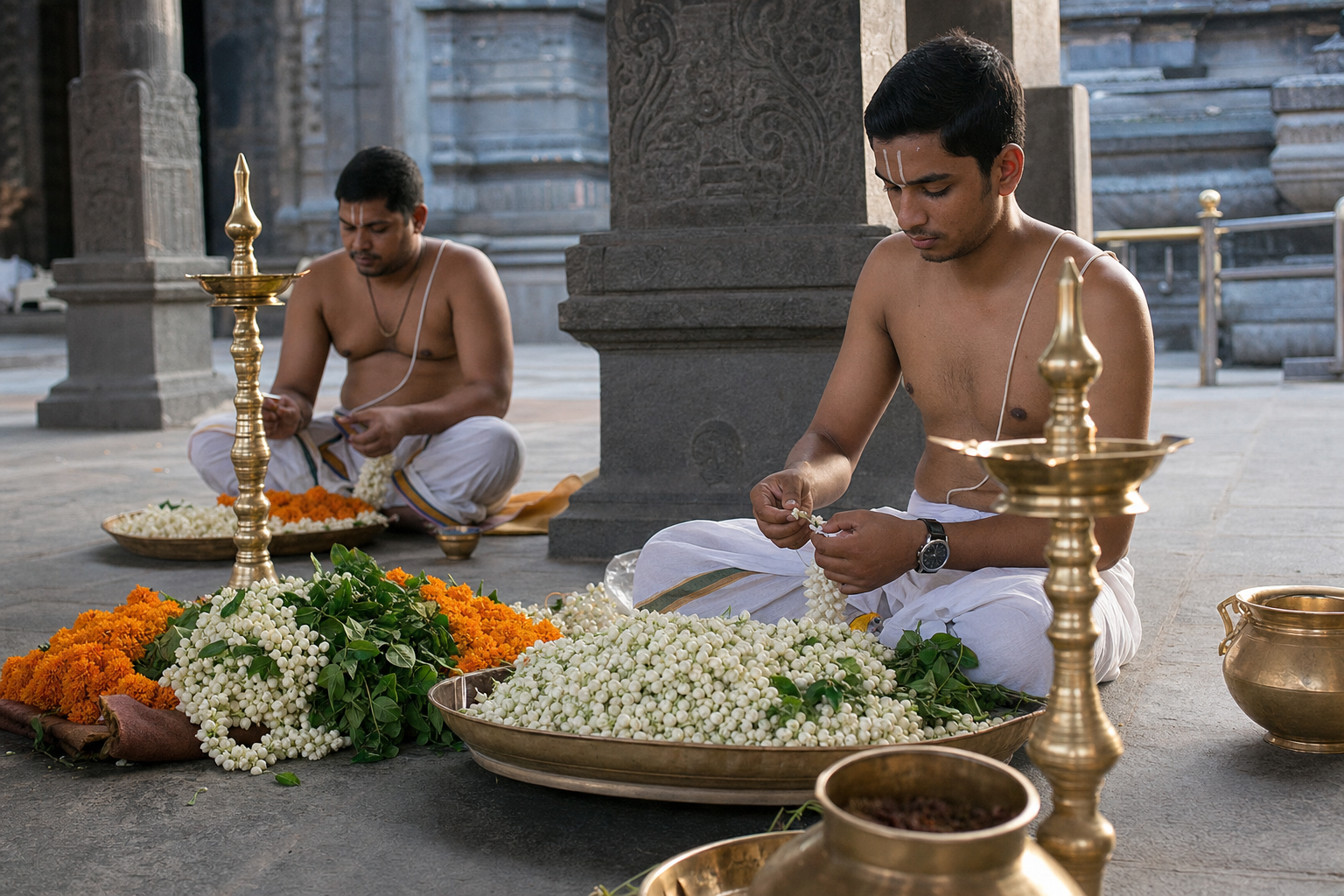
Three facts are firm enough to guide your first decisions:
- Shravana Masam gives August 2026 a particularly auspicious religious setting in Tirumala.
- A series of important festivals will be observed during the month.
- The programme includes anniversaries associated with deities and revered saints, rather than a single isolated celebration.
That tells you to expect a layered sacred calendar. It does not justify printing unverified dates beside festival names. A festival name and its civil date are two separate facts, and both must be confirmed before they become part of your travel plan.
This distinction matters because Hindu observances are not safely transferred from one Gregorian year to the next. If a celebration occurred on a certain August date in an earlier year, that date alone is not evidence for 2026. Check the year on every calendar image, forwarded message, booking note, and saved browser page you use.
Choose the kind of visit before choosing the date
The right planning method depends on why you are going. Decide which of the following best describes your visit before committing money or coordinating a group.
- You want to attend one named observance: Treat the event date as the controlling fact. Wait until you can match the exact observance name to a confirmed 2026 civil date and location. Do not substitute the date from a general panchanga or a previous year’s Tirumala programme.
- You want darshan during Shravana Masam: Choose a range rather than a single day until you have checked the month’s festival calendar. This preserves your ability to select the atmosphere and practical conditions that suit your family.
- You want to avoid major festival activity: First identify every listed event in your proposed window. Moving by one day without seeing the complete sequence may simply place you beside another observance.
- You are arranging a family or group pilgrimage: Agree on the non-negotiable before booking. Decide whether the priority is a particular festival, a general Shravana visit, or the dates when everyone can travel. Otherwise different assumptions will surface after reservations have been made.
If the journey depends on one specific observance, avoid non-refundable travel commitments until its date has been verified in current Tirumala information. The practical risk is simple: a copied or misread date can leave you at Tirumala on the wrong day, with no inexpensive way to correct the itinerary.
Build a verification sheet before you book

A festival list becomes useful only when it is converted into a travel-ready record. Make one line for each occasion that affects your visit, then fill in the following fields.
- Exact observance name: Copy the full label rather than shortening it from memory. Similar devotional names can refer to different occasions.
- Gregorian date and year: Write the month, day, and 2026 together. This prevents an older calendar image from quietly entering the plan.
- Place of observance: Confirm whether the programme concerns the principal temple, another sacred site at Tirumala, or a broader local commemoration. “In Tirumala” does not by itself identify the precise venue.
- Announced time or ritual window: Record only a timing that is actually published. Do not create an arrival time by assuming that every festival follows the same daily pattern.
- Effect on your visit: Check whether the occasion changes any arrangement relevant to you, such as access, movement, reporting instructions, or the time you need to be present.
- Date of your last check: Note when you verified the entry and schedule one final check before your ticket or accommodation cancellation deadline.
Keep the religious calendar and the travel calendar side by side. The first tells you what is being observed; the second contains transport, accommodation, reporting requirements, and family constraints. A festival date is not yet a complete itinerary.
If you are using a panchanga as well as a civil calendar, preserve the local date and timing exactly as shown. Traditional calendrical conditions do not always map neatly onto the midnight-to-midnight assumptions of a phone calendar. For a Tirumala visit, the announced local programme should control your arrival plan.
Prepare for the observance as a pilgrim, not a collector
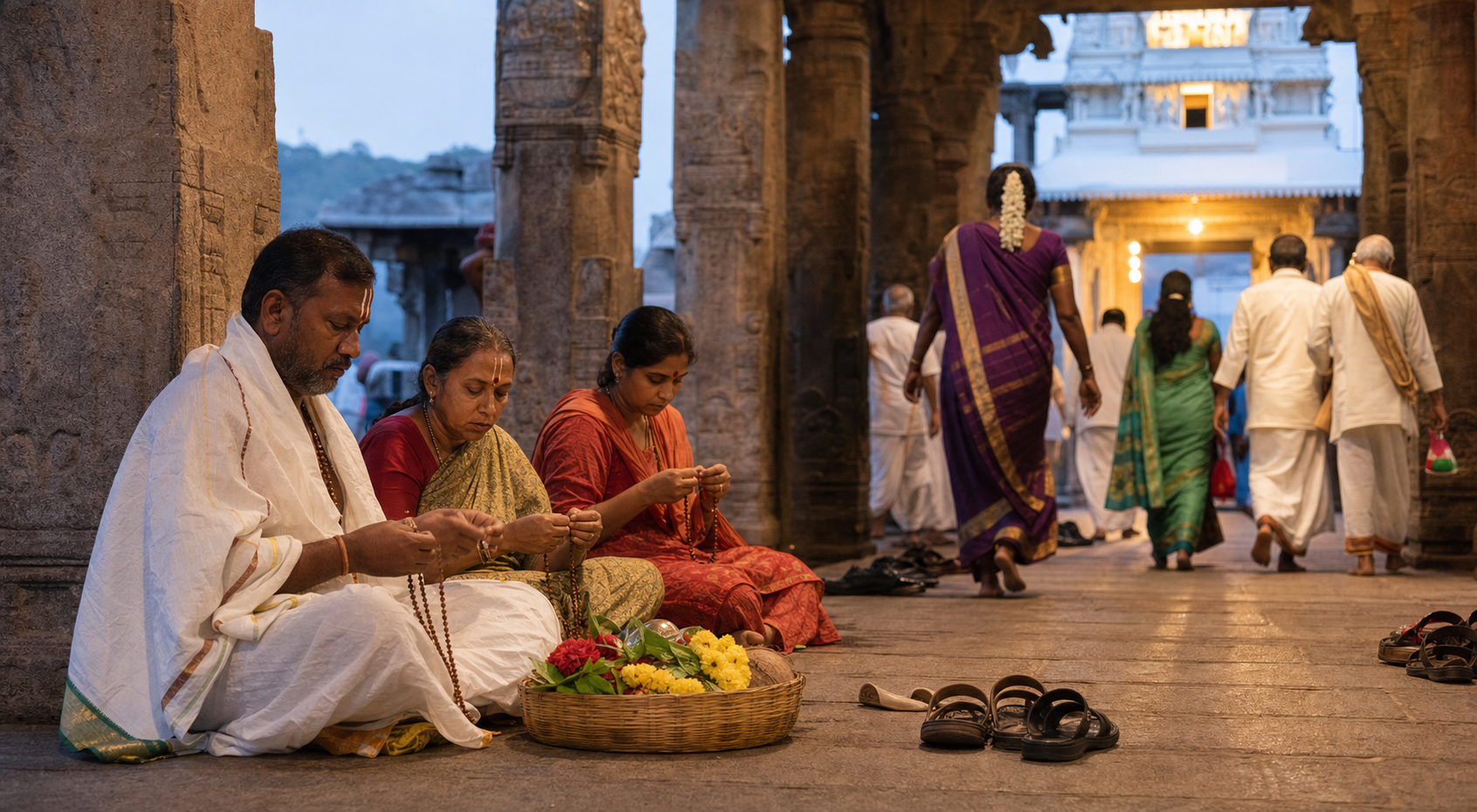
Shravana Masam should not be reduced to a checklist of events. A commemoration connected with a deity or saint has meaning before it has logistical value. Once you know which observance falls within your visit, learn whom or what it honours and why devotees mark it.
You can make that preparation concrete:
- Write the observance name into your family itinerary so everyone knows the religious purpose of the day.
- Read the current temple instructions that apply to visitors, including any requirements concerning entry, belongings, dress, or conduct.
- Identify the precise venue before setting out rather than assuming that every named activity occurs at the same place.
- Let worship take priority over photography, rapid movement, or trying to witness every item in a programme.
- If children are travelling with you, explain one commemoration clearly instead of presenting the month as a crowded list of unfamiliar names.
For a visit without one must-attend festival, leave room for unhurried worship. The value of being at Tirumala during an auspicious month does not depend on collecting the largest possible number of observances.
Key takeaways for your August 2026 plan
- August 2026 is an active Shravana Masam period at Tirumala, with several important religious occasions.
- The month includes festivals and anniversaries associated with deities and great saints.
- Do not infer a 2026 date from an earlier year’s calendar, a cropped screenshot, or a festival name without its year.
- For every event that affects your journey, verify the exact name, civil date, venue, timing, and visitor implications.
- Keep bookings flexible when attendance at one particular observance is essential.
- Approach the calendar as a guide to worship and remembrance, not merely as an events schedule.
Your next step is straightforward: select the observance or travel window that matters to you, enter only confirmed 2026 details in your itinerary, and check the applicable visitor arrangements before any booking becomes non-refundable. If the name, date, or venue is still missing, keep that part of the journey flexible.
References
