
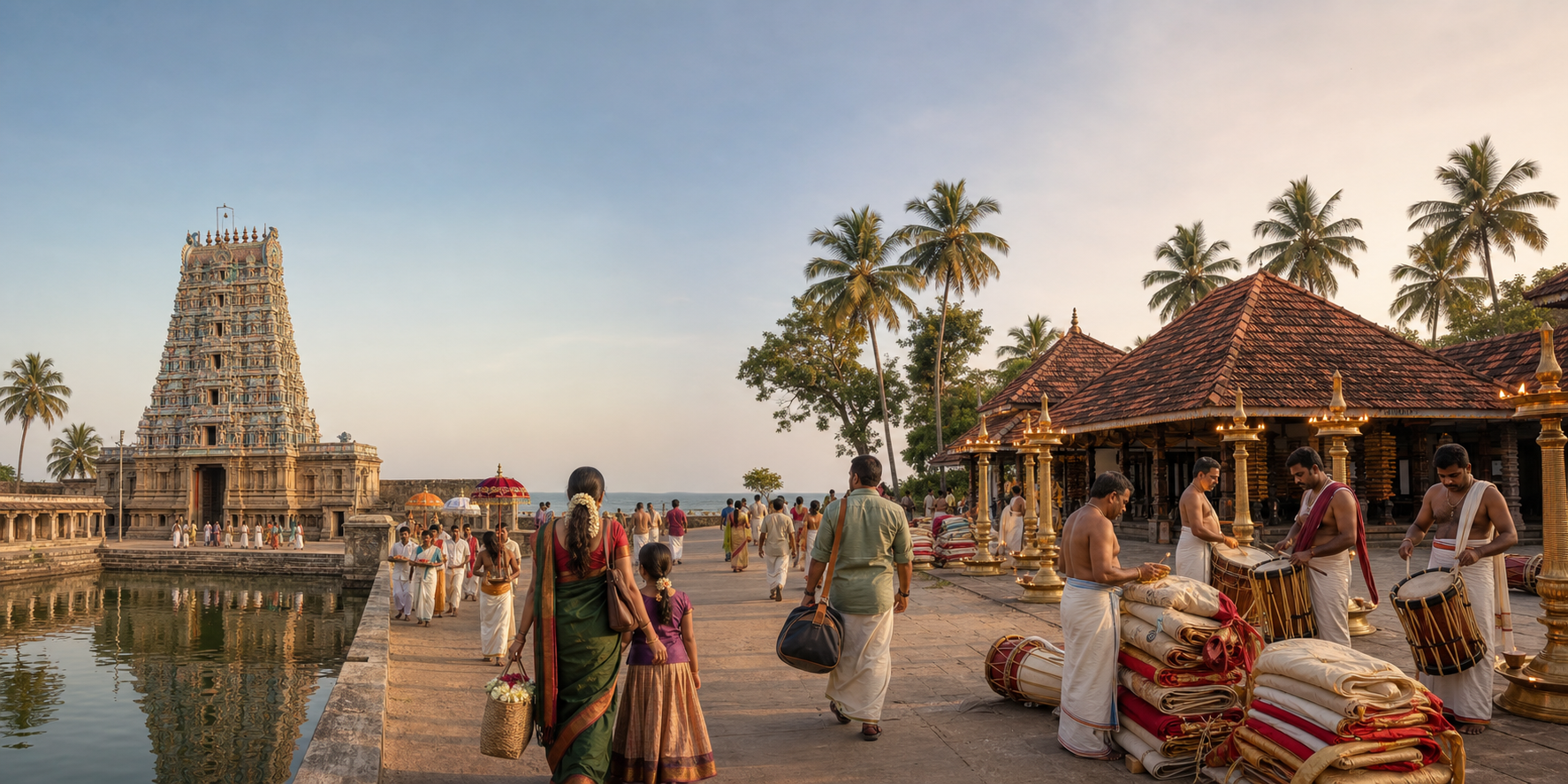
If you are coordinating temple visits, family leave, or travel in February and March 2026, a generic Indian festival calendar is not enough. Tamil Masi observances and Kerala’s Malayalam Kumbha month overlap in the Gregorian calendar, but their decisive timings come from different regional panchang calculations and temple programmes.
The practical approach is to enter the dates that are already firm, label the details that still require local confirmation, and avoid treating every South Indian calendar as interchangeable. This is a focused Tamil-Kerala planner rather than an exhaustive calendar for every South Indian state.
Key takeaways for February-March 2026
- Kerala’s Kumbha Masam begins on 14 February and ends on 13 March 2026. These are the dependable boundaries for planning month-long household observances.
- Masi Magam falls on 3 March 2026. Enter the date now, but confirm the local Magam Nakshatra window and temple procession time before finalising your day.
- Attukal Pongala and Kumbha Bharani Utsavam belong within the Kumbha Masam festival period, but their precise programmes must be taken from the relevant temple and a regional Malayalam Panchangam.
- Masi Magam and Kumbha Masam are not two names for one observance. One identifies a Tamil festival associated with Magam Nakshatra; the other is an entire Malayalam solar month.
- If you are travelling, distinguish the festival’s calendar date from the public event time. A temple’s procession, theerthavari, Pongala arrangements, or Bharani celebrations may follow a locally announced schedule within the relevant panchang window.
Why a Gregorian date does not settle every observance
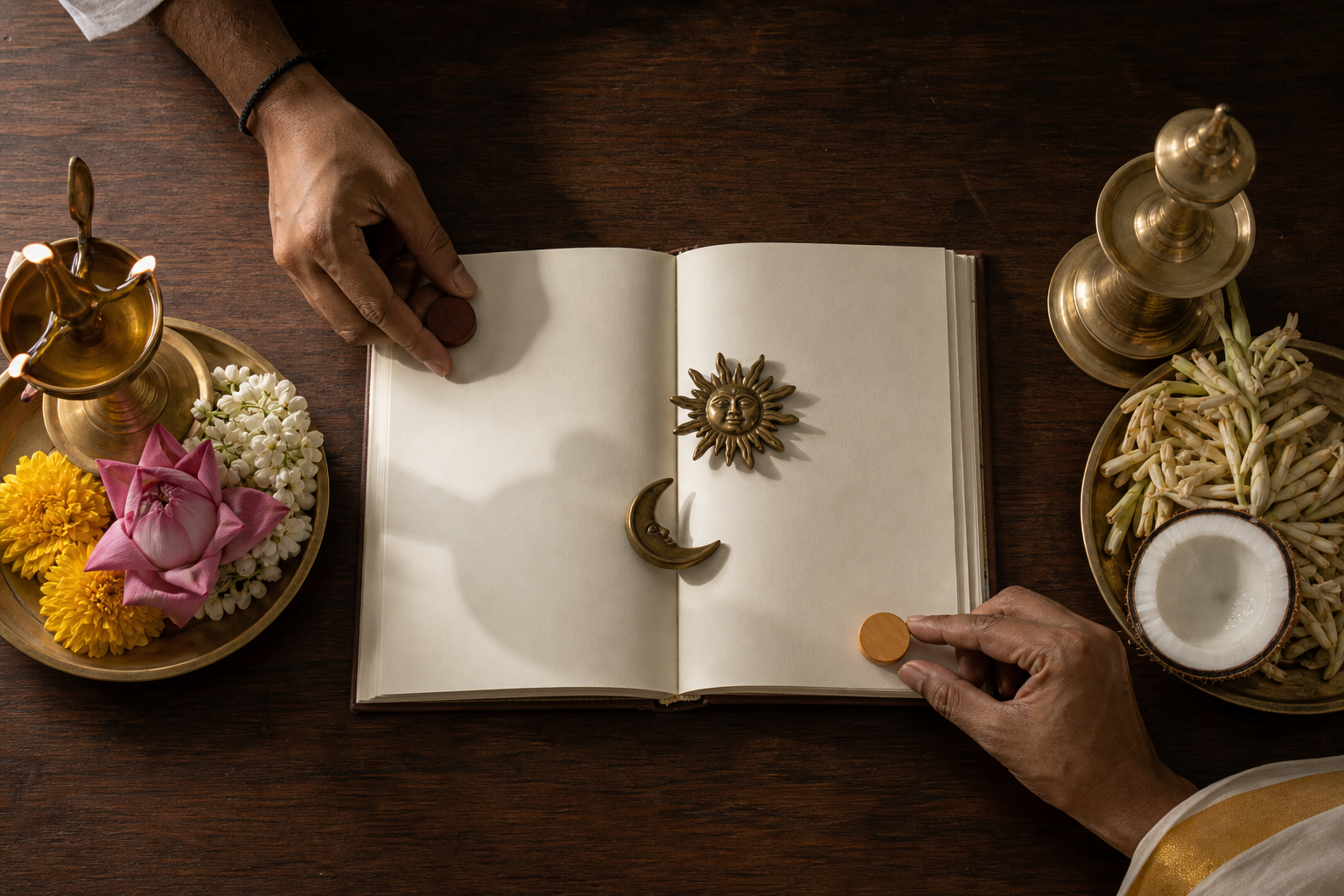
A Gregorian date is useful for booking a train, requesting leave, or inviting relatives. It does not by itself tell you when a nakshatra begins, when a vrata should be observed, or when an utsava murti will leave the temple. Those decisions depend on place-specific panchang timings and, for a public festival, the temple’s programme.
Kumbha Masam is the seventh month of the Malayalam calendar. In 2026 it is marked by the Sun’s transition into Kumbha, or Aquarius, and runs from 14 February through 13 March. Masi Magam is identified differently: it is observed when Magam Nakshatra occurs during the Tamil month of Masi, and it often coincides with Pournami. You should therefore not use a full-moon label alone as a substitute for the Magam calculation.
The distinction becomes important when your calendar gives only all-day entries. The date may be right while the useful ritual window begins or ends during that day. Magam timings can vary with location, so a time printed for Tamil Nadu should not automatically be carried into a household calendar in another country.
Use three labels in your own planner: confirmed date, local panchang time, and temple programme. The first lets you reserve the day. The second guides a personal vrata or puja. The third tells you when and where a public observance actually happens. Keeping those fields separate prevents most calendar confusion.
Plan Masi Magam around the theerthavari, not just the date
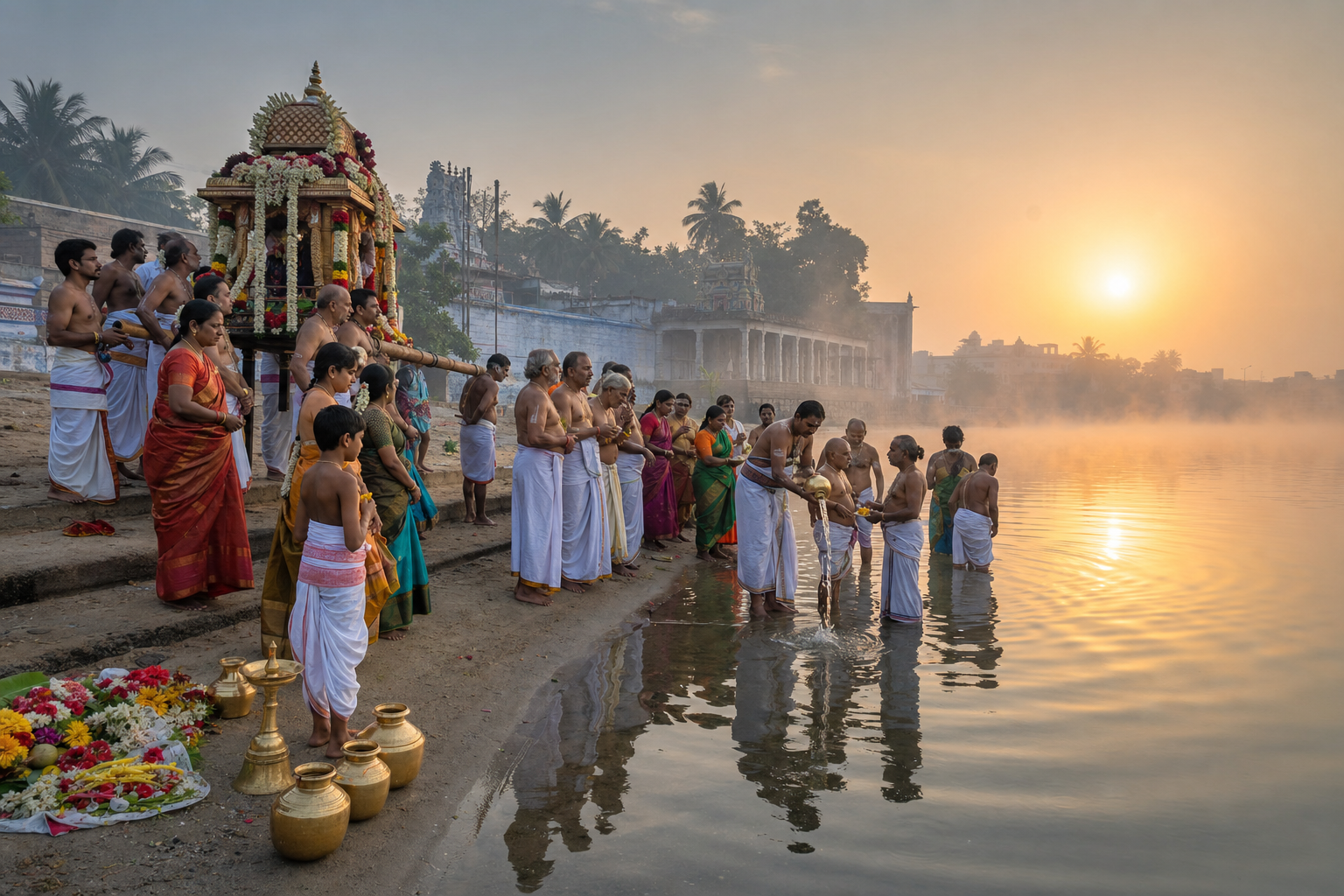
For Masi Magam, 3 March is your central date. Its most distinctive public rite is the theerthavari: utsava murtis are carried from temples to a seashore, river, or temple tank for ceremonial immersion or abhishekam. In places with large processions, the movement of the deity from temple to water is as important to planning as the date written on the calendar.
Chennai, Cuddalore, Nagapattinam, Rameswaram, Puducherry, and Kumbakonam are among the coastal and riverine centres associated with processions and sacred-water observances. If one of these is your destination, identify the specific participating temple before arranging the journey. A city-wide festival name does not tell you the procession route, departure time, immersion point, or darshan arrangements.
- Ask the temple which part of its programme is intended for public participation: the procession, theerthavari, deepa aradhana, darshan, or more than one of these.
- Check the regional panchang for the local Magam Nakshatra interval. Use that timing for a personal vrata or household worship rather than copying a clock time from another city.
- Plan to arrive early where large crowds are expected. The sacred-water observance often draws devotees around the morning bathing and procession period, so arriving only at the nominal ceremony time may leave you outside the practical viewing or darshan area.
- Check the coastal or local weather and carry water in a reusable container. If bathing is permitted, follow the site’s instructions and do not enter unfamiliar, deep, or moving water merely because ritual bathing is customary.
- Decide in advance how you will observe if you cannot reach the water procession. A pre-dawn bath at home, a lamp, temple darshan, archana, japa, stotra recitation, simple naivedyam, dana, or annadanam all preserve the devotional purpose without requiring you to reproduce the public rite privately.
Masi Magam is associated with purity, renewal, and ancestral grace. That gives families a clear way to make the day intergenerational: include elders in the plan, teach children why the deity is brought to sacred water, and make gratitude rather than spectacle the centre of the observance. If your family maintains a particular ancestral or temple tradition, follow that inherited practice instead of assembling unrelated rites from several calendars.
The day is not restricted to one deity. Shiva, Vishnu, Murugan, and Amman temples may all hold appropriate worship. Choose the temple whose sampradaya and programme your family actually follows; there is no need to visit several temples merely to make the observance feel complete.
Use Kumbha Masam as a planning window for Kerala festivals
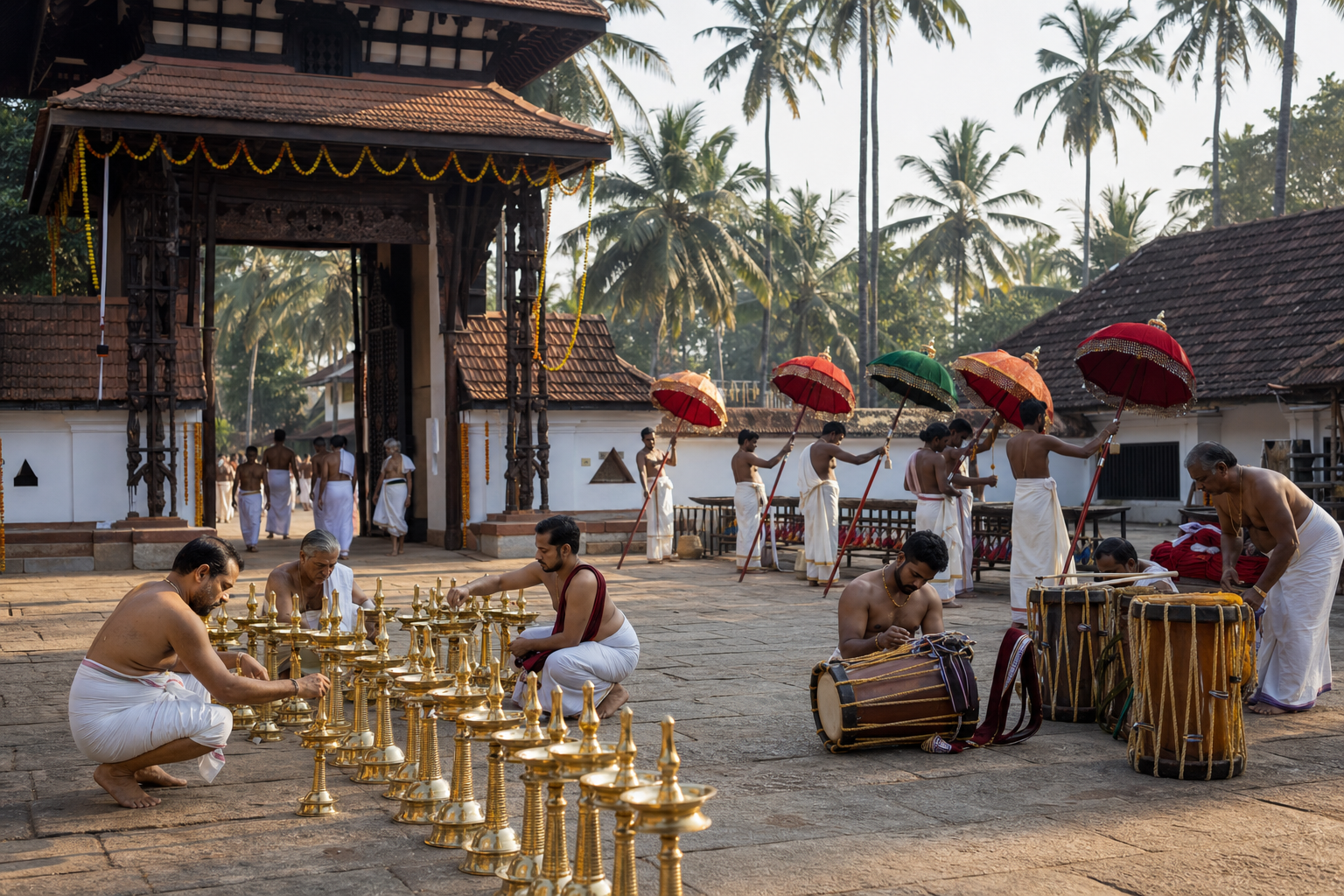
In Kerala, 14 February and 13 March define the 2026 Kumbha Masam window. This month-level information is enough to organise regular vrata, Devi or Vishnu darshan, stotra recitation, household puja, charitable giving, and annadanam. It is not enough to assign an exact date to every temple festival inside the month.
The two major observances to watch are Attukal Pongala and Kumbha Bharani Utsavam. Attukal Pongala in Thiruvananthapuram centres on women devotees making their offering to the Goddess and embodies a powerful form of shared devotion and community service. If you plan to participate, use the Attukal temple’s programme for practical arrangements rather than inferring the day from the Kumbha month boundaries.
Kumbha Bharani is connected to Bharani Nakshatra and is celebrated at Bhagavati temples, including Chettikulangara. Here too, the month tells you the season, while the nakshatra calculation and temple announcement tell you the actual festival day and programme. Do not assume that every Bhagavati temple will publish an identical schedule.
- If your purpose is a named temple festival, treat the temple’s announcement as the operational schedule.
- If your purpose is a household Kumbha observance, use 14 February to 13 March as the month boundary and follow your family’s Malayalam Panchangam.
- If your vrata is tied to Bharani or another astronomical marker, record the local nakshatra timing separately from the public celebration.
- If travel depends on an exact Attukal or Kumbha Bharani date, keep the booking provisional until the relevant temple schedule is available. A plausible date inferred from the month is not a confirmed festival date.
- If you cannot attend a large gathering, choose a local Devi temple, offer a simple home puja, or support annadanam or another act of seva. The scale of the gathering is not the measure of the sincerity of the observance.
Kerala’s festival culture during Kumbha Masam is intensely communal, but participation also depends on cleanliness, safety, and respect for local arrangements. Follow designated spaces, keep shared areas free of disposable waste where possible, and listen to organisers responsible for the temple grounds and offering areas.
Turn the dates into one household calendar
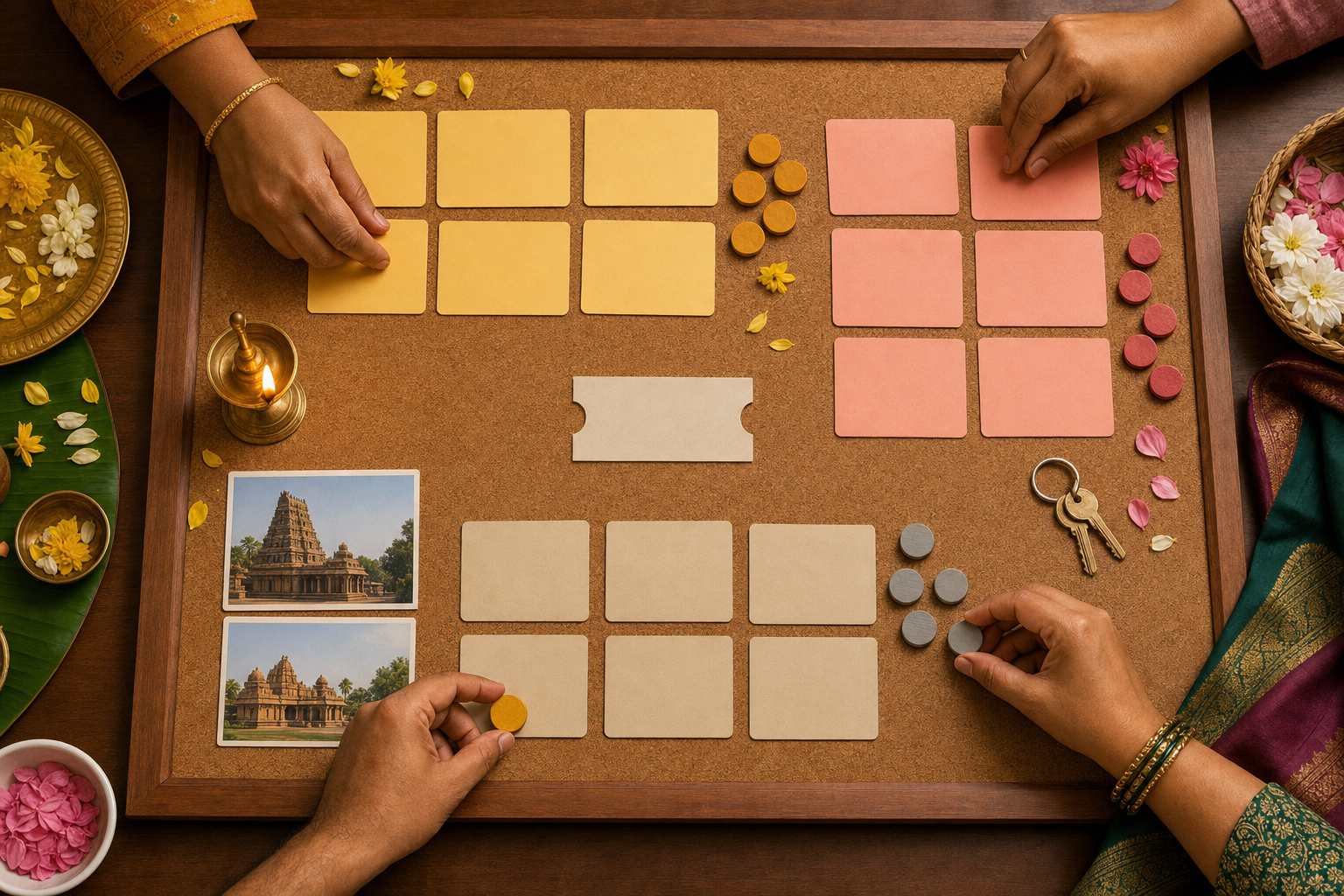
A useful family calendar should show more than festival names. Build each entry around the decision somebody must make: whether to take leave, travel, fast, prepare naivedyam, join a procession, support annadanam, or attend local darshan.
- Enter 14 February as the beginning of Kumbha Masam.
- Create separate provisional entries for Attukal Pongala and the Kumbha Bharani celebration relevant to your chosen temple. Leave the exact date and programme visibly marked for confirmation rather than filling the gap with an assumption.
- Enter 3 March as Masi Magam. Add separate fields for the local Magam interval and the temple’s procession or theerthavari time.
- Enter 13 March as the conclusion of Kumbha Masam.
- Assign the next action beside each entry: consult the panchang, contact the temple, arrange transport, prepare a home observance, or coordinate seva.
- Recheck temple information shortly before departure. A calendar date can remain unchanged even when the public programme, access arrangements, or gathering point requires clarification.
If you live outside India, use the panchang and temple programme for your own location. Masi Magam is also maintained by Tamil communities in Sri Lanka, Singapore, Malaysia, and elsewhere in the diaspora, but an Indian date or clock time should not automatically replace the local observance. You can follow an India-based procession remotely while keeping personal worship aligned with your local temple and calendar.
Put the three firm anchors into your calendar now: 14 February, 3 March, and 13 March. Then mark every temple-led or nakshatra-dependent detail as awaiting local confirmation. Once your chosen temple publishes its programme, replace the placeholder and share the same final schedule with everyone travelling or observing with you.
References
- DharmaRenaissance Blog — Masi Magam 2026 (Masi Makam/Masi Maham): Auspicious Date, Rituals & Processions
- DharmaRenaissance Blog — Kumbha Masam 2026: Sacred Kerala Festivals, Key Dates, and Malayalam Calendar Insights
