

If you are arranging Shravana worship around work, school and temple visits, decide which regional calendar your household follows before buying puja materials. In 2026, that choice affects even the opening Lakshmi observance: Mahalakshmi Sthapana falls on July 31 in one reckoning and August 14 in the Telugu-region sequence.
The calendar below helps you separate those traditions, choose a manageable worship rhythm and prepare for the dates that overlap. Treat its dates as planning markers. For a time-bound vrata or sankalpa, use the panchanga followed by your family or local temple, especially if you live outside Bharat.
Shravana 2026 dates at a glance
Under the Hyderabad temple calendar used here, Shravana runs from August 13 through September 11, 2026. The earlier July 31 entry belongs to a different observance reckoning and should not be inserted into that Telugu month as an extra mandatory Friday.
| Date | Day | Observance | What you should plan |
|---|---|---|---|
| July 31 | Friday | Mahalakshmi Sthapana or Kalasha Sthapana in the reckoning that begins its Shravan Friday worship here | Use this date only if it matches your household panchanga. Prepare the kalasha and the items required by your family tradition. |
| August 13 | Thursday | Beginning of Shravana in the Hyderabad calendar | Set your monthly sankalpa, check temple schedules and place the five Shravana Fridays on your calendar. |
| August 14 | Friday | First Shravana Shukravaram and Mahalakshmi Sthapana in the Andhra Pradesh, Telangana and Karnataka sequence; also Satyanarayana Swamy Jayanti at Annavaram | Decide beforehand whether your commitment is Lakshmi worship, the Annavaram-connected observance or both. If both, allot separate time for each sankalpa rather than rushing them into one undifferentiated puja. |
| August 16 | Sunday | Ganesha Pavitraropanam on Shravana Shukla Chaturthi under the Telugu Panchangam | Obtain the cotton threads used for Pavitra Samarpana and confirm the method followed by your temple or family. |
| August 17 | Monday | First Shravani Somvar; Shivamuth Puja with tandul, or rice, in the Goa and Maharashtra practice | Set aside clean rice for the offering. Do not assume that this regional form is required in a household that follows another Shaiva custom. |
| August 21 | Friday | Shravana Shukravaram for Mahalakshmi worship | Continue the Friday vrata or puja established under your chosen calendar. |
| August 28 | Friday | Shravana Shukravaram for Mahalakshmi worship | Keep the recurring practice consistent; do not add a new vow merely because another household follows one. |
| September 4 | Friday | Shravana Shukravaram for Mahalakshmi worship | Check now for any family-specific concluding requirement rather than discovering it on the final Friday. |
| September 11 | Friday | Final listed Shravana Shukravaram and end of Shravana in the Hyderabad calendar | Complete the Friday practice followed by your household. The end of the month does not by itself establish one universal concluding ritual, so use your own vrata procedure. |
Decide which regional calendar controls your vrata

The apparent conflict between July 31 and August 14 is a calendar issue, not a reason to perform two installations. Hindu lunar observances are reckoned through regional panchangas, and the same civil year can therefore present different Shravan boundaries and first-Friday markers.
The regional setting is visible elsewhere in the month. Shivamuth worship is identified with Goa and Maharashtra under Konkan and Marathi calendars, while Ganesha Pavitraropanam is placed under the Telugu Panchangam. These are living local forms of dharma, not errors that need to be forced into one uniform schedule.
- If your vrata is inherited, follow the panchanga and procedure your family has consistently used.
- If you are attached to a temple, follow that temple’s published calendar. This is especially important for an observance tied to a particular kshetra, such as Satyanarayana Swamy Jayanti at Annavaram.
- If you are beginning a home practice without an inherited calendar and want to align with the Andhra Pradesh, Telangana and Karnataka Shravana-Friday sequence, use August 14, 21 and 28, followed by September 4 and 11.
- If you live outside Bharat, ask your local temple whether it observes the Indian civil date or calculates the tithi locally. Location can change when a tithi begins and ends, so an India-based date alone is not an exact local muhurta.
Write the calendar name at the top of your schedule. That small step prevents a common problem: collecting dates from several regions and then feeling obliged to perform every observance on every listed day.
Build a worship plan you can sustain for the full month
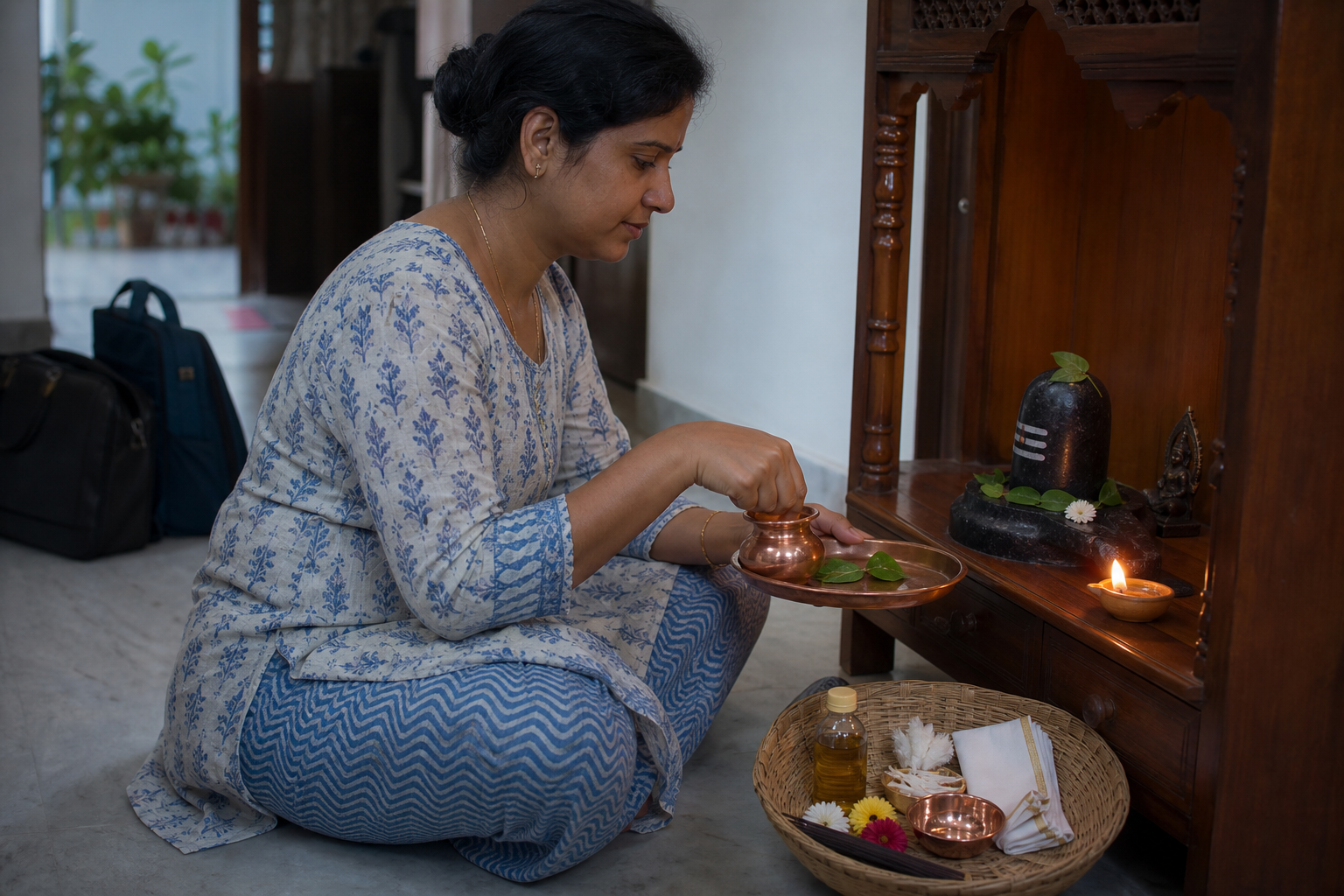
Shravana offers several devotional paths, but a household does not need to adopt all of them at once. Start with the deity, vrata or temple relationship already central to your practice. Add a special observance only when you can prepare for it without weakening that primary commitment.
- Choose one weekly anchor. For a Lakshmi-focused month, reserve the five listed Fridays from August 14 to September 11. For a Shaiva practice connected to the Marathi or Konkan tradition, begin with the first Shravani Somvar and its rice offering on August 17.
- Add one-off observances deliberately. Mark August 16 for Ganesha Pavitraropanam only if you intend to make the cotton-thread offering. Mark the Annavaram Jayanti on August 14 when that temple tradition is meaningful to your worship.
- Separate the date from the vidhi. This calendar establishes the documented day and, in a few cases, the defining material. It does not establish your mantras, fasting rules, kalasha procedure or conclusion. Take those from your sampradaya, family elder, priest or temple.
- Prepare the previous day. For the specifically named rites, that means having the kalasha materials ready before the relevant Mahalakshmi Sthapana, cotton threads before August 16 and rice before August 17.
- Give overlapping observances their own space. August 14 carries both the first Telugu-region Shravana Friday and the Annavaram Satyanarayana Jayanti. Choose one as your principal observance, or schedule two distinct worship periods if your family follows both.
A useful household entry contains three lines: the deity or vrata, the minimum practice you can complete attentively, and any temple or family commitment attached to it. For example, an August 16 entry might read: Ganesha Pavitraropanam; cotton-thread offering; confirm local temple time. That is more useful than writing only “puja” and trying to reconstruct the details on the day.
Do not turn a missed elaborate puja into a reason to abandon the rest of the month. Keep the observances you have actually undertaken, and ask the appropriate family or temple authority about any vrata-specific remedy rather than inventing one. Consistency, clarity of sankalpa and respect for your tradition matter more than accumulating the largest possible calendar.
Key takeaways
- The Hyderabad-based Shravana calendar runs from August 13 to September 11, 2026.
- The Andhra Pradesh, Telangana and Karnataka Shravana Fridays are August 14, August 21, August 28, September 4 and September 11.
- Mahalakshmi Sthapana appears on July 31 in a different reckoning and on August 14 in the Telugu-region Friday sequence. Follow one governing panchanga rather than treating both as compulsory.
- Ganesha Pavitraropanam falls on August 16, with cotton threads offered as pavitra.
- The first Shravani Somvar is August 17; the documented Shivamuth form uses rice and belongs particularly to Goa and Maharashtra practice.
- Satyanarayana Swamy Jayanti on August 14 is specifically connected here with the Annavaram temple celebration.
Choose your governing panchanga first, circle one weekly devotional rhythm, and then add only the special dates your household genuinely observes. Confirm local timing before the first relevant date; once Shravana begins, your attention should be on the worship rather than on reconciling competing calendars.
References
- Hindu Pad — Sravana Masam Utsavalu in Ashtalakshmi Temple Hyderabad
- Hindu Pad — Shivamuth Puja with Tandul (Rice), 17 August 2026 Shravani Somvar
- Hindu Pad — Mahalakshmi Sthapana Pujan, Mahalakshmi Kalasha Sthapana
- Hindu Pad — Shravana Shukravaram Pooja 2026
- Hindu Pad — Ganesha Pavitraropanam
- Hindu Pad — Satyanarayana Swamy Jayanti in Annavaram Satyanarayana Swamy Temple