
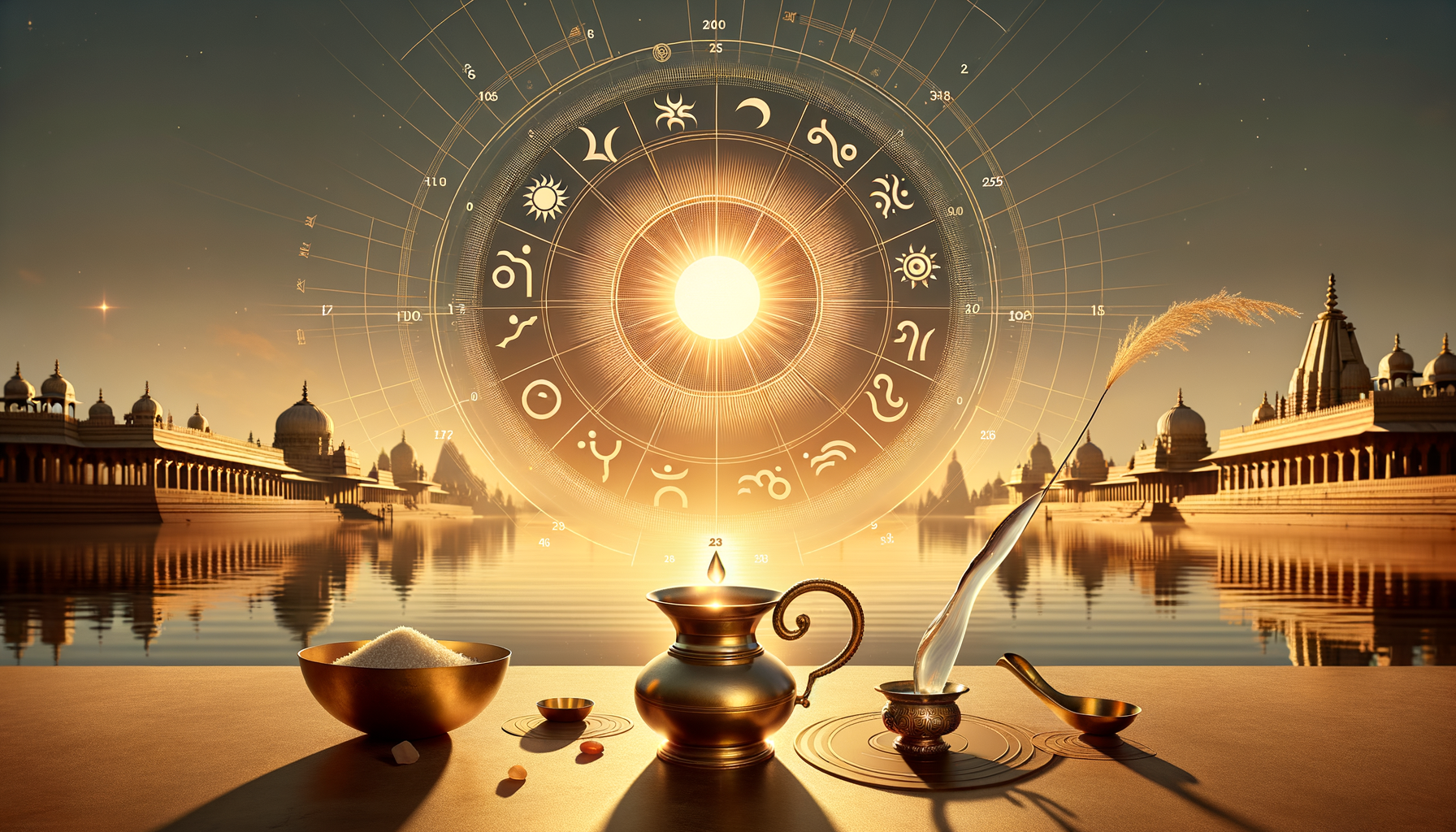
Masik Sankranti (also known as Masa Sankranti or Surya Sankramana) denotes the Sun’s precise transit from one Rashi (zodiac sign) to the next, setting the rhythm of the solar month in the Hindu calendar. In 2026, each Surya Sankramana marks the beginning of a new solar month, shaping observances, vratas, and regional customs that honor the Sun as a symbol of light, knowledge, and inner renewal.
Within the Gregorian year frame, the Masik Sankranti sequence begins with Makar Sankrantiwhen the Sun moves from Dhanu Rashi to Makara Rashiand concludes with Dhanu Sankrantiwhen the Sun moves from Vrischika Rashi to Dhanu Rashi. This annual arc offers a clear, astronomical way to understand Monthly Sankranti dates while grounding observances in the consistent logic of solar motion.
Surya Sankramana establishes the start of the solar month (masa) and is distinct from lunar-month reckonings that hinge on tithis and moon phases. Because the Sun’s ingress is an exact astronomical event, timings for Masik Sankranti 2026 vary by geography and time zone. For accuracy, it is advisable to consult a reliable Panchang that provides local Sankramana moments and the associated Punya Kala and Mahapunya Kala.
Across the year, twelve Sankrantis occur as the Sun enters each sign: Makara, Kumbha, Meena, Mesha, Vrishabha, Mithuna, Karka, Simha, Kanya, Tula, Vrischika, and Dhanu. While all are spiritually significant, many regions accord special cultural resonance to particular monthsfor instance, Mesha Sankranti (solar ingress into Mesha/Aries) aligns with solar New Year observances in parts of India, and Makar Sankranti is celebrated nationwide with distinct regional flavors.
Masa Sankranthi Vratham traditionally emphasizes inner purification and compassionate action. Common disciplines include snana (ritual bath), upavasa (fasting as health permits), daana (charity, often with til and gud), arghya to Surya at sunrise, and a focused period of japa and dhyana. Observing during Punya Kala or Mahapunya Kala is considered especially auspicious, aligning personal effort with the sanctity of the transit window.
For many households, Sankranti evokes serene dawn baths, the fragrance of sesame preparations, and moments of quiet gratitude. Even simple practicessharing seasonal foods, greeting neighbors, or spending time in mindful reflectionanchor the monthly rhythm in lived experience, making spiritual observance both accessible and deeply meaningful.
These solar turnings speak to a larger dharmic unity. In Hinduism, Buddhism, Jainism, and Sikhism, reverence for light as a metaphor for wisdom and compassion is a shared strand, even where calendars and ritual forms differ. Recognizing this common symbolism fosters mutual respect: the Sun’s steady course becomes a reminder of shared ethical commitments to clarity, restraint, service, and harmony.
Regarding Monthly Sankranti dates for 2026, exact timings depend on longitude, latitude, and local sunrise. Panchang references typically list Surya Sankramana to the minute, along with guidance on Punya Kala. Because religious duties are often tied to these windows, practitioners are encouraged to verify local timings rather than relying on a single pan-Indian time.
Approached in this way, Masik Sankranti 2026 becomes both an astronomical calendar of Surya Sankramana and a contemplative practice calendar. Each monthly transition invites renewed intentionthrough vratham, daana, and mindful livingso that personal discipline and community well-being steadily grow together throughout the year.
Inspired by this post on Hindu Pad.
