
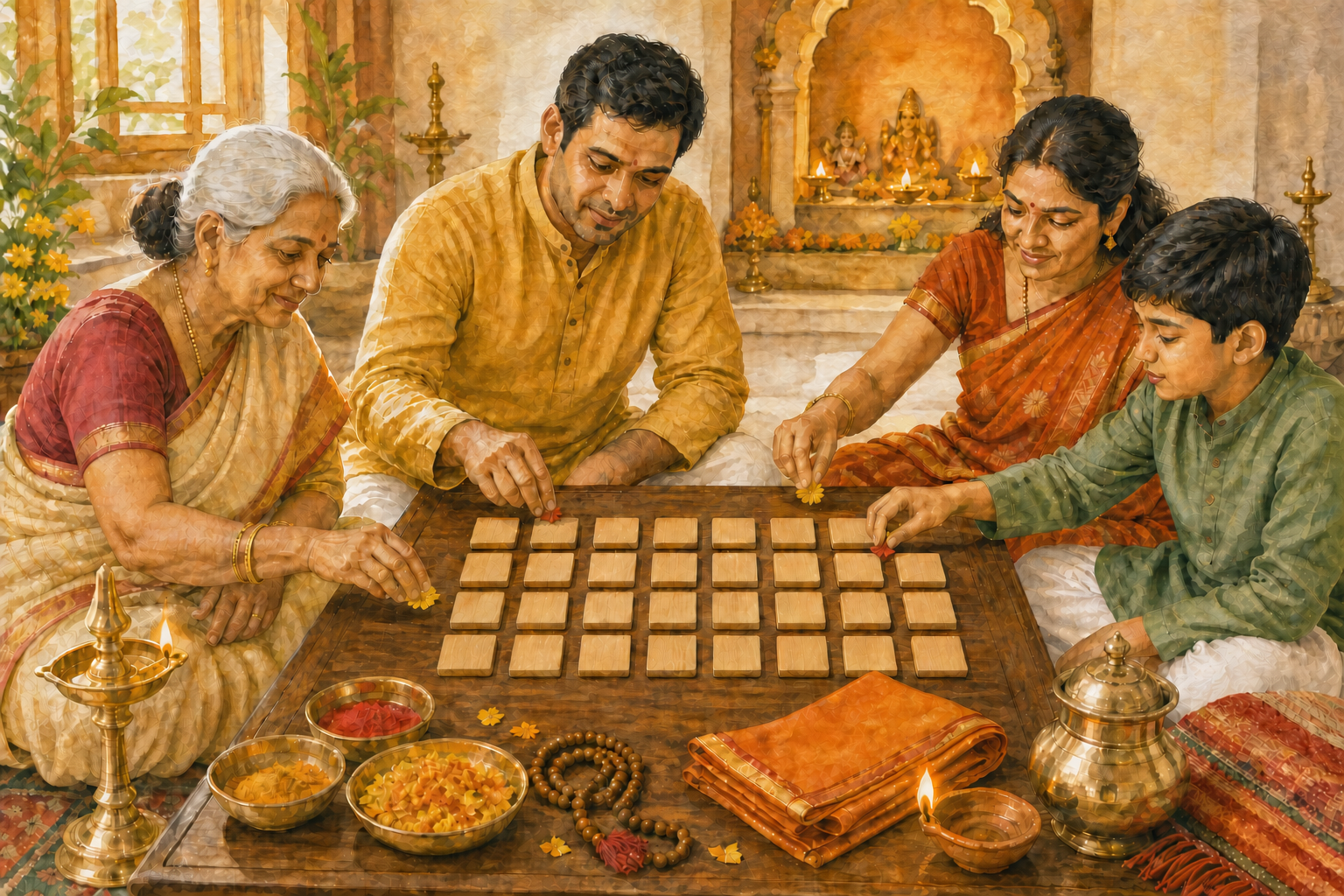
If you are trying to plan March 2026 for your family, temple group, or community, a list of Gregorian dates is not enough. You also need to know which lunar calendar your community follows, which tithi governs each observance, and whether the local temple will hold its program on the tithi itself or at a more accessible time.
The practical approach is to place the month’s main festivals first, add only the vrats your household actually keeps, and then verify every local timing. That gives you a usable dharmic calendar without pretending that one date sheet can represent every region and sampradaya.
Read March as a bridge from Falgun to Chaitra
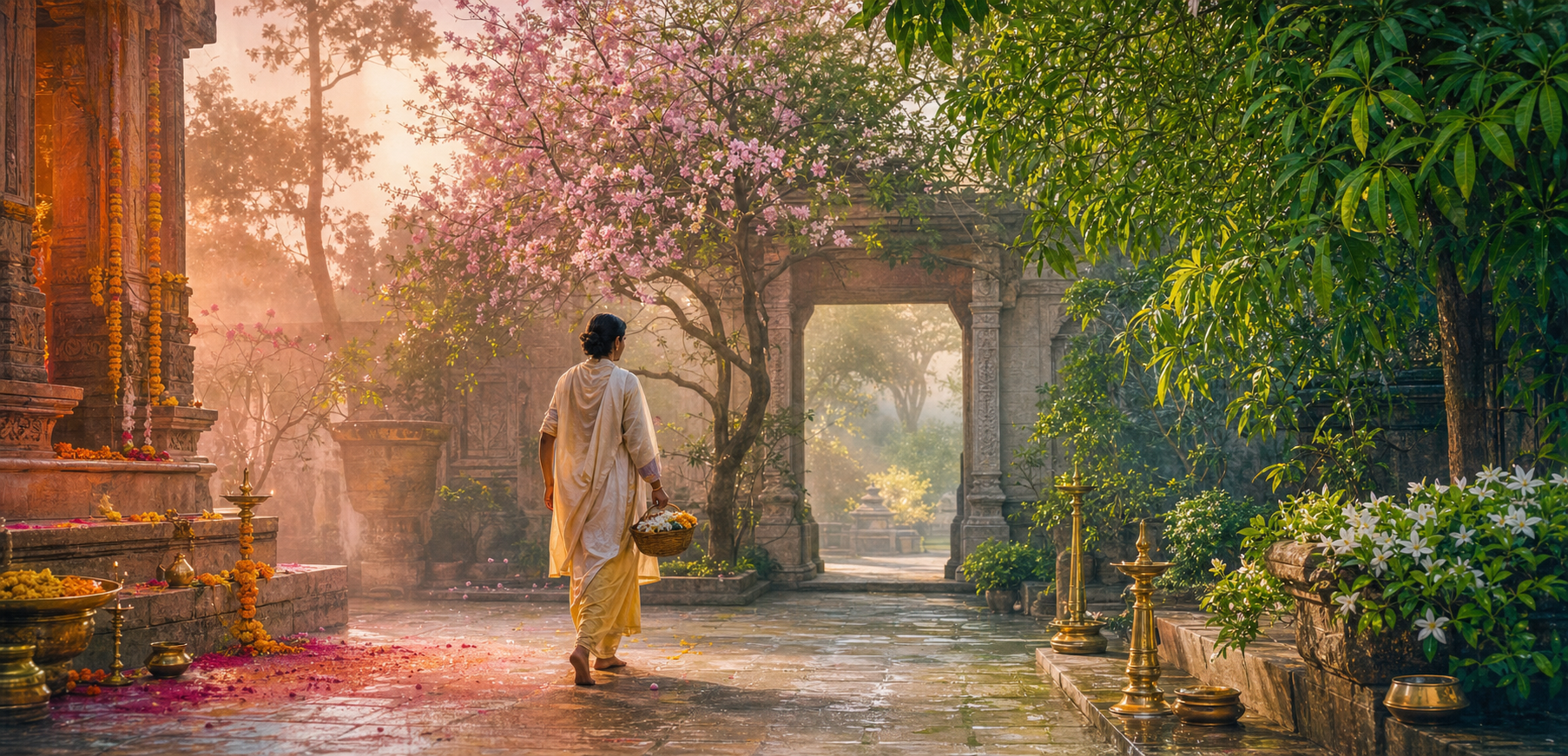
March 2026 crosses from Falgun into Chaitra, giving the month a natural movement from completion to renewal. Holi brings Falgun’s public joy to its culmination, while the arrival of Chaitra turns attention toward cleansing, fresh sankalpa, and the next cycle of household and temple observances.
The month name printed beside a date may differ between calendars without either calendar being defective. Purnimant reckoning, used across much of North India, treats the full moon as the major boundary in naming the lunar month. Amavasyant, or Amanta, reckoning in Marathi and Gujarati traditions structures the month around the new moon. Both systems move through the same lunar tithis, but they may label the surrounding period differently.
| Calendar context | How to read March 2026 | What you should verify |
|---|---|---|
| Purnimant traditions | Late Falgun gives way to early Chaitra around the full-moon transition. | Use a regional Panchang that follows your North Indian or sampradaya convention. |
| Amavasyant or Amanta traditions | Phalgun and Chaitra are organized around the new-moon boundary. | Use a Marathi, Gujarati, or other locally appropriate Panchang rather than copying North Indian month labels. |
| Diaspora communities | The tithi must be calculated for the place where the observance occurs. | Check the local time zone, daylight-saving change, and the temple’s announced program time. |
This distinction matters most when two relatives, calendars, or temples attach different month names to a nearby civil date. Before treating that as a contradiction, compare the location, calendar system, and tithi. The shared observance may still be perfectly clear once those three details are aligned.
Build your March calendar in three layers
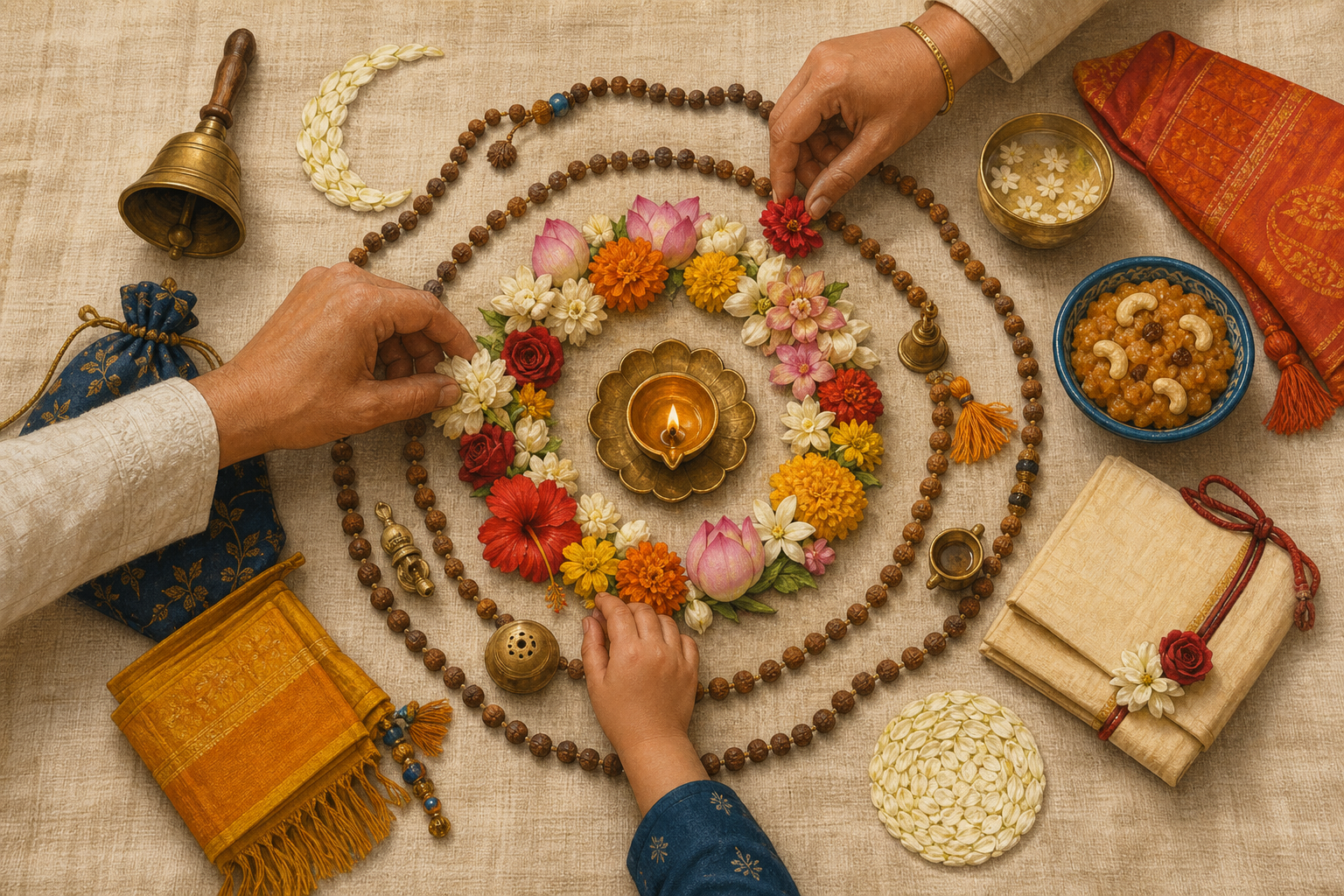
Trying to observe every item on a comprehensive festival calendar usually produces confusion rather than depth. Build your month in layers: major family festivals, recurring vrats, and regional observances. This lets you protect the days central to your tradition while leaving room for work, school, health, and seva.
Layer one: the major family festival
Holi is the central public celebration in the month’s Falgun cycle and is observed on Phalgun Purnima. Its forms range from color play and shared meals to prayer, kirtan, bhajan, charity, and community gatherings. When planning, separate the devotional observance from the social event: first confirm the locally observed Purnima date and temple program, and only then arrange travel, meals, or a neighborhood gathering.
That separation is especially useful when a temple’s worship schedule and a community’s convenient celebration do not occupy the same hours. Your household can honor the tithi through prayer or a simple offering and still participate in the larger gathering when it is held.
Layer two: the recurring vrats you already keep
March also includes the recurring discipline of the lunar month. These observances should not be treated as interchangeable reminders on a phone. Each has its own devotional orientation:
- Ekadashi: observed in both Shukla Paksha and Krishna Paksha as a vrata of sattvic discipline, restraint, and spiritual clarity.
- Pradosh Vrat: associated with devotion to Shiva during the twilight period. Confirm the locally applicable tithi before fixing your evening worship.
- Sankashti Chaturthi: dedicated to Ganesha and the prayerful removal of obstacles.
- Masik Shivratri: where kept, it offers a monthly occasion for quieter, meditative Shiva devotion.
- Amavasya: often reserved for ancestral remembrance, inward reflection, and a more subdued household rhythm.
You do not need to adopt every vrata because it appears on a calendar. Begin with the observances received through your family, guru-parampara, or temple. If you are adding a practice, choose one and learn its local procedure before expanding your schedule. A smaller sankalpa kept steadily is more coherent than a crowded list abandoned midway through the month.
Layer three: the regional observance
Regional festivals carry memory through local songs, temple customs, seasonal foods, and neighborhood participation. They may receive little attention on a national calendar while remaining important to the communities that sustain them. Rang Teras is the clearest March 2026 example: it belongs on the plan of many Krishna devotees and families with roots in the regions where the observance is prominent.
Give Rang Teras on 16 March a definite place
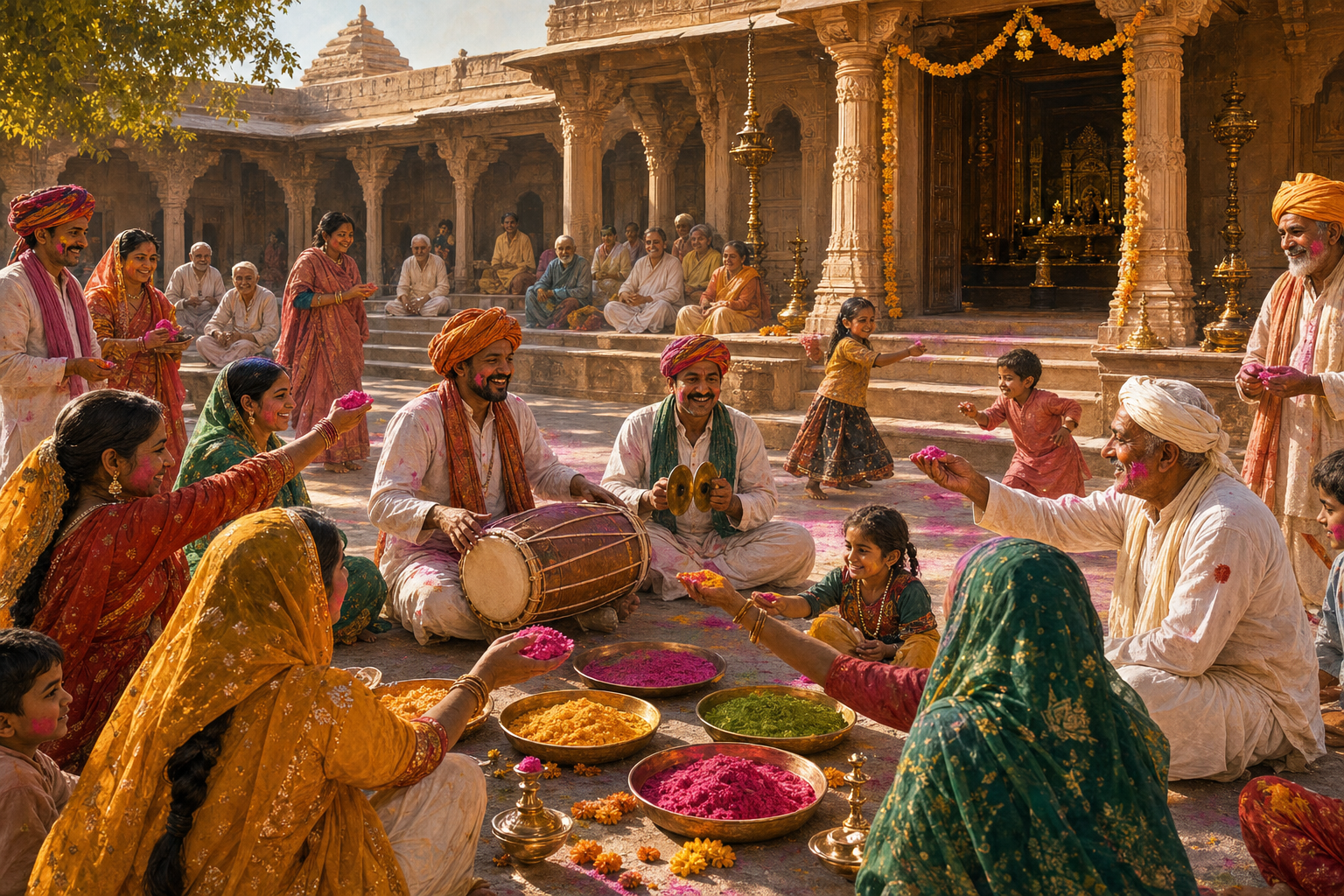
Rang Teras falls on 16 March 2026. Also called Rang Trayodashi, it is associated with the Trayodashi, or thirteenth tithi, of the bright fortnight of Chaitra. Because the local Trayodashi window can begin or end at different civil times, keep 16 March as the planning date but confirm the applicable tithi and temple schedule for your city.
The observance is particularly prominent across Rajasthan, Gujarat, Uttar Pradesh, Madhya Pradesh, Bihar, and Himachal Pradesh. Krishna temples in North India, including ISKCON centers, may arrange special darshan, kirtan, bhajan, prasada, or community gatherings. Do not assume that every temple will offer the same program. A village shrine, a large city temple, and a diaspora center may each express the day at a different scale.
You can prepare for Rang Teras through one of three realistic forms:
- Temple-centered observance: ask whether your Krishna temple has special darshan or kirtan on 16 March, note the actual program time, and arrive with enough margin for a crowded spring gathering.
- Household observance: clean the altar, offer simple prasada, sing familiar Krishna bhajans, and give children or younger relatives a role in the worship. The point is participation across generations, not an elaborate display.
- Community-centered observance: combine satsang with a manageable act of seva, shared food, or neighborly hospitality. Keep the gathering welcoming while retaining its Krishna-bhakti center.
Rang Teras comes within the springtime devotional rhythm that follows Holi. That makes it tempting to treat it as an extension of color festivities alone. Its more durable value lies in the combination of Krishna devotion, seva, satsang, and community renewal. If your available time is limited, prioritize darshan, bhajan, and one act of service over adding more spectacle.
Families outside the regions where Rang Teras is widely celebrated can still observe it without manufacturing a custom they have not inherited. Contact a Krishna temple, follow the temple’s form, and learn the regional meaning of the day. Respectful participation begins with listening to the tradition that carries the observance.
Confirm regional timings before making commitments
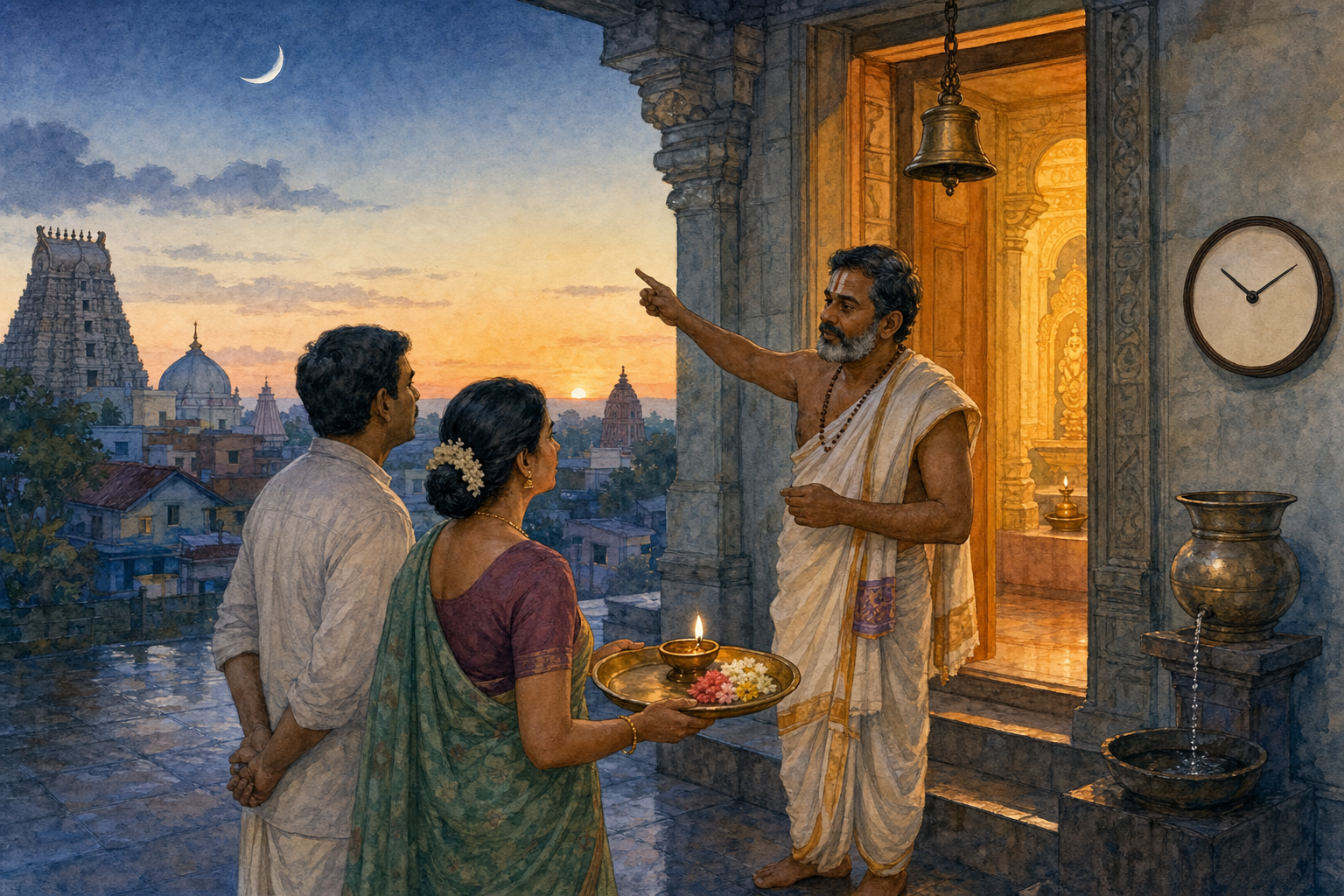
A tithi is a lunar measure, not a midnight-to-midnight civil date. That is why two calendar displays can place an observance differently even when both are working from the same lunar cycle. The right response is not to choose whichever date is more convenient and call the matter settled. Verify the convention used for that particular vrata or festival.
- Set the location first. Enter the city where you will actually perform the observance, not your ancestral city and not the location of a calendar publisher.
- Identify the calendar tradition. Check whether the Panchang uses Purnimant or Amavasyant month naming and whether your family or temple follows a particular sampradaya convention.
- Record the tithi window. Note when the relevant tithi begins and ends locally. Do not copy Indian timings directly into a North American, European, or other diaspora calendar.
- Ask which civil date is prescribed locally. The applicable rule may depend on whether the tithi is present at sunrise, twilight, or another ritual period. Let the regional Panchang or temple apply that rule.
- Confirm the public program separately. A temple may schedule darshan, kirtan, or a community meal according to local practical needs. Record both the ritual date and the announced event time if they differ.
- Check daylight saving. Diaspora communities should make sure automated calendar conversions account for any clock change affecting March schedules.
A useful calendar entry therefore contains more than a festival name. Write the tithi, the local civil date, the source of the timing, and the temple program. For example, your Rang Teras entry might read: “Chaitra Shukla Trayodashi; 16 March 2026; local Panchang checked; Krishna temple program to be confirmed.” That short note prevents most last-minute uncertainty.
If relatives in two cities receive different timings, do not pressure one household to imitate the other. Compare locations and Panchang conventions first. Shared dharmic intention does not require pretending that the moon’s local calendrical relationship is identical in every time zone.
Key takeaways for your March sankalpa
- March 2026 moves from Falgun into Chaitra, so plan for both completion and renewal rather than treating the month as one undifferentiated festival season.
- Place Holi, observed on Phalgun Purnima, at the center of the Falgun portion of your plan, but obtain its local timing from a regional Panchang or temple.
- Reserve 16 March for Rang Teras and verify the local Trayodashi window before fixing worship or travel.
- Add Ekadashi, Pradosh, Sankashti Chaturthi, Masik Shivratri, and Amavasya only according to the vrats your household or sampradaya actually keeps.
- For every tithi-based observance, confirm location, calendar system, local timing, ritual convention, and public program as separate details.
- Use spring gatherings to strengthen seva, satsang, restraint, intergenerational participation, and neighborly goodwill rather than measuring devotion by the size of an event.
Start with one practical action: put Rang Teras on 16 March in your calendar, then contact your temple and select a reliable Panchang for your city. Once those are in place, add Holi and the recurring vrats you intend to keep. Your March calendar will then serve its real purpose: helping you protect time for dharma before ordinary commitments consume it.
References
- DharmaRenaissance Blog — Rang Teras 2026 (Rang Trayodashi): Date, Significance, and Vibrant Krishna Celebrations
- DharmaRenaissance Blog — March 2026 Hindu Festivals: Falgun-Chaitra Observances, Rituals, and Shared Significance
