

If you are arranging Magh Shukla worship in January 2026, reserve two mornings now. Varad Chaturthi, also observed as Ganesh Jayanti, falls on January 22. Vidhan or Ratha Saptami falls on January 25. The observances are only three days apart, but they have different devotional centres and should not be compressed into one generic Magh puja.
Use the civil dates to gather materials and protect the necessary time. Before fixing the precise puja hour, check a panchang calculated for your location. Chaturthi is centred on Ganesha, sesame offerings, and the removal of obstacles; Saptami is centred on Surya, sunrise arghya, renewal, and gratitude for life-sustaining light.
Key takeaways for Magh Shukla in January 2026
- January 22: Observe Magh Shukla Chaturthi as Varad Chaturthi, Varad Til Chaturthi, Ganesh Jayanti, or Tilkund Chaturthi, according to your regional tradition.
- January 25: Observe Magh Shukla Saptami as Vidhan Saptami, Vidhana Saptami, Ratha Saptami, Arogya Saptami, Radha Saptami, or Surya Jayanti, according to local usage.
- Check local timing: A lunar tithi does not necessarily begin at midnight. Use a city-specific panchang or a trusted temple schedule before choosing the puja time.
- Prepare different materials: Keep sesame, durva grass, flowers, and Ganesha prayers ready for Chaturthi. For Saptami, prepare for sunrise arghya, Surya prayer, and sattvic naivedya.
- Keep the vrata proportionate: Discipline and sincerity are central; unnecessary ritual complexity or an unsafe fast is not.
A calendar date gets you ready; the local tithi sets the observance
January 22 and January 25 are the dates to mark, but a tithi is a lunar day rather than a midnight-to-midnight civil date. Its beginning and end can fall between conventional clock times, and the applicable timing can vary by location. This matters most when you are undertaking a formal vrata, arranging a temple visit, or coordinating a community puja.
For Ratha Saptami, sunrise deserves particular attention because arghya to Surya is the defining practice. A calendar that gives the right date but is calculated for another city may not give you the right local sunrise or tithi interval. Treat an undated social-media graphic as a reminder, not as your final timing authority.
- Open a panchang configured for the city where you will perform the worship.
- Find Magh Shukla Chaturthi and Magh Shukla Saptami, then note their local beginning and ending times.
- For January 25, confirm that the recommended sunrise observance agrees with the local Saptami timing.
- If you will attend a temple, use its announced schedule for the communal rites; the temple may follow a particular sampradaya or regional convention.
- Write the final date and time beside your materials list so that the household is not trying to resolve calendar questions on the morning itself.
Different regional names do not automatically indicate different festivals. Use the name familiar to your family or temple while keeping the governing tithi and deity clearly in view. That preserves local tradition without turning harmless naming differences into confusion.
January 22: A workable Varad Chaturthi home observance
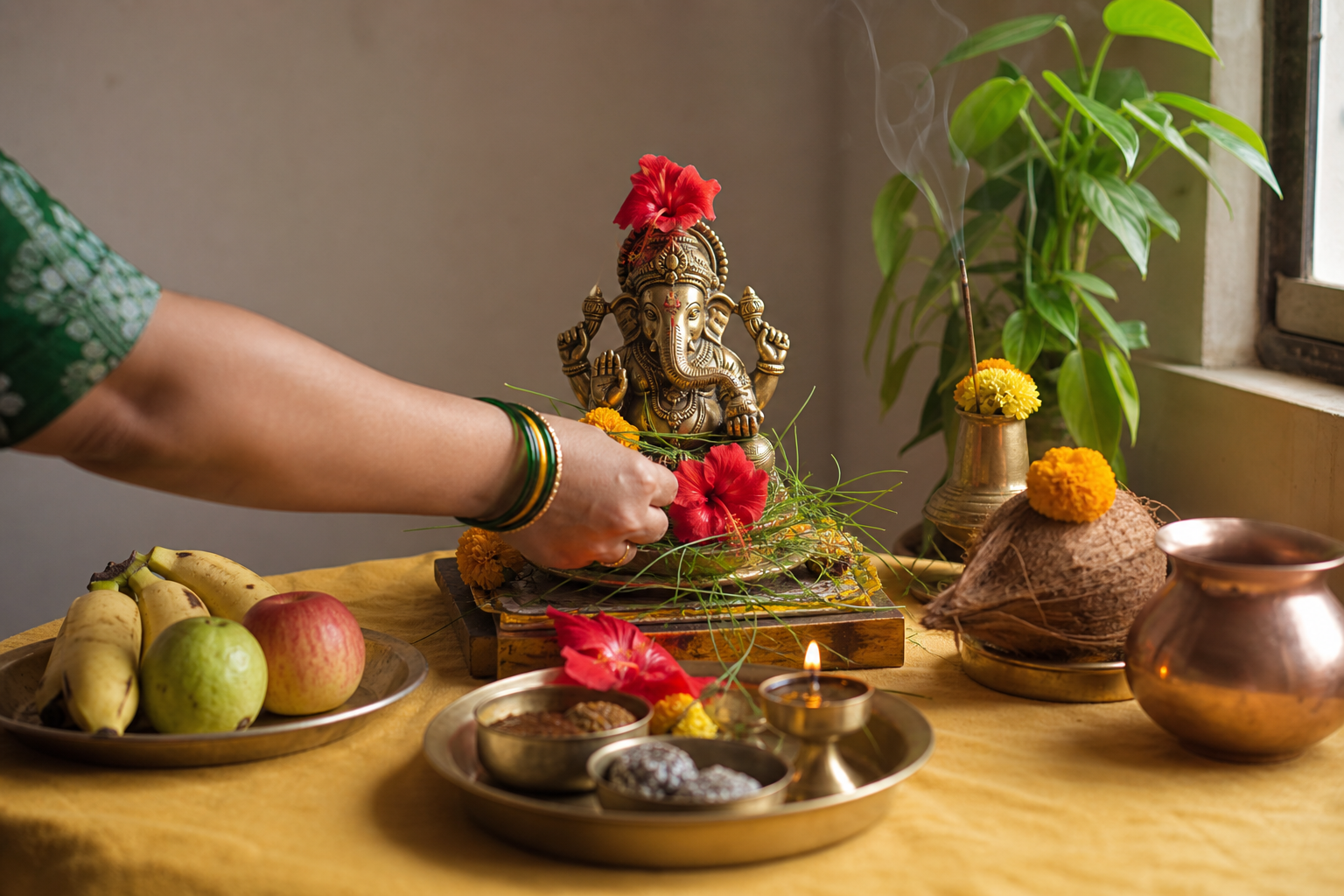
Varad Chaturthi is especially prominent in Maharashtra and Gujarat and is also observed in parts of North India. Many families know it as Ganesh Jayanti, the regional celebration of Ganesha’s birth. The name Varad points to boon-bestowing grace, while Til in Varad Til Chaturthi identifies sesame as a characteristic element of the worship.
The devotional aim is not merely to ask that an external difficulty disappear. Ganesha as Vighnaharta also invites you to notice the habits that maintain an obstacle: haste, pride, avoidance, confusion, or unwillingness to learn. A useful sankalpa therefore joins a prayer with a responsibility. Ask for clarity, then name the next right action you are prepared to take.
- Begin with snana and a clean worship space. Keep the opening quiet enough to shift from ordinary activity into a deliberate vrata.
- State the sankalpa. Dedicate the observance to Ganesha and identify the quality you seek, such as wisdom, perseverance, humility, or clarity.
- Offer durva grass and flowers. Use the form of Ganesha puja already followed in your household rather than assembling unfamiliar procedures at the last minute.
- Present sesame-based naivedya. Sesame carries the Til identity of the day. Prepare an offering suitable for your family’s practice and available time.
- Recite a Ganesha prayer. The Ganapati Atharvashirsha is a recognised choice. If it is not part of your practice, use a familiar hymn or mantra that you can recite attentively.
- Complete the worship with prasada and generosity. Share the sesame preparation with the household or community. Sesame may also be included in charity where that accords with family custom.
A temple darshan can complement the home puja, particularly where Ganesh Jayanti is celebrated communally. For children, participation can be concrete: let them arrange flowers, shape a simple clay form of Ganesha, or hear a story that connects Ganesha with learning, humility, and persistence. Give them one meaningful task instead of expecting them to remain spectators through a long ritual.
Vrata and upavasa express discipline, but no single degree of food restriction should be treated as universal. Follow your established family or temple practice. Do not improvise a restrictive fast if it would be unsafe because of a medical condition, medication, pregnancy, or a history of disordered eating; choose a health-appropriate sattvic observance and seek qualified medical guidance when needed. The purpose is focused devotion, not harm.
January 25: Put sunrise at the centre of Ratha Saptami

Magh Shukla Saptami carries several regional names. Vidhan or Vidhana Saptami identifies the lunar observance; Ratha Saptami and Surya Jayanti foreground Surya; Arogya Saptami highlights well-being and vitality. Radha Saptami is another name used in some regions. You do not need to combine every regional form. Follow the name and liturgical pattern recognised by your community.
The practical anchor is sunrise. Arghya transforms gratitude into an embodied act: you rise deliberately, bring water, face the morning light, and acknowledge the source of warmth and energy that sustains life. Prepare the night before, because searching for a vessel or prayer text after sunrise defeats the calm that the observance is meant to cultivate.
- Check the local sunrise and Saptami timing in advance. Set aside enough time for snana and preparation before the offering.
- Begin the morning in cleanliness and quiet. Keep the water vessel, prayer text, and naivedya materials ready before you sleep.
- Offer arghya to Surya at sunrise. Make the water offering with attention rather than rushing through it as a calendar obligation.
- Recite a Surya stotra or mantra known to you. A shorter prayer said steadily is better than an unfamiliar long recitation performed without attention.
- Offer simple sattvic naivedya. Let purity, gratitude, and restraint guide the meal and the rest of the morning.
- Carry the symbolism into conduct. Let reverence for the Sun sharpen your responsibility toward the natural world and the forms of life sustained by light.
The word Arogya can orient reflection toward balanced living, cleanliness, and disciplined habits, but ritual worship is not a medical treatment. Do not use the festival as a reason to delay care, stop medication, or substitute a religious claim for professional diagnosis. Its contribution is spiritual: gratitude, steadiness, and a renewed intention to care responsibly for body and mind.
Use the three-day interval to carry one sankalpa forward
The short distance between Chaturthi and Saptami gives you a useful devotional sequence. On January 22, ask Ganesha for the clarity to recognise and address an obstacle. During the intervening days, take one small action consistent with that prayer. On January 25, greet the rising light with gratitude and renew the energy needed to continue.
- Before January 22: Confirm the local Chaturthi timing; obtain sesame, durva, flowers, and the prayer text you will actually use.
- On January 22: Perform the Ganesha worship and write down one obstacle together with one ethical, practical response.
- Between the observances: Keep that response alive through one repeatable action. Prepare the water vessel, Surya prayer, and naivedya for Saptami.
- On January 25: Offer arghya at the locally appropriate sunrise, then return to the earlier sankalpa with renewed steadiness.
These are recognisably Hindu rites, even as their emphasis on disciplined practice, wisdom, compassion, gratitude, light, and ethical conduct can resonate across the wider Dharmic family. Respect for shared values does not require pretending that Hindu, Buddhist, Jain, and Sikh ritual forms are interchangeable. Unity is stronger when difference is acknowledged honestly.
Put January 22 and January 25 in your calendar now. Then make the city-specific panchang check your first act of preparation. That one decision will let you approach both mornings with the materials ready, the timing settled, and the purpose of each observance intact.
References
- DharmaRenaissance Blog — Auspicious Varad Chaturthi 2026 (Ganesh Jayanti): Date, Significance, and Magh Shukla Chaturthi Rituals
- DharmaRenaissance Blog — Vidhan Saptami 2026 (Magh Shukla Saptami): Auspicious Ratha Saptami Rituals and Surya Jayanti
