
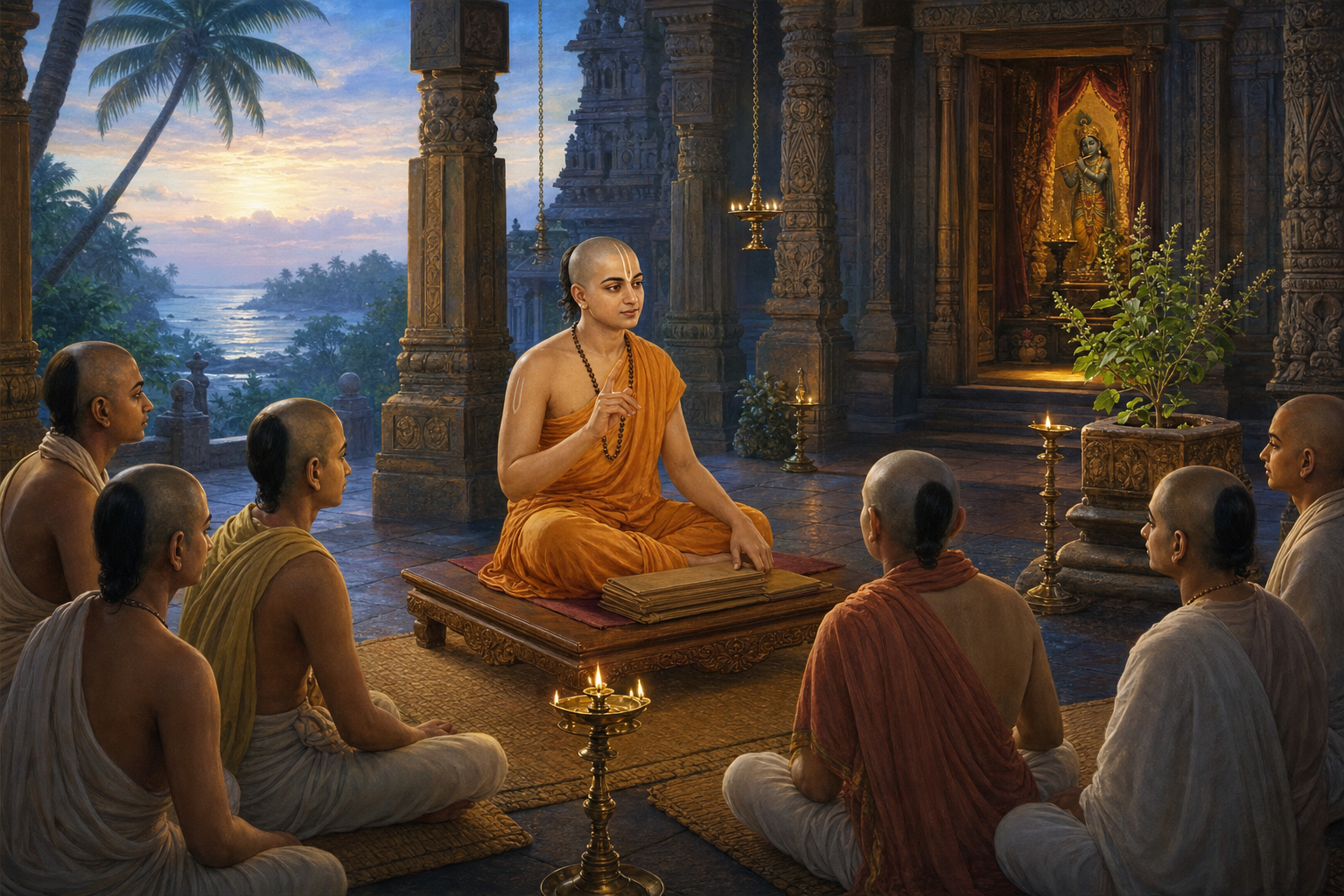
You may know that Madhva Navami is important yet still wonder what the day asks of you. Is it a temple festival, a remembrance of a guru, or an occasion for studying Vedanta? It holds all three together: worship Sri Hari, honour Madhvacharya, and let what you learn change one thing you do.
If you are observing at home, you do not need to reproduce the scale of a major Matha. A clean altar, attentive recitation, a short reading and a completed act of seva can carry the day with integrity.
What Madhva Navami actually commemorates
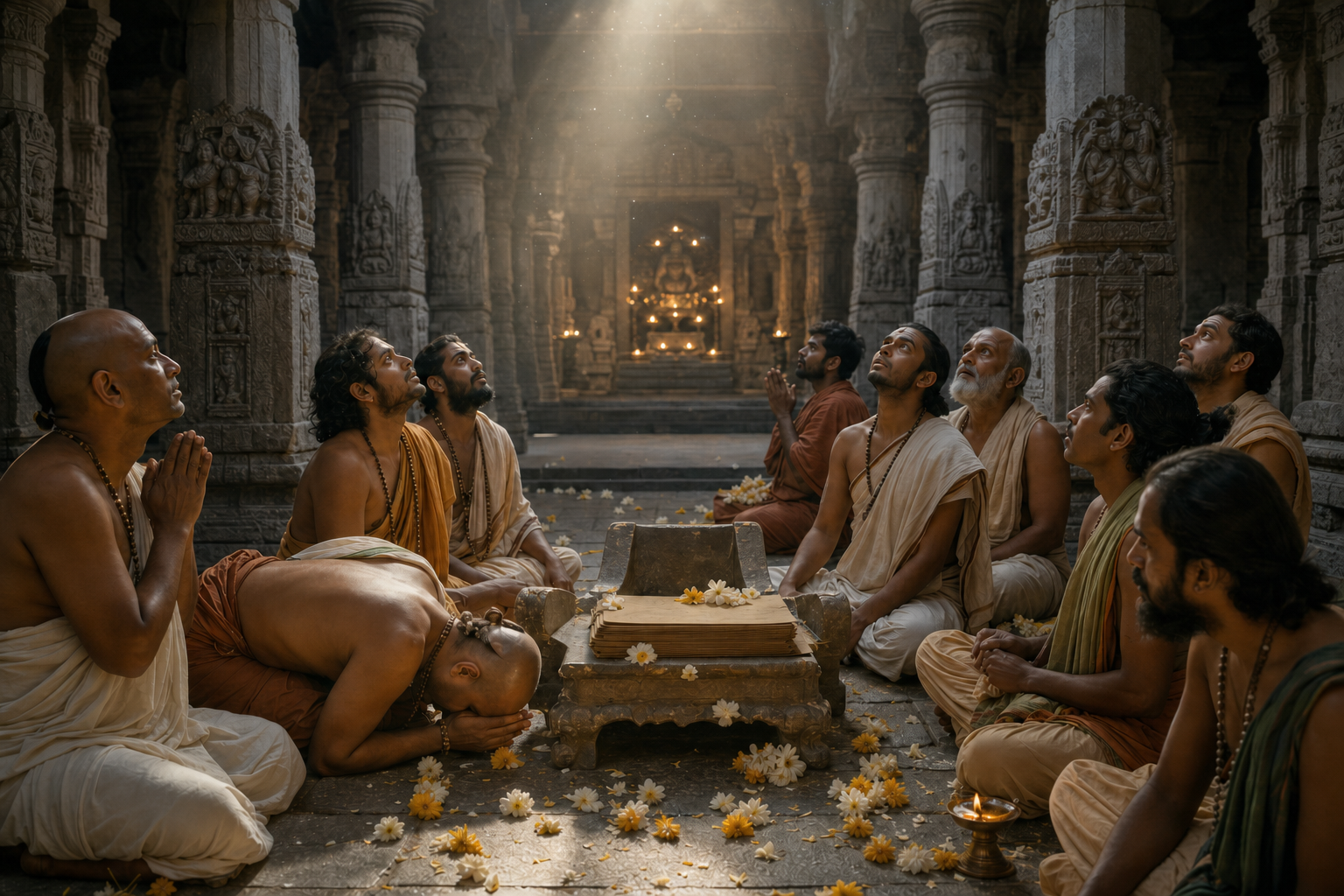
Madhva Navami is observed on Magha Shukla Navami, the ninth lunar day of Magha’s bright fortnight. It remembers the sacred tradition that Madhvacharya entered Badarikashrama and commenced his Prayana toward Badrinath. The day is therefore a remembrance of the acharya’s sacred journey, not merely a generic celebration of a historical personality.
That distinction should shape your observance. The centre is not biographical trivia or ceremonial display. It is the direction of Madhvacharya’s life: disciplined learning, unwavering devotion to Sri Hari and the transmission of a path that joins clear thinking to bhakti.
The Gregorian date must be checked afresh each year because the observance follows a lunar tithi. For a concrete example, Madhva Navami in 2026 fell on January 27. Do not carry that civil date into another year. Consult a panchang calculated for your location, and follow your family or Matha tradition if it specifies which part of the Navami tithi should be used.
The observance is especially prominent at Udupi Sri Krishna Matha, but its meaning is not confined to Udupi. A devotee at home can preserve the same basic order: Sri Hari at the centre, the guru honoured as teacher, and remembrance expressed through worship, study and service.
Why Madhvacharya’s Dvaita teaching changes the day
Madhvacharya is remembered as the great exponent of Dvaita Vedanta, also called Tattvavada. Dvaita affirms a real distinction between Sri Hari and the individual soul. Sri Hari is supreme; the soul and the world are real and dependent upon him. Bhakti therefore describes a real relationship between the devotee and Bhagavan, not a temporary distinction that eventually disappears.
This gives Madhva Navami its particular character. Honouring Madhvacharya should direct you toward Vishnu rather than place the acharya in competition with him. On the altar, in the reading and in your intention, honour the guru as the one who teaches the devotee to know and serve Sri Hari.
You do not need to turn the festival into a debate between Vedanta schools. A more useful approach is to understand Madhvacharya’s teaching accurately on its own terms. When you read a short passage, ask three questions:
- What does this teaching ask me to understand about Sri Hari?
- What does it say about the soul’s relationship with Bhagavan?
- What discipline, devotion or service should follow from that understanding?
Those questions prevent two common failures. Philosophy does not remain an intellectual ornament, and devotion does not become sentiment without understanding. Madhvacharya’s legacy asks you to bring buddhi, bhakti and conduct into alignment.
A simple Madhva Navami puja you can perform at home
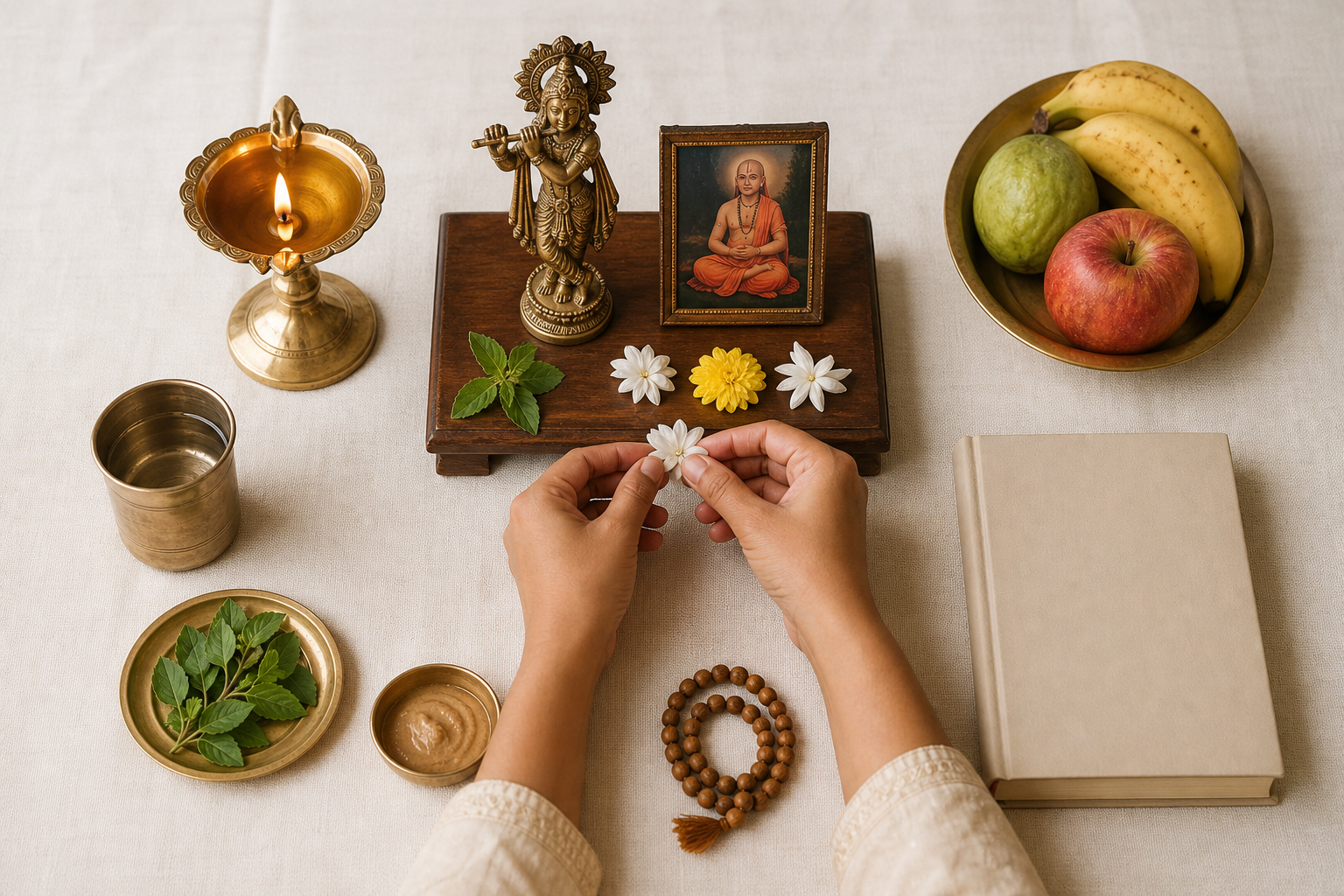
If your family, guru or Matha has given you a paddhati, follow it. If not, the following sequence keeps to the observance’s essential elements without pretending to replace a sampradaya-specific ritual manual.
- Confirm the Navami tithi in a local panchang. Decide in advance when you will perform the puja so that the observance is not reduced to whatever time remains at the end of the day.
- Clean the puja space and prepare a simple altar. Place your murti or image of Vishnu at the centre. A portrait or paduka representing Madhvacharya may be placed respectfully alongside it.
- Begin quietly. Light a deepa and bring your attention away from ordinary activity before making offerings.
- Offer Tulasi, flowers and naivedya according to your household custom. Simplicity is sufficient; the point is attentiveness, purity and devotion.
- Recite Vishnu Sahasranama or a stotra you already know. If your time is limited, an attentive recitation is better than hurrying through a longer unfamiliar text.
- Read a short selection from Madhvacharya’s teachings or a reliable explanation of Tattvavada. Pause after the reading and state its central teaching in your own words. If you cannot explain what you read, return to a smaller passage.
- Spend a few minutes in quiet reflection on guru-bhakti. Choose one act of discipline or seva that you can actually complete, then conclude with pranama and distribute the naivedya as prasada according to your custom.
If the day is crowded, preserve four things: the deepa, an offering to Vishnu, one deliberate recitation and one short period of study. Do not abandon the observance merely because an elaborate puja is not possible.
Many devotees also undertake a simple vrata. Follow inherited rules where you have them, but do not invent severity as proof of devotion. A vrata can include restraint in speech, reduced distraction, dedicated study or a food discipline appropriate to your circumstances. If fasting is medically unsuitable for you, choose a non-food discipline rather than risking harm.
Make seva concrete. You might assist with a temple observance, help clean a shared worship space, support someone’s study, share prasada or quietly help a person in need. Choose an action small enough to finish. An intention postponed indefinitely does not yet constitute seva.
Share the observance without erasing its sampradaya
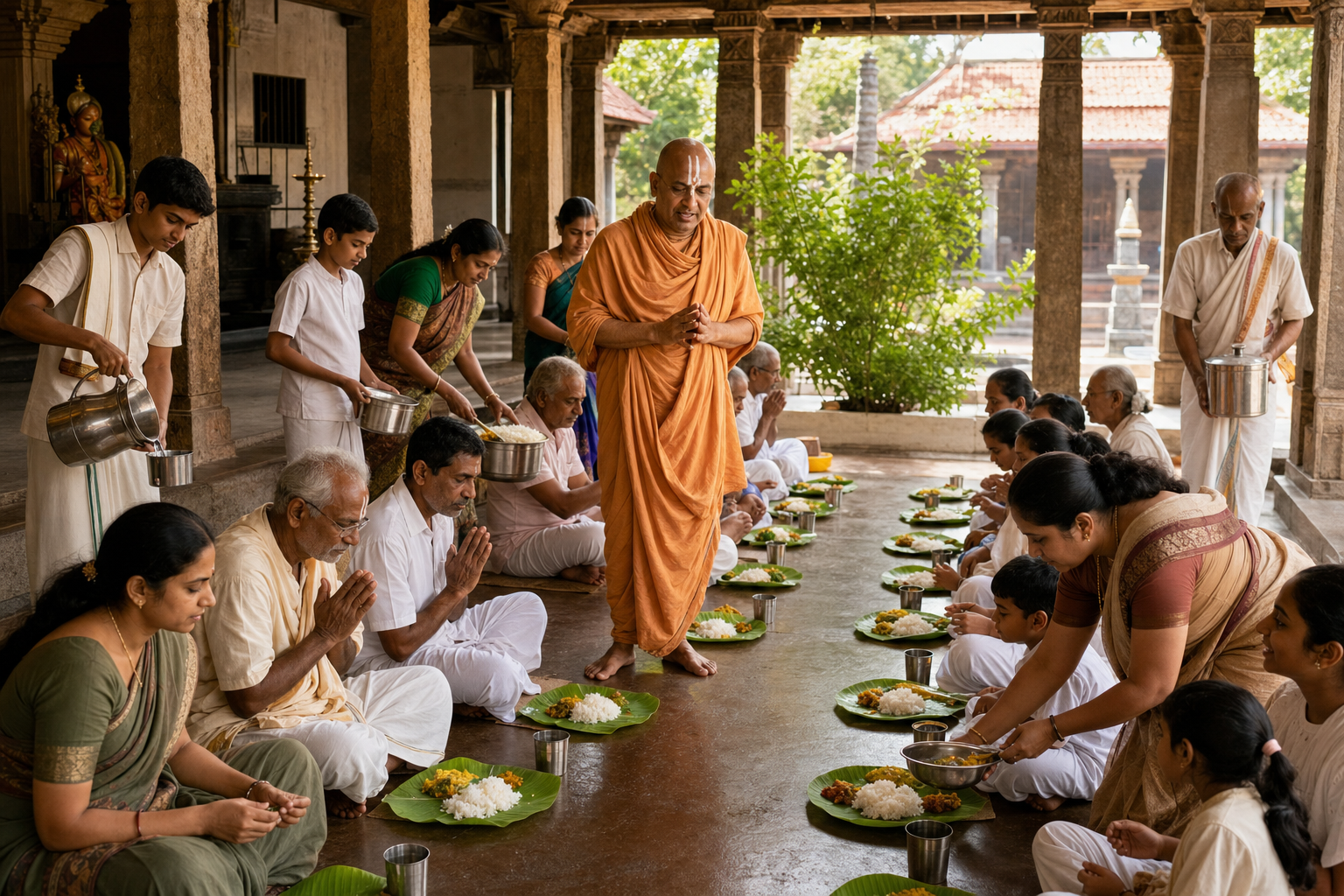
Madhva Navami can speak to the wider Dharmic family through reverence for the guru, disciplined learning, ethical conduct and compassionate service. Hindu, Buddhist, Jain and Sikh traditions each recognise the seriousness of learning and lived discipline, even though they do not teach identical philosophies.
Shared values are a basis for mutual respect, not a reason to flatten real differences. Madhva Navami remains a Vaishnava observance centred on Madhvacharya, Dvaita Vedanta and devotion to Vishnu. Saying this plainly makes an inter-sampradaya or inter-Dharmic gathering more honest, not less welcoming.
If you are explaining the day to a mixed group, use a clear order:
- Name Madhvacharya and explain the tradition associated with his Prayana.
- Describe Dvaita positively, in its own terms, without caricaturing another school.
- Keep Sri Hari at the centre of the worship.
- Identify shared virtues only after the distinctive teaching is clear.
- End with study, prasada or a specific act of seva rather than a vague appeal to unity.
This approach gives visitors a truthful encounter with the tradition while allowing them to recognise virtues that extend beyond a single sampradaya.
Practical questions before you observe
Is Madhva Navami on the same civil date every year?
No. It is determined by Magha Shukla Navami, so its Gregorian date changes. Use a panchang for your location rather than copying the previous year’s date or relying on a calendar made for another region.
Can I observe Madhva Navami if I cannot visit Udupi?
Yes. Homes and temples can both mark the day. At home, keep the observance focused on Vishnu-puja, remembrance of Madhvacharya, recitation, study and seva. A modest practice performed attentively is more faithful than an elaborate programme assembled without understanding.
Is fasting compulsory?
A simple vrata is customary for many devotees, but the exact form depends on household and sampradaya practice. Follow guidance you have received. Where a food fast is inappropriate, undertake a safe non-food restraint and give the saved attention to worship or study.
What can I read if I am new to Tattvavada?
Begin with one short, authenticated passage from a trusted Madhva institution or a reliable edition. Read less and understand more. If you do not yet have access to Madhvacharya’s works, recite Vishnu Sahasranama and use the day to identify a dependable text for continued study. Avoid treating unattributed quotations circulated online as substitutes for the acharya’s teaching.
Make one preparation now: record the locally determined Navami tithi, choose your reading, and decide on one act of seva before the day arrives. Then let the observance remain exact in purpose: Sri Hari worshipped, the acharya understood, and one teaching carried into conduct.
References
