
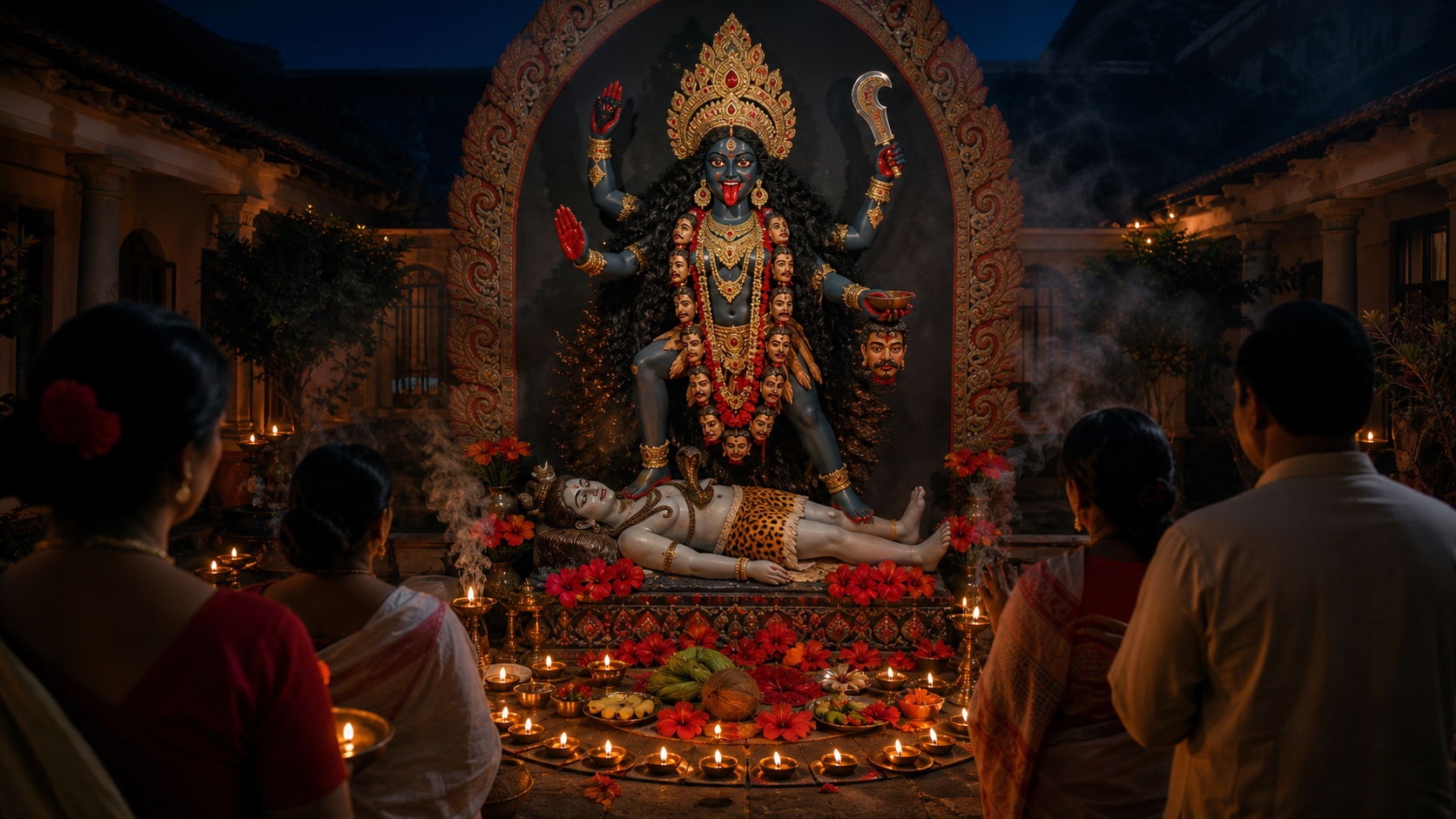
If you grew up around Kali Puja but have never led an observance yourself, or you will be in Bengal during Diwali and do not want to treat the night as a generic festival of lights, begin with one distinction: the lamps create the setting, but Kali is the devotional centre.
You do not need an elaborate altar or advanced ritual knowledge to approach the night sincerely. You do need the correct timing, a restrained form of worship, and a clear understanding of what you are asking the Mother to remove from your life.
Key takeaways
- Kali Puja, also called Shyama Puja, is observed on Kartik Amavasya, coinciding with Diwali. The principal worship begins after dusk and reaches its contemplative focus during Nishita Kala around midnight.
- Check the current Bengali panjika or a trusted local temple notice for the civil date and ritual window. Do not reuse the date or timing from a previous year.
- A simple home observance can consist of a clean altar, a safely placed lamp, flowers, fruit, sattvic bhog, mantra, silent reflection, and a closing prayer for collective well-being.
- Red hibiscus, the darkness of Amavasya, and Kali standing upon Shiva are not decorative details. Each directs your attention toward life-force, honest self-examination, and the relationship between Shakti and consciousness.
- Bhoot Chaturdashi belongs to the preceding evening. Its fourteen lamps should not be casually collapsed into the midnight worship of Kali.
Choose the form of worship that matches your responsibility
In Bengal, Kali Puja falls on the Amavasya associated with Diwali, yet it retains a distinctly Shakta identity. That matters when you decide how to participate. You are not merely attending a regional version of the same celebration. You are entering a night centred on Devi Shakti as fierce guardian, compassionate Mother, and liberating power.
A household puja is the clearest choice when you want quiet reflection, family continuity, or an observance simple enough to conduct without a priest. A temple observance is better when your family follows a particular ritual order, you need guidance, or you want to experience worship maintained by an established lineage. A neighbourhood pandal gives you the public face of the festival through the murti, alpona designs, lamps, bhog, and cultural programmes.
These forms belong together historically. Tantric and Shakta traditions nourished Kali worship in eastern India, while its public prominence expanded during the 18th century through patronage associated with Nadia and Shovabazar Rajbari. Kalighat, Dakshineswar, and the spiritual legacy connected with Sri Ramakrishna later helped carry devotion to Kali far beyond specialist ritual circles. The household altar and the crowded community pandal are therefore not rival versions. They express different scales of a living Bengali tradition.
If you visit a pandal, look beyond size and decoration. Notice how the murti presents the relationship between Kali and Shiva, whether the alpona reinforces the theme, how people approach the offering space, and how bhog and cultural activity bind the neighbourhood together. Public beauty has meaning when it leads you back to worship, memory, and community.
Ritual practice is not identical in every household or temple. Some traditions historically included animal offerings, while many homes maintain sattvic worship and many communities use non-violent symbolic alternatives. Do not assume that one practice represents all Bengali Kali worship. Follow the discipline of your household or temple, and do not improvise a specialised custom merely because you have seen it elsewhere.
A simple home Kali Puja you can conduct with care
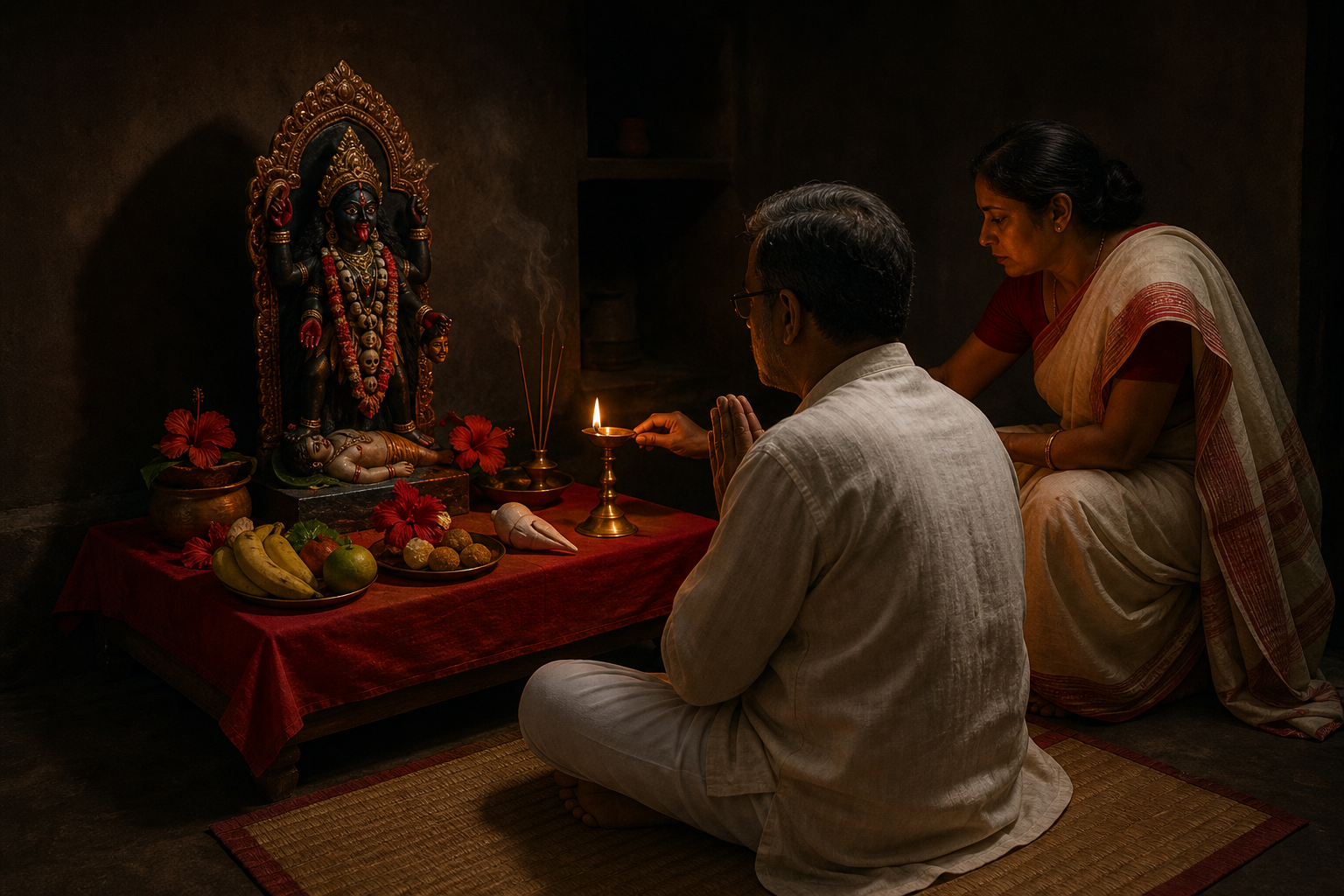
The essential movement of the home puja is preparation, invocation, offering, contemplation, and dedication. Keep it small enough that you can remain attentive. An ambitious arrangement that leaves you hurried is less useful than a modest altar before which you can sit steadily.
- Confirm the date and timing from the current Bengali calendar or your local temple. Plan to begin after dusk. If you intend to sit during Nishita Kala, identify the local midnight worship window in advance.
- Clean a quiet place and establish a small altar. Use the image or murti already accepted in your household. You do not need to acquire an elaborate installation for a first home observance.
- Place an earthen lamp or another suitable puja lamp on a stable, heat-safe surface, away from cloth and anything flammable. Never leave a burning lamp unattended.
- Arrange flowers, preferably red hibiscus when available, along with fruit and a simple sattvic dish for bhog. Sincerity and cleanliness matter more than abundance.
- Before lighting the lamp, name one obstacle you are prepared to confront: fear, ego, confusion, resentment, avoidance, or another form of inner darkness. Make the intention specific enough that it can guide an action after the puja.
- Light the lamp after dusk and settle your attention. A short mantra used in Kali worship is “Om Krim Kalikayai Namah.” Repeat it calmly rather than treating speed or quantity as the measure of devotion.
- Offer the flower, fruit, and bhog with reverence. If your household honours Bhairav as part of the sequence, follow the form you have received. If you have not learned that form, do not invent one from disconnected instructions.
- During the midnight Nishita period traditionally associated with focused worship, sit in silence after the mantra. Ask what must end for courage and clarity to become possible. If staying awake until midnight is impractical, keep your after-dusk observance coherent and attentive rather than performing exhaustion.
- Close with a prayer for your family, community, and the wider world. Receive and share the bhog respectfully, according to your household custom.
This sequence is intentionally restrained. Kali Puja has Tantric dimensions, but a person without initiation or lineage instruction does not need to imitate advanced rites. A simple devotional practice can hold the central disciplines of the night: attention, truthfulness, surrender, and ethical resolve.
Let Kali’s symbols change how you meet fear
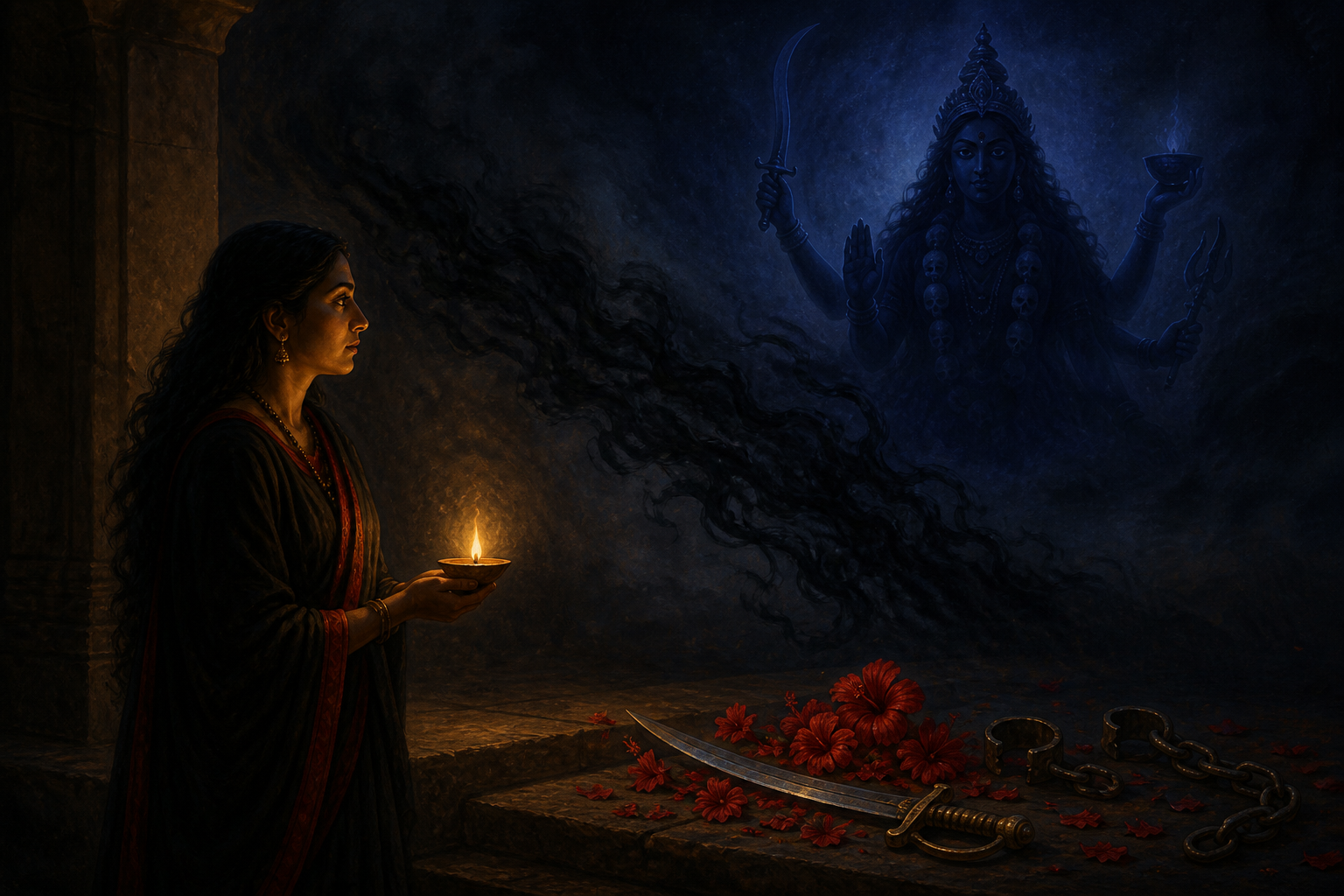
Kali’s fierce appearance is easy to misread if you separate it from her maternal and liberating character. She does not invite you to glorify terror or destruction. She confronts the forces that keep you ruled by fear, ignorance, and ahankara. The practical question is not whether the image looks comforting. It is whether you are willing to see what comfort has allowed you to avoid.
The darkness of Amavasya becomes the setting for renewal. With no moonlight to soften the night, the lamp becomes more than festive decoration. It marks the clarity you must cultivate when circumstances do not provide reassurance. When you light it, identify the next truthful step available to you, not a vague wish that every difficulty will disappear.
The red hibiscus carries the force of concentrated life and purity of intention. Offer it with a question: where is your energy being wasted, and where should it be directed? The flower then becomes a commitment to disciplined Shakti rather than a token placed before the murti and forgotten.
The familiar image of Mahakali standing upon Shiva expresses the dynamic power of Shakti in relation to consciousness. It should not be reduced to a contest between two deities or to a simple claim that one has defeated the other. For your own practice, the image offers a sharper lesson: power without awareness becomes ungoverned, while awareness without active power remains inert. Your resolve after the puja needs both.
This inward conquest has resonances across the wider Dharmic family: Buddhist traditions also confront ignorance, Jain dharma demands self-mastery and ahimsa, and Sikh teachings cultivate fearlessness and service. Resonance does not erase difference. Kali Puja remains a Shakta Hindu observance rooted in a particular theology and Bengali ritual culture. Respect is deepened by recognising that identity, not by turning every tradition into the same general message.
Keep Bhoot Chaturdashi distinct, then carry one vow forward
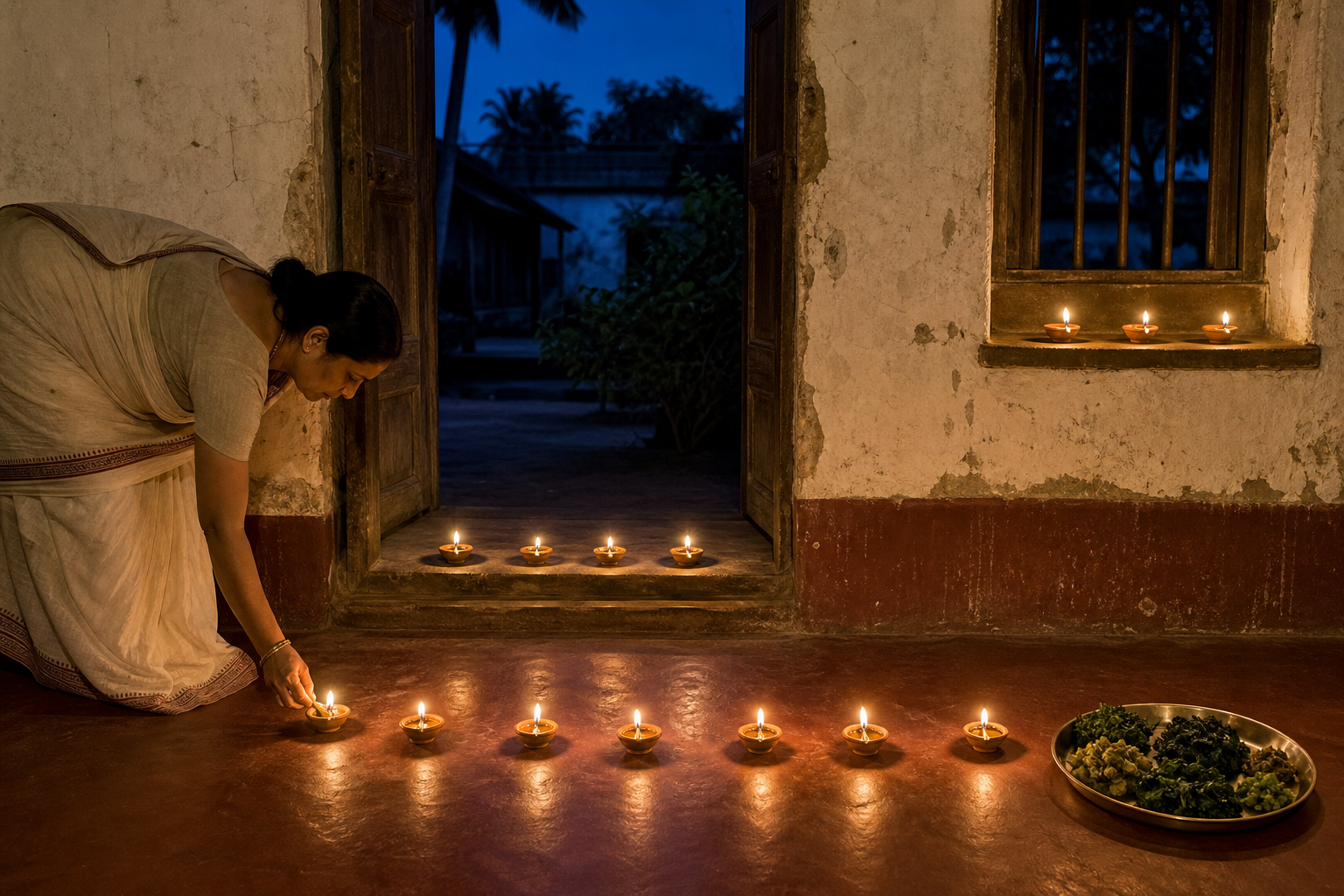
The evening before Kali Puja is marked in many Bengali families as Bhoot Chaturdashi. Families light fourteen lamps in remembrance of ancestors and for protection from negative influences. This is a separate layer of the festival cycle, not simply an early start to the main puja.
If your family observes it, prepare fourteen safe lamps before the evening begins and let elders guide their customary placement and sequence. If the custom was lost in your household, ask what older relatives remember before reconstructing it from fragments. The purpose is continuity and remembrance, not visual effect. If your household does not follow the practice, you can learn about it respectfully without pretending to possess a family custom you did not inherit.
Kali Puja itself should also leave a trace beyond the altar. Before the night, write down one fear, one act of ego, or one harmful pattern you are offering to the Mother. Beside it, write one action you will take the following day: make the apology, end the evasive habit, perform an act of service, or begin the difficult duty you have postponed. Choose only one. A vow narrow enough to keep is more honest than a long list produced by festival emotion.
Prepare the lamp and offerings, confirm the current timing, and decide now whether you will worship at home, at a temple, or through your neighbourhood puja. Then enter the dark night with one clear intention. Let your measure of the observance be the courage and compassion that remain when the lamps have gone out.
References
