
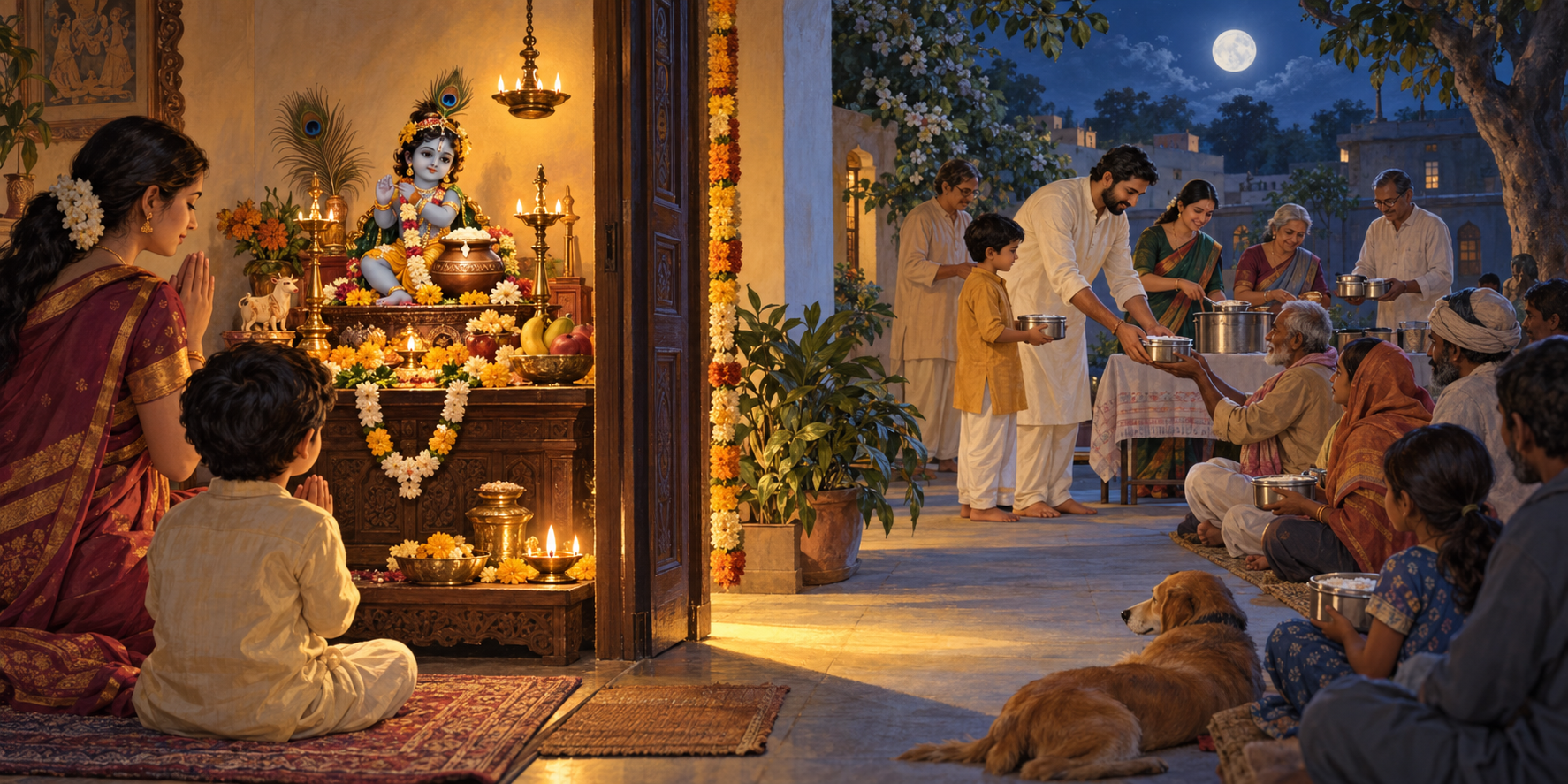
You may know the familiar pattern: the altar is prepared, Krishna’s leelas are told, aarti is offered, and the home remains awake for the sacred midnight. Then the decorations come down, ordinary life resumes, and the devotion of the festival never quite crosses the front door.
If that gap troubles you, don’t make the celebration bigger. Make its consequence clearer. Janmashtami can join bhakti with dedicated action for Dharma without reducing worship to activism or treating activism as a substitute for worship. The practical aim is simple: let devotion clarify one duty, and complete that duty while the festival is still fresh in your mind.
Begin with a sankalpa you can verify
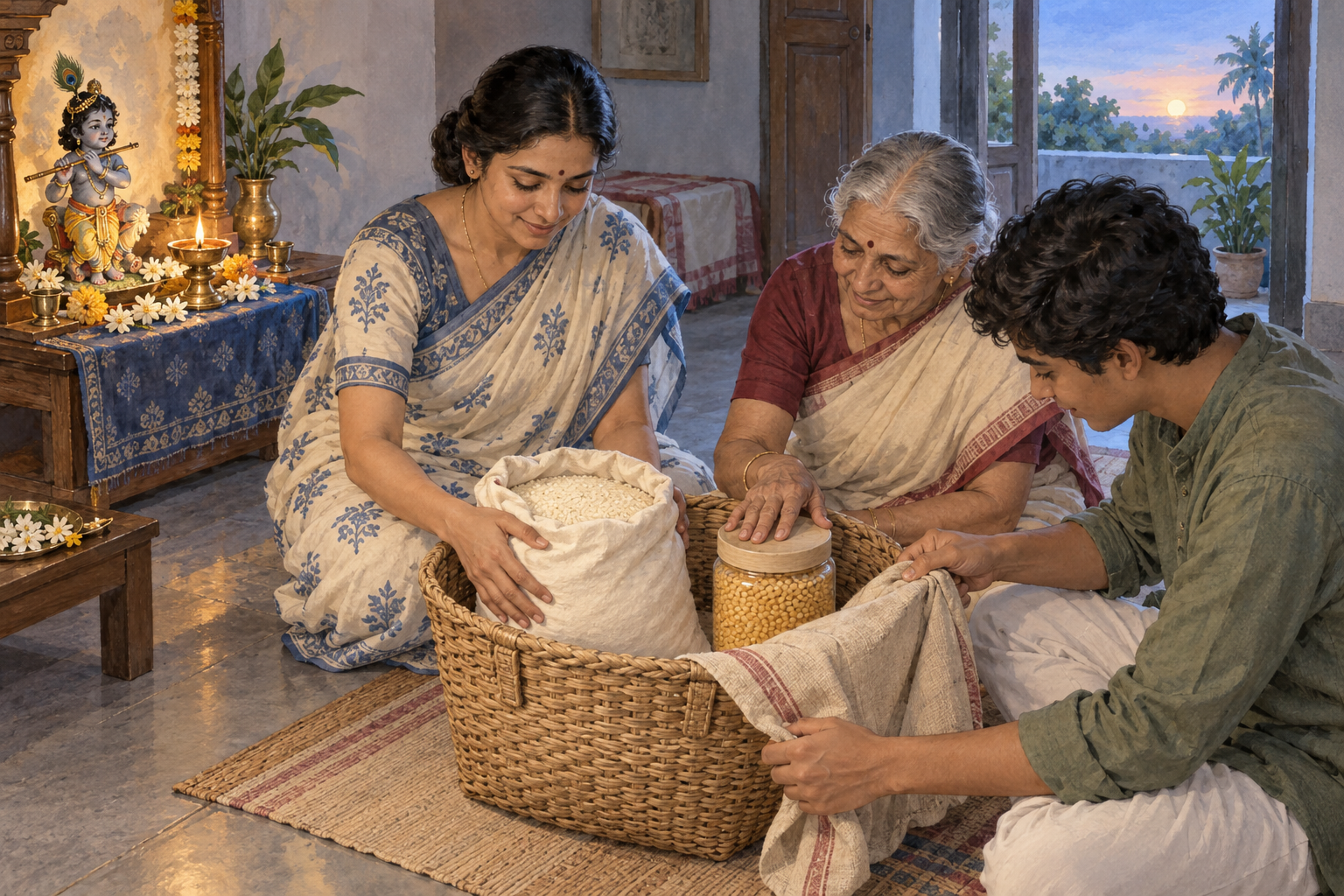
A broad intention such as serving Dharma may be sincere, but it gives you no next step. A useful Janmashtami sankalpa names an action, a beneficiary, a responsible person, and a point at which the work is complete.
Write your sankalpa in this form: In gratitude to Bhagwan Krishna, our household or sangha will do a named task for a named person or community, and we will know it is complete when a specific result has been delivered.
That sentence might lead you to teach a Krishna leela to the children in your family, assume a neglected duty at your mandir, help an isolated community member attend the celebration, or prepare a factual correction when Hindu tradition has been misrepresented in a school, workplace, or civic institution. Each is more useful than announcing that someone ought to do something.
- Name the beneficiary. Who becomes less isolated, better informed, more capable, or better protected because you acted?
- Name the deliverable. Are you offering a lesson, a ride, a meal, a completed temple task, a carefully documented correction, or sustained help?
- Name the owner. If several people are participating, one person should still accept responsibility for follow-through.
- Name the finish. Good intentions are not completion. Decide what observable result will close the task.
- Remove the need for applause. If the action loses its appeal when no photograph, public praise, or social-media response is attached, reconsider the motive.
Keep the sankalpa proportionate. It is better to finish a modest act of seva than to make a dramatic promise that becomes another unfinished festival announcement. You are not trying to prove how devoted you are. You are training devotion to become dependable conduct.
Let worship, understanding, and service reinforce one another
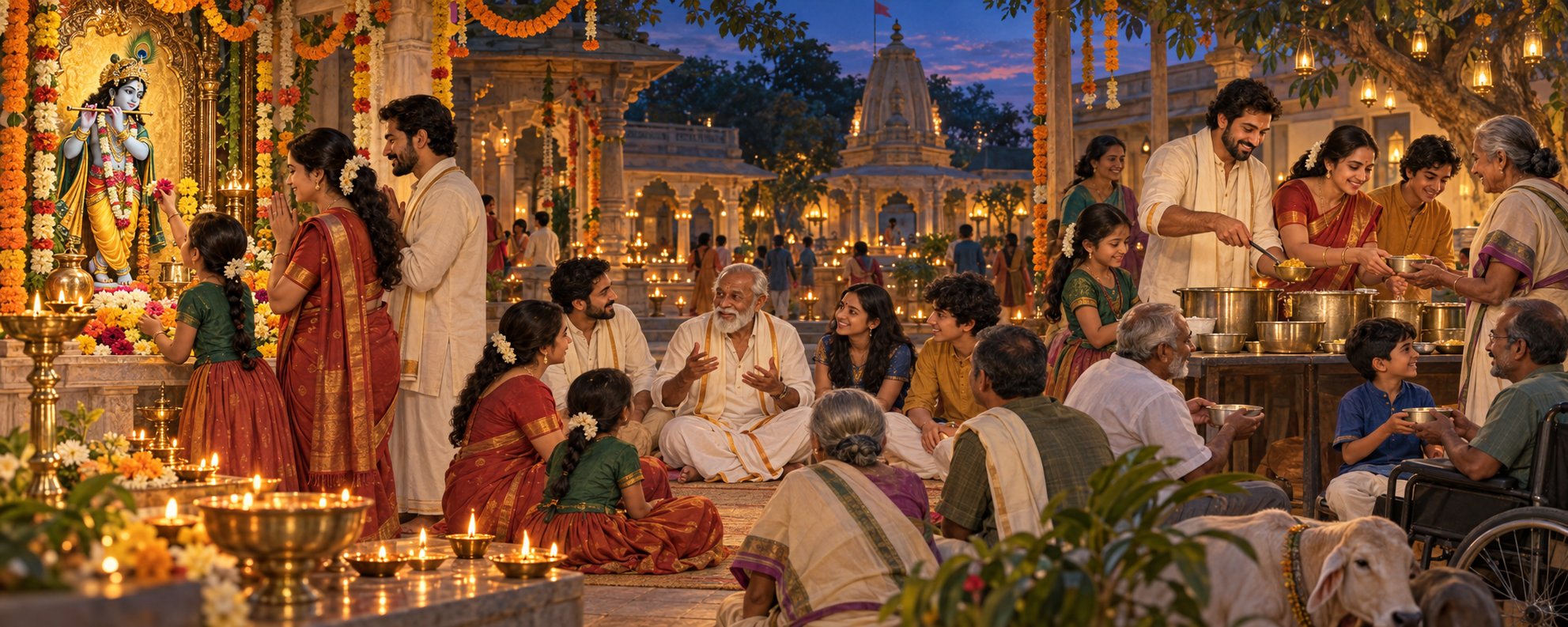
A practical observance can move through three connected activities: worship, understanding, and service. They do different work, and weakening any one of them distorts the whole.
Worship before performance
Follow the practice of your family, temple, or sampradaya. An elaborate public event is not the measure of bhakti. Families have marked Janmashtami meaningfully through something as accessible as a Krishna story and a simple aarti. If your household has limited time, space, money, or ritual knowledge, simplicity need not become embarrassment.
If you are hosting, give people real roles rather than leaving most of the gathering as spectators. Someone can prepare the altar, someone can lead the reading, someone can explain the selected leela to children, and someone can coordinate the community action. The distribution of work matters because seva begins inside the celebration itself.
Understanding before slogans
Select one episode from Krishna’s life and stay with it long enough to ask what it demands of you. A crowded sequence of names and events may entertain children, but one carefully discussed leela can form moral judgement.
After telling the story, ask: Who was vulnerable? What duty was being neglected? What temptation made the right action difficult? What quality did Krishna reveal? Where does a similar choice appear in our family or community? These questions turn remembrance into discernment without flattening divine leela into a generic moral fable.
Service before self-congratulation
Connect the discussion to the sankalpa before everyone disperses. Record the task, the responsible person, the beneficiary, and the finish condition. A donation may be appropriate, but money should not automatically replace the time, knowledge, courage, or sustained presence the situation actually requires.
Bhakti is not campaign branding, and seva is not a test of who is Hindu enough. Worship turns attention toward the Divine. Understanding helps you identify your duty. Service tests whether that understanding survives contact with inconvenience.
Turn one Krishna leela into a present decision

A family-made scene depicting Krishna and Sudama can be more than decoration. It can prompt a quiet examination of friendship, hospitality, dignity, and the habits by which status separates people. Ask whether someone has gradually disappeared from your community because illness, age, distance, financial pressure, or social discomfort made participation difficult. Then choose an unobtrusive way to restore contact. Help should protect dignity, not turn another person’s difficulty into your festival display.
An episode involving danger or the protection of the vulnerable can lead to a different decision. Ask what your community is failing to notice, who bears the cost of that neglect, and what responsible protection would look like. Protection may mean accompanying a person, preserving an accurate record of harassment, correcting a false description of Hindu practice, supporting a temple task, or teaching children how to respond calmly when their tradition is mocked.
Krishna’s guidance to Arjuna offers another essential lesson: doubt did not disqualify Arjuna from duty. His confusion had to be faced and clarified. If grief, anger, or discouragement has made you passive, use the festival to conduct a disciplined self-audit:
<!– wp:list {
Leave a Reply
You must be logged in to post a comment.