
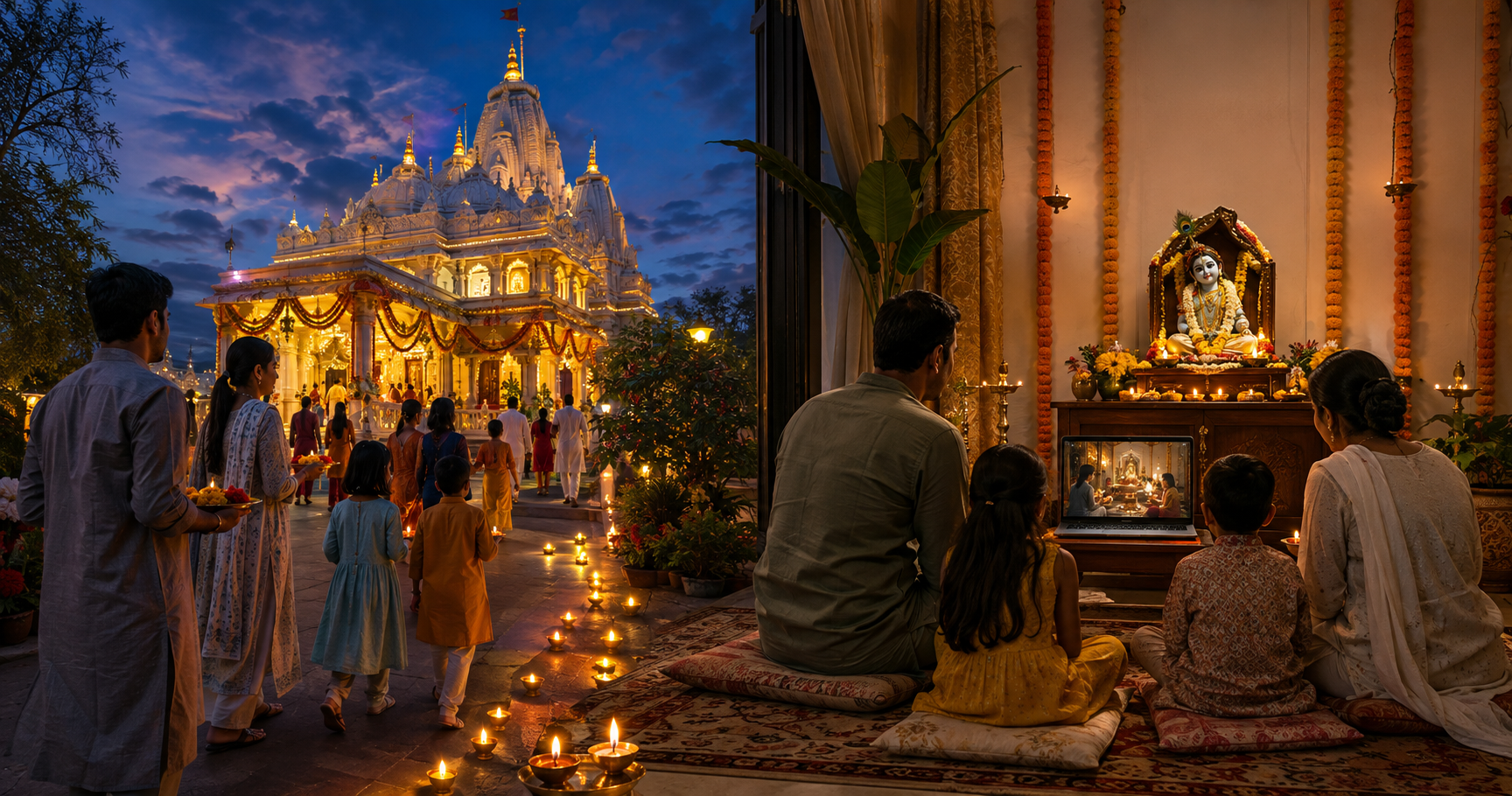
If you are choosing how to observe Janmashtami 2026 through ISKCON, settle two questions first: where can you participate responsibly, and what do you want your participation to centre on? A crowded temple visit, a quieter local programme and a live broadcast can all support devotion, but they require different preparation.
In 2026, ISKCON Janmashtami extended from a live broadcast at the Alachua Hare Krishna temple to celebratory participation in Vrindavan and a very large gathering of devotees in Imphal. That range matters. The ISKCON name identifies a shared devotional tradition, not one worldwide schedule or one standard visitor experience. You still need a plan for the particular temple or broadcast you intend to join.
Choose your form of participation before choosing a temple
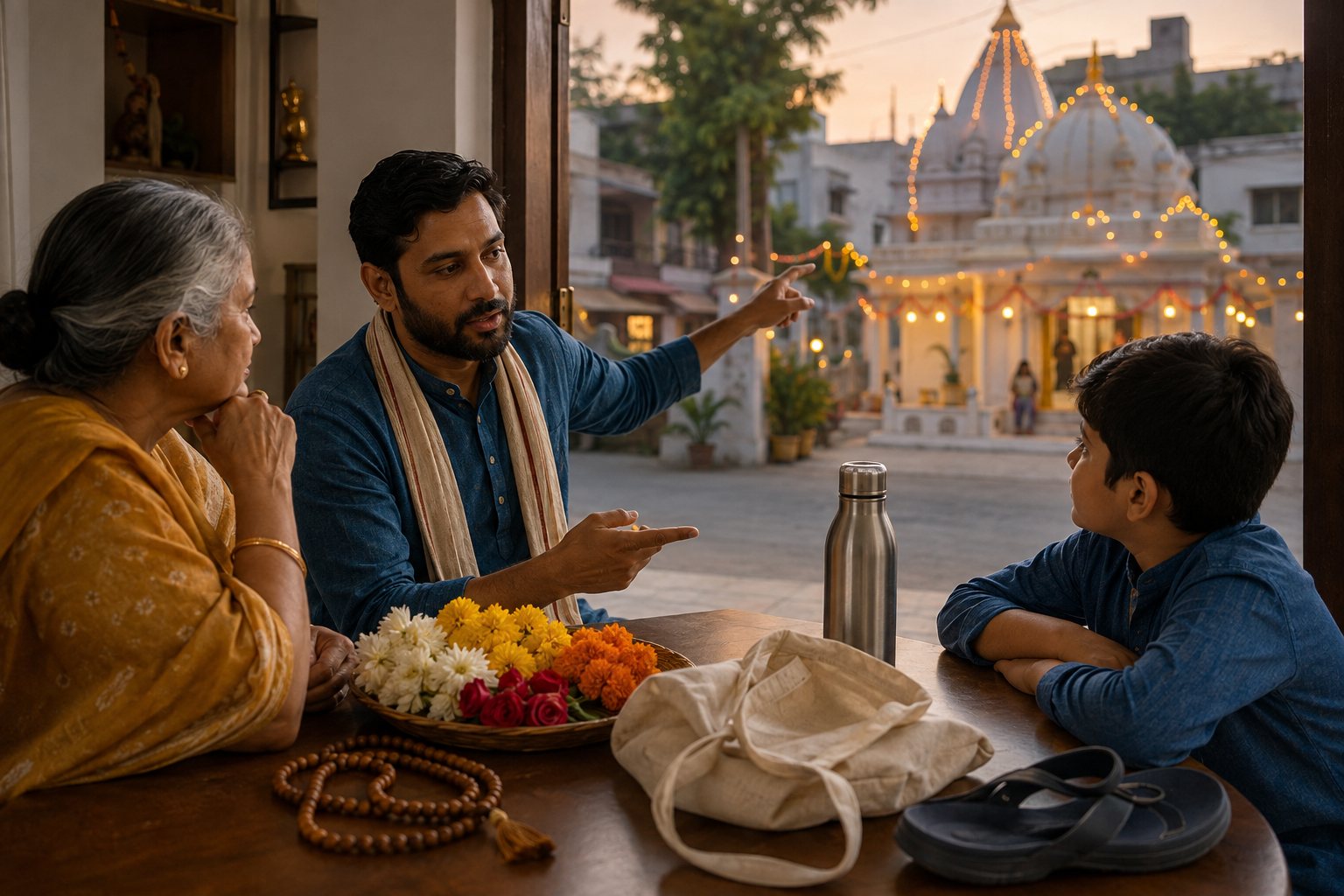
A famous destination can attract you before you have considered whether it suits your household. Reverse that order. Decide what kind of observance is realistic, then choose the place or channel that supports it.
- Attend a nearby temple when you want in-person kirtan, darshan, community and possible opportunities for seva without turning the day into a demanding journey.
- Travel to a major temple when the pilgrimage and that particular sacred setting are central to your observance. Confirm the temple’s own programme and access arrangements before committing money or travel time.
- Join online when distance, mobility, family duties or transport would make a temple visit impractical. The Alachua broadcast demonstrates that remote participation was a real part of ISKCON Janmashtami 2026, not merely an afterthought.
- Use a hybrid plan when you can visit locally for one portion and follow another temple online. Do not assume that two temples will conduct corresponding parts of the programme at the same time.
Let your non-negotiable constraint make the first decision. If an elder needs seating, a child cannot manage a long queue, or your journey home becomes unreliable late in the programme, a closer temple or broadcast may support a more attentive observance than a celebrated venue that leaves everyone exhausted. Choosing within your limits is not choosing less devotion; it is removing avoidable distraction from it.
Build your plan from local details, not the festival name
The participation visible in Vrindavan and the scale of the gathering in Imphal make crowd planning part of the devotional preparation. When entry procedures, transport or accessibility remain uncertain, those questions consume attention precisely when you hoped to direct it toward Sri Krishna.
Use the temple’s current, official communication to answer the following questions. A general Janmashtami announcement, an old event page or a forwarded image is not enough when the missing detail affects whether you can enter, travel safely or remain for the portion you value.
- Identify the exact programme. Confirm the local date, opening time, main observances, kirtan or discourse sessions, aarti, prasadam arrangements and stated finishing time. If a detail is absent, treat it as unknown rather than filling it in from another temple’s schedule.
- Check whether entry has conditions. Look for registration, passes, queue instructions, security checks, bag restrictions, footwear arrangements and rules for phones or photography.
- Ask about accessibility directly. If someone needs step-free entry, a place to sit, a shorter route, an accessible washroom or permission to carry essential medication, confirm the arrangement with the local temple instead of assuming that a large event can accommodate it automatically.
- Plan the entire journey. Work out parking or public transport, the return trip and a backup if the programme runs differently from your expectation. For a group, choose a meeting point outside the densest area before entering.
- Give each adult a clear responsibility. Decide who stays with children, who assists an elder and who holds the transport information. Do not depend on mobile reception or assume that separated family members can easily move against a crowd.
- Save an online fallback. Keep a confirmed broadcast page available in case illness, weather, transport or crowd conditions prevent the visit. Test the link, sound and time-zone conversion before the observance begins.
Keep plans from different temples separate. A programme shared by Alachua cannot confirm the entry process in Vrindavan, and crowd scenes from Imphal cannot tell you whether your nearest temple requires registration. The local announcement is authoritative for local arrangements.
Do not let a large gathering consume the observance
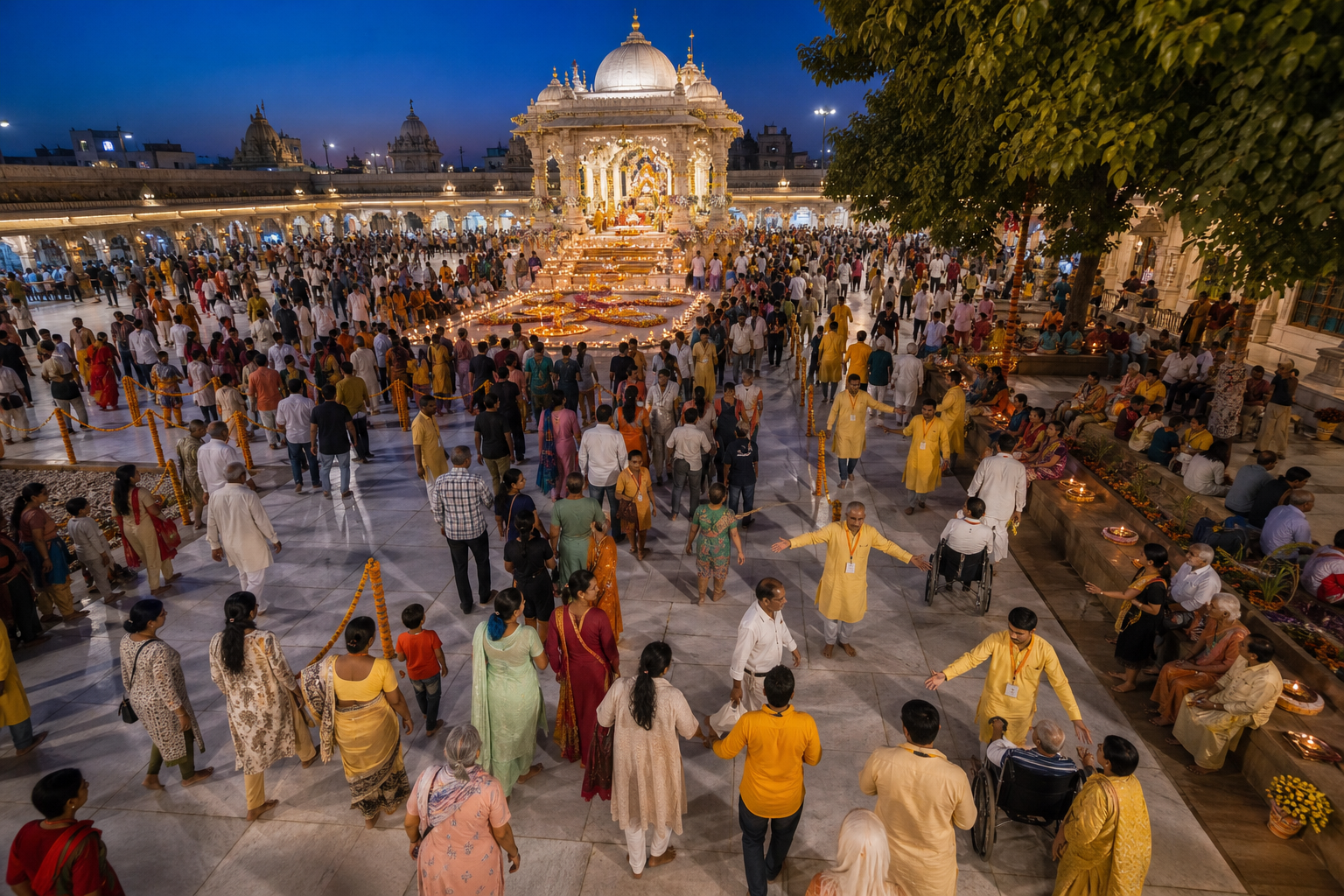
Janmashtami is devotional remembrance of Sri Krishna’s appearance, not a contest for the closest position, the longest stay or the most dramatic photograph. A large congregation can deepen kirtan and shared celebration, but it can also turn the mind toward queues, screens and comparisons. Decide in advance what will anchor you when the setting becomes busy.
- Choose one primary practice. It may be attentive kirtan, darshan, hearing a discourse, assisting family members or completing an assigned seva. Other parts of the programme can enrich the day, but they need not compete for equal attention.
- Carry a short sankalpa. State in one sentence why you are going. Something as simple as dedicating the visit to remembering Krishna can bring you back when logistics begin to dominate.
- Use waiting time deliberately. A queue need not be dead time. Keep your phone away unless you need it, chant quietly where appropriate, or recall the purpose of the festival.
- Follow the movement directed by volunteers. Do not stop an entry route or hold up a darshan line for a photograph. If you want an image, take it only where temple rules and crowd flow permit.
- Set a group rule for separation. Children and first-time visitors should know whom to approach and where the group will reunite. A predetermined external meeting point is more useful than telling everyone to call later.
- Leave a congested area when necessary. If you or someone with you becomes unwell, distressed or unable to move comfortably, seek help from event staff and move to a safer space. Remaining in the densest part of a crowd is not a devotional obligation.
Do not measure the observance by how much of the programme you managed to collect. A shorter period of attentive participation can be more coherent than hours spent moving anxiously between queues, stages and camera angles.
Turn a livestream into an observance, not background media
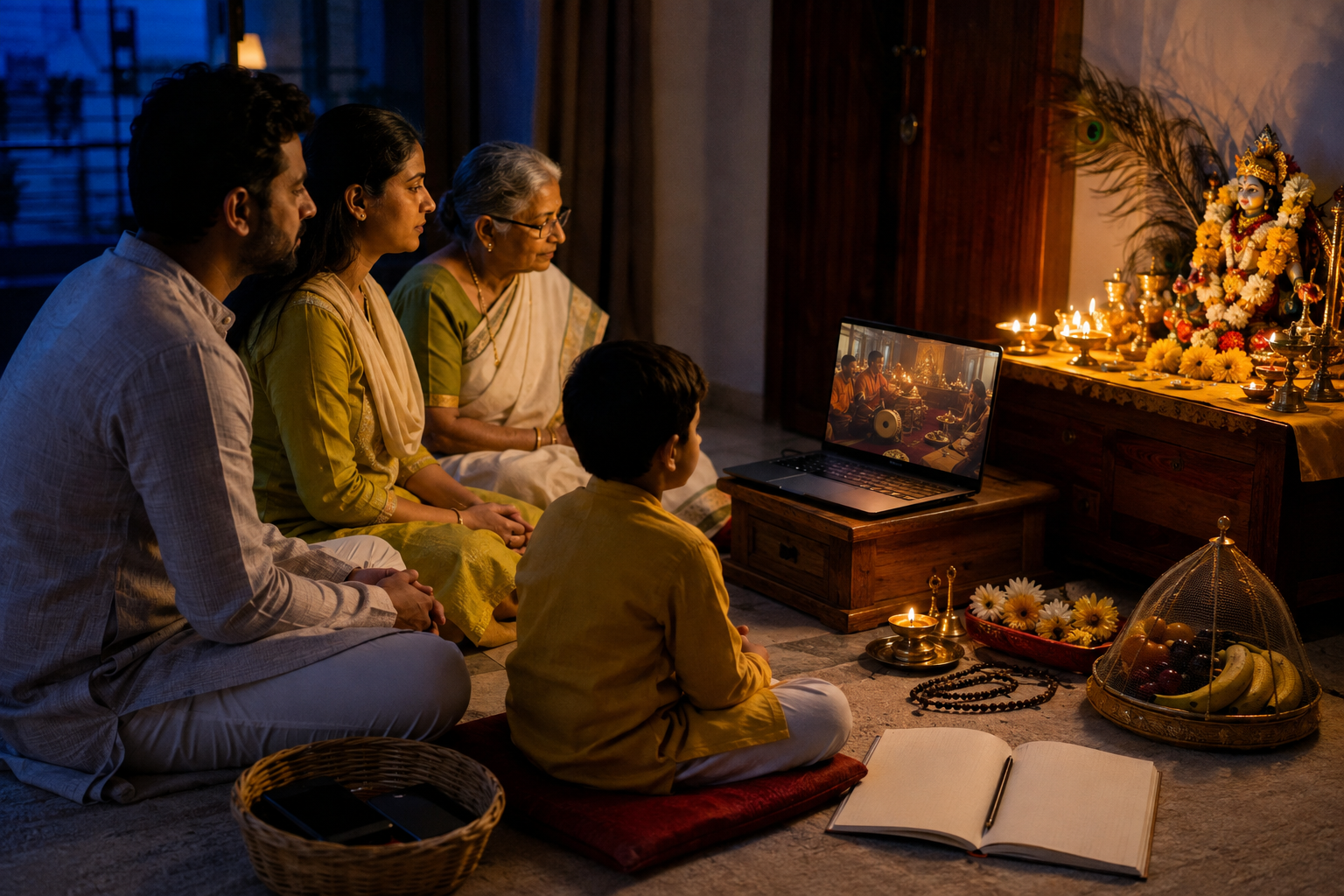
A broadcast removes travel and crowd pressure, but it introduces a different problem: the same device that carries kirtan also carries messages, news and endless opportunities to switch away. Treat the screen as the doorway to a scheduled devotional period, not as something to leave running while the household does unrelated work.
- Verify what the link actually contains. The Alachua broadcast was explicitly identified as Part 1. A page with that label may represent only one segment, so check whether later portions have separate links rather than assuming one player contains the entire programme.
- Confirm the host temple’s time zone. Write the converted local time beside the link. Do not depend on memory when a broadcast originates somewhere else.
- Test the setup in advance. Open the page, check the audio, connect the larger screen if you intend to use one, and make sure the person managing the device knows how to restore the stream if it stops.
- Prepare one clean, settled place. Silence notifications and remove unrelated tabs. If your household tradition includes a lamp, flowers, an image of Sri Krishna or an offering, arrange it before the programme so preparation does not interrupt participation.
- Participate in one defined way. Chant with the kirtan, listen without multitasking, or gather the household for a selected segment. Merely keeping the video audible in another room does not create the same quality of attention.
- Decide what follows the screen. End with a prayer, reading, family reflection or act of service appropriate to your practice. This gives the observance a deliberate conclusion instead of letting it disappear into the next recommendation on the device.
If a live connection fails, preserve the practice rather than spending the entire period troubleshooting. Continue with nama-japa, kirtan, reading or prayer, then return to the recording if it becomes available. The transmission is a means of participation; it is not the object of devotion.
Key takeaways
- Choose among a local visit, destination temple, livestream or hybrid observance according to your real constraints.
- Use only the selected temple’s current communication for its schedule, entry rules, accessibility and prasadam arrangements.
- Expect major centres to be busy, and make transport, meeting-point and family-care decisions before entering the crowd.
- Select one devotional anchor so that queues, phones and programme choices do not take over the day.
- Check whether an online broadcast is one segment or the complete programme, and convert its time zone before you gather to watch.
Your next step is concrete: choose one temple or broadcast, record the verified local programme and access details, and name the one practice that will anchor your observance. Once those three decisions are made, Janmashtami becomes more than an event you hope to catch; it becomes time you have intentionally set aside for Sri Krishna.
References
- Dandavats – Janmastami 2026 – Part 1 – LIVE Broadcast – ISKCON Alachua Hare Krishna Temple
- Dandavats – Vrindavan Janmashtami: ISKCON Temple Witnesses Devotees In Festive Spirit | NewsX
- Dandavats – ISKCON temple in Imphal witnesses a massive gathering as devotees arrive for Krishna Janmashtami
