
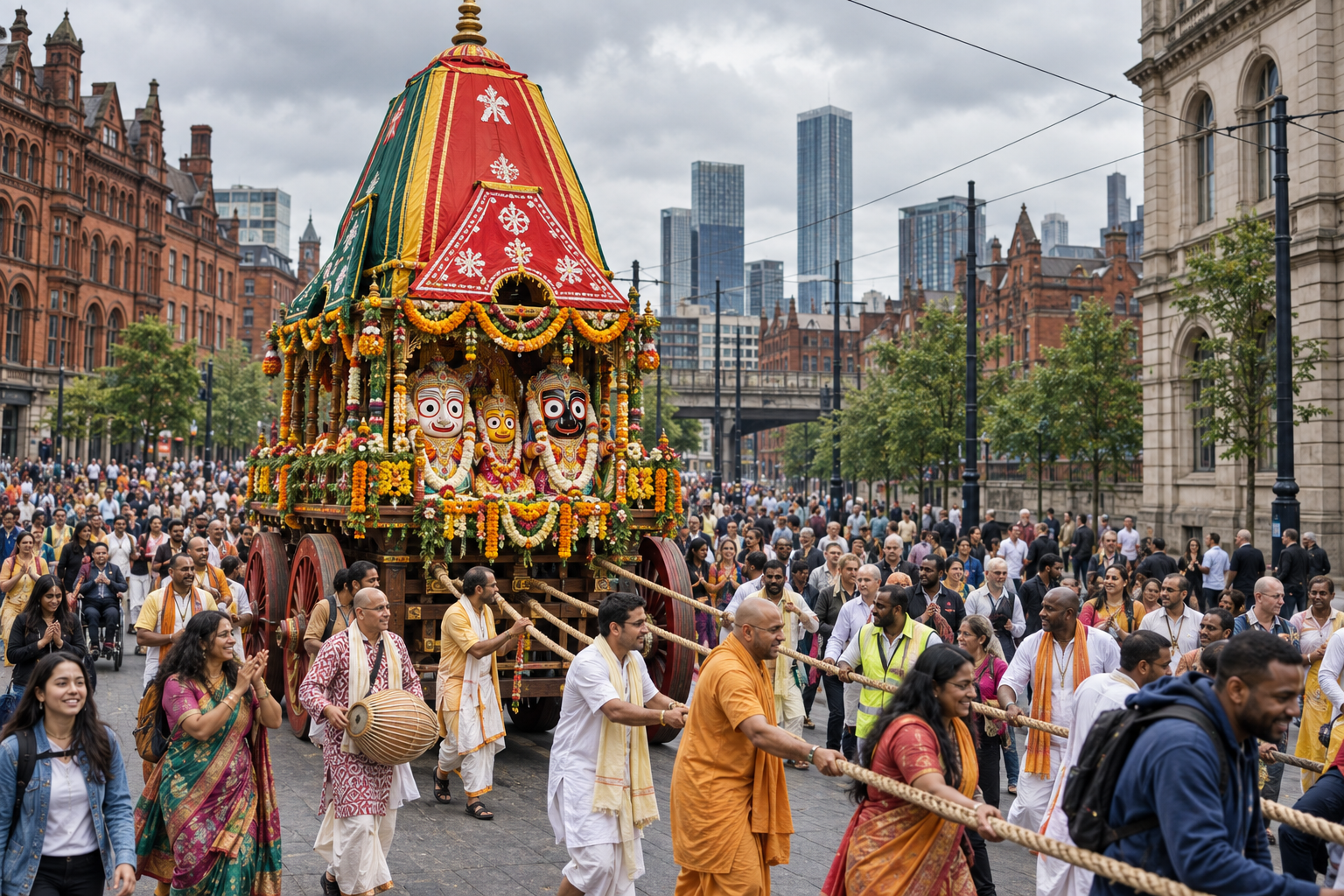
If you are trying to attend ISKCON Manchester’s Jagannath Ratha-yatra in 2026, the event name is not yet an itinerary. Before you book travel or set out, separate the one confirmed fact from the practical details that still need verification.
A 2026 Jagannath Ratha-yatra bearing the ISKCON Manchester name has been identified. The available information does not establish its date, present status, assembly point, route, timings or accessibility arrangements. This guide will help you ask the right questions, prepare intelligently and participate with the devotional respect the occasion deserves.
Separate the confirmed event from the missing itinerary

Do not infer a date or location from the words “Manchester” and “2026.” Manchester may describe the organising community rather than the exact starting point, while a year-labelled page may remain accessible after an event has finished. Your first question should therefore be whether the Ratha-yatra is upcoming, completed, postponed or rescheduled.
For attendance planning, confirmation has four layers: current status, calendar date and timings, exact locations, and an organiser-controlled contact or announcement. A poster or forwarded message that supplies only some of these is not enough for a long journey.
If you would be travelling from outside Manchester, wait for the full set of details before buying a non-refundable ticket or reserving accommodation. The common planning mistake is to treat the existence of an event as confirmation of its schedule. They are different facts.
Understand what Ratha-yatra asks of a participant
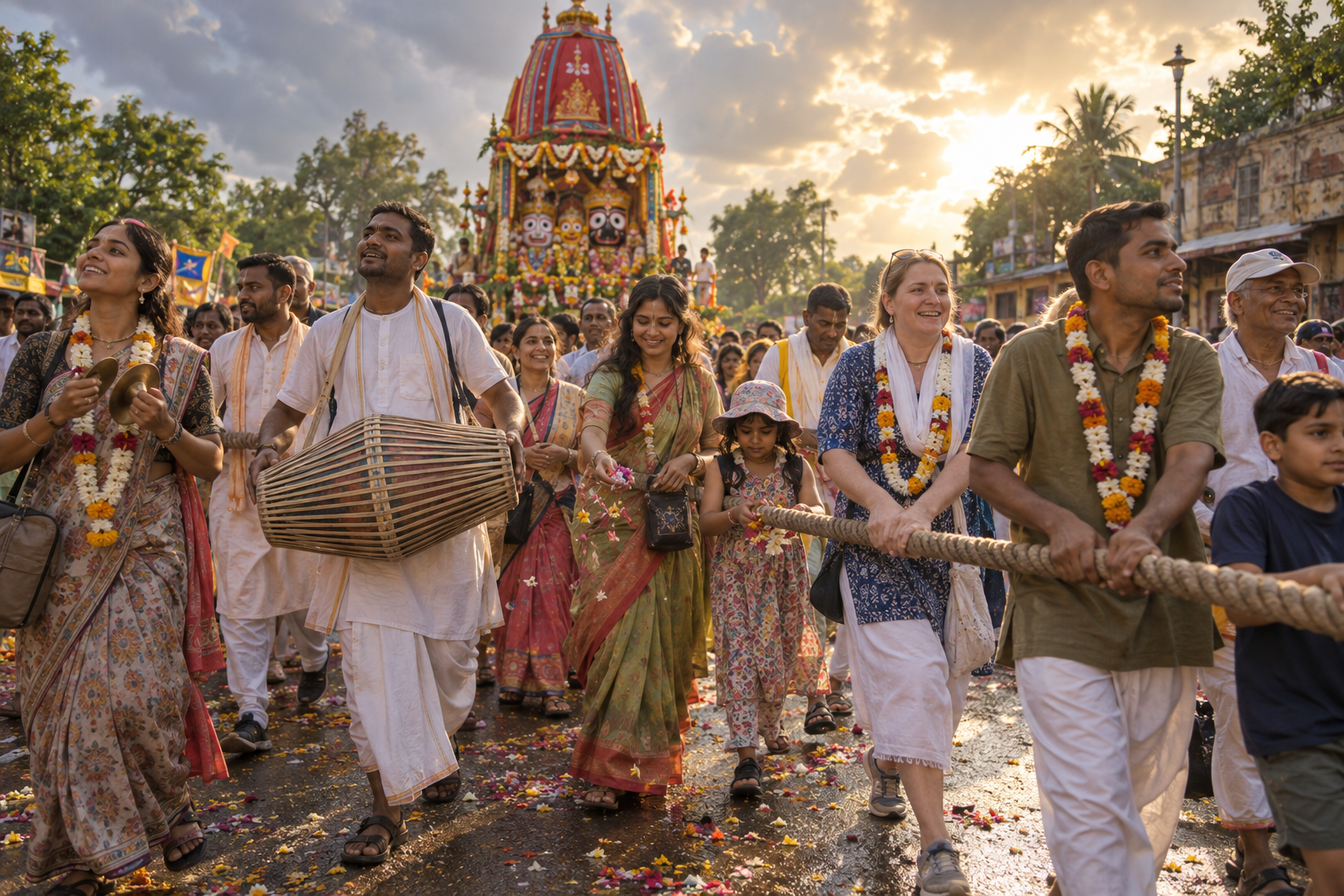
Ratha-yatra means a chariot journey or procession. In Vaishnava devotional life, Lord Jagannath’s movement into public space carries a meaning deeper than spectacle: darshan and congregational devotion are brought into the shared life of the community.
That changes how you should approach the day. The chariot is not merely a parade float, and Jagannath is not a cultural mascot. You can come ready to walk, hear, chant and follow the directions of the devotees managing the procession. If you do not know the kirtan, listen to the lead chanter and repeat the response with the congregation. You do not need prior expertise to participate attentively.
Respect also has a physical form. Keep the chariot’s path clear. Do not climb on it, touch its moving parts or take hold of a rope unless authorised volunteers invite and instruct you. Take photographs without blocking darshan, kirtan or the work of stewards. If close-up photography involves a devotee, ask first.
Verify six details before you leave home

A useful announcement should let you answer all six points below. If it does not, send the organiser one concise message rather than relying on guesses repeated through social media.
- Status: Is the 2026 event still upcoming, or has it already taken place? Has any change or postponement been announced?
- Date and timing: What are the date, assembly time, expected procession start and approximate finishing time? These may not be the same.
- Starting point: What is the full address or map pin? A neighbourhood name is not precise enough when a crowd is gathering.
- Route and endpoint: Does the procession finish where it begins? Ask about walking distance, road surfaces and the easiest public-transport connection at the endpoint.
- Access and family facilities: Is the route step-free? Are toilets, rest points or provisions for older participants and families identified?
- Participation arrangements: Is registration needed for attendance or seva? Are there instructions about prasadam, bags, photography, volunteering or joining the chariot procession?
Save the final announcement, map and organiser contact on your phone once they are issued. Check for changes again before departure, especially if the details first reached you through a forwarded image. A screenshot can preserve an old plan; it cannot tell you whether that plan was later revised.
Prepare for a devotional procession, not just a day out
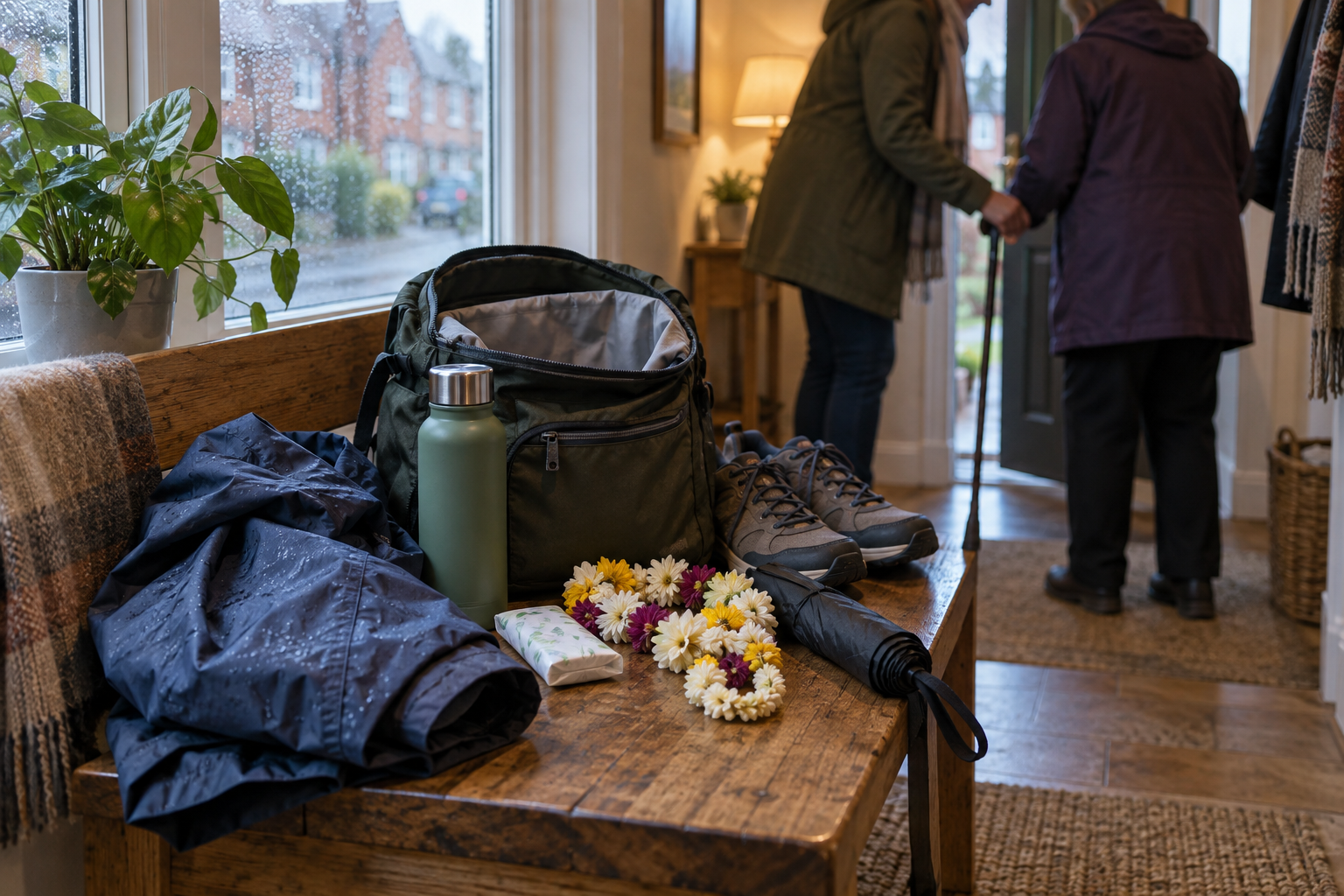
Your preparation should support walking, worship and consideration for the people around you. Bring only what you can carry without obstructing a moving congregation.
- Wear modest clothing and comfortable footwear suitable for the confirmed route. Carry layers or rain protection appropriate to the day’s forecast.
- Bring water, necessary medication and a charged phone. Keep valuables to a minimum so your attention can remain on the procession.
- If you are attending with children, agree on a reunion point and place a parent’s contact number in a secure pocket. Do not choose the moving chariot as your meeting point.
- If you have limited mobility, ask about the actual route rather than assuming that a street procession is fully accessible. Step-free access at the assembly point does not guarantee a step-free journey.
- If prasadam is offered and you have an allergy or dietary restriction, ask about ingredients. Its sacred character does not remove the need to protect your health.
- Follow the stewards around roads, crossings, ropes and wheels. Their instructions protect both the worship and the people taking part.
If you want to offer seva, contact the organisers before the event and ask for a defined role, reporting place and reporting time. On the day, do not create an unofficial responsibility for yourself. Helping under a coordinator keeps good intentions from becoming confusion at the busiest moment.
You can still serve without a formal assignment. Make room for elders, avoid breaking the kirtan flow, keep litter with you until you find a bin, and respond calmly when a steward redirects the crowd. These small choices help public dharma remain both joyful and disciplined.
Key takeaways
- The confirmed event-specific fact is the identification of an ISKCON Manchester Jagannath Ratha-yatra for 2026.
- Do not assume its date, present status, route or meeting point; verify each one directly.
- Confirm both the starting point and endpoint before arranging transport, particularly if you are coming from outside Manchester.
- Approach Ratha-yatra as darshan, sankirtana and seva rather than as a spectacle.
- Follow authorised volunteers around the chariot, ropes, roads and crowd movement.
Your next move is simple: ask the organiser for the event’s current status, date, assembly point, start time, route, endpoint and accessibility information in one message. Once those answers are confirmed, plan your journey and arrive prepared to take part as a respectful participant in Lord Jagannath’s procession.
References

Leave a Reply
You must be logged in to post a comment.