
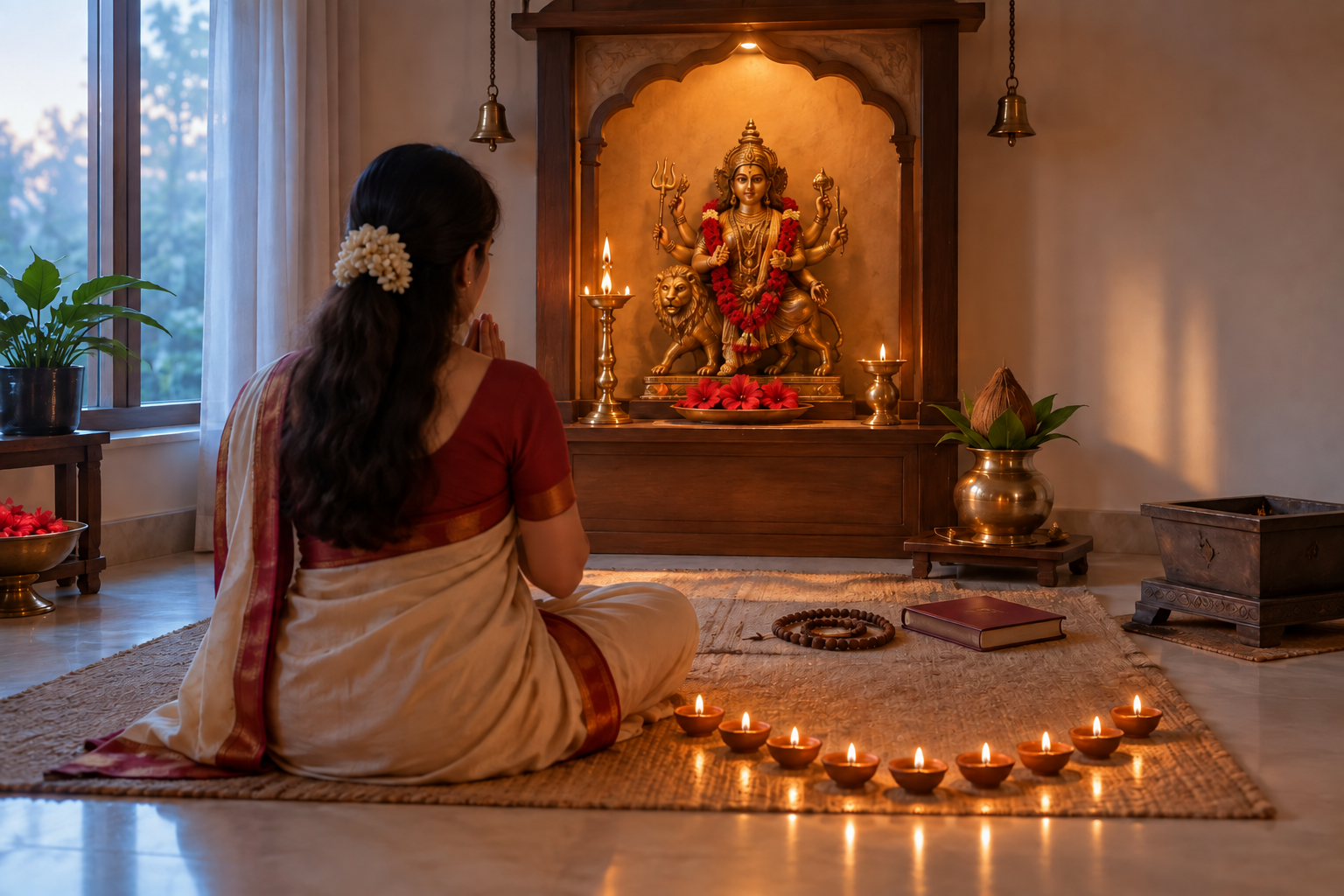
If Navratri is approaching and you are still deciding whether to worship the Navadurga, remain with one beloved form of Devi, establish a kalasha, or arrange a havan, begin by removing one false pressure: the most elaborate option is not automatically the most suitable one.
Your observance needs a clear devotional center and a method you can sustain. Once those two decisions are settled, the flowers, readings, offerings, fasting customs, temple visits, and festival additions can take their proper place.
Start with the relationship, not the ritual
Navratri presents many legitimate forms of worship, but it does not require you to shop among deities as though each were a different service. The forms of Devi are not competing products. Your first question is therefore not, “Which goddess gives the result I want?” It is, “Through which form and tradition can I worship sincerely and responsibly?”
Use this order of preference when selecting your devotional focus:
- Follow an established family, temple, sampradaya, or guru-given practice if you already have one.
- If you have a settled relationship with a particular form of Devi, keep that form at the center rather than abandoning an existing practice for seasonal novelty.
- If you have neither an inherited practice nor a personal commitment, the nine manifestations of Durga provide a natural Navratri framework.
- If you are considering a Mahavidya, distinguish devotional attraction from readiness for a specialized practice. Seek guidance before adopting methods whose obligations you do not understand.
You do not have to replace your chosen form every day in order to honor the Navadurga. One workable approach is to retain your regular deity, mantra, and daily structure while respectfully remembering the form associated with each festival day. This preserves continuity without excluding the wider Navratri cycle.
Key takeaways:
- Give priority to a living family, temple, sampradaya, or guru-given tradition.
- Use the Navadurga as the straightforward festival framework when you have no specialized commitment.
- Keep one stable daily practice instead of assembling a different collection of rituals every night.
- Treat a kalasha or havan as a definite ritual commitment, not as festive decoration.
- Let personal needs or astrological considerations inform Mahavidya discernment only within competent guidance.
Build one daily practice you can actually complete
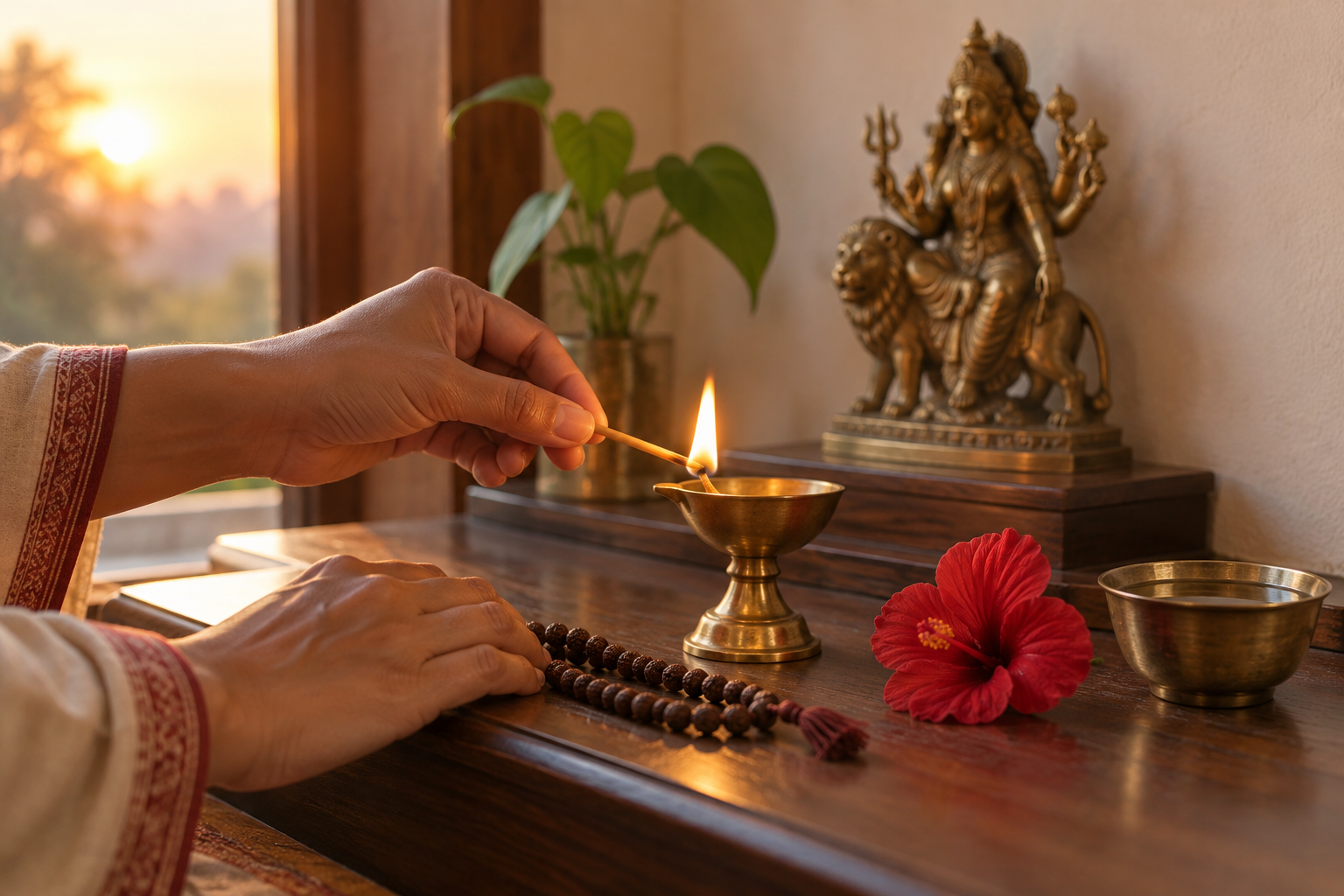
A modest puja performed attentively throughout Navratri is more coherent than an ambitious program that collapses after its opening. Decide in advance what you can maintain on a busy day, because that is the real measure of your plan.
A simple home sequence can follow this order, adjusted to your own tradition:
- Prepare the place. Clean the shrine area, arrange the image or murti you already use, and place the needed offerings within reach. Preparation keeps the worship itself from becoming a search for missing items.
- Settle yourself. Wash and wear clean clothing according to your household custom. Sit quietly long enough to leave ordinary activity behind.
- State your sankalpa. Say plainly that you are undertaking Navratri worship and name the devotional or ethical intention you can honestly carry. Avoid promising severe disciplines merely because the festival has begun.
- Offer light and simple upachara. Where customary and safe, light a lamp and offer water, flowers, or suitable food. If flame is unsafe in your setting, do not create a fire hazard for the sake of appearance.
- Perform your central practice. Use a mantra, name, stotra, reading, or prayer already accepted in your tradition. Decide the amount beforehand and keep it stable.
- Allow a period of quiet attention. Do not hurry directly from recitation to your phone or household work. Give the practice room to become inward rather than merely verbal.
- Close respectfully. Perform aarti where it belongs to your custom, bow, ask forgiveness for errors, and share or consume the offering as prasada in the customary way.
If you are honoring a different Navadurga form on successive days, keep this basic structure unchanged. Change the day’s remembrance, image, or reading if your tradition calls for it, but avoid rebuilding the entire puja each night. Repetition is not a lack of creativity here. It is what turns a festival schedule into sadhana.
When time is genuinely limited, reduce the number of elements rather than rushing through all of them. A clean place, a respectful bow, your established prayer or japa, one sincere offering, and a proper closing can form a disciplined minimum. Do not treat an improvised internet ritual as more authentic than the modest practice your family or teacher actually gave you.
Know what Ghatasthapana and havan add
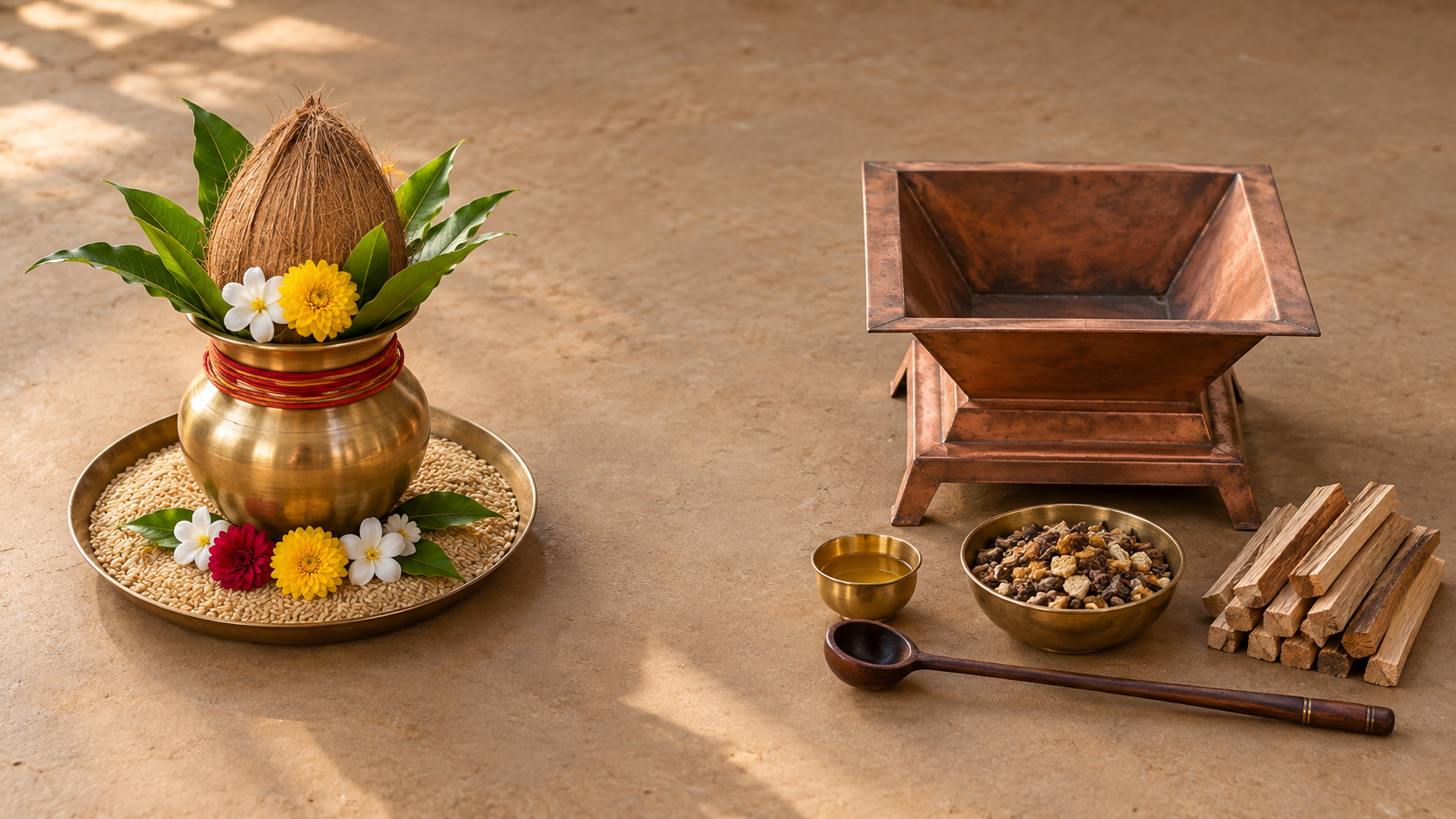
Ghatasthapana establishes the observance
Ghatasthapana, also called Kalasha Sthapana, is a principal opening rite on the first day of Navratri. In 2026, the first day falls on March 19 for Chaitra Navratri and October 11 for Ashwin Navratri. Confirm the applicable timing and procedure with the calendar followed by your household or temple, especially when you live in a different time zone from the place where that calendar was prepared.
Installing a kalasha should change how you approach the festival. It marks the deliberate establishment of sacred presence and ordinarily belongs to a continuing cycle of daily attention and proper completion. Do not set one up merely because a photograph makes the shrine look complete. First make sure you know your tradition’s procedure, can maintain the observance, and understand how it is concluded.
If you do not know that procedure, you can still worship Devi with a clean shrine and a consistent devotional practice. Simplicity is not a defective version of Navratri.
Havan is a distinct fire rite
A Navadurga havan invokes the forms of Durga through offerings placed into sacred fire. In its ritual understanding, Agni carries the offered prayers. That makes havan a different mode of worship, not simply a larger aarti or an impressive finale.
Choose havan when it genuinely belongs to your tradition and you have a competent person to conduct or guide it. The altar, offerings, recitations, sequence, fire control, ventilation, and completion all matter. If you are unfamiliar with fire ritual, attend one at a temple or arrange qualified guidance rather than attempting an indoor fire from a brief checklist. A sacred intention does not remove the ordinary risks of flame, smoke, hot vessels, or unsuitable surroundings.
You also do not need havan in order for your Navratri to be meaningful. Add it because the method is understood and appropriate, not because you fear that daily puja is spiritually insufficient.
Approach Mahavidya selection without a deity-to-boon chart
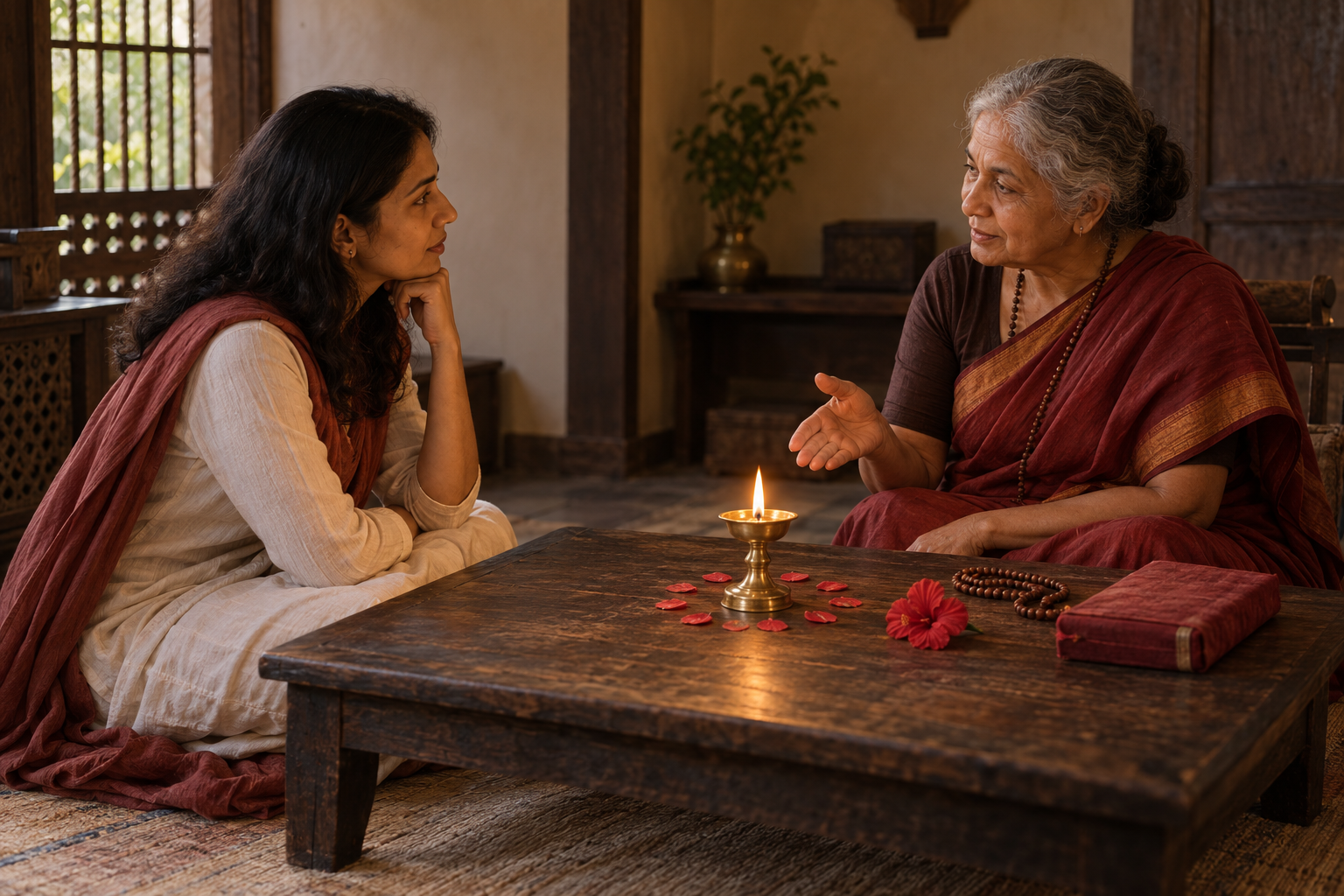
The wish to choose the “right” Mahavidya often begins with a real difficulty: fear, conflict, stagnation, a desire for protection, or a serious need for inner change. Those concerns can help reveal why you are turning toward Devi. They do not, by themselves, tell you which practice you are qualified to undertake.
Personal needs, astrological indications, desired boons, problem-solving, and spiritual goals are among the criteria used to consider a Mahavidya. The important word is “consider.” A criterion can point toward a conversation; it does not automatically authorize a mantra or ritual method.
Before selecting a Mahavidya practice, ask four questions:
- Is there a living line of guidance? Know who will explain the practice, correct mistakes, and answer questions that arise after Navratri begins.
- Do you understand the commitment? Ask what is expected during the practice and how it is properly completed. Do not assume that attraction to an image supplies this knowledge.
- Is your motivation stable? A decision made in panic, anger, or fascination with extraordinary results is a poor foundation for sustained worship.
- Are you willing to accept a simpler recommendation? If you will only accept the most dramatic answer, you are not really seeking discernment.
Astrology is not used identically by every Hindu tradition. If the teacher or lineage you trust uses a horoscope in this decision, let it be interpreted within that system. Do not combine an isolated astrological claim, a deity description, and a mantra gathered from unrelated places and call the mixture a tradition.
If you have no qualified guidance this Navratri, the practical answer is not to guess. Worship Durga or the Navadurga devotionally through a method you already understand. You can observe which form repeatedly draws your attention, write down the questions that emerge, and take those questions to a competent teacher without turning curiosity into an unsupported ritual commitment.
Write your nine-night rule before worship begins
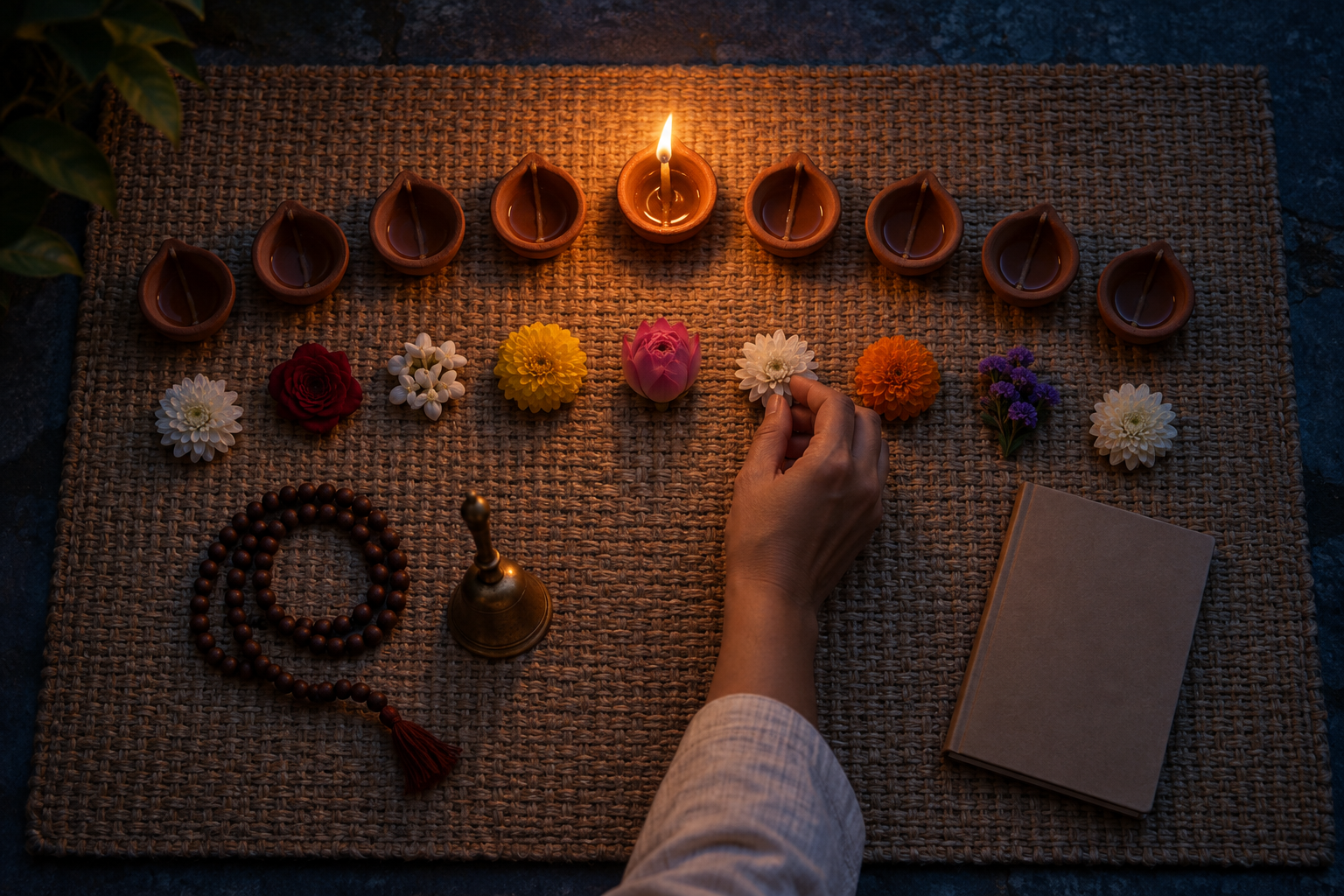
A written rule prevents daily indecision. Keep it short enough to read before you begin:
- Devotional center: Name the form of Devi who will remain central throughout your observance.
- Daily core: Name the prayer, japa, reading, meditation, or family puja you will actually perform.
- Festival framework: State whether you will remember the Navadurga successively, follow one form throughout, or use the sequence prescribed by your own tradition.
- Additional rites: Record whether Ghatasthapana, temple worship, or havan is included and who is guiding it.
- Practical boundary: Decide what the shortened form will be on a difficult day, so that pressure does not turn into abandonment.
- Completion: Find out in advance how your household or lineage concludes the observance instead of improvising on the final day.
You should be able to complete this sentence: “During this Navratri, I will worship this form of Devi through this daily practice, following this tradition or guidance.” If the sentence becomes vague precisely where you reach Mahavidya worship, Ghatasthapana, or havan, take that vagueness as useful information. Simplify the plan now, and use the coming Navratri to deepen a relationship you can continue after the festival lamps are put away.
References
- Hindu Pad – 1st day of Navratri 2026, 11 October 2026
- Hindu Pad – Navratri Navadurga Havan | Nine Navadurga Homams during Navaratri
- Hindu Pad – How can I choose ‘Which Mahavidya to Worship in Navratri’

Leave a Reply
You must be logged in to post a comment.