
If you are arranging leave, preparing a family altar, or deciding when to visit a temple, mark October 11 through October 14 as the first four days of Sharad Navratri 2026. The dates are straightforward; the part that needs care is the lunar tithi, which can change during a civil day rather than at midnight.
Two details should guide your planning: Dwitiya continues until 9:15 PM on October 12 before Tritiya begins, and October 14 is the fourth Navratri day associated with Maa Kushmanda in the Navadurga tradition. Use these as calendar anchors, then verify any location-specific muhurta with the panchang followed by your household or temple.
Mark these first four Navratri dates
| Date | Navratri day | Calendar marker | What you should do |
|---|---|---|---|
| Sunday, October 11 | Day 1 | Opening day in the numbered sequence | Prepare for the beginning of your household observance, but obtain the local opening muhurta from the panchang or temple you actually follow. |
| Monday, October 12 | Day 2 | Shukla Paksha Dwitiya lasts until 9:15 PM; Tritiya follows | Treat 9:15 PM as a planning boundary, not as a universal instruction detached from place. Confirm the applicable local time before scheduling a tithi-specific rite. |
| Tuesday, October 13 | Day 3 | The numbered Navratri sequence continues | Do not infer Tritiya’s ending time merely from its beginning on the previous evening. Check your local panchang if the tithi at the time of worship matters. |
| Wednesday, October 14 | Day 4 | Maa Kushmanda worship, Vinayak Chaturthi, and Ganesha Damana Puja | Follow the ritual stream belonging to your sampradaya instead of combining every observance into one improvised ceremony. |
The day-one and day-three labels follow the consecutive sequence established by the second-day and fourth-day anchors. They do not supply independent tithi cutoffs or a city-specific ghatasthapana muhurta. That distinction matters because a numbered festival day, a lunar tithi, and a local temple programme answer different ritual questions.
Let the tithi guide special rites, not your wall clock alone
A civil date begins at midnight. A tithi is a lunar division and may begin or end at another time. That is why October 12 can carry Dwitiya for most of the day and Tritiya after 9:15 PM. The change does not mean you must interrupt an ordinary evening prayer at that minute; it means that any rite specifically assigned to Dwitiya or Tritiya needs the correct local rule.
Before copying a time into your family calendar, settle four questions:
- Which city or locality is the panchang calculated for?
- Which tithi prevails at the time when you intend to perform the rite?
- Does your family or temple determine the observance by the tithi at sunrise, by the tithi prevailing during a prescribed period, or by another inherited convention?
- Are you planning the regular daily Devi puja or a special tithi-bound vrata? The latter usually requires greater precision.
Without a matching location, the 9:15 PM transition is a useful warning to check rather than a universal clock instruction. Do not move a puja to later in the evening merely so that you can call it Tritiya. First confirm that the timing applies where you live and that your tradition requires the change.
This approach also prevents a common calendar mistake: assuming that Navratri Day 2 and Dwitiya are interchangeable labels in every practical situation. They coincide in the early 2026 sequence, but the festival-day count tells you where you are in Navratri, while the tithi tells you the lunar condition under which a tithi-specific observance is performed.
Use one repeatable home-puja sequence
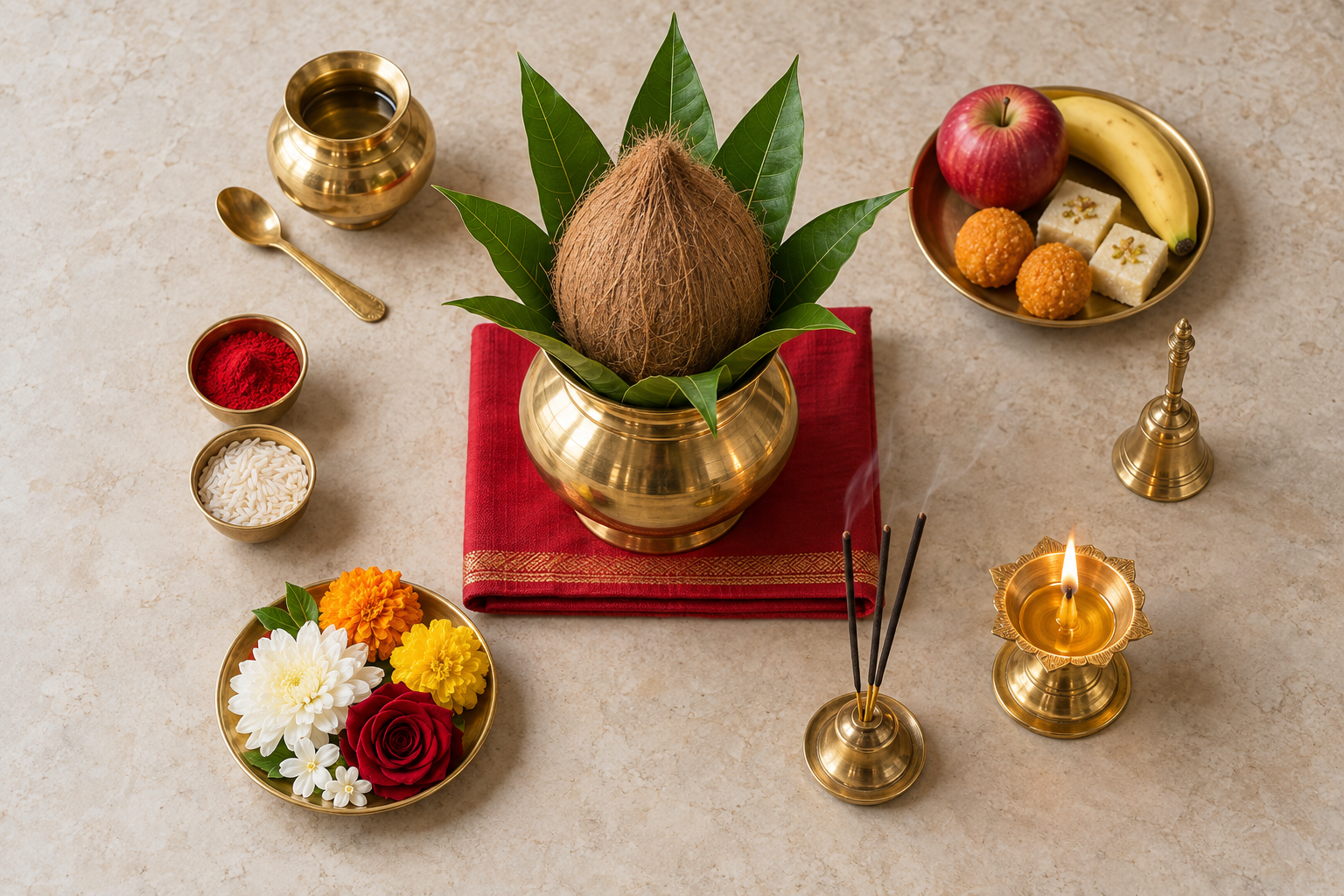
Your early Navratri worship does not need a newly invented ritual for every date. A stable daily sequence makes it easier to maintain attention and discipline, especially when work or family obligations limit the time available. Keep the elements already recognised in your household and change only the day-specific focus.
- Choose the tradition before arranging the altar. Decide whether you are following your household sampradaya, a local temple calendar, or the common Navadurga sequence. Do not switch systems merely because a different deity name appears on another calendar.
- Prepare one clean worship space. Place the Devi image, murti, or other form your family ordinarily worships. Add a kalasha only if you know and follow the corresponding family or priestly procedure.
- Make a clear sankalpa. State the day and your intention in the form customary to your household. If you do not know a formal Sanskrit sankalpa, a sincere statement in your own language is preferable to reciting words you do not understand.
- Begin with your customary opening. Perform achamanam, guru remembrance, or an opening Ganesha invocation only as your inherited method directs. A calendar date does not replace ritual instruction.
- Offer the familiar upacharas. A lamp, water, flowers, incense, fruit, or sattvic food may be offered according to household practice. Keep any flame attended and use only items appropriate to the murti or image in front of you.
- Recite what you already know. Use the Devi nama, stotra, japa, or scriptural passage received through your family or teacher. Do not let an unsupported claim about a special colour, food, or mantra displace a practice you can perform correctly.
- Complete the worship deliberately. Perform aarti where customary, offer pranam, distribute prasad, and note the next day’s puja time before putting materials away.
If ghatasthapana or another opening rite is part of your observance, obtain its full method and local muhurta from the priest, temple, or panchang your family trusts. A date-only calendar cannot tell you how to install, maintain, and conclude a ritual object correctly. If your household does not maintain that practice, you can still observe Navratri through orderly Devi puja, japa, aarti, and disciplined conduct.
Handle the three ritual layers on October 14 correctly
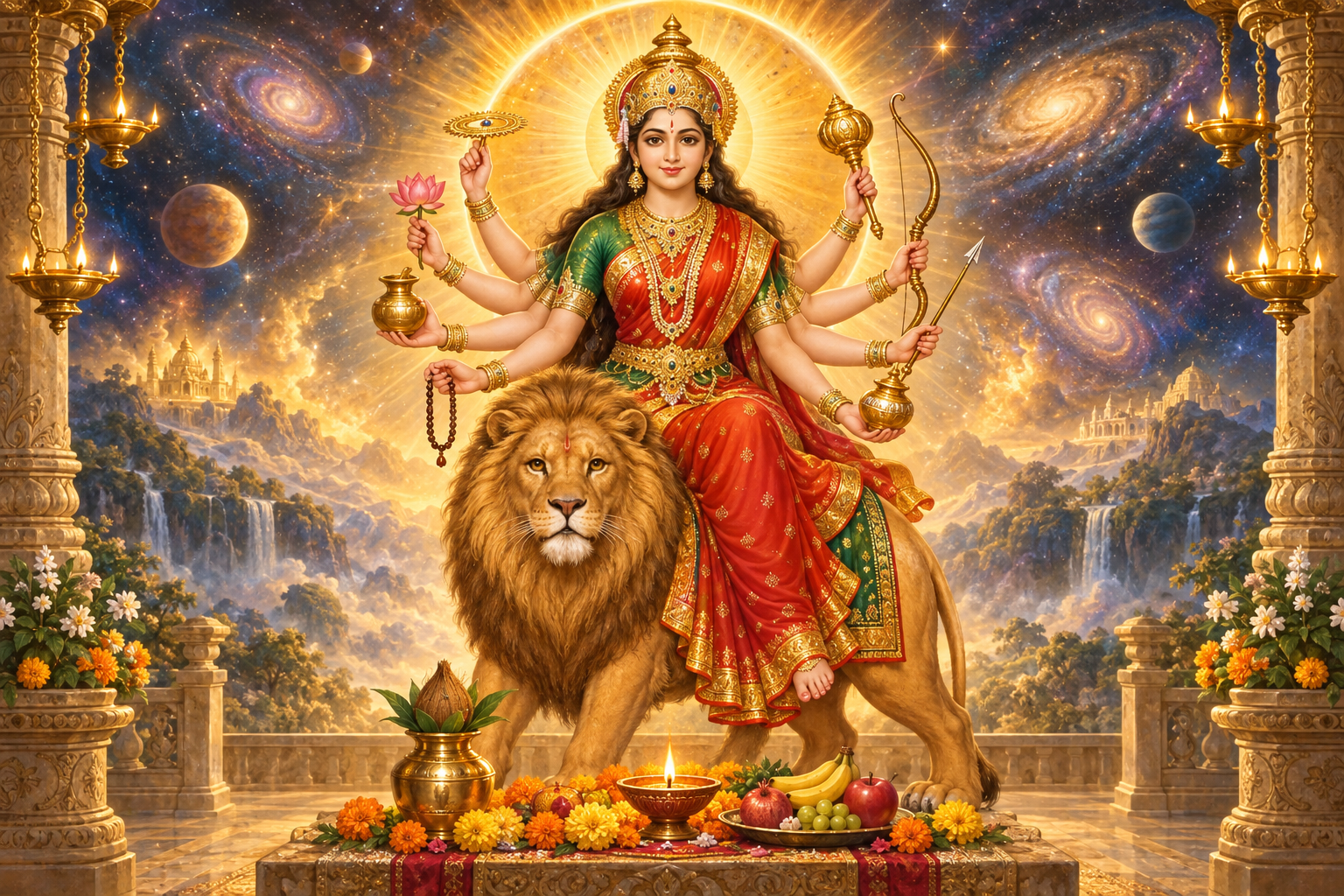
October 14 brings several legitimate observances onto the same date. In the Navadurga sampradaya, the fourth day is devoted to Maa Kushmanda. The day also marks Vinayak Chaturthi and Ganesha Damana Puja. At Vijayawada’s Kanaka Durga Temple, however, Sri Katyayani Devi is the fourth-day alankaram.
These names do not represent a contradiction. They belong to three different layers of observance:
- The Navadurga layer: If your household follows the nine-form sequence, direct the fourth-day Devi worship to Maa Kushmanda.
- The tithi layer: If Vinayak Chaturthi or Ganesha Damana Puja belongs to your lineage, include it in its customary place. Do not assume that every Navratri household must add the rite.
- The temple-alankaram layer: If you are following the Vijayawada temple celebration, recognise Sri Katyayani Devi as that temple’s fourth-day alankaram. A temple’s liturgical sequence need not duplicate the household Navadurga list.
If you know Maa Kushmanda worship but have never performed Ganesha Damana Puja, do not construct the latter ceremony from its name. Continue the Devi observance you know and ask a qualified priest or the temple that maintains the Ganesha rite for its procedure. Preserving the distinction between sampradayas is more faithful than merging their visible features into a hybrid puja.
Key takeaways for your 2026 plan
- Reserve October 11 through October 14 for the first four numbered days of Sharad Navratri 2026.
- On October 12, note the Dwitiya-to-Tritiya transition at 9:15 PM, but verify the time against a panchang calculated for your location.
- Do not invent an October 13 tithi cutoff from the previous evening’s transition; obtain the missing local timing if a special rite depends on it.
- On October 14, worship Maa Kushmanda when following the Navadurga sequence, while recognising that Ganesha observances and Vijayawada’s Katyayani alankaram belong to their own ritual settings.
- Use a simple daily puja you can perform correctly. Add special mantras, alankarams, kalasha procedures, or tithi rites only when they come from the tradition you actually follow.
Enter the four dates in your calendar now, place a local-timing check beside the opening rites and the October 12 tithi change, and decide which ritual tradition will govern October 14. Once those choices are settled, the daily worship can remain simple, consistent, and recognisably your family’s own.
References
- Hindu Pad — 4th day Navratri Puja Timings, 14 October 2026
- Hindu Blog — October 12 2026 Tithi – Panchang – Hindu Calendar – Good Time – Nakshatra – Rashi

Leave a Reply
You must be logged in to post a comment.