
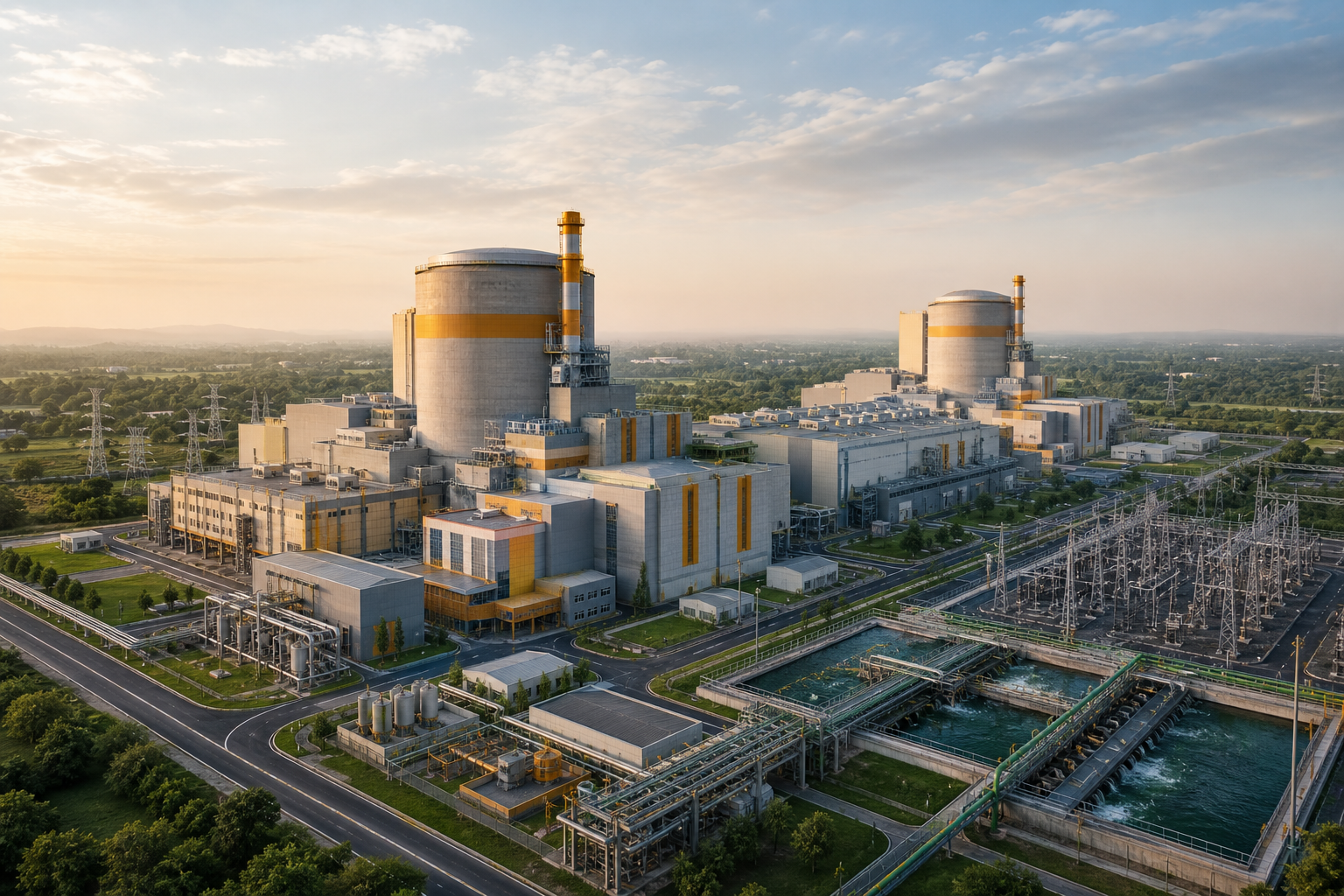
If you are trying to decide whether Bharat’s small modular reactor push is a buildable energy strategy or merely another promise about future technology, look past the letters “SMR.” The decisive question is simpler: which reactor can clear the rules, move into construction and be repeated without waiting for a foreign design to become commercially real?
Bharat’s answer is increasingly its own 220 MW Pressurised Heavy Water Reactor. It is not the newest concept on the international market. It is the platform Bharat has already built multiple times, while almost every proposed SMR elsewhere remains somewhere between design work, licensing and demonstration. That makes the 220 MW PHWR the credible starting point for an industrial programme – provided Bharat proves the “modular” part through standardisation and repeat construction.
The global SMR market is much less mature than it looks
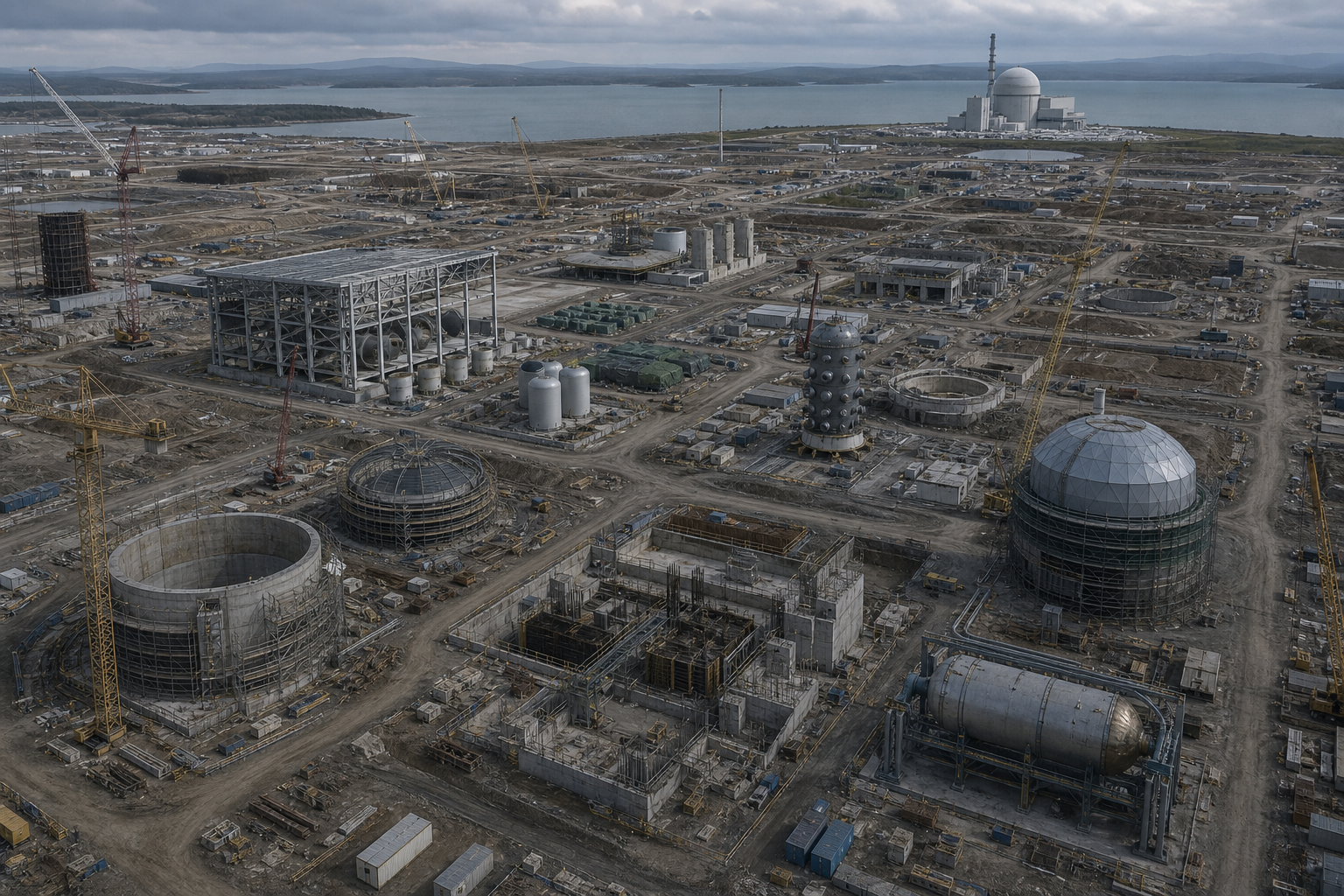
A catalogue of reactor concepts can create the impression that Bharat has dozens of proven foreign options from which to choose. It does not. Of the 83 SMR designs identified internationally, only two are operational. The other 81 remain at pre-operational stages such as design, licensing or development.
The two operating cases are also highly specific. Pevek in Russia has used two 35 MW reactors mounted on a barge since May 2020. China’s Shidaowan has operated a 210 MW gas-cooled demonstrator commercially since December 2023. Neither amounts to an off-the-shelf reactor that Bharat can simply order under the emerging Indian framework.
This distinction matters whenever you hear that Bharat should buy the world’s “best” SMR. A promising design is not the same thing as an operating design. An operating design is not necessarily exportable. An exportable design is not necessarily eligible under Indian rules. And eligibility still does not establish that a reactor is economical, suitable for a particular site or ready for serial construction.
The practical comparison is therefore not between Bharat’s familiar PHWR and 82 equally mature alternatives. It is between a domestic reactor with repeated construction behind it and a foreign field dominated by projects that have not yet reached operation. Once you see the choice that way, beginning with the 220 MW PHWR looks less like technological conservatism and more like disciplined sequencing.
Draft SHANTI rules make operating experience a gate
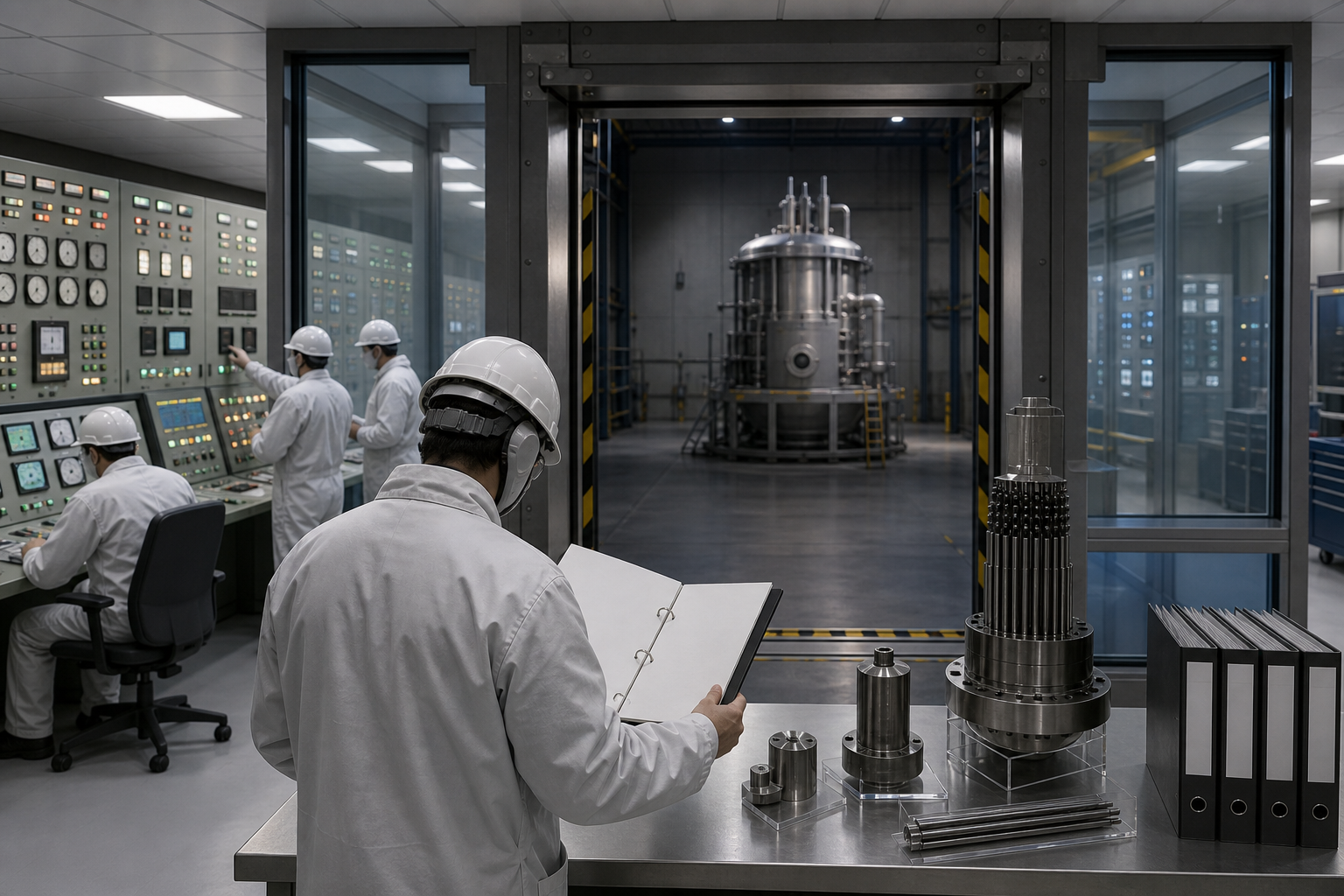
On 14 August 2026, the Department of Atomic Energy opened the draft SHANTI Rules and Regulations, 2026 for public comment. The comment period closes on 4 September 2026. Because the framework is still a draft, its final requirements may change; analysis should distinguish the proposed eligibility test from settled law.
Under the proposed test, a foreign reactor design would have to clear three connected hurdles:
- Its home regulator must have certified the design.
- The reactor must already be operating somewhere, whether in its home country or abroad.
- The originating country must possess its own reactor-design industry and supply chain.
These conditions do not amount to a blanket prohibition on foreign reactors. They do, however, prevent Bharat from becoming the first proving ground for a design that exists only in plans, licensing submissions or investor presentations. They also test whether the exporting country has a real nuclear industrial base behind the product rather than a thin commercial arrangement dependent on capabilities elsewhere.
For you as a policy reader, the important distinction is between a maturity filter and a claim of superiority. Prior operation can show that a design has crossed a major threshold. It cannot, by itself, prove that the reactor will be affordable in Bharat, that its supply chain can scale or that it is the best match for Indian requirements. The proposed rule determines who may reach the starting line; it does not predetermine the winner on cost, delivery or performance.
The framework also changes the incentives facing overseas developers. A company with an unbuilt SMR cannot treat Bharat as the convenient first customer while transferring first-of-a-kind risk to Indian institutions and consumers. It would first have to demonstrate the reactor under regulatory supervision somewhere in the world and stand behind it with a functioning national industry.
Why the 220 MW PHWR is a strategic platform, not a fallback
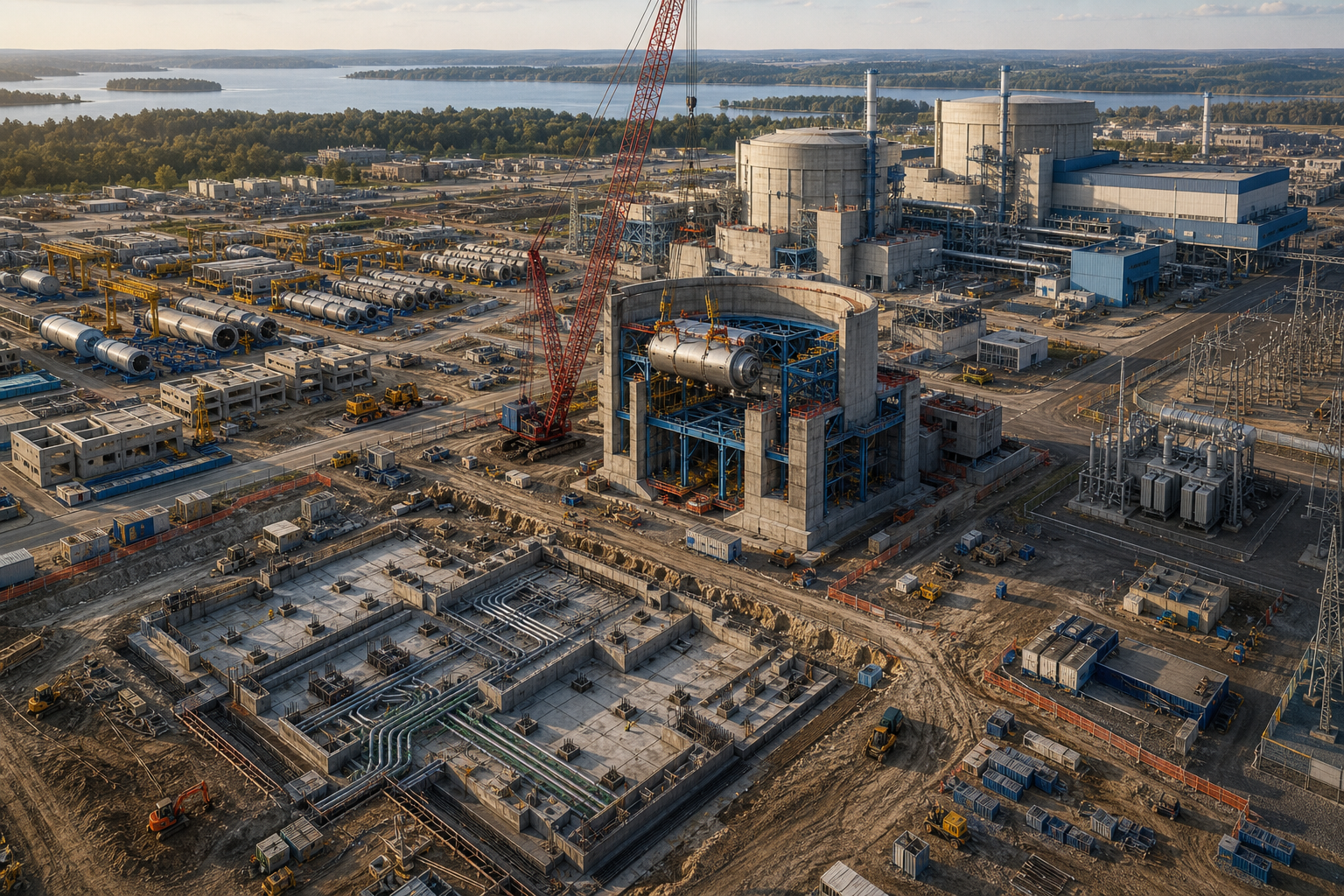
The 220 MW PHWR enters this discussion from the opposite direction. Bharat is not being asked to evaluate an unfamiliar drawing and hope that an overseas development schedule holds. It has built the 220 MW heavy-water design multiple times. That repeated construction is the foundation of its value.
Repetition accumulates knowledge that a paper reactor cannot supply. Engineers learn which interfaces repeatedly cause trouble. Regulators work with a known technological family. Manufacturers understand the component specifications they must meet. Project teams gain a basis for comparing one build with the next. None of this removes nuclear-project risk, but it changes the programme from first-time invention to structured improvement.
That gives Bharat three strategic advantages.
- A sovereign starting point: the core programme does not have to wait for one of the many unbuilt foreign SMRs to become operational, exportable and eligible.
- A basis for standardisation: a reactor built repeatedly can become a stable reference design around which manufacturing, licensing and construction processes are organised.
- Better control of learning: lessons from each project can flow into the next Indian unit instead of remaining dependent on an overseas vendor’s timetable and commercial decisions.
Strategic autonomy does not require technological isolation. Bharat can still evaluate useful international cooperation in manufacturing methods, equipment and project execution without making an unproven foreign reactor the foundation of its nuclear plans. The sound objective is control over the critical path, not separation from every external capability.
There is an equally important caution: an existing 220 MW reactor does not become a successful SMR merely because officials apply the label. “Small” describes scale. “Modular” should describe how effectively a standardised design, components and construction sequence can be reproduced. If every unit becomes a heavily customised project, much of the expected benefit of a modular programme disappears.
The honest claim is therefore narrower and stronger. The 220 MW PHWR gives Bharat a credible reactor platform from which to pursue modular deployment. It does not guarantee low cost, rapid construction or effortless scaling. Those outcomes must be demonstrated through the programme that follows.
Use this checklist to judge whether the strategy is working
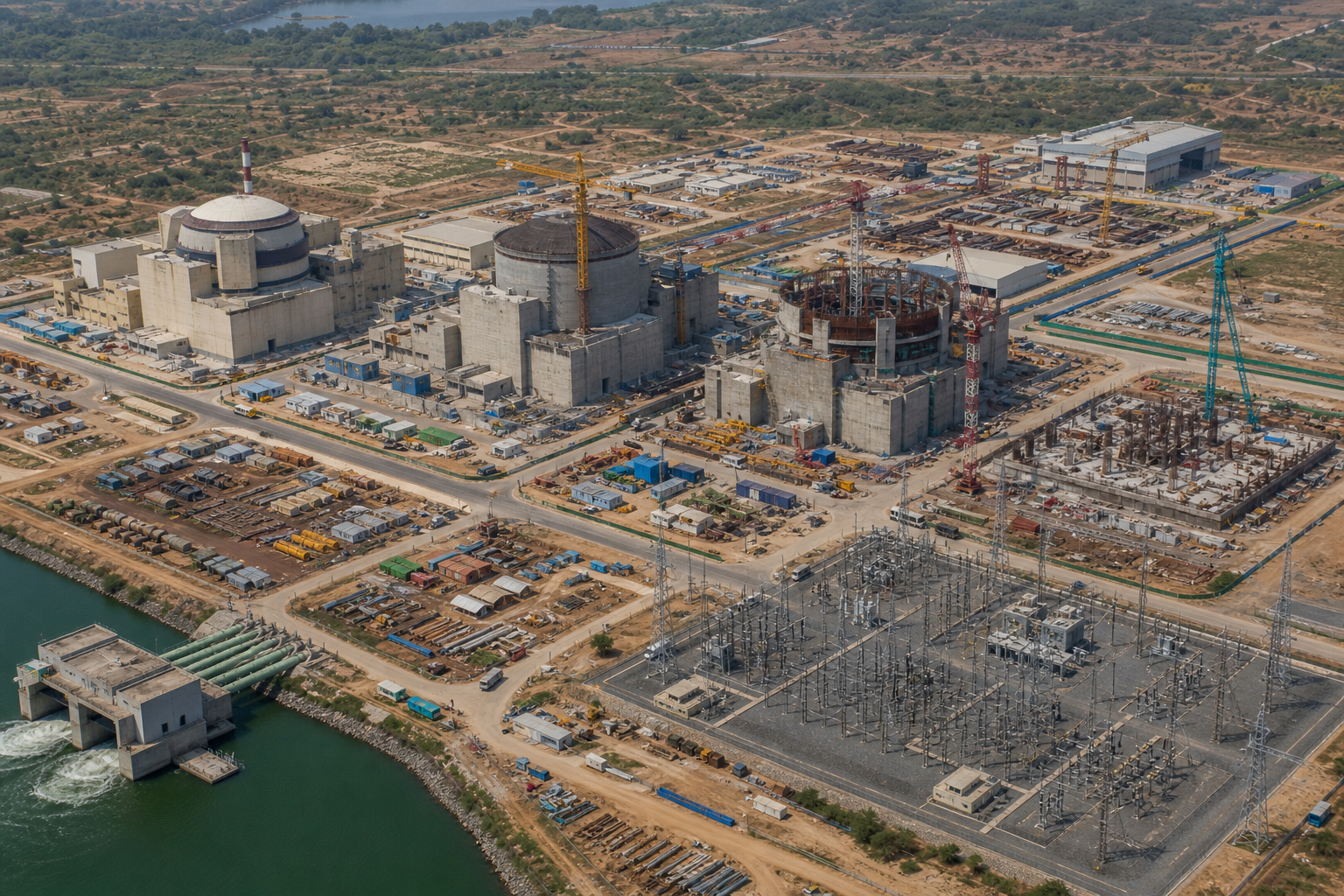
Announcements about reactor capacity are easy to celebrate and difficult to evaluate. You will get a clearer view by watching for evidence in six areas.
- A stable reference design: look for a defined configuration that can be repeated. Frequent redesign may produce technical improvements, but it also resets engineering, procurement and licensing work.
- A series rather than an isolated unit: modular economics depend on repetition. One bespoke project cannot show whether manufacturing and construction learning will carry across a fleet.
- Specific supply-chain commitments: broad claims about indigenisation are not enough. Credibility rises when responsibilities for major components, quality assurance and production capacity are identifiable.
- Clarity after the draft period: watch what survives into the final SHANTI framework, especially the operating-reference requirement, the treatment of foreign designs, licensing procedure and liability. Do not treat draft language as final policy.
- Evidence of modular execution: ask which work will be standardised, which components can be produced repeatedly and how site assembly will differ from a conventional one-off project. A reactor’s output alone does not answer these questions.
- Transparent delivery results: compare promised and actual schedules, costs, commissioning progress and operational performance. Maturity should produce measurable improvement across successive units; it should not become an excuse to stop publishing results.
Safety must remain a constraint on the entire exercise, not a target to be traded against speed. Faster licensing is not the same as weaker scrutiny, and a domestic design should not receive a free pass simply because it is indigenous. The strongest case for the PHWR strategy is that Bharat can combine national capability with accumulated regulatory and construction knowledge. Relaxing standards would weaken that case rather than advance it.
Cost claims require similar discipline. When a future announcement presents an attractive figure, check whether it refers to one reactor or a series, whether it covers only construction or a broader project boundary, and whether it is a forecast or an observed result. A programme built around a familiar design deserves confidence only in proportion to the evidence it produces.
Key takeaways
- Bharat’s immediate SMR choice is constrained by technological readiness, not by a shortage of concepts: 83 designs exist internationally, but only two are operating.
- The draft SHANTI eligibility test would require a foreign design to have home-regulator certification, an operating reference and backing from a country with its own reactor industry and supply chain.
- The 220 MW PHWR is credible because Bharat has already built it repeatedly; this reduces dependence on an overseas first-of-a-kind project.
- Past construction establishes a platform, not the promised benefits of modular deployment. Standardisation and repeat execution still have to be demonstrated.
- The strategy should be judged by a stable reference design, serial orders, supplier readiness, final regulatory clarity and transparent cost, schedule, safety and performance results.
After 4 September, do not focus first on another rendering of a proposed reactor. Watch whether the final rules are followed by a stable 220 MW reference configuration, a repeatable build programme and named industrial responsibilities. That is the evidence that will tell you whether Bharat has converted a proven national reactor into a genuine SMR strategy.
References
