
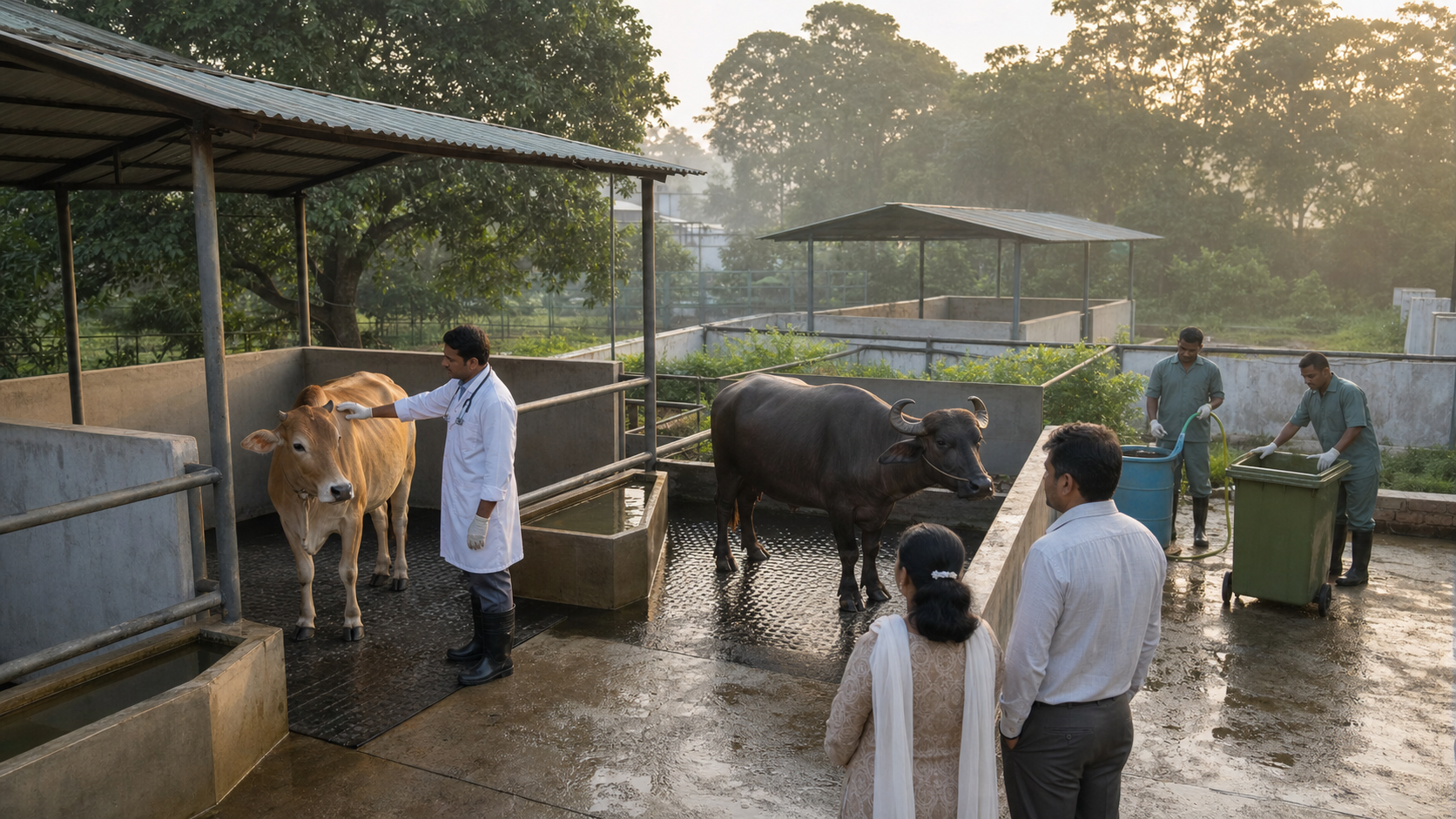
If you are arranging a sacrifice, transporting an animal, operating a meat business, or managing a residential complex in West Bengal, settle the venue before the animal moves. Bakri Eid has not been banned, but religious intent does not turn a road, courtyard, pavement, market, park, or housing-complex common area into a lawful bovine-slaughter site.
For Bakri Eid 2026, cow and buffalo sacrifice must take place inside a licensed or recognized abattoir, with veterinary, sanitation, animal-welfare, and waste-disposal controls. Here is how you can comply, avoid a preventable confrontation, and ask the government for even-handed enforcement.
Key takeaways
- West Bengal has not prohibited Bakri Eid observance. It has restricted where and how cows and buffaloes may be slaughtered.
- A private address is not a substitute for an authorized abattoir. The restriction covers bovine slaughter itself, not merely slaughter performed on a public road.
- A licensed meat shop, a butcher’s trade registration, or permission to transport an animal does not by itself prove that the proposed slaughter site is authorized.
- Before transport begins, confirm the facility, operating hours, species accepted, veterinary-certificate process, required documents, and collection arrangements with the relevant local body.
- Violations can attract action under animal-welfare, food-safety, municipal, sanitation, environmental, or public-order provisions. Possible consequences include fines, imprisonment, seizure, and the sealing of an unauthorized business.
- The directive discussed here specifically concerns cows and buffaloes. It should not be misread as permission to slaughter other species anywhere; separate local and animal-welfare requirements still apply.
The rule regulates the act without cancelling the observance

The most common misreading runs in opposite directions. One claim treats the restriction as a ban on Bakri Eid. Another assumes that anything done in the name of the festival is exempt from ordinary civic law. Neither position describes the rule accurately.
The observance remains possible, but a cow or buffalo must be taken to a recognized slaughterhouse. Slaughter on roads, pavements, in marketplaces and parks, or in visibly accessible residential common areas is disallowed. Carcasses and gore must not be displayed in open public space. Moving the act behind the gate of a house does not cure the problem when the venue itself is not licensed for bovine slaughter.
This is also more than a one-season request for tidiness. The Prevention of Cruelty to Animals Act, 1960 and the Prevention of Cruelty to Animals (Slaughter House) Rules, 2001 provide the animal-welfare framework. The Food Safety and Standards Act, 2006 and related requirements govern hygienic processing, licensed food businesses, and traceability. State bovine-control rules require administrative oversight and fit-for-slaughter certification, while municipal and environmental provisions address unauthorized premises, effluent, waste, odor, nuisance, and public health.
That overlap matters when you assess legal risk. An incident may involve more than one violation: an unauthorized location, inhumane transport, absence of veterinary clearance, unsafe meat processing, unlawful waste disposal, or breach of a local public-order direction. There is therefore no single universal penalty that can be quoted for every case. The applicable action depends on what happened, where it happened, and which orders were in force.
If an officer disputes the site or directs that the slaughter must not proceed, stop. Do not assume the defect can be corrected afterward, and do not move the animal to another unverified address. Ask the municipality, panchayat, district administration, or a qualified local lawyer to confirm the lawful alternative before proceeding.
How to verify an authorized venue before you commit
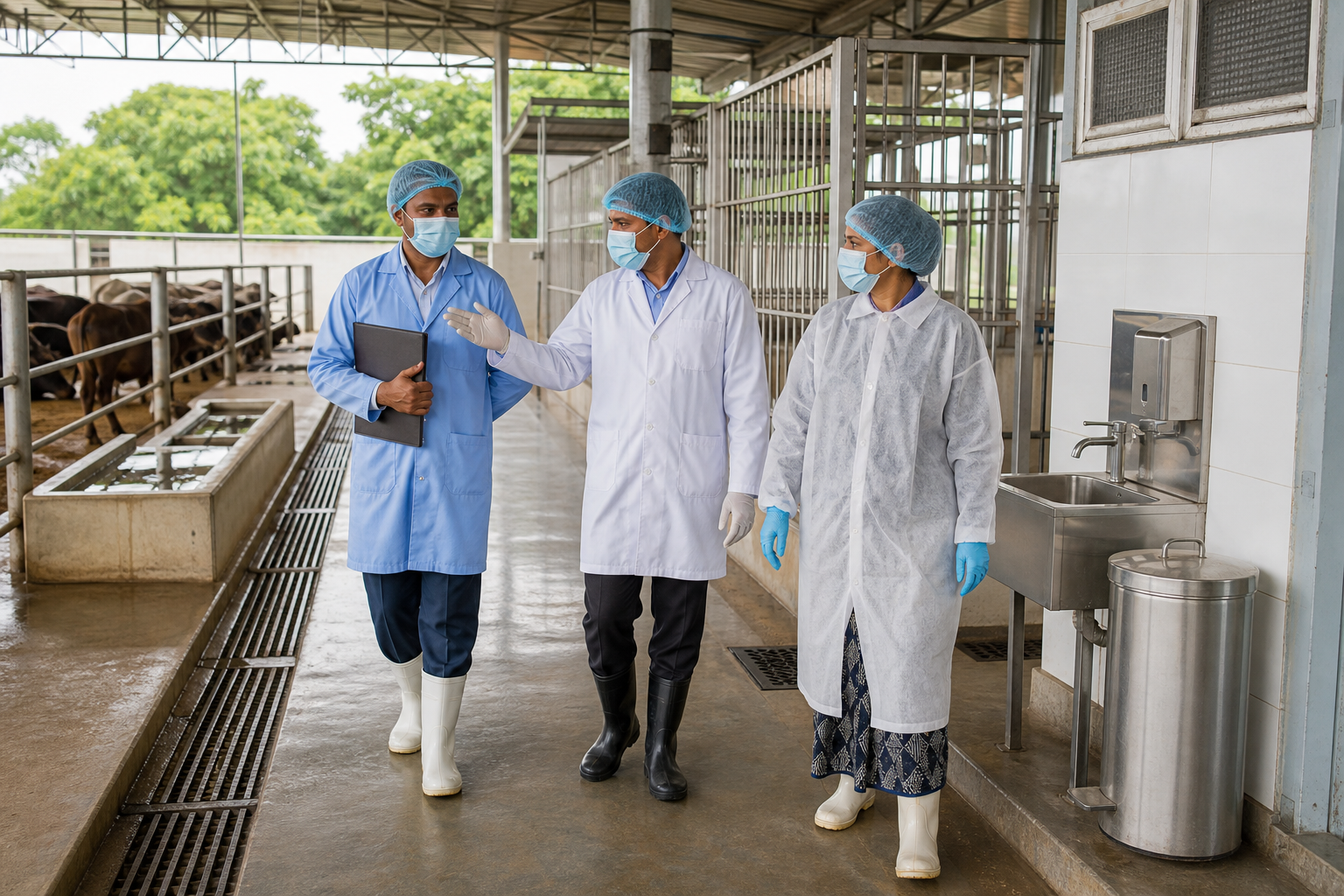
The words licensed butcher, licensed shop, and licensed abattoir are not interchangeable. A shop may be permitted to sell meat processed elsewhere without being authorized to slaughter animals on its own premises. A butcher’s occupational credentials likewise do not license a courtyard, garage, temporary enclosure, or community ground.
Do not rely only on last year’s practice, an informal message, or a verbal assurance from the person collecting payment. Contact the municipal corporation, municipality, panchayat, or district administration and ask for the current list of recognized facilities and festival operating arrangements. Then confirm these points with the facility itself:
- Venue status: Is this exact address recognized by the local body as a slaughter facility?
- Species and availability: Is the facility accepting cows or buffaloes on the intended day, and is a confirmed slot or receipt required?
- Animal eligibility: Which fit-for-slaughter certificate is required, who issues it, and when must the animal be presented for ante-mortem inspection?
- Veterinary supervision: Will a veterinary officer conduct the required pre-slaughter and post-slaughter checks?
- Meat collection: How will inspected meat be identified, packaged, stored, and released to the participant or licensed seller?
- Waste control: Does the facility use approved systems for blood, offal, wastewater, sealed collection, and scheduled disposal?
Rural and peri-urban areas may use a panchayat-run slaughter slab or a smaller facility instead of a large urban abattoir. Its size does not decide legality. It must still be licensed or recognized, provide veterinary oversight, and manage waste hygienically. A bare concrete slab without those safeguards is not made lawful by calling it a local arrangement.
Keep the official confirmation, booking record, receipts, and contact details together. If instructions conflict, obtain clarification from the authority responsible for that jurisdiction before paying for transport or promising a collection time to families.
A compliance plan for participants, businesses, and organizers
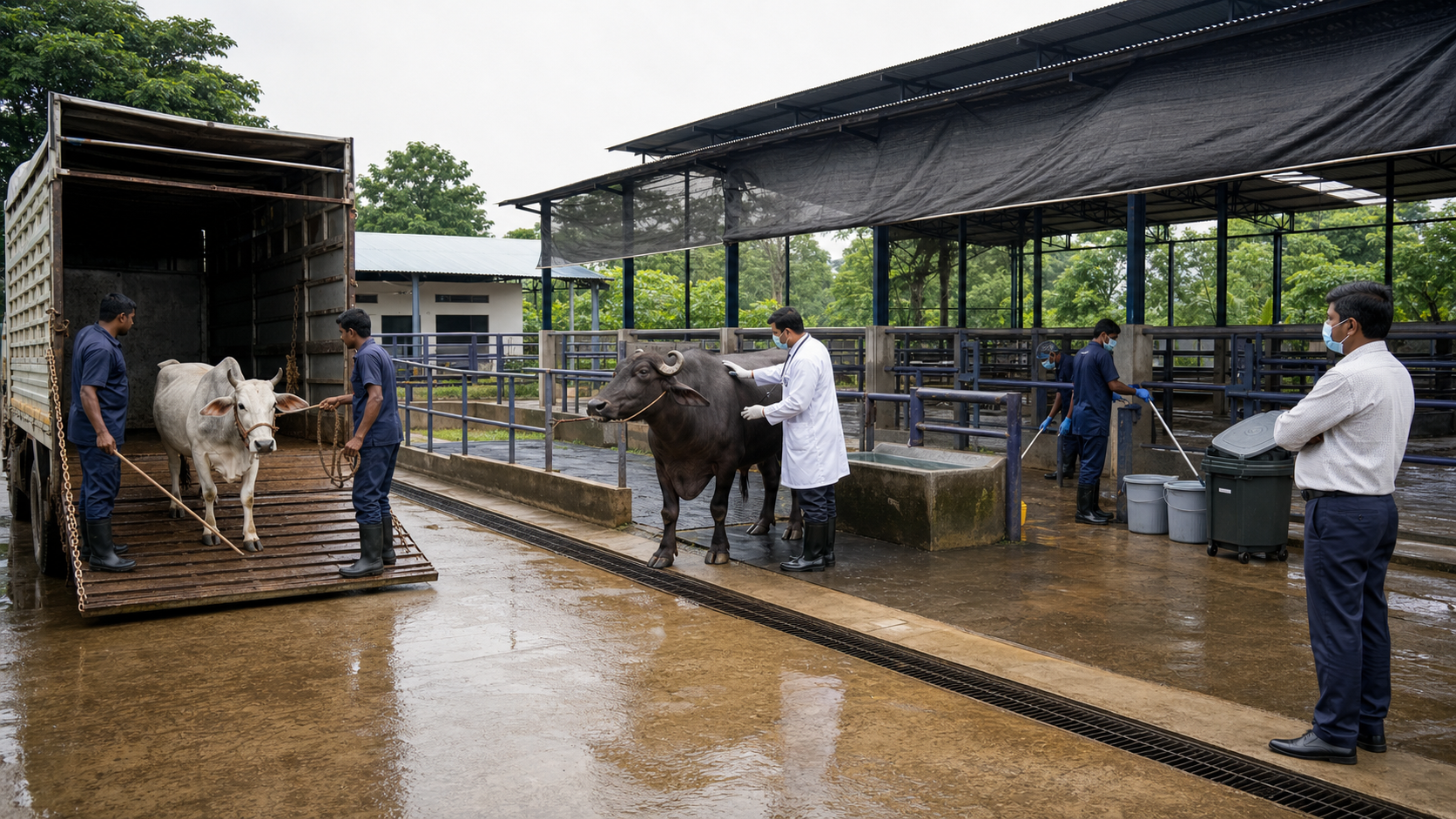
For a household or individual participant
- Carry personal identification, proof of the animal’s origin or purchase, the destination details, relevant receipts, and any booking confirmation requested locally.
- Use transport that provides adequate space, ventilation, protection from heat, and appropriate rest. Do not overload the vehicle or handle the animal in a way that causes avoidable pain or distress.
- Travel directly to the confirmed facility. Transport permission or paperwork does not authorize unloading at an unlicensed slaughter point.
- Present the animal for the required veterinary examination before slaughter. A post-event receipt cannot repair the absence of a mandatory pre-slaughter check.
- Collect meat through the facility’s supervised process. If you buy instead of arranging a sacrifice, use a licensed outlet supplied by an authorized facility.
- Keep carcasses, blood, offal, and graphic imagery out of public view. Do not live-stream the killing or circulate images likely to inflame tension.
For butchers, meat shops, and transporters
Business registration in one part of the chain does not remove duties in another. A lawful operation needs the relevant FSSAI authorization, veterinary inspection procedures, hygienic handling, traceable sourcing, reliable temperature control, clean equipment, and approved waste management. Meat offered for sale should originate in a licensed facility rather than an improvised festival site.
Before peak days, confirm delivery windows, inspection capacity, documentation, cold-storage space, and waste pickups with the abattoir and municipal officials. A vague plan to sort out paperwork at the gate invites crowding and may leave animals waiting in heat. If the approved facility cannot accept the volume, reduce or reschedule commitments rather than diverting animals to an unauthorized premises.
Operating outside the authorized system can do more than produce a fine. Authorities may seize animals or equipment, interrupt the supply chain, or seal an unlicensed premises. The reputational cost also falls on lawful traders when a visibly unhygienic operation is allowed to represent the entire trade.
For mosque committees and community coordinators
A religious committee can make compliance easier, but it cannot convert an unauthorized place into a lawful one. Share the exact facility names, official operating hours, document requirements, routes, and booking process. Avoid broad announcements such as permission has been granted unless the responsible authority has confirmed the specific venue and procedure.
Volunteers can help check bookings before departure, guide vehicles, manage queues, keep common areas clear, and connect participants with sanitation teams. Multilingual instructions are especially useful when handlers, drivers, residents, and officials do not share a first language. The aim is to prevent an avoidable mistake before it becomes a police, welfare, or communal-order problem.
Dharmic concern and equal citizenship point in the same direction

Dharmic citizens need not pretend that public killing is culturally neutral. Graphic slaughter can distress children and other bystanders, violate the sensibilities of Hindu and Jain residents, create sanitation hazards, and turn a shared neighborhood into a communal flashpoint. Protecting common space from those harms is a legitimate civic duty.
At the same time, responsible enforcement should regulate conduct rather than humiliate a community. The sound position is neither selective indulgence nor a disguised religious prohibition. It is a clear place-and-manner rule: lawful observance remains feasible, while public slaughter, cruelty, unsafe processing, and open display are prevented.
This approach is consistent with Ahimsa as a discipline of reducing avoidable suffering. Licensed facilities do not erase the moral difference between nonviolence and killing, but trained handling, appropriate restraint, veterinary supervision, and prompt hygienic processing can reduce distress and prevent additional harm to animals, workers, consumers, and neighbors.
Citizens should expect the administration to make compliance realistically possible. That means publishing current facility lists, hours, procedures, and user charges; providing veterinary capacity; displaying clear instructions; managing traffic and queues; collecting waste promptly; and applying the same standard regardless of the offender’s identity. A rule that is announced but supported by neither capacity nor clear directions creates confusion rather than order.
If you encounter open slaughter or exposed animal waste, do not enter a confrontation or obstruct officials. Report the exact location and nature of the problem to the local police, municipality, panchayat, or sanitation authority. Share identifying details needed for action, not graphic material designed for social-media outrage.
Before an animal is purchased or moved, secure five things: the official facility name, a confirmed time, the certificate process, lawful transport, and a plan for inspected meat and waste. That modest preparation protects religious observance, Dharmic sensibilities, public health, and the rule of law at the same time.