
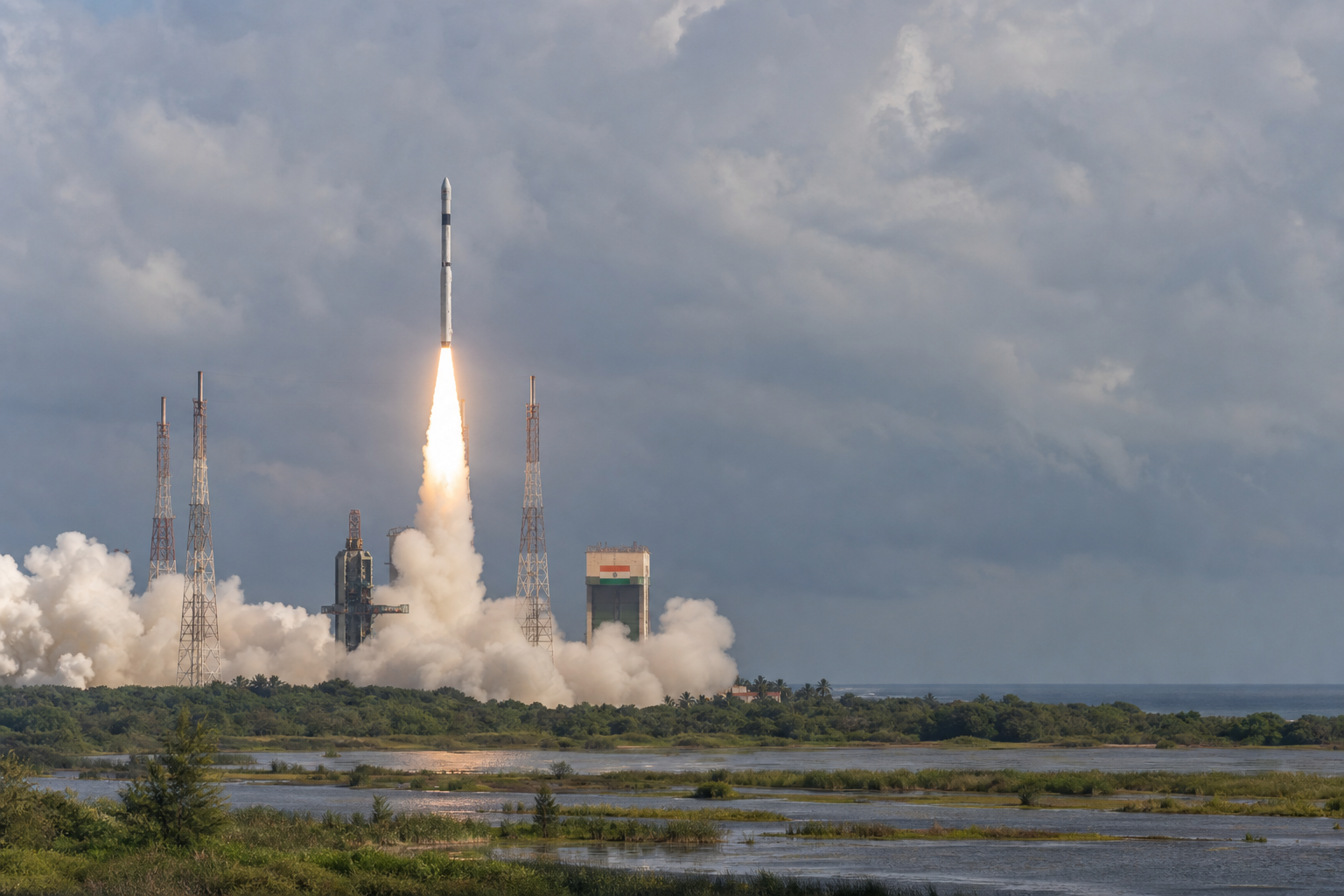
If you are trying to decide whether Vikram-1 was merely a proud headline or a genuine change in India’s space economy, do not begin with predictions. Begin with the threshold the rocket crossed.
On July 18, 2026, Skyroot Aerospace sent Vikram-1 into orbital flight from Sriharikota. The successful mission made it the first privately developed Indian vehicle to reach orbit. That is a substantial achievement. It demonstrates private Indian orbital capability, but it does not by itself establish routine service, commercial scale or a self-sufficient private space industry. Keeping those claims separate gives you a reliable way to judge what comes next.
The breakthrough is orbit, not simply rocket flight
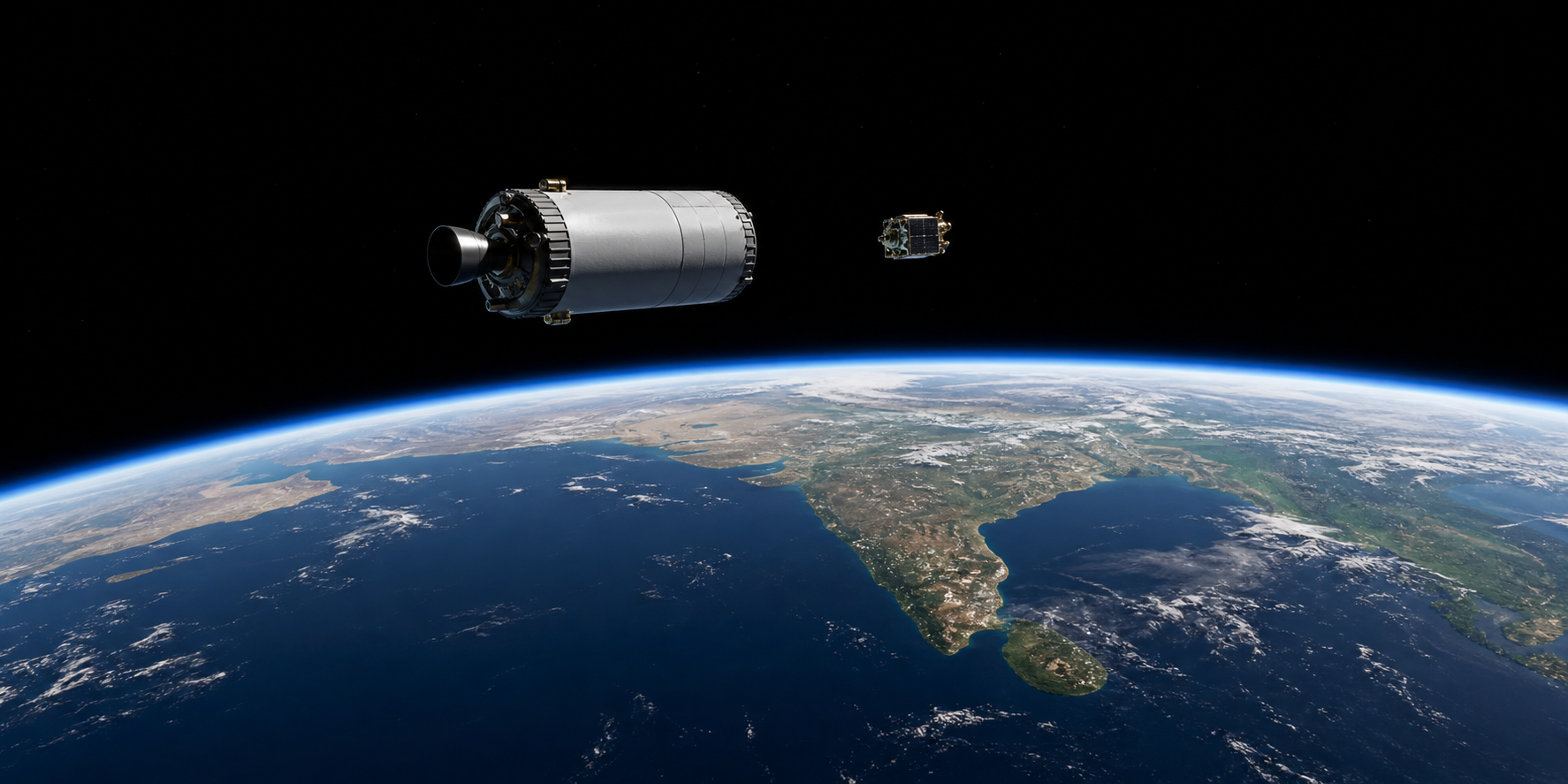
A rocket can leave the ground, climb to a great height and return on a ballistic path without entering orbit. Orbital flight requires the vehicle to gain enough horizontal speed, on a sufficiently precise trajectory, to continue moving around Earth. Propulsion, guidance, control, staging and ground operations must function as an integrated system under actual flight conditions.
That is why the exact description of Vikram-1 matters: it was the first privately developed Indian vehicle to achieve orbital flight. Broader phrases such as India’s first private rocket can blur the achievement. They can also tempt people to infer things that the milestone does not establish, such as an entirely private mission, a completely domestic supply chain, dependable launch frequency or proven cost leadership.
Sriharikota also belongs in the account. Private space does not mean separation from national infrastructure. Any orbital programme needs permissions, range safety, tracking, communications and operational coordination. When you assess a private launch, ask which organisation developed the vehicle, which operated the launch facilities and which supplied essential services. The useful question is how the parts of India’s space system worked together, not which side can claim the achievement exclusively.
One successful flight moves the burden of proof

Before an orbital flight, a new launch vehicle is supported by plans, component tests, ground tests and engineering claims. Reaching orbit adds evidence from the complete system operating in its real environment. It removes one important uncertainty: whether that integrated vehicle can cross the orbital threshold.
What Vikram-1 now allows us to say
- An Indian private company has developed a vehicle that achieved orbital flight.
- Private launch development in Bharat has moved from projected capability to demonstrated capability.
- Future missions can now be assessed against an actual orbital baseline rather than an aspiration.
- The debate can move from whether a private Indian vehicle can reach orbit to whether private launch can become repeatable, useful and economically durable.
What one flight cannot yet establish
- Reliability. That is a pattern built through repeated missions, not a permanent label earned by the first success.
- Launch cadence. A company must repeatedly bring manufacturing, testing, suppliers, facilities and mission operations together on workable schedules.
- Commercial demand. Orbital capability and a durable customer market are related, but they are not the same achievement.
- Competitive economics. A successful flight does not disclose the recurring cost of producing and operating the vehicle.
- Supply-chain resilience. One mission cannot show how easily critical components can be replaced, produced at higher volume or supported across several launches.
- A wholly private or wholly indigenous system. Privately developed describes the vehicle’s development; it should not be stretched into claims about every facility, service or component.
None of these limits diminishes Vikram-1. They identify the evidence that a serious observer should seek next. Celebration becomes more credible, not less, when the verified achievement is not burdened with claims it was never meant to prove.
Use this six-part scorecard for every private-space claim
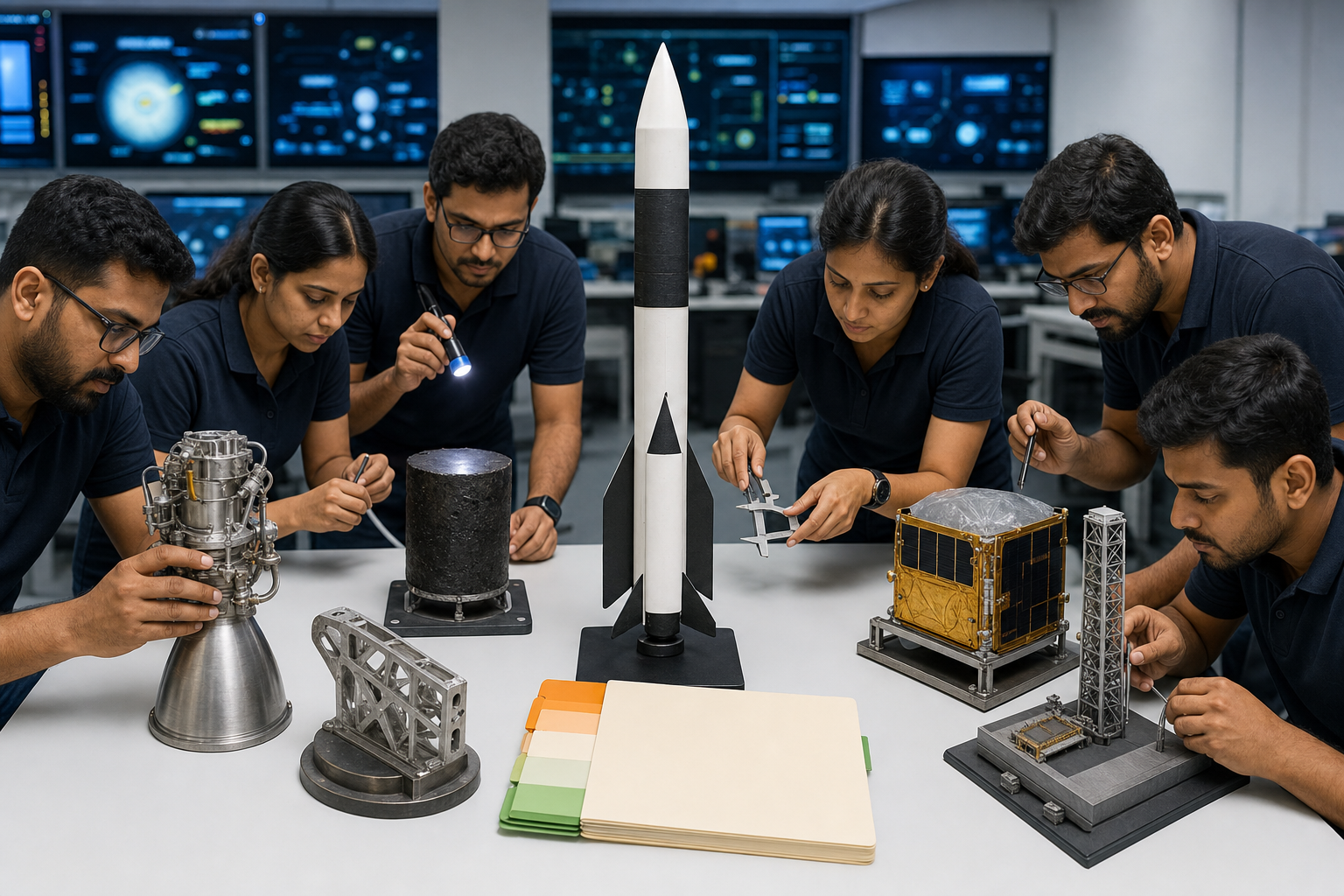
A private space sector is not built by accumulating announcements. It is built when successful missions become a repeatable service supported by customers, suppliers, skilled people, sound institutions and honest reporting. You can track that transition without relying on slogans.
- Record the mission objective and result. Note what was declared before launch and what was achieved afterward. For an orbital mission, distinguish merely leaving the pad from reaching the intended orbital outcome. A post-launch description should not quietly replace the original test.
- Track repeatability mission by mission. Keep a simple record of completed flights, their stated goals and their outcomes. A second and third result tell you something that a first cannot: whether success can survive new payloads, production cycles and operating conditions.
- Separate cadence from schedules. Announced dates show intent; completed missions show operating capacity. Regular launches require manufacturing, testing, supplier deliveries, facility access and range coordination to converge more than once.
- Look for customers, especially returning ones. Distinguish a technology demonstration from a contracted customer mission, and a one-time customer from repeat demand. Funding can help a company build capacity, but capital raised is not the same evidence as customers purchasing launches.
- Map the industrial depth. Ask which systems are developed, manufactured and tested in Bharat, which depend on a single supplier and which can be produced for successive vehicles. Avoid reducing this to an all-or-nothing argument about indigenous content. The stronger question is whether Indian technical capability and supplier capacity are becoming deeper with each mission.
- Identify every institutional role. List the vehicle developer, launch-site operator, regulator, customer and providers of range or tracking services. This prevents the word private from hiding public contributions, while also preventing public infrastructure from being used to erase private engineering achievement.
Transparency belongs across all six tests. A maturing launch sector should make it possible to compare objectives with outcomes and schedules with completed missions. Delays or anomalies do not automatically invalidate a programme, but vague descriptions prevent customers, citizens and policymakers from learning what the programme can actually do.
Dharmic confidence is strongest when its claims are exact
Bharat does not have to choose between ancient cosmic curiosity and modern engineering discipline. The Rig Veda’s expansive contemplation of the cosmos can give cultural meaning to the country’s continuing gaze beyond Earth. It does not certify a propulsion system, a guidance design or a launch company’s reliability. Preserving that boundary respects both scripture and science.
Two opposite errors weaken a Dharmic account of technological progress. One turns an ancient philosophical vision into a modern engineering specification that it was never intended to be. The other treats civilizational memory as irrelevant, as though scientific ambition must be culturally rootless. A more confident position allows inherited wonder to motivate inquiry while requiring contemporary technical claims to stand on contemporary evidence.
Vikram-1 also carries an economic lesson. Private Indian enterprise once operated under the heavy constraints associated with the licence-permit order; an Indian private company reaching orbit would have been difficult to imagine in that environment. The reasonable conclusion is not that frontier industries need no rules. Orbital launch has unavoidable safety, coordination and national responsibilities. The conclusion is that clear rules can protect the public interest while leaving room for capable Indian entrants to build and prove difficult technology.
This should not become an ideological contest between national institutions and private firms. Public infrastructure can remain a strategic asset while private developers add engineering approaches, specialised services and commercial pathways. The measure of success is whether the combination expands Bharat’s total capacity, improves accountability and creates more opportunities for Indian talent and industry.
Key takeaways
- Vikram-1’s defining achievement is orbital flight: on July 18, 2026, it became the first privately developed Indian vehicle to reach orbit.
- Orbital success proves an integrated technical capability. It does not yet prove reliability, routine cadence, commercial demand or competitive economics.
- Privately developed should not be misread as wholly private, wholly indigenous or independent of national launch infrastructure.
- The next phase should be judged through mission results, repeatability, completed launch cadence, customer evidence, industrial depth and clear institutional roles.
- A pro-Bharat and pro-Dharma account is most persuasive when civilizational pride is paired with precise technical claims.
When the next private-space headline appears, write down five things: the developer, launch site, mission objective, achieved result and evidence of repetition. If the headline does not let you fill those fields, it is not enough for a sector-wide conclusion. Vikram-1 has given Bharat a real first. What matters now is whether Indian institutions, companies and customers can turn that first into a durable pattern.