
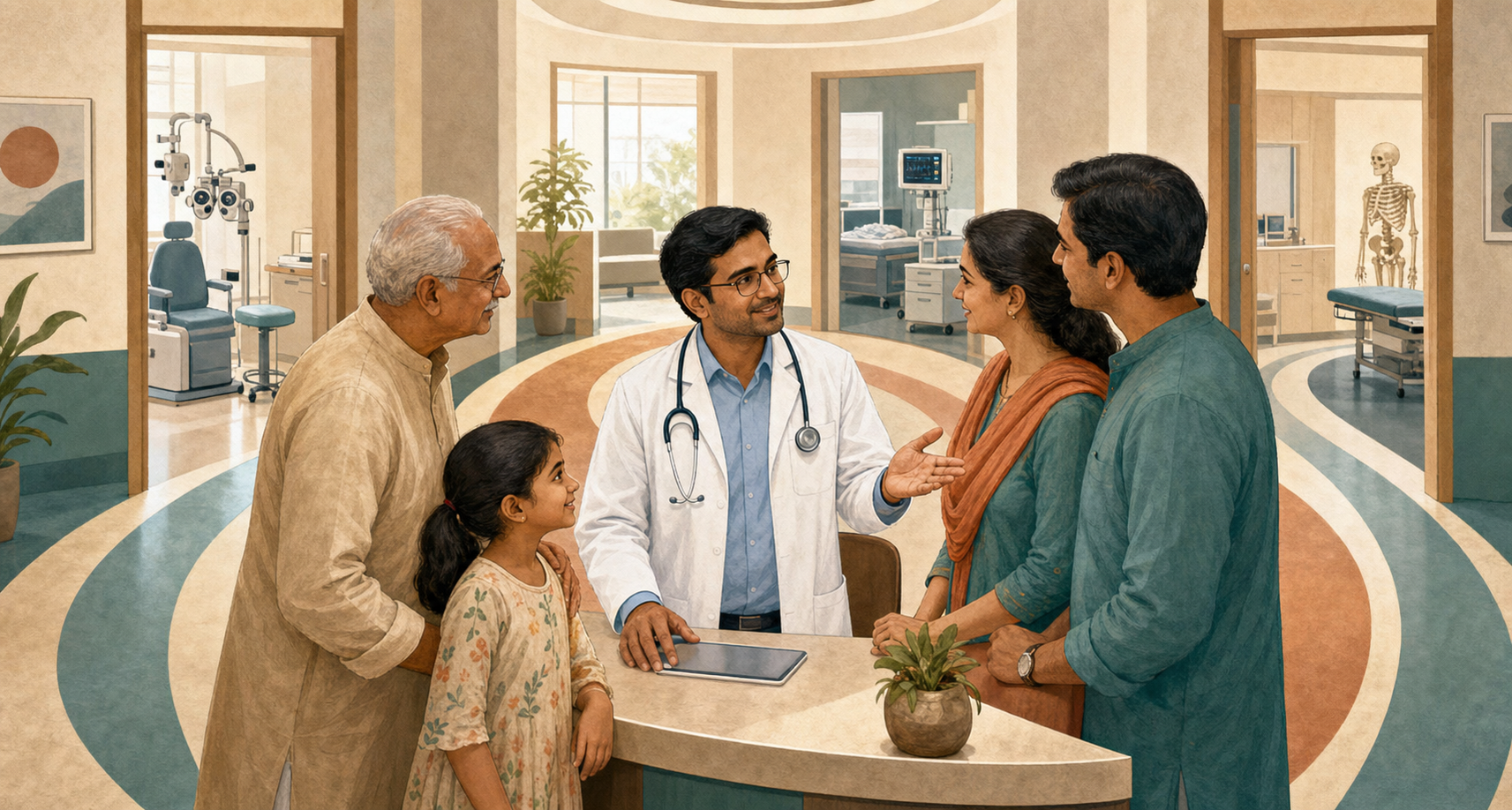
India’s healthcare challenge is not simply gaining access to medical expertise; it is knowing which expertise is needed, when it is needed and how separate recommendations fit together. A capable family doctor can provide that organising function without competing with specialists.
The case for family medicine therefore rests less on nostalgia for home visits and handwritten prescriptions than on continuity, coordination and informed trust. These qualities can help families use an increasingly complex medical system with greater clarity while preserving appropriate access to specialist care.
Continuity is the modern core of the family-doctor relationship
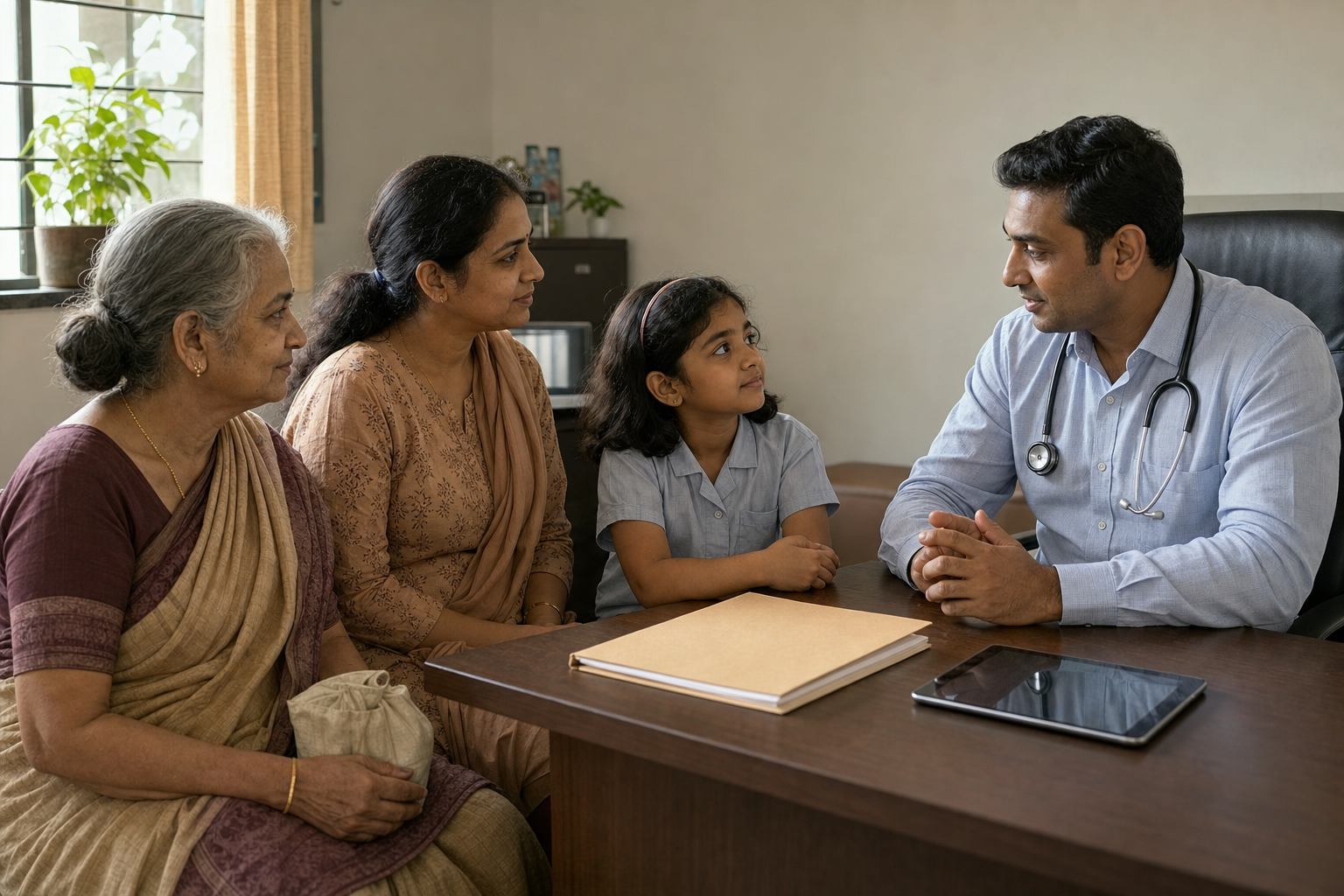
The DharmaRenaissance Blog article remembers an earlier model in which a general practitioner often knew several members of a family, their recurring illnesses, habits, financial constraints and anxieties. The consultation could include a home visit, a physical examination, a simple prescription and reassurance delivered by someone already familiar with the household.
The historical details are not the part of that model most worth recovering. Glass medicine bottles, compounders and leather medical bags belonged to a particular period. The enduring value was accumulated knowledge: each encounter added context to the next one, allowing illness to be understood as part of a person’s history rather than as an isolated complaint.
In general primary-care terms, continuity means having a clinician who remains familiar with the patient’s broad health story over time. The source article connects this role with a commonly used primary-care framework: care that is first-contact, continuous, comprehensive, coordinated and focused on the person. A contemporary family doctor need not reproduce the old clinic to perform those functions. Records may be digital, consultations may occur in a larger practice and referrals may happen more quickly, but the need for someone to hold the whole picture remains.
Specialist skill needs a coordinating centre
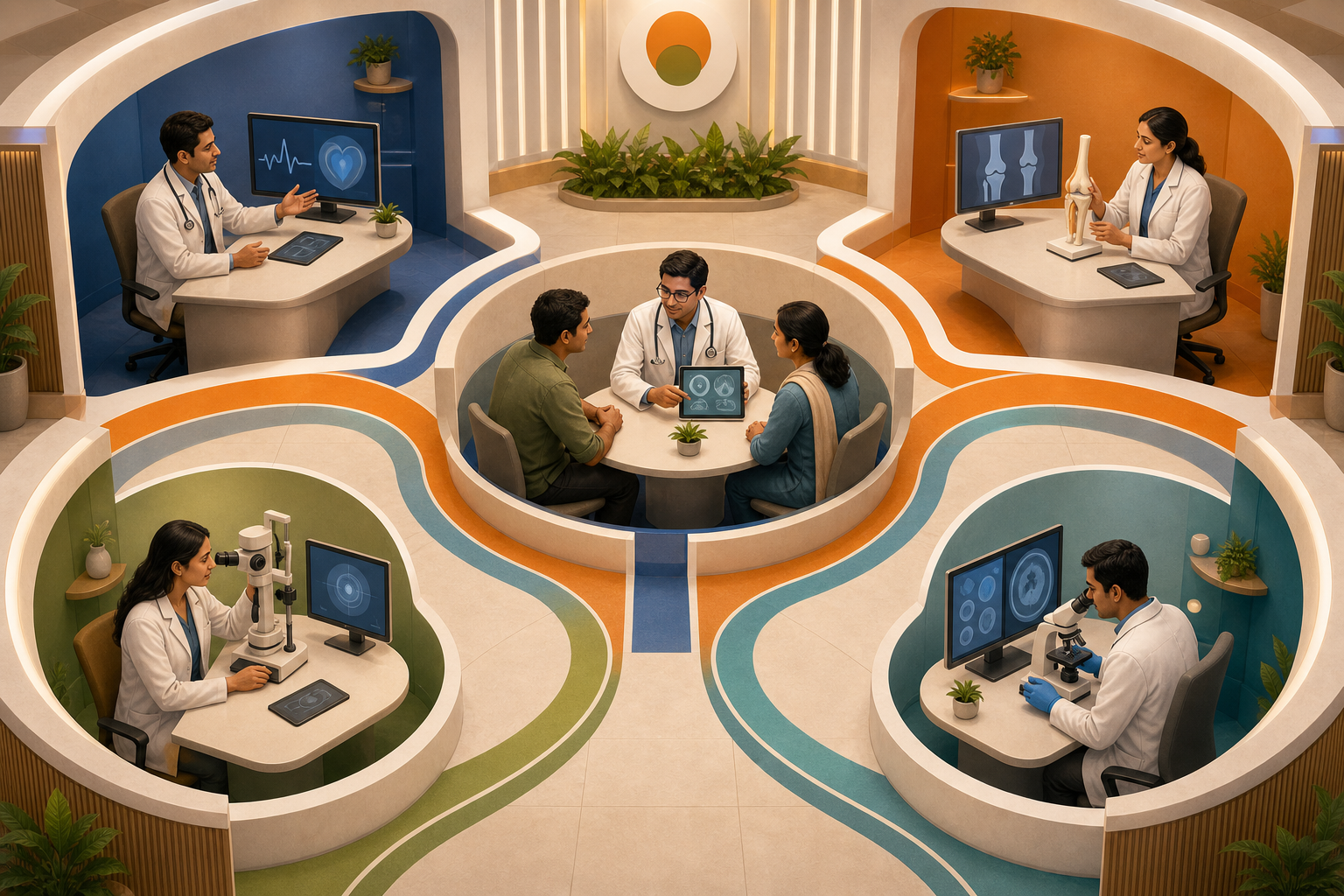
The source strongly affirms the importance of specialists in fields including cardiology, neurology, oncology, endocrinology and orthopaedics. Its concern is not specialisation itself but fragmentation: one clinician may examine the heart, another the kidneys and another the joints, while no single professional considers how the findings, medicines and priorities relate to one another.
A family doctor can serve as the first clinical interpreter in that situation. Common or limited problems may be managed in primary care; warning signs or unresolved symptoms can prompt referral; and specialist findings can later be placed back into the patient’s broader history. This is coordination, not obstruction. The family doctor should not become a barrier between a seriously ill patient and necessary expertise.
The distinction is especially important when a family is unsure which specialist to approach. Beginning with the most narrowly focused clinic can lead to several disconnected consultations. Beginning with a clinician able to assess the overall presentation may produce a clearer referral question and give the specialist better context. Afterward, the same primary-care relationship can help the patient understand what changed and what still requires attention.
Trust should mean explanation, not unquestioning obedience
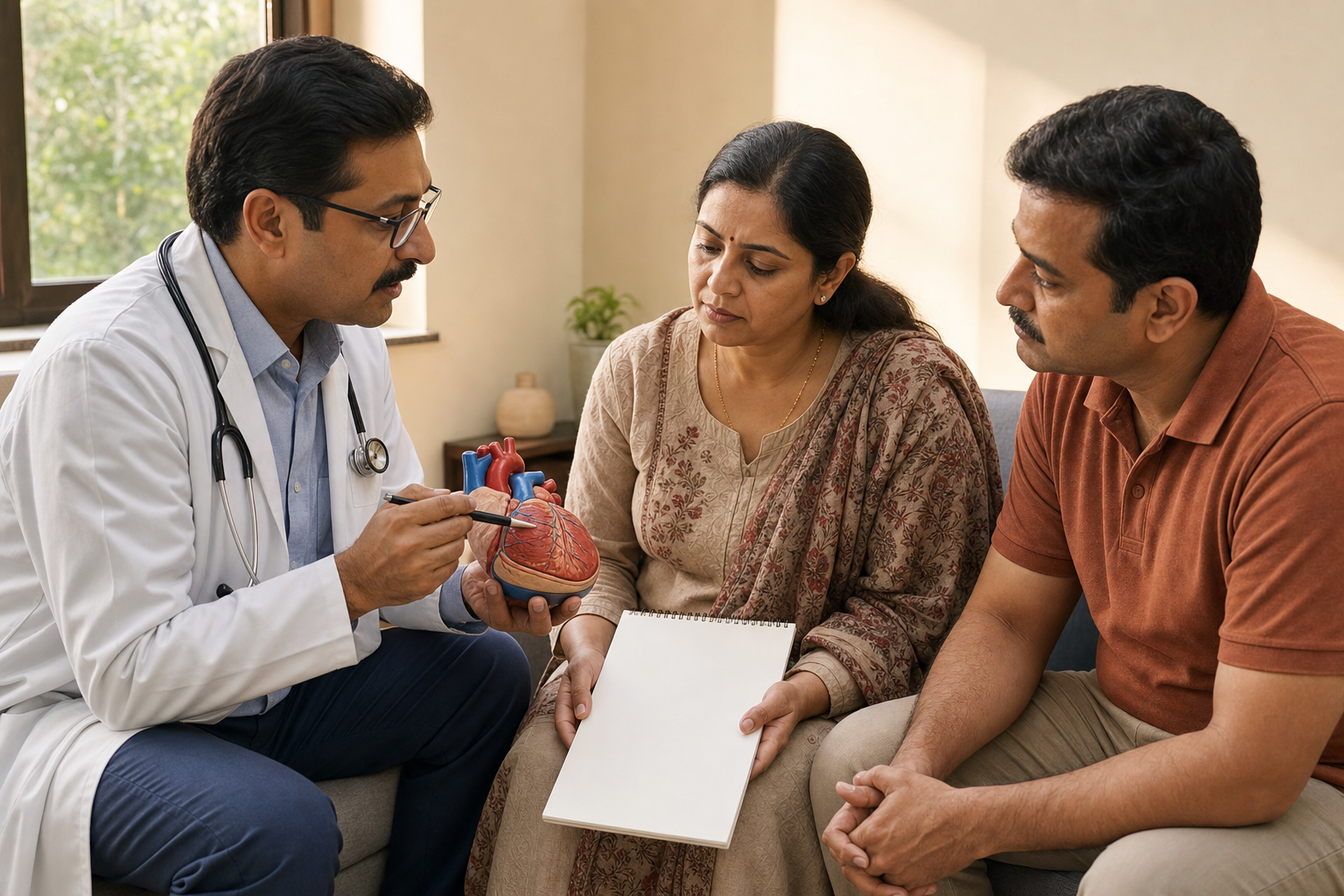
The DharmaRenaissance article places the family doctor within a wider decline of trust. It describes patients’ worries about repeated tests, costly investigations and procedures whose necessity they cannot judge. It also makes an important qualification: advanced imaging, laboratory testing, endoscopy, cardiac procedures and surgery may be necessary or urgent when properly indicated. Suspicion of overuse should not become blanket rejection of modern medicine.
To illustrate the ethical problem of unnecessary intervention, the article cites a 2023 Axios report about a Lown Institute analysis. According to that second-hand account, more than one in five coronary stents placed among Medicare beneficiaries from 2019 through 2021 met the analysis’s criteria for overuse. This was evidence concerning a United States population, not a measurement of Indian practice, and it does not establish how often comparable overuse occurs in India. Its relevance is narrower: even a valuable procedure can impose risk and cost when used without sufficient clinical need.
A dependable family doctor can help a patient ask proportionate questions: What problem is a test intended to confirm or exclude? How might its result change management? Why is a referral necessary? What would make waiting unsafe? The goal is not automatic agreement with the first recommendation, nor automatic resistance to it, but a conversation in which reasoning and uncertainty are made understandable.
Trust in this model is earned through consistency, candour and appropriate limits. Reassurance has value when it follows a careful assessment, but it should never conceal uncertainty or warning signs. Likewise, a second opinion can be reasonable in a major decision without implying that every doctor is commercially motivated. The family physician’s most useful contribution is often calibrated judgment: neither panic nor dismissal.
What families can reasonably expect from primary care

A useful family-doctor relationship should make the patient’s medical story easier to follow. The clinician should be willing to review prior diagnoses, current medicines, test results and relevant family circumstances rather than treating every visit as a disconnected event. Explanations should distinguish what is known, what remains uncertain and what would justify escalation.
Referral quality also matters. A responsible primary-care clinician recognises the boundary of general practice and can explain why specialist assessment is needed. After the referral, the clinician should be able to help integrate the new opinion with existing treatment. Conversely, a practitioner who discourages all specialist consultation or dismisses every investigation as unnecessary is not providing balanced coordination.
Families also have a role in creating continuity. Bringing previous reports, maintaining an accurate medicine list and returning for follow-up with the same clinician can supply the context on which longitudinal care depends. Continuity cannot be produced by the doctor alone if records and decisions remain scattered across unrelated encounters.
The source article’s strongest insight is that reassurance is not an ornamental part of medicine. When grounded in examination and clear reasoning, it can reduce confusion and help a family respond proportionately. Yet familiarity should complement clinical discipline, not replace it. The best contemporary version of the family doctor combines humane attention with readiness to investigate, refer or seek urgent care when the situation demands it.
Key takeaways
- A family doctor is most valuable as a continuing first contact who understands the patient’s broader history.
- Primary care and specialist medicine are complementary: one coordinates the whole story while the other supplies focused expertise.
- Concern about unnecessary intervention should lead to better questions, not wholesale distrust of tests, procedures or hospitals.
- Trust is strongest when recommendations, uncertainty, referral thresholds and follow-up plans are explained clearly.
- Patients support continuity by keeping records organised and returning to a clinician who can connect successive episodes of care.
As Indian healthcare grows more specialised, rebuilding durable first-contact relationships could make that expertise easier to navigate. The family doctor’s future lies not in recreating an old-fashioned clinic, but in restoring a clear centre of responsibility around the patient.
References
- DharmaRenaissance Blog – Why the Trusted Family Doctor Still Matters in India’s Complex Medical Maze