

If the ₹10,000-crore headline left you wondering whether the T20 World Cup final itself was compromised, begin with the distinction the headline cannot make for you: evidence of an illegal betting network would not, by itself, be evidence that a player, official, or match was corrupted.
What has surfaced is an allegation of a large technology-enabled betting operation, alongside a request for a Special Investigation Team. The request reportedly cites citizen complaints from Goa and Nagpur and concerns activity around the India-New Zealand final. Those facts justify scrutiny. They do not settle the allegation, establish the ₹10,000-crore figure, or prove match manipulation. You can demand a serious investigation without prejudging its result.
Separate the headline into three questions
A betting scandal can involve several kinds of wrongdoing, but they require different evidence. Public discussion becomes unreliable when they are collapsed into one dramatic claim.
- Did an illegal betting operation exist at the alleged scale? Investigators would need to authenticate the applications, domains, operator panels, user accounts, server records, communications, and payment flows. The ₹10,000-crore description also needs a defined basis. It could refer to wagers accepted, balances displayed, transactions processed, or alleged criminal proceeds. Those are not interchangeable measures.
- Did the network conceal or launder money? That requires tracing funds through bank accounts, payment handles, prepaid instruments, wallets, crypto transfers, cash collectors, shell entities, or hawala channels. Suspicious movement is an investigative lead; the identity and knowledge of each participant still have to be established.
- Was anyone inside cricket involved? Match corruption requires its own evidence: an approach to a player or official, misuse of confidential information, an agreement to manipulate an event, or another provable connection between betting operators and a participant. Unusual odds or betting volumes may trigger inquiry, but an anomaly alone cannot identify a guilty person.
This distinction protects both cricket and justice. If the operation existed without influencing play, it remains a serious cybercrime and financial-enforcement problem. If insiders were involved, investigators must prove that additional link rather than allowing public suspicion to substitute for evidence.
How a modern betting network can hide in plain sight

The storefront may look like a simple mobile screen, yet the operation behind it can be deliberately fragmented. A typical structure has controllers at the top, panel operators in the middle, and customers at the edge. The controllers manage odds and liquidity. Panel operators recruit users and issue private IDs. Customers receive live rates through restricted applications or messaging groups.
That layered arrangement matters because no single participant necessarily sees the whole enterprise. A local recruiter may know payment handles but not the server owner. A mule-account holder may receive deposits without controlling the betting panel. A technical administrator may maintain domains without collecting cash. A credible investigation has to join these fragments into an evidence-backed network rather than assume every contact played the same role.
The technology is designed for rapid replacement. Operators can distribute custom Android packages, use progressive web applications, rotate domains, hide origin servers behind content-delivery services, and host databases on offshore virtual private servers. Encrypted groups and auto-deleting messages can coordinate customer onboarding and live rates. When one address is blocked, another can appear while the underlying accounts and administrators remain active.
The money can be fragmented in the same way. Numerous small transfers may pass through mule accounts, prepaid wallets, gift cards, peer-to-peer crypto transactions, stablecoins, cash collectors, or over-the-counter conversion points. Cross-border remittances, shell entities, and hawala channels can add further layers. The practical target is therefore not just the visible app. Investigators must identify the people, devices, financial nodes, and infrastructure that allow the app to return under a new name.
You should treat unsolicited access to such a system as a warning sign when the offer combines a private ID, a sideloaded APK, rotating payment instructions, promises of easy withdrawals, pressure to recruit others, or communication that disappears automatically. None of these features proves the full syndicate allegation. Together, however, they give you a sound reason not to install, deposit, or forward the offer.
What a credible SIT would need to establish
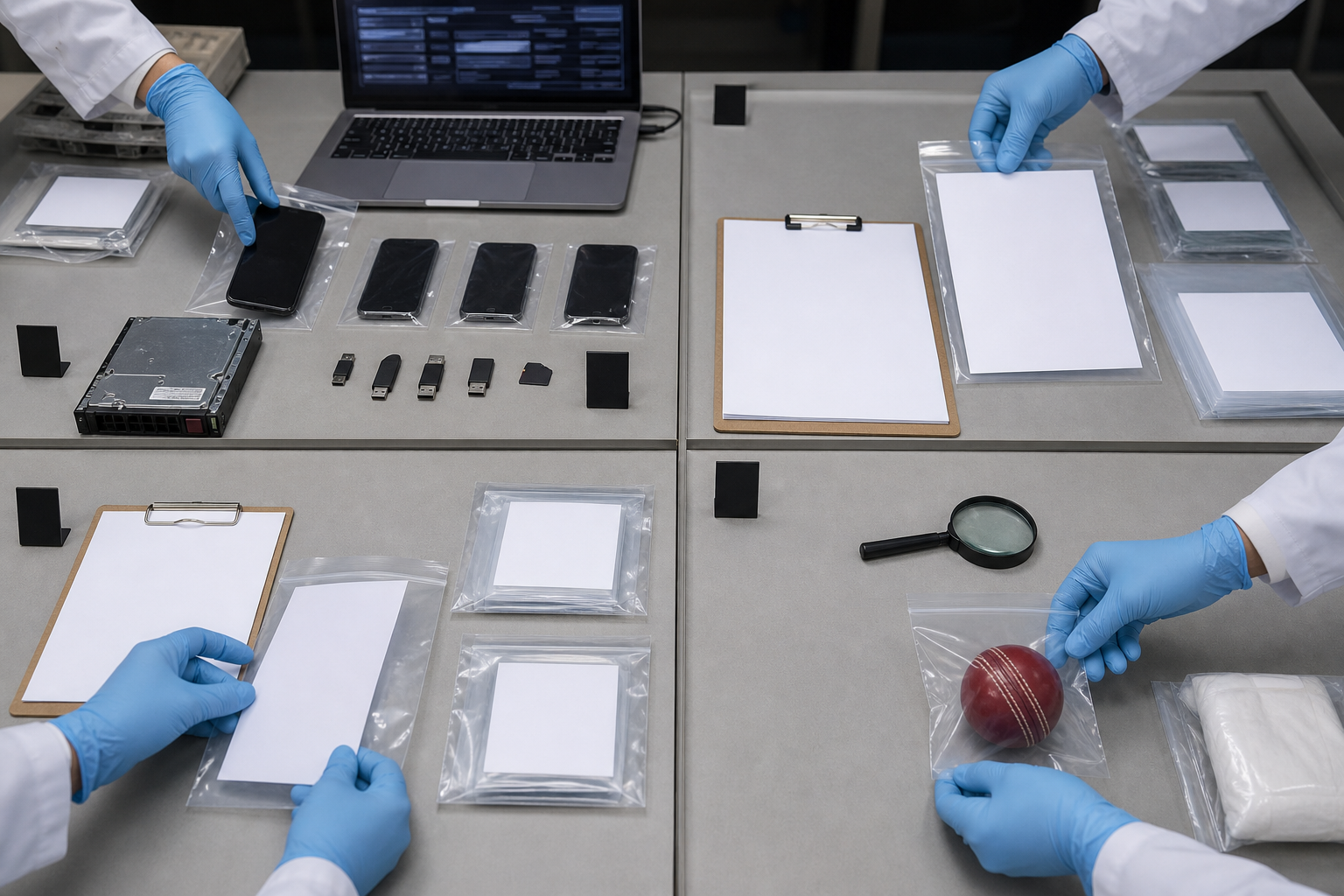
A Special Investigation Team is appropriate only if it solves the coordination problem. Illegal betting of the kind alleged crosses state policing, cyber-forensics, financial intelligence, telecommunications, taxation, foreign-exchange control, and possibly international evidence requests. Merely placing several agency names on an order would not be enough.
The operational core should bring together state crime branches and cyber cells with the Enforcement Directorate, Financial Intelligence Unit-India, MeitY, CERT-In, and the Department of Telecommunications. Coordination with banks, RBI-regulated payment businesses, and NPCI can help identify suspicious merchant IDs, examine high-velocity transfers, review device and location mismatches, and freeze accounts when the legal threshold is met.
The legal toolkit may include applicable central and state gambling laws, the Information Technology Act, 2000 and its Section 69A blocking power, the Prevention of Money Laundering Act, 2002, the Foreign Exchange Management Act, 1999, the Income-tax Act, 1961, and the Prohibition of Benami Property Transactions Act, 1988. Goa’s licensed casino framework does not make an unlicensed offshore sports-betting service lawful. Because gambling rules and enforcement powers can depend on the state and the facts, anyone facing personal legal exposure should obtain qualified legal advice rather than rely on a general account of these laws.
Speed matters, but so does evidence discipline. Domains can rotate, accounts can be emptied, and overseas providers may retain data only for limited periods. Preservation requests should therefore go out early. Seized devices need forensic imaging, not casual browsing. Messages, payment records, server data, certificates, wallet metadata, and account identities must be collected with a documented chain of custody and the certification required for electronic evidence.
| Period | Priority | Publicly meaningful result |
|---|---|---|
| Days 1-7 | Preserve server and platform data, identify urgent domains, and freeze evident mule accounts through lawful process. | Evidence is secured before infrastructure or funds disappear. |
| Days 8-30 | Correlate devices, IDs, payment nodes, certificates, domains, and communications; reconstruct the financial trail with FIU-IND. | The alleged network is mapped by role instead of treated as an undifferentiated list of suspects. |
| Days 31-90 | Pursue justified asset attachment, prepare charges supported by electronic evidence, advance overseas requests, and formalize tournament-response procedures. | Interim enforcement becomes a prosecutable case and a reusable integrity system. |
Offshore hosting makes early international requests especially important. Mutual legal assistance, letters rogatory, bilateral arrangements, memoranda of understanding, and available emergency contact channels can support data preservation or subscriber-information requests. Narrow, technically precise requests are more useful than broad demands sent after the infrastructure has disappeared.
Sports-integrity work must run alongside the criminal inquiry. The anti-corruption units of the ICC and BCCI can reinforce reporting duties, educate players and staff about approaches, and share appropriate threat intelligence. Analysts can examine unusual activity in micro-markets and compare it with on-field sequences. That analysis should generate questions, not public verdicts. A statistical irregularity is not a substitute for a proven human connection.
How to judge official progress without feeding a trial by headline
The demand for an SIT and the constitution of an SIT are different events. So are an account freeze, an asset attachment, a charge, and a conviction. When you encounter an update, identify which procedural stage has actually occurred before sharing it.
A useful public scorecard would report non-prejudicial measures such as domains neutralized, suspicious merchant IDs disabled, mule accounts frozen through lawful orders, data preserved, the value of assets attached, overseas requests advanced, and prosecution milestones reached. Even these numbers require context. Blocking many disposable domains may produce a large total without removing the controllers or payment network.
Look for explanations of how evidence was preserved and how agencies are coordinating, not disclosures that could compromise the inquiry. Independent oversight of blocking orders, privacy-respecting handling of personal data, whistleblower protection, and periodic factual briefings would make enforcement more credible. Public communication should also distinguish suspects from convicted offenders and unlawful betting from gaming that is specifically licensed where state law permits it.
Be particularly careful with claims that a named player, official, community, or city was responsible. The allegation presently described concerns a suspected betting ecosystem. Unless an authority produces evidence of an insider link, attaching guilt to cricket participants turns a legitimate demand for accountability into speculation. Satya requires accuracy even when a rumour appears to defend a cause we care about.
What to do if a betting operator contacts you
You do not need to investigate the network yourself. Your useful role is to preserve what reached you, avoid increasing your exposure, and place the information with people who have lawful access to records.
- Do not install a sideloaded APK or make a test deposit. A small payment can still expose your financial details, connect you to a mule account, or encourage further contact. Do not forward the installation file to friends for inspection.
- Preserve the visible evidence without engaging further. Capture the profile or number that contacted you, the date and time, the exact URL, offered user ID, payment handle, transaction instructions, group name, and screenshots of the messages. Keep the original conversation if it is safe to do so.
- Record any transaction accurately. If money has already moved, retain the transaction reference, amount, destination handle or account, and the communication that prompted it. Do not edit screenshots or combine them into a misleading reconstruction.
- Report the material. Use the National Cybercrime Reporting Portal or approach your local cyber police station. If you transferred money, promptly notify the bank or payment provider as well; delay can make tracing or freezing funds harder.
- Do not confront the recruiter or stage your own sting. Warning the operator may cause evidence to disappear, while continued participation can create financial, device-security, or legal risk. Give investigators the identifiers and let them seek the underlying records.
- Do not publish personal data as an accusation. A phone number or payment handle can be a useful lead without proving who controlled it. Send it through the reporting channel rather than exposing a possibly innocent account holder to harassment.
If betting has become difficult for you or someone in your household to stop, treat that as a separate harm that deserves attention now. Cutting access to the operator, protecting shared finances, and seeking qualified counselling are more useful than waiting for the criminal case to resolve. Enforcement against a syndicate does not by itself repair a gambling problem.
A dharmic standard for protecting cricket

Cricket is more than a commercial spectacle in Bharat. It is a shared civic ritual across Hindu, Buddhist, Jain, and Sikh homes. That is precisely why a dharmic response must resist two temptations at once: the greed cultivated by illegal betting and the anger cultivated by unverified accusation.
Satya asks us to distinguish allegation from proof. Ahimsa asks us not to ruin reputations through careless forwarding. Self-restraint asks us not to treat a private betting ID as harmless entertainment. Social responsibility asks institutions to follow the money, preserve evidence, protect whistleblowers, and publish measurable progress. These are practical duties, not decorative moral language.
Key takeaways
- The alleged ₹10,000-crore network and any claim of match manipulation are separate propositions. Each needs its own evidence.
- A serious inquiry must connect applications, operators, devices, payment nodes, controllers, and beneficial owners; blocking visible domains is only an interim measure.
- Betting-market anomalies can justify investigation but cannot, by themselves, prove that a player or official acted improperly.
- If an operator contacts you, do not install, deposit, confront, or publicly accuse. Preserve identifiers and report them through the cybercrime portal or local cyber police.
- Demand fast preservation of evidence and transparent milestones while retaining the presumption of innocence.
Your next useful step is simple: verify the procedural status before forwarding the next claim, and report any concrete betting-app evidence through the proper channel. Clean cricket will be protected by disciplined investigation and disciplined citizenship, not by a larger rumour.
References
