
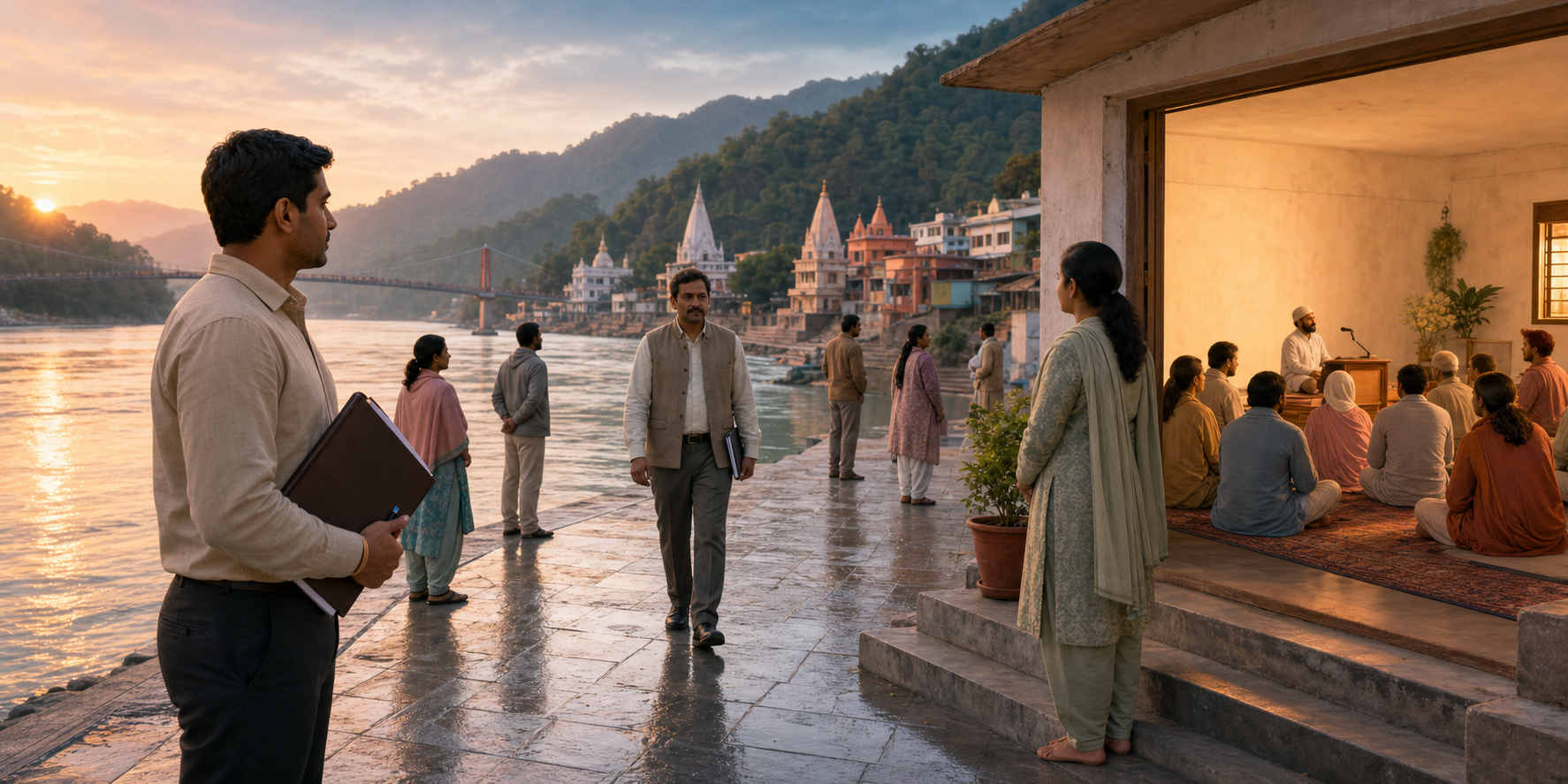
A message in your neighbourhood group claims that a mosque is being planned nearby. You care about Rishikesh’s sacred character, and you may have legitimate questions about land use, congestion, safety, or compliance. Your next move matters: interrupting a prayer will answer none of those questions, but it can create a second conflict before the first claim has even been verified.
On 15 October 2025, activists reportedly interrupted a Muslim prayer gathering in Rishikesh amid an unverified claim that a new mosque was planned in a predominantly Hindu neighbourhood. If you want to defend Hindu interests without sacrificing public order or constitutional fairness, separate worship from construction, rumour from record, and lawful objection from coercion.
Keep three different questions separate

Communal disputes become harder to resolve when several distinct issues are treated as one. In this case, you should open three separate mental files.
- The prayer gathering: Was it peaceful, and was there any specific, verified public-order concern? India’s constitutional framework protects freedom of religion and peaceful assembly within the law. The existence of a gathering does not, by itself, prove that a permanent religious structure is being planned.
- The alleged mosque proposal: Does an application actually exist? If it does, where is the site, what use has been proposed, which permissions are required, and what has the competent authority decided? These are planning and administrative questions.
- The disruption: Did anyone obstruct worship, intimidate participants, provoke disorder, or disregard directions from lawful authorities? Conduct at the gathering must be assessed separately from any dispute over construction.
This distinction prevents a common but serious error. Even if a proposed building lacked a required permission, that would not automatically settle the legal status of a separate prayer gathering. Conversely, the ability to pray peacefully does not amount to approval for construction. One question cannot be used as evidence for the other.
Due process begins by identifying the decision that actually needs to be made. If the concern is construction, investigate construction. If the concern is public order, report observable conduct. Do not turn a rumour about a building into a confrontation with worshippers.
Build an official record before taking a public position
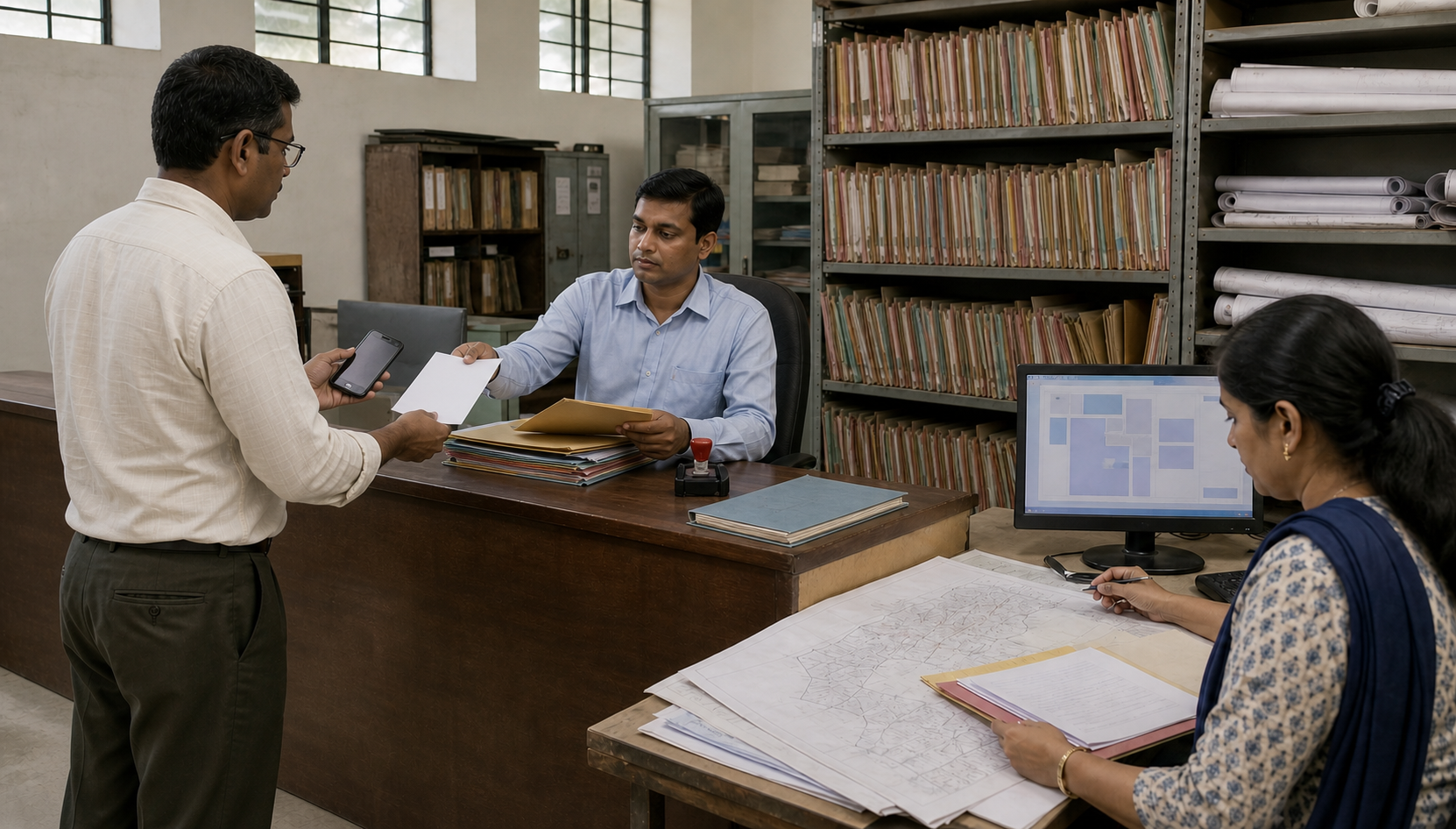
A forwarded message, a street conversation, or the sight of people gathering for prayer is not proof of a building proposal. Before organising an objection, convert the allegation into questions that an authority can answer.
- Write down the precise claim. Identify the alleged location, proposed use, applicant if known, and claimed stage of approval. If the message contains none of these details, label it an allegation rather than a fact.
- Contact the relevant municipal or planning office. Ask whether an application exists for the identified property and proposed use. Do not assume that the office receiving your first request is the competent authority; ask it to identify the responsible department if necessary.
- Ask narrow questions in writing. Request confirmation of whether an application has been filed, whether any permission has been granted, which approvals remain pending, and what procedure residents may use to submit planning concerns.
- Keep the acknowledgement and reply. A dated written request gives residents, officials, and community leaders a common record. Ask for a time-bound written clarification, but do not treat a delayed response as proof that the allegation is true.
- Use recognised civic forums. Ward committees, municipal channels, and other lawful neighbourhood forums are the appropriate places to raise planning and public-safety concerns. Record the questions asked, the answers received, and the next responsible contact.
A useful fact sheet needs only three labels: confirmed, disputed, and not yet known. Put every claim under one of them. Do not upgrade an unknown claim to a confirmed one merely because it has been repeated often.
If a formal notice, police complaint, court matter, or threat of legal action involves you personally, consult a qualified local advocate. The consequences will depend on the precise facts and applicable law; a general civic checklist is not a substitute for advice on an individual case.
Raise planning objections without targeting a faith
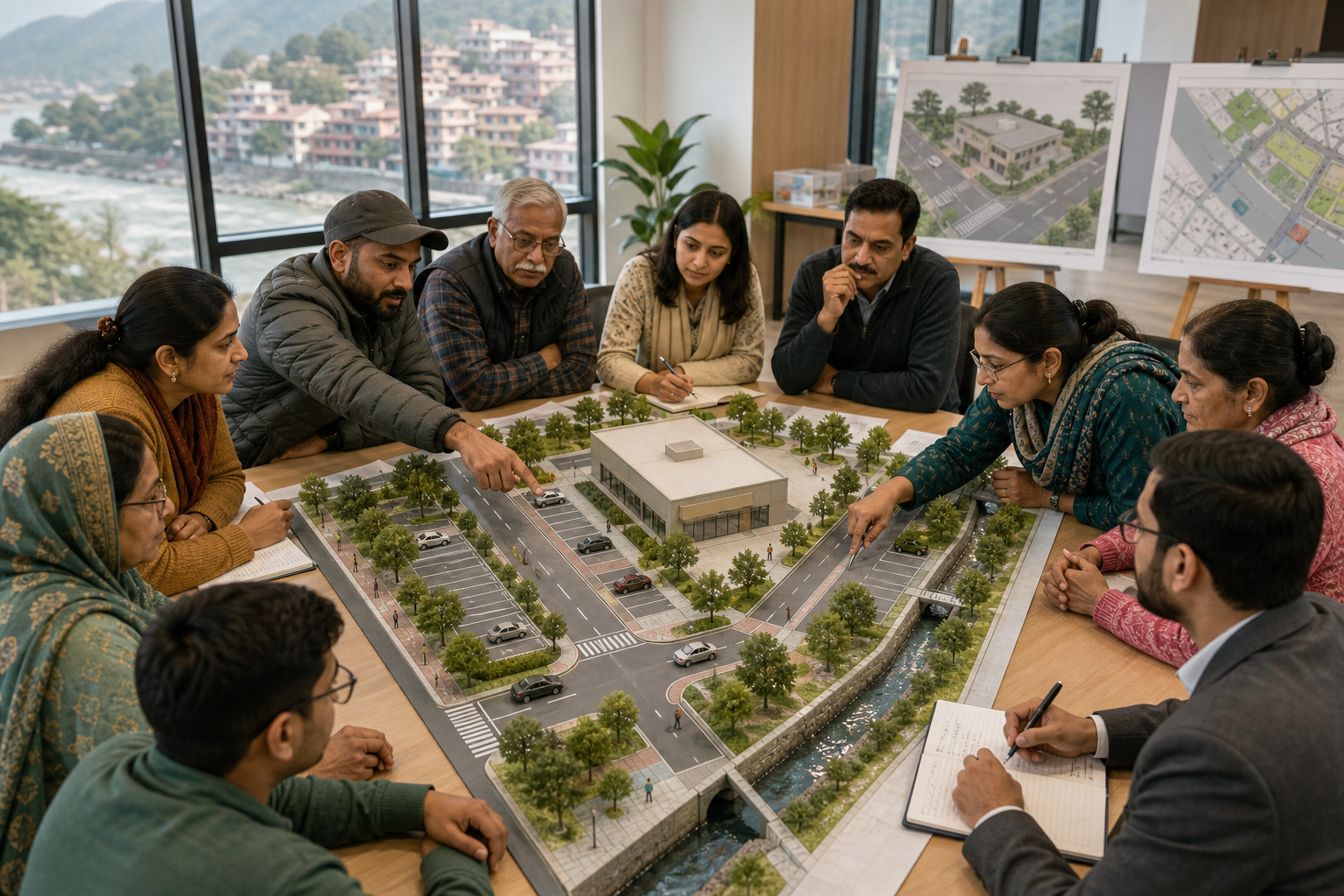
Due process does not require residents to remain silent. It gives legitimate objections a form that authorities can examine. Concerns about land use, access, crowd management, neighbourhood infrastructure, or public safety can be stated clearly and supported with verifiable information.
The strongest test is consistency: would you ask the same planning question if the proposal involved a temple, gurdwara, monastery, community hall, or another place expected to receive regular gatherings? A rule applied only after the identity of the worshippers becomes known looks less like civic protection and more like selective pressure.
Use requests an authority can answer
- Instead of saying, “A mosque is being built illegally,” ask, “Has an application for this property and proposed use been filed or approved?”
- Instead of objecting to the presence of worshippers, identify a specific planning or safety issue and ask which rule governs it.
- Instead of demanding action from a crowd, submit the concern to the office empowered to examine it and keep proof of submission.
- Instead of treating a pending application as a completed decision, state whether it is alleged, filed, under review, approved, rejected, or subject to a further procedure.
This language is not timid. It prevents officials from dismissing a legitimate concern as a communal accusation. It also makes inconsistency visible: if similar buildings are being treated differently under the same rule, the written record will show where the unequal treatment occurred.
If the alleged project has no required permission, documented questions and official replies give residents a much firmer basis for lawful action than slogans do. If no proposal exists, verification prevents an avoidable confrontation. If a compliant proposal does exist, residents can use the available objection or review process without interfering with worship.
When prayer is underway, de-escalate first
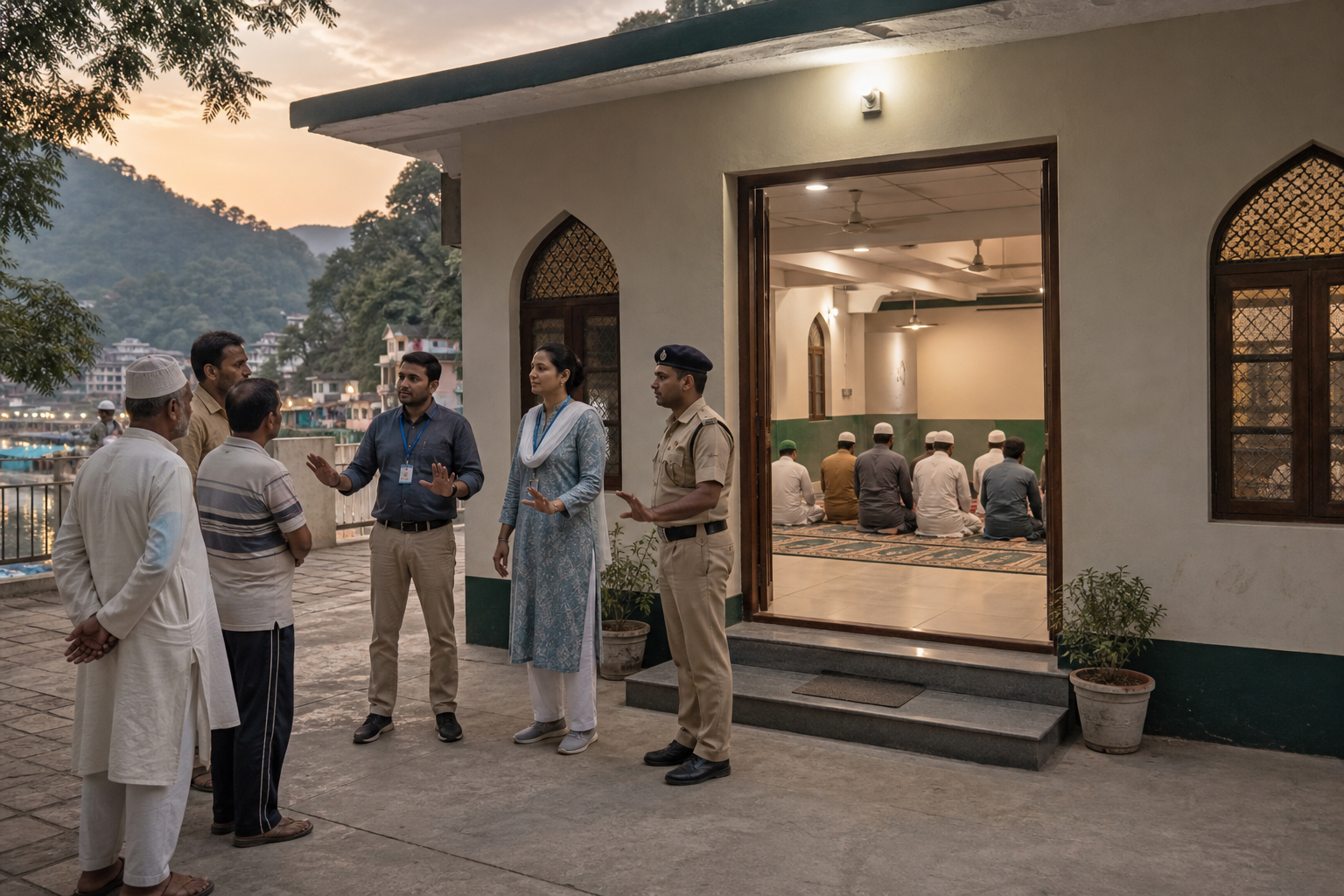
A live prayer gathering is the wrong place to determine zoning facts. People arriving with competing claims, raised voices, and mobile-phone recordings can turn uncertainty into a public-order emergency within moments. Move the dispute away from the act of worship and into an accountable civic setting.
- Do not block an entrance, crowd participants, interrupt a ritual, or use provocative slogans.
- If you believe there is an immediate safety problem, contact the appropriate public authority and describe what you can directly observe. Do not present a construction rumour as an emergency fact.
- Ask respected local faith and community leaders to appeal jointly for calm while officials verify the planning claim.
- Choose a neutral civic venue for any meeting. Do not hold the discussion at the entrance to an active place of worship or prayer gathering.
- Circulate official replies and a short list of unresolved questions. Do not circulate speculation merely to maintain pressure.
Early, structured dialogue through neutral civic bodies can reduce misinformation and strengthen trust. For that dialogue to work, participants need a clear agenda: what is confirmed, which authority controls the decision, what remains unanswered, and when the next written update is expected.
A joint appeal for calm is not a joint endorsement of every claim or proposal. Hindu representatives can preserve their objections while agreeing that nobody should intimidate worshippers, spread unverified allegations, or bypass lawful procedure.
Dharmic firmness requires disciplined means
A pro-Hindu response should protect more than the immediate preference of one crowd. It should protect the credibility of equal rules, the safety of sacred activity, and the ability of future Hindu communities to rely on the same constitutional order.
Ahimsa does not mean refusing to object. It means refusing needless injury while pursuing the objection. Karuna prevents a planning dispute from turning every worshipper into an enemy. Samvad subjects claims to questions, records, and answerable institutions. These principles, present across the Dharmic traditions in different forms, turn restraint into a method of civic strength.
That method also demands reciprocity. If Hindus expect temples, yatras, festivals, and prayer gatherings to be protected from intimidation, we should defend the principle that peaceful worship cannot be obstructed merely because someone alleges a separate land-use violation. Equal treatment is not an abandonment of Hindu interests; it is what makes their defence principled and durable.
Rishikesh does not have to choose between its Hindu spiritual character and lawful civic peace. Residents can scrutinise development, insist on compliance, and preserve neighbourhood interests without converting an unverified claim into collective punishment.
Key takeaways
- A prayer gathering, a construction proposal, and a public-order incident are three separate questions.
- The alleged mosque plan in the Rishikesh episode remained unverified at the time described; repetition did not make it an official fact.
- Ask municipal or planning authorities whether an application exists, which permissions apply, and how residents may submit concerns.
- Put objections in writing and frame them around consistent planning and safety standards, not the identity of worshippers.
- When tension is immediate, protect people and worship first; investigate land use through official channels afterward.
- Ahimsa, karuna, and samvad support firm action when they guide its means, language, and forum.
Before forwarding the next alarming message, rewrite it as a precise question and send it to the authority that can answer it. That small act moves the neighbourhood from reaction to evidence, and gives every legitimate concern a lawful path forward.
References
