

Your phone shows a temple insult, a procession clash, a disputed burial ground, or an allegation of religious conversion. By the time you see it, the strongest claim is already being repeated as fact. An arrest is treated as proof of guilt, a delay as proof of bias, and an unverified caption as if it were a land deed or court order.
That is precisely when dharmic clarity matters. You can defend Hindu dignity, demand even-handed policing, and insist on due process at the same time. The practical task is to separate what happened, what can be proved, what the state is being asked to do, and what will keep legitimate accountability from collapsing into rumour or collective blame.
First identify the dispute the state is being asked to resolve

Religious disputes often arrive as a single emotional story, but the underlying legal and administrative questions may be entirely different. A provocative video calls for authentication, identification, and an assessment of its effect on public order. A land dispute calls for records, maps, surveys, notices, and title adjudication. A conversion allegation calls for evidence about conduct, consent, inducement, coercion, and any applicable immigration conditions. A procession clash calls for evidence about individual acts of violence and immediate risks to public safety.
Do not let the religious label obscure the actual question. Start by placing the dispute in one or more of these tracks:
- Fact verification: Did the event occur where and when claimed? Is the video complete and authentic? Are the people correctly identified?
- Speech or symbolic conduct: What exactly was said, displayed, damaged, or burned? Was it criticism, deliberate desecration, a threat, or alleged incitement?
- Land title and land use: Who holds the recorded interest? Do revenue, municipal, religious-endowment, defence, and court records agree? Has the proposed use received the required scrutiny?
- Religious-conversion conduct: Was there merely discussion or propagation of belief, or is there evidence of coercion, inducement, misrepresentation, or another prohibited act?
- Public-order enforcement: What immediate danger did the authorities identify? Is the response directed at specific conduct and individuals?
- Extraordinary state action: Has preventive detention or another exceptional power been used? If so, what necessity, proportionality, duration, and review safeguards apply?
This classification prevents a common mistake: using evidence from one track as if it settled another. An offensive statement may establish that words were spoken, but it does not by itself prove coercive conversion. A religious board’s property claim may justify examination, but it does not by itself settle title. A viral video may justify investigation, but it does not establish the identity, motive, or legal guilt of every person named online.
A useful first statement is deliberately narrow: At a stated place and time, a named authority has taken a stated action concerning alleged conduct; these facts are confirmed, these claims remain unverified, and this is the next formal step. If you cannot fill one of those fields, mark it unknown. Do not replace it with a confident guess.
Consider the arrest of four people in Tiruchirappalli on 3 October 2025 after a video showed an effigy of Lord Rama being burned. The confirmed procedural facts were that a case had been registered and an investigation was underway. Those facts established that the police had acted. They did not, at that stage, determine each person’s role, motive, final charge, or guilt.
An arrest shows state action, not the final truth

Public discussion regularly compresses allegation, arrest, charge, and conviction into one word: guilty. That shortcut is especially dangerous when religious feeling is intense. An arrest tells you that an authority has exercised a power against a person. It does not convert every circulating allegation into a judicial finding.
Keep five stages separate even when news updates blur them:
- Allegation: Someone claims that an act occurred or a law was violated.
- Official response: Police or administrators register a case, issue a notice, conduct a survey, arrest someone, or order detention.
- Investigation: Authorities examine identity, intent, evidence, individual roles, and possible legal provisions.
- Formal determination: A competent authority frames charges or issues an administrative decision that can be tested through the prescribed process.
- Review and outcome: Courts or other authorised bodies assess the evidence, procedure, and legality of the action.
Not every matter follows an identical sequence, but the distinctions remain essential. You may morally condemn the burning of a sacred effigy while recognising that each accused person’s legal responsibility still has to be established. You may demand prompt police action without demanding a predetermined verdict. Due process is not softness toward an anti-Hindu provocation. It is what turns a grievance into durable accountability rather than a case vulnerable to weak evidence, mistaken identity, or procedural failure.
Preventive detention requires an additional distinction. It is intended to prevent an anticipated threat, not to serve as punishment after conviction. In Bahraich, the National Security Act was invoked against eight accused after communal disturbances associated with Durga immersion festivities. Detention under that law was described as time-bound and subject to an Advisory Board’s oversight.
Do not discuss such detention as if it were interchangeable with routine case registration. Ask what present danger is alleged, why ordinary measures were considered insufficient, whether the action is limited to identified individuals, when it will be reviewed, and whether the statutory threshold has been met. Support for firm policing does not require giving extraordinary power a blank cheque.
Equal enforcement also does not mean mechanically identical outcomes for unlike cases. It means applying the same evidentiary discipline, procedural safeguards, and public-order criteria regardless of the community identities involved. Selective passivity erodes trust, but selective severity does as well. The state earns legitimacy by explaining the conduct under investigation and applying the law to people, not treating a religious population as collectively accused.
If you are named in a complaint, summoned, arrested, placed under detention, or directly affected by an administrative order, stop arguing the merits on social media and consult a qualified Indian advocate promptly. Public posts can complicate an active matter, while missed notices or review deadlines can narrow your practical options. A general framework can help you ask better questions, but it cannot determine your individual legal position.
Use a document-first test for land and conversion claims

Religious land disputes are record-reconciliation problems
Land controversies become combustible when a religious use is proposed and one side circulates an ownership claim before the underlying registries have been reconciled. The first question is not which community can attract the loudest support. It is which records exist, what legal interest each record proves, whether their boundaries refer to the same parcel, and which authority can resolve any conflict.
In Rahmatnagar, Hyderabad, the Telangana Waqf Board reportedly designated approximately 22,500 square feet for Waqf purposes and moved toward constructing a graveyard. A claim that the parcel belonged to the Indian Army was not accompanied by documentary confirmation in the available account. Repeating that allegation as settled ownership would therefore outrun the evidence.
For a disputed religious site, ask for a parcel-specific file containing:
- Official land and revenue records identifying the parcel, recorded interests, and boundaries.
- Cadastral maps and a georeferenced survey showing that every claimed record refers to the same physical land.
- Municipal records governing the proposed use, access, and surrounding civic requirements.
- Waqf or other religious-endowment records on which the religious claim relies.
- Defence estate records when military ownership or control is alleged.
- Relevant court filings, interim orders, and final judgments, if litigation exists.
- Public notices, objections received, responses to those objections, and the authority’s reasoned decision.
Title and land use are related but distinct. A claimant may present a historical or religious interest, while the proposed use still requires separate administrative consideration. Conversely, municipal discussion of a proposed use does not by itself prove title. Your demand should therefore be for a published chain of procedure: identify the parcel, reconcile the registries, survey the boundaries, notify affected parties, hear evidence, explain the decision, and preserve access to judicial review.
A joint fact-finding process can reduce speculation, but it should not become a substitute for the competent authority. Community representatives can agree on the map being discussed, exchange documents, identify missing records, and observe a survey. They cannot manufacture title through a compromise meeting. Dialogue can lower the temperature; lawful records and adjudication must resolve the legal claim.
Conversion cases turn on conduct, consent, and status
Religious freedom and anti-conversion enforcement are often discussed as if only one can exist. The workable distinction lies between a person’s freedom of conscience and lawful religious propagation, on one hand, and alleged coercion, inducement, or other prohibited conduct on the other. When a foreign national is involved, visa conditions may present a separate question. Each issue needs its own evidence.
A United States citizen was reportedly detained in Maharashtra over alleged conversion activity, while accounts differed over whether his name was Watson or James Watson. A further claim linking him to a United States military unit lacked public official corroboration. The reported statement that Hinduism is based on superstition may reasonably be condemned as demeaning, but the statement alone does not establish coercion, inducement, a visa violation, or the full identity and background attributed to the speaker.
Before you endorse a legal conclusion, ask six questions:
- Has the person’s identity been officially confirmed, or are social-media profiles being treated as identification?
- Is the disputed speech available in full context, and has its authenticity been established?
- What conduct beyond speech or theological criticism is alleged?
- Is there evidence from an identifiable person concerning consent, coercion, inducement, or misrepresentation?
- If immigration conditions are relevant, which activity is alleged to have violated them?
- What grounds has the competent authority formally recorded, and what review process follows?
This distinction does not require indifference to attacks on Hinduism. It requires precision about the remedy. Answer false or contemptuous claims with scholarship, public criticism, and cultural confidence. Use the legal process for conduct that is actually alleged to cross a legal boundary. Combining insult, biography, military affiliation, visa status, and coercive conversion into one viral accusation may feel forceful, but one unverified component can discredit the parts that deserve serious investigation.
Make the community response disciplined in the first 24 hours
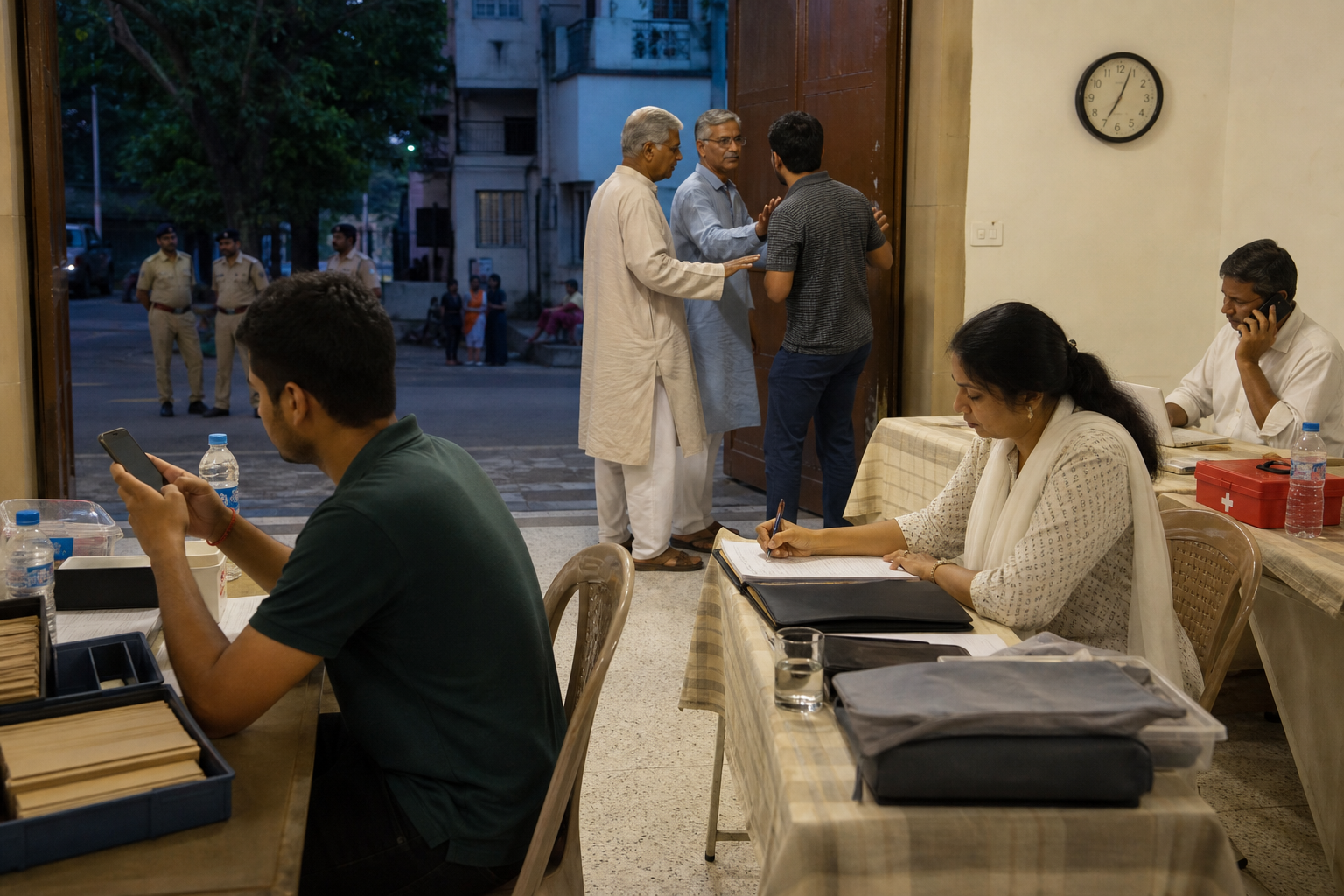
You do not owe passivity when a sacred symbol is desecrated, worshippers are threatened, or a procession is attacked. You do owe discipline. The first day is when incomplete information spreads fastest, identities harden into communal labels, and demands for lawful accountability can be displaced by calls for retaliation.
Use this response sequence:
- Preserve without amplifying. Save the original link, upload time, visible location markers, and surrounding context. Do not repeatedly forward inflammatory footage merely to express outrage; every new share republishes the provocation and may expose wrongly identified people to harassment.
- Create three factual headings. Record what is confirmed, what is claimed, and what remains unknown. Put every assertion under one heading. Move it only when a document, official statement, or verifiable evidence justifies the change.
- Name conduct, not a population. Describe the alleged act and the identified individuals. Avoid captions that attribute one person’s conduct to an entire religious community.
- Ask for a defined remedy. A complaint should identify the act, evidence, affected interest, and requested response. Requests such as preserving footage, authenticating a video, surveying a parcel, protecting a procession route, or investigating named conduct are more effective than an undefined demand to take strict action.
- Use one accountable spokesperson. A temple committee, neighbourhood association, or advocacy group should designate someone to issue verified updates. Multiple unofficial voices produce contradictions that rumours can exploit.
- Open a police-community channel. For a festival or procession, agree in advance on route, timing, contact persons, crowd-management responsibilities, and a method for correcting rumours. These arrangements protect the right to worship without conceding control to anyone seeking disruption.
- Publish the next checkpoint. State when the next official update, survey, hearing, liaison meeting, or review is expected. A visible process reduces the vacuum in which fabricated explanations thrive.
If physical danger is imminent, prioritise safety and contact the responsible local emergency or law-enforcement authority. Do not organise an improvised confrontation at the disputed site. That can endanger worshippers, contaminate evidence, create new offences, and shift attention from the original grievance to the resulting clash.
For processions and high-footfall festivals, prevention is concrete: settle routes and timing before the event; identify police, organiser, trader, and resident contacts; establish a verified channel for rapid corrections; use community volunteers with defined roles; and direct enforcement toward individual misconduct. The Bahraich disturbances associated with Durga immersion show why these arrangements belong before the crowd gathers, not after violence has begun.
The dharmic principles are practical here. Satya requires that no claim travel further than its proof. Ahimsa rejects retaliatory harm without requiring surrender before aggression. Rajadharma requires the state to protect worship, public order, and individual rights through impartial authority. Applied together, they support a response that is morally clear about desecration or violence and procedurally careful about who is legally responsible.
Key takeaways for judging the next religious controversy
- Classify the dispute before judging the response: speech, land, conversion, violence, ordinary policing, and preventive detention raise different questions.
- Treat an arrest, detention order, survey, or case registration as an official act, not as a final finding of guilt or ownership.
- Demand individual accountability. Do not convert allegations against named people into collective accusations against a religious community.
- For land, insist on parcel-specific records, reconciled maps, a georeferenced survey, public notice, reasoned decisions, and access to review.
- For conversion allegations, separate offensive speech from evidence of coercion, inducement, misrepresentation, or a distinct visa issue.
- When extraordinary detention is used, ask about the present threat, necessity, proportionality, duration, statutory threshold, and independent review.
- Preserve inflammatory material as evidence without turning your own network into its distribution system.
- Demand equal standards from the state: neither indifference to anti-Hindu provocation nor punishment untethered from evidence and procedure.
Before your community shares, protests, petitions, or litigates, prepare a one-page incident sheet with six fields: verified event, alleged conduct, affected right or interest, present official action, missing evidence, and next review point. If that page cannot yet be completed, the immediate job is verification. If it can, you have the foundation for a focused complaint, a lawful public position, and accountability that can withstand scrutiny.
References
- Hindu Janajagruti Samiti – Essential Analysis of Telangana Rahmatnagar Waqf Land: Discover Paths to Peaceful Resolution
- Hindu Existence – Complete Report: TN Police Arrest Four over Lord Rama Effigy Burning
- Hindu Existence – Essential Briefing: NSA Invoked in Bahraich
- Hindu Existence – Essential Brief: US Citizen’s Maharashtra Arrest and Conversion Claims
