

If you watched the Raipur clips and felt pulled in two directions, the central question is simpler than the online argument makes it: can you take concerns about coercive religious conversion seriously while unequivocally rejecting an attack on Christmas decorations? Yes. A principled response requires both.
On 25 December 2025, reports and social-media clips from Raipur indicated that Christmas decorations at a city mall were vandalised during a Chhattisgarh Bandh called over alleged increases in Christian conversions. The word alleged matters. The reported damage and the wider conversion charge are different claims, requiring different evidence and different remedies.
Start with the distinction that prevents escalation
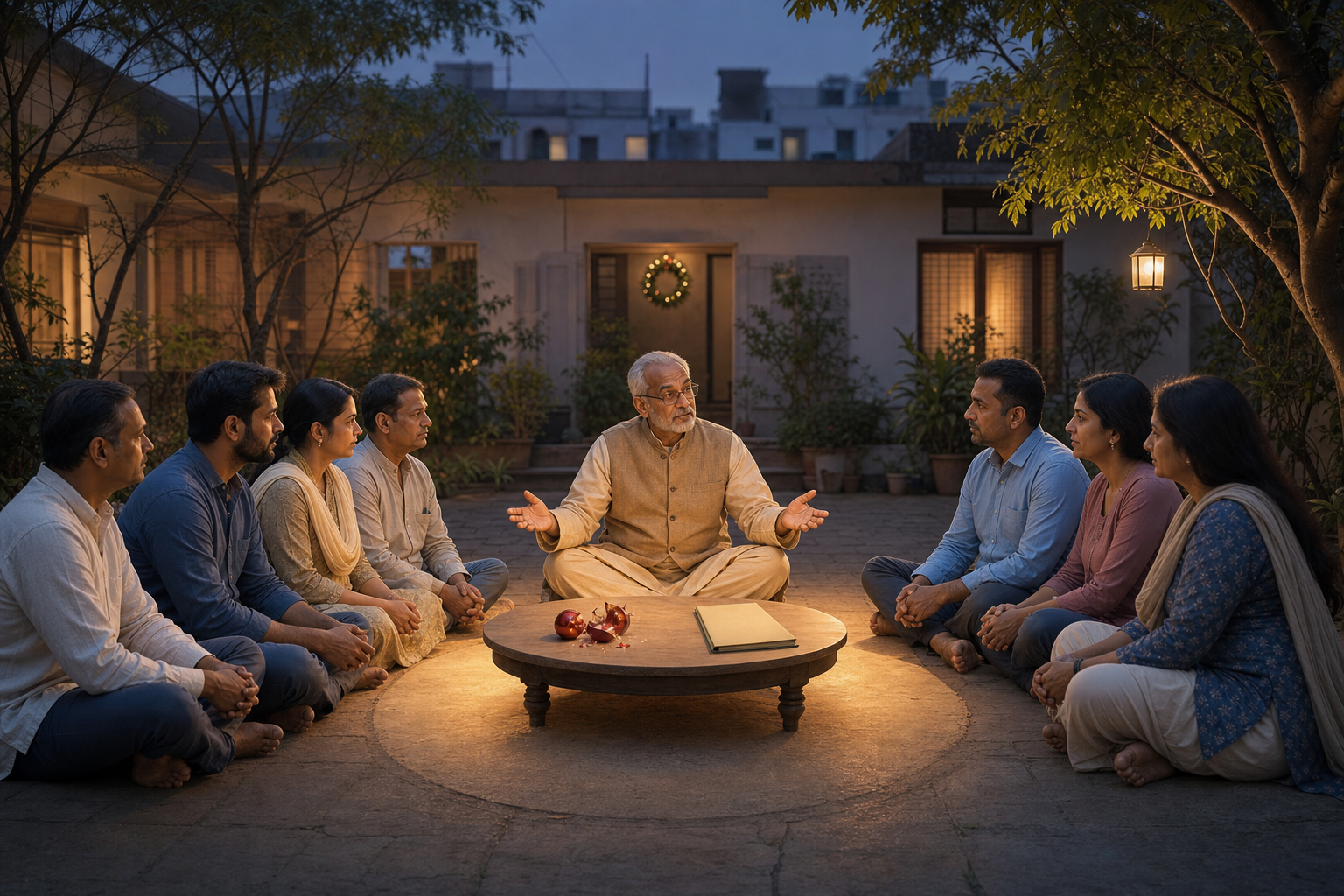
A Christmas display is not evidence of conversion activity. It cannot answer whether coercion occurred elsewhere, and the families, workers or shoppers near it cannot be made responsible for an allegation against unidentified people. Once a public symbol is treated as a substitute for evidence, collective blame becomes almost automatic.
Keep three questions separate whenever you discuss Raipur or a similar incident:
- What happened at the immediate scene? Identify the conduct, the people directly involved and the available evidence. Do not infer more from a short clip than it actually shows.
- What conversion activity is being alleged? A serious complaint needs identifiable events, affected persons and material that investigators can examine. A general atmosphere of suspicion is not enough.
- How should neighbours of different faiths be treated? They remain individual citizens, not representatives who can be punished for everything attributed to their religious community.
A bandh can express political opposition. It does not suspend the ordinary protection owed to people and property. India’s constitutional framework accommodates peaceful assembly as well as the profession, practice and propagation of religion; intimidation and vandalism do not become protected merely because they occur during a protest.
The most useful public position is therefore a two-sentence one: allegations of coercion deserve an evidence-based investigation, and vandalising a Christmas display is wrong. Say both sentences without inserting a but between them. That small choice prevents one concern from being used to erase the other.
What a Dharmic response requires in practice
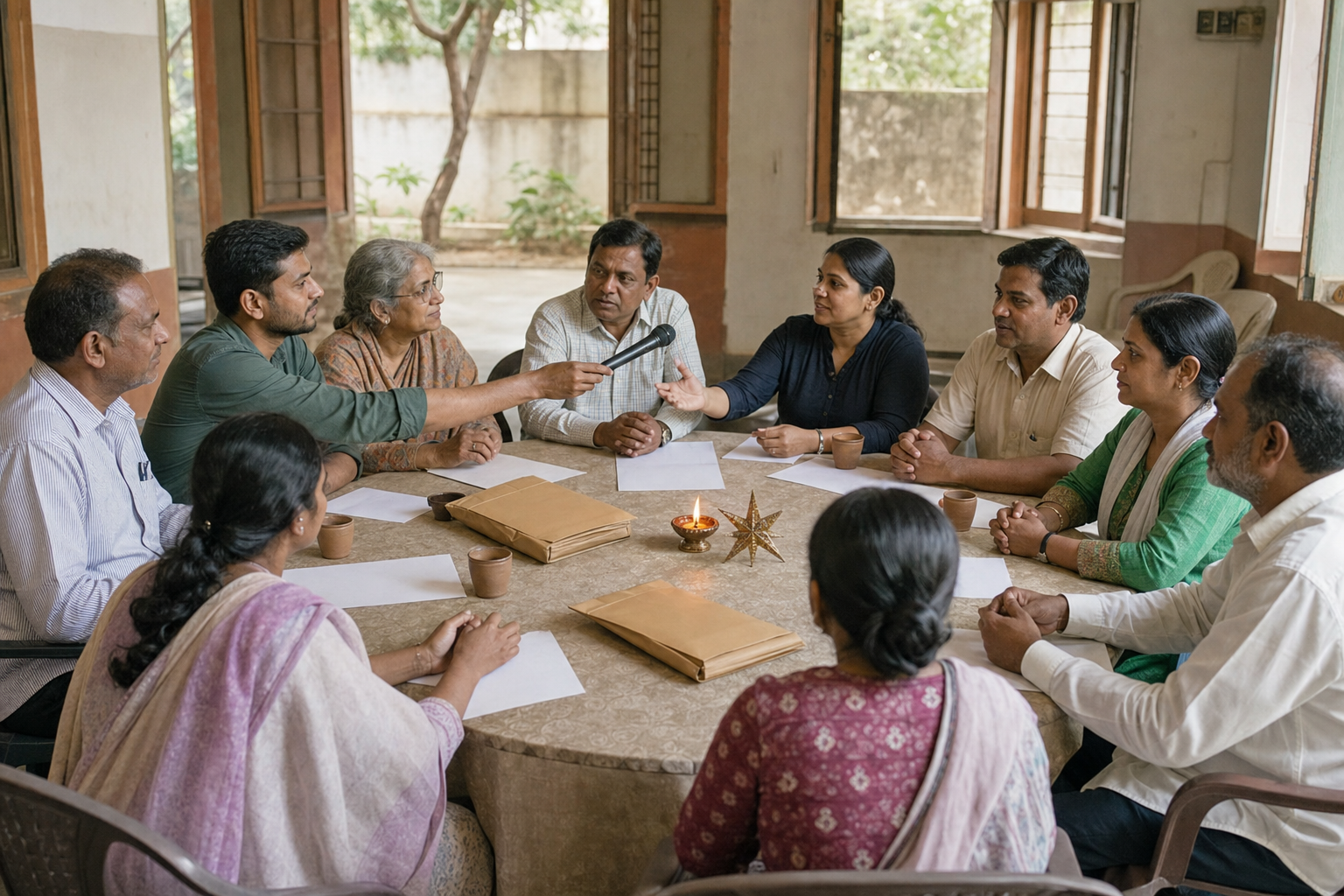
Dharma does not demand indifference to alleged wrongdoing. It does demand that the response not become another wrong. A legitimate end cannot cleanse intimidation, destruction or collective humiliation used as its means.
Ahimsa is especially relevant here because it is more demanding than simply avoiding a physical assault. In public life, it asks you to resist conduct that creates fear, invites retaliation or turns an uninvolved family into a symbolic enemy. It also asks you to intervene wisely. If a crowd is damaging property, do not stage a personal confrontation that may increase the danger. Move away from the immediate scene, help children or vulnerable people reach safety, and alert venue security or the appropriate emergency authorities.
Sarva dharma sambhava is not a requirement to erase theological differences or pretend that every religious claim is identical. As a civic principle, it means that disagreement does not cancel another person’s dignity or peaceful place in society. Protecting a Christian family’s ability to mark Christmas does not weaken Hindu self-respect. Insisting that conversion complaints receive a fair hearing does not authorise hostility toward Christians as a group.
This is where restraint becomes a form of courage. Anger can make destruction look decisive for a few minutes, but the actual consequences fall on workers, shoppers, property owners, police, local residents and relations between communities. Ahimsa interrupts that chain before a symbolic confrontation becomes reciprocal injury.
Key takeaways when a communal clip reaches you

- Pause before forwarding it. Check whether you have the original upload, a clear location, a reliable date and independent confirmation. A caption can attach an old or partial clip to a new claim.
- Separate observation from interpretation. You may be able to see property being damaged without being able to establish who organised it, why each person was present or what happened outside the frame.
- Do not identify people from appearance alone. Avoid publishing names, affiliations or accusations unless reliable evidence connects a person or organisation to the conduct. Misidentification can endanger an innocent person and create legal exposure.
- Do not answer provocation with provocation. Reject calls for retaliation, collective punishment or attacks on another festival. Ask group administrators to remove threats, doxxing and unverified accusations.
- Preserve evidence if you witnessed the event. Retain the complete, unedited recording; note the time and precise place; and provide the material to the property owner or lawful investigators. Keep the original even if you make a shorter copy for easier transfer.
- Use language that lowers heat without hiding the issue. State what is confirmed, label what remains alleged, condemn the specific wrong and ask for a lawful inquiry into the separate complaint.
- Help repair the civic space. Once the area is safe, support restoration or a community reassurance effort through legitimate local organisers. The purpose is to show that intimidation will not define the neighbourhood.
Take conversion concerns seriously without targeting Christians
The conversion debate becomes unmanageable when voluntary religious choice, ordinary religious outreach and coercive conduct are treated as one undifferentiated thing. Concern about coercion must be attached to a specific alleged act. Without that discipline, a charge against one person can expand into suspicion of every church, Christian school, Christmas gathering or family displaying a religious symbol.
If someone presents a conversion allegation, ask five practical questions:
- What exact conduct is alleged? Replace broad phrases with a description of the claimed threat, deception, pressure or other coercive act.
- Who says they were affected? Protect a complainant’s privacy where necessary, but distinguish an account from the affected person from a rumour repeated by outsiders.
- What evidence can be examined? Dates, locations, complete messages, records and first-hand witness accounts are more useful than a viral caption or an anonymous generalisation.
- Which lawful institution can investigate? Submit the complaint through the proper channel and preserve evidence. A crowd at a mall cannot test testimony or determine responsibility.
- Is the proposed response directed at the alleged act? Investigation and due process address an allegation. Destroying unrelated decorations does not.
This method protects everyone. Christians are not required to prove their collective innocence whenever an allegation circulates. Hindus who bring documented complaints should not be dismissed merely for raising a difficult issue. The test must remain the same: examine conduct, evidence and individual responsibility.
Vague allegations followed by symbolic attacks can actually weaken credible complaints. Public attention shifts from the alleged coercion to the visible vandalism, witnesses become fearful, positions harden and careful fact-finding becomes more difficult. If you want a conversion complaint taken seriously, keep it precise, documented and separate from festival confrontation.
Build a local response before the next sensitive occasion
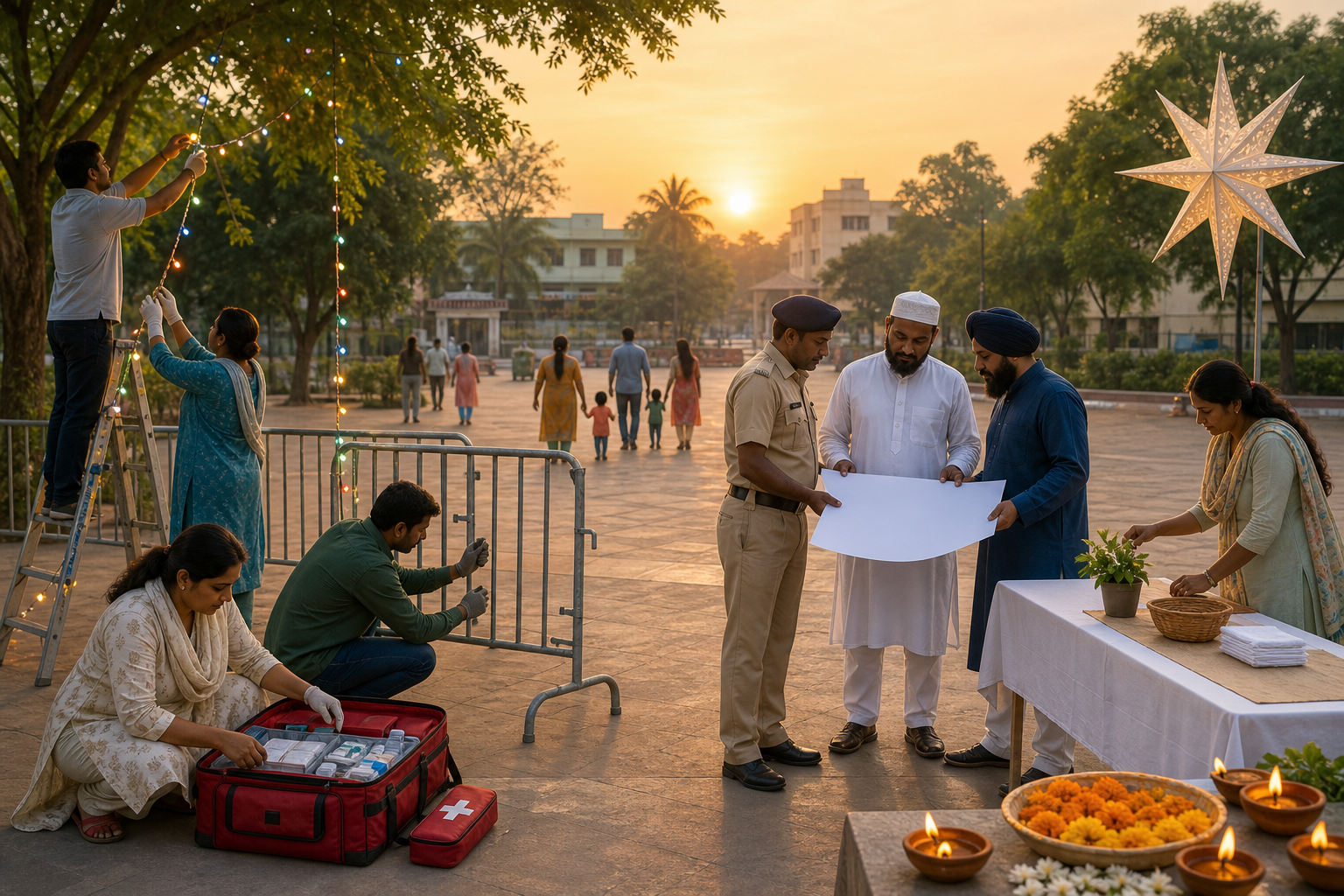
Communal harmony cannot depend on citizens improvising after a crowd has formed. Mall managers, resident groups, religious leaders, traders and local authorities need a simple response arrangement before a bandh or major festival. It need not be elaborate, but everyone should know whom to contact and who is authorised to communicate verified information.
A workable local protocol has four parts:
- Before the event: establish a contact chain linking venue management, community representatives and the responsible public-safety authorities. Review exits, staff responsibilities and the procedure for protecting families without turning worshippers or festival visitors into objects of suspicion.
- During the first confusion: issue a short factual update that states what is confirmed, what remains unknown and which safety instructions apply. Update it when facts change instead of allowing multiple unofficial accounts to compete.
- After an incident: preserve CCTV and witness material, assess and repair damage, and pursue responsibility person by person. Public communication should avoid blaming an entire religious or political community for unidentified actors.
- For the underlying dispute: create a separate, structured forum for conversion complaints. It should accept evidence, direct complainants to lawful processes, correct rumours and allow community representatives to raise concrete concerns without a crowd setting the terms.
A useful dialogue meeting also needs an agenda. Begin with immediate safety, verified facts, damage and restoration. Deal next with misinformation and reassurance for affected families or workers. Schedule the wider conversion question separately, with time for documents and specific complaints. Trying to adjudicate a complex religious dispute during an emergency meeting usually rewards the loudest accusation rather than the strongest evidence.
The standard worth carrying forward is firm but uncomplicated: no coercion, no vandalism and no collective blame. When another provocative clip arrives, slow its circulation, protect the people in front of you and insist that every allegation travel through evidence and due process. That is how you defend both Dharma and civic peace without surrendering either.
References
