
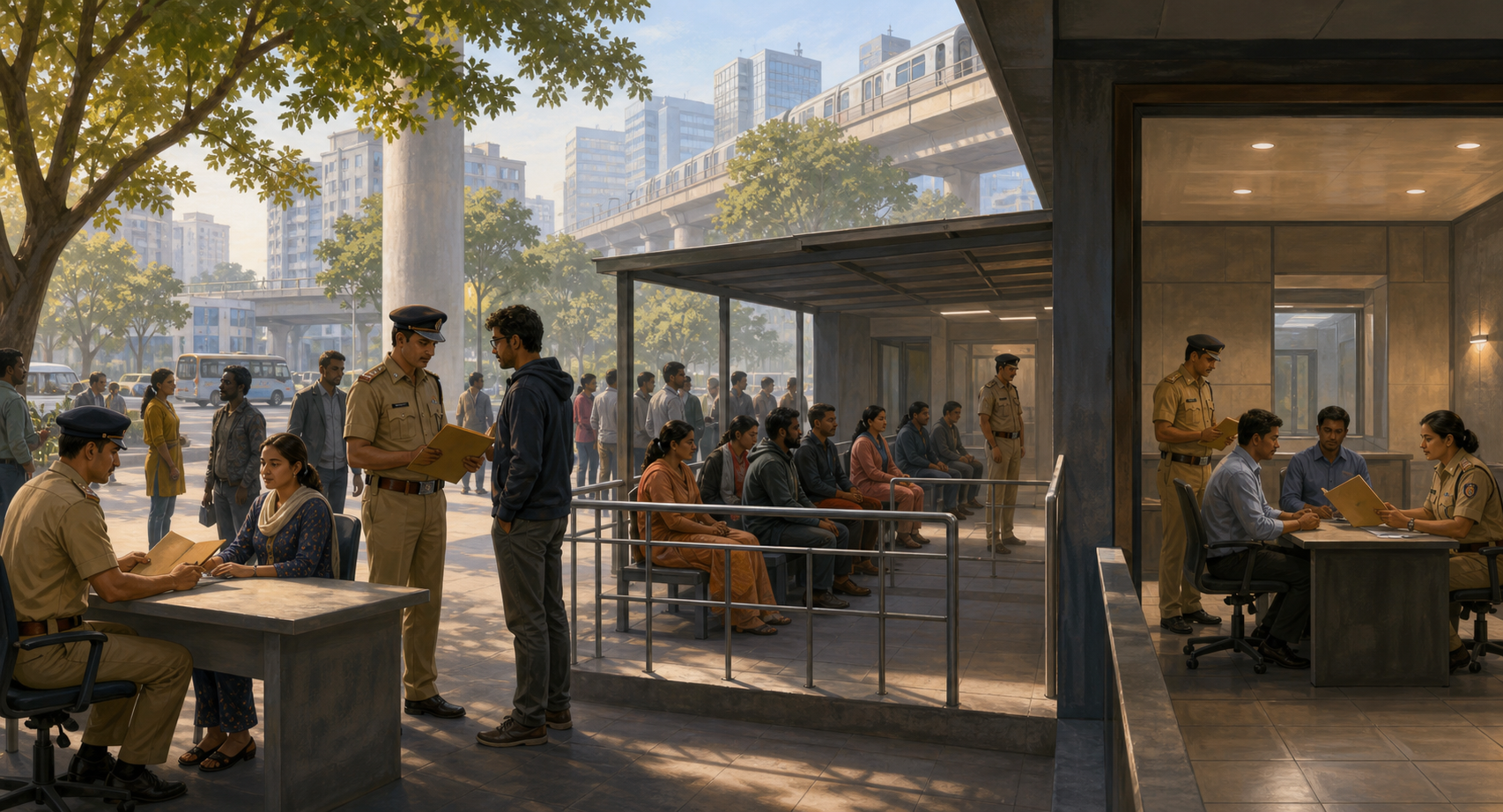
If you saw the figure 2,894 and assumed Bengaluru police had proved that many people were living in the city illegally, you have read more into the number than the operation establishes. You should take the security concern seriously, but you should also distinguish a person being screened from a person whose unlawful status has been established.
The reported figures describe different stages of police action: more than 3,000 people were questioned, 2,894 Bangladeshi nationals were identified and detained for verification, and 53 people were arrested after reportedly having no passport, visa, or citizenship documents. That is a substantial enforcement exercise. It is not proof that everyone questioned was undocumented, guilty of an offence, or liable to deportation.
Read the operation as an evidence ladder, not one total

Operation Mukta involved more than 33 special teams and 295 police personnel. Searches were conducted simultaneously at 29 strategic locations and around 40 additional locations, including sheds, rented homes, construction sites, and buildings under construction. The scale tells you that this was a planned internal-security operation, not an isolated document check.
It does not make every number interchangeable. When you encounter a claim about undocumented immigration, place it on the correct rung of the evidence ladder:
- Encountered or questioned: Police have made contact with a person. No conclusion about nationality or immigration status necessarily follows.
- Unable to produce documents immediately: The person requires further verification. This is not automatically proof of foreign nationality or illegal entry.
- Records under examination: Police compare identity details with passport, visa, citizenship, nationality, and background information.
- Arrested as an alleged illegal immigrant: Police believe they have a basis for legal action. Arrest is still not the same as a final judicial or administrative determination.
- Removal or other final action: Authorities must establish nationality and unlawful status and then follow the applicable legal process.
Within the Electronic City division, preliminary verification identified 15 alleged undocumented Bangladeshi nationals, reportedly from the Bagerhat and Khulna districts of Bangladesh. The word “preliminary” matters. It signals an investigative finding that still requires proper verification and legal handling.
The honest formulation is therefore not “2,894 illegal entrants were caught.” It is that police reported identifying 2,894 Bangladeshi nationals during a large verification drive, while 53 people were arrested for allegedly lacking the required documents. Keeping those categories separate strengthens the security case because it prevents an inflated claim from replacing evidence.
The map shows where police searched, not a citywide prevalence rate

The operation concentrated on fast-growing parts of Bengaluru containing construction activity, rented accommodation, and informal settlements. The area-level figures help you understand the deployment, but they do not constitute a random survey of the city.
| Area | Reported screening or identification | Reported outcome |
|---|---|---|
| Begur | 339 suspected persons identified across four searched locations | Eight arrested for reportedly having no documents |
| Parappana Agrahara | 355 people questioned | Seven alleged illegal Bangladeshi nationals detected |
| Electronic City | 550 suspected persons identified | Division-wide preliminary verification identified 15 alleged undocumented Bangladeshi nationals |
| Bandepalya | 244 suspected persons identified | No area-specific arrest total provided |
| Hulimavu | 219 suspected persons identified | No area-specific arrest total provided |
| Hebbagodi | 202 suspected persons identified | No area-specific arrest total provided |
| Mahadevapura, K.R. Puram, and Kadugodi | More than 1,000 people reportedly taken for questioning in the Whitefield division | Identity and immigration verification continued |
These figures reveal where police directed their teams and how many people entered the screening process. They do not tell you what proportion of all residents in those localities are undocumented. A targeted search will naturally produce a concentration around the places targeted.
Use the map to notice where document verification and lawful tenancy practices may need attention. Do not use it to brand an entire neighbourhood, construction workforce, linguistic group, or class of tenants as foreign. That leap is unsupported and creates noise that can obstruct real enforcement.
A pro-Bharat response has two non-negotiables
Bharat has the right and duty to enforce its borders, identify people residing without legal permission, and act when illegal entry or unlawful residence is established. Citizens are also entitled to expect that the state will establish identity and nationality before imposing severe consequences. Firm enforcement and due process are not rival positions. Each makes the other credible.
A Bangladeshi national may be lawfully present with a valid passport, visa, or other authorization. An Indian citizen or lawful resident does not become an illegal foreign national merely because a document is unavailable at the instant of a street or workplace check. Records, not impressions, must settle the question.
Religion, clothing, Bengali speech, a surname, poverty, or employment in construction cannot prove nationality or immigration status. Bengali is spoken by Indian citizens as well as Bangladeshis. Profiling people on those grounds risks false accusations, diverts police attention, and makes reliable public cooperation harder.
The disciplined position is straightforward: verify every credible case, prosecute offences that can be proved, and pursue removal where unlawful residence and nationality have been established under the applicable process. At the same time, do not turn an internal-security operation into permission for collective blame. Dharma does not require softness toward illegality, but it does require that punishment follow truth rather than prejudice.
What you should do when you have a credible concern
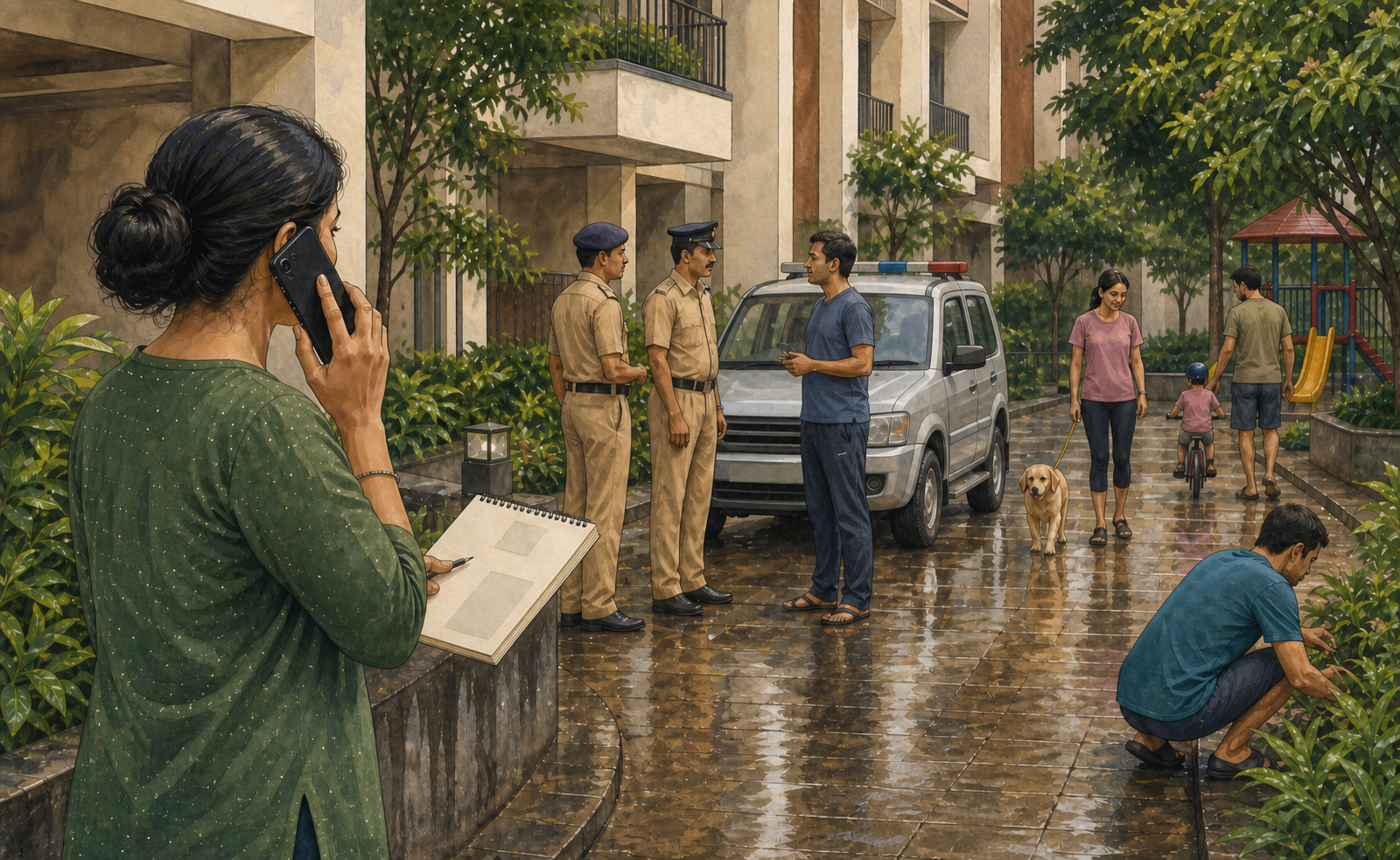
You can help lawful enforcement without trying to become an investigator. The safest approach is to report concrete information and let trained authorities verify it.
- Separate danger from an immigration suspicion. If there is an immediate threat, violence, or another active offence, contact police immediately and describe that conduct. Do not delay an urgent report while trying to determine nationality.
- Identify the factual basis for your concern. Ask what you actually observed. Language, religion, occupation, dress, or residence in a shed is not enough. A direct admission about nationality or an apparent document discrepancy is different from a rumour passed through a neighbourhood group.
- Record only what you can lawfully observe. Note the location, time, conduct, and other details you personally witnessed. Do not trespass, impersonate an official, demand documents from strangers, or collect private information through intimidation.
- Give the information to the nearest police station. Bengaluru police specifically urged residents to report foreign nationals who cannot produce valid documents or whose presence raises a genuine concern. State clearly which details are first-hand and which, if any, came from someone else.
- Keep ordinary records consistently. If you are a landlord, contractor, or employer, retain the tenancy, identity, and employment records lawfully required for everyone in the same category. Do not invent a special procedure based on religion or mother tongue. If you are uncertain about your legal duties, ask the local police or a qualified lawyer before taking action.
- Do not seize papers or restrain anyone. Confiscation, threats, assault, or private detention can harm an innocent person and expose you to legal consequences. Pass the information to the authorities and step back.
- Do not publish an accusation online. A face, name, address, or workplace posted with an unverified allegation can trigger harassment and compromise verification. Share evidence with police, not with a social-media crowd.
If you or someone working for you is arrested, threatened with removal, or accused of using false documents, the stakes have moved beyond informal advice. Preserve genuine records and seek a qualified lawyer. Do not fabricate, alter, destroy, or borrow identity papers in an attempt to solve the problem.
Key takeaways
- The figure 2,894 refers to people identified and detained for verification; it must not be presented as 2,894 completed findings of illegal residence.
- Police reported arresting 53 people who allegedly had no passport, visa, or citizenship documents.
- The concentration of checks in construction areas, rented housing, and informal settlements reflects a targeted operation, not a citywide population survey.
- Nationality and immigration status must be determined from verified identities and records, not religion, language, appearance, or occupation.
- Residents should report concrete facts to the nearest police station and avoid confrontation, private detention, document seizure, or public accusations.
- Effective internal security requires both decisive enforcement against proven illegal residence and protection for people who have not been shown to have broken the law.
If you share the news, use the accurate formulation: police reported identifying 2,894 Bangladeshi nationals during verification and arresting 53 people who allegedly lacked the necessary documents, while further checks continued. That sentence neither minimizes the operation nor claims more than the available facts establish.
Your useful next step is small and concrete. Keep lawful records if you manage housing or workers, report specific evidence through police channels, and refuse to forward claims built on appearance or religion. A secure Bharat is best served when enforcement reaches the person whose violation can be proved and leaves no innocent person carrying someone else’s guilt.
References
