
If you came to the Nuh encounter wondering whether police stopped an armed cattle-smuggling run or whether a dramatic headline has outrun the evidence, keep those questions separate. Nuh police describe a violent interception with tangible recoveries, but criminal guilt and the alleged interstate links still require investigation and judicial scrutiny.
You should treat this as a serious enforcement incident, not as a completed case. That distinction protects gau raksha from rumour, keeps attention on the people actually accused, and makes it easier to judge whether the investigation produces results after the immediate headlines fade.
What police say happened near Beewa village
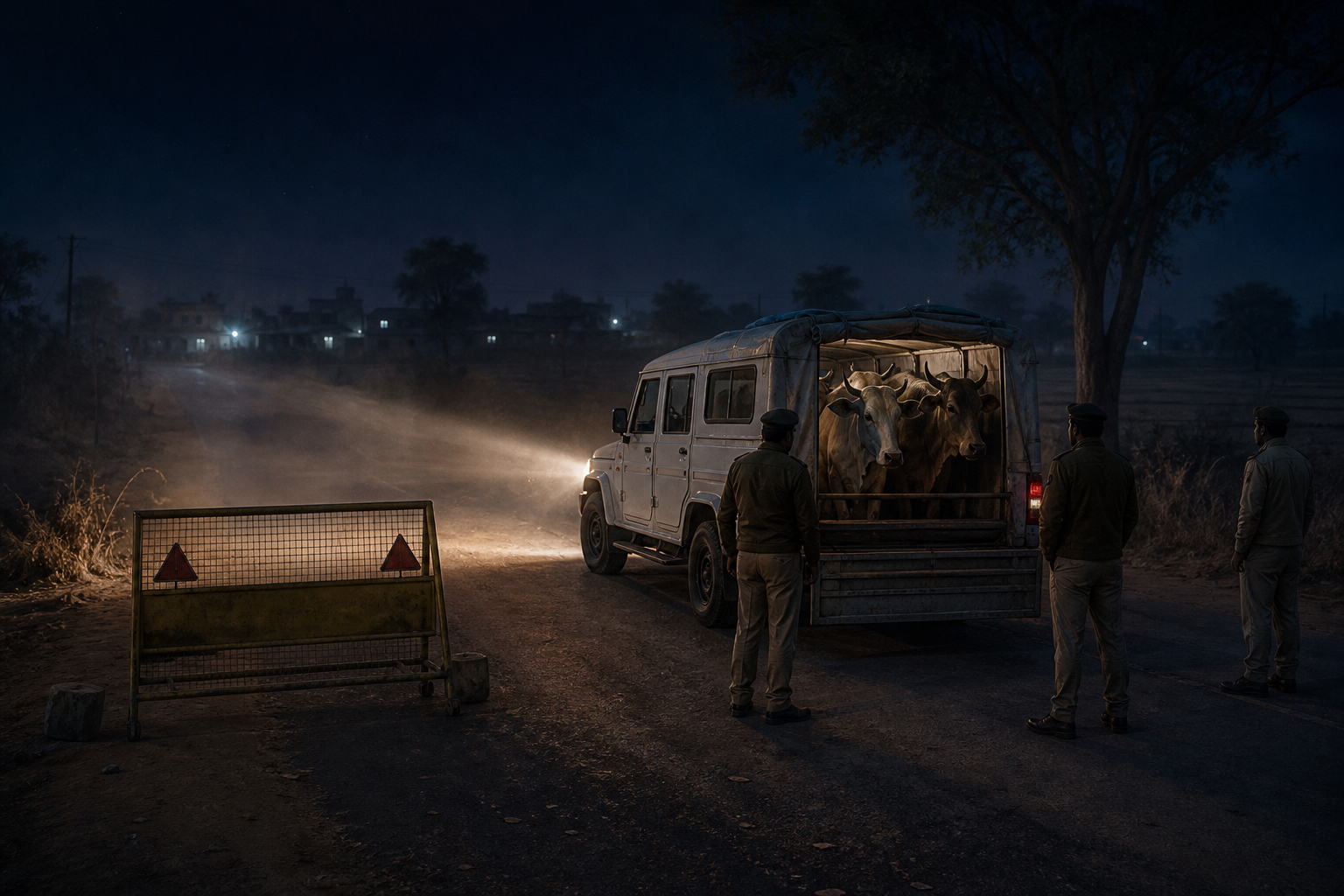
The operation began before dawn on Tuesday, 4 August 2026, after police received information that a Bolero pickup would carry cattle from the Ferozpur Jhirka area towards Rajasthan. A team from the Cow Slaughter Staff established a barricade on a hilly road near Beewa village under Sub-Inspector Mahender Singh.
At approximately 5:15 a.m., the team saw the suspected vehicle approaching. Police say the driver ignored instructions to stop, struck the barricade and continued into the hilly terrain. During the pursuit, an attempted sharp turn ended when the Bolero stalled.
The police sequence then becomes an armed-encounter allegation. The passenger, identified as Sahun, allegedly left the vehicle, fired at the pursuing officers with a country-made pistol and escaped through nearby fields and scrub. The driver, identified as 30-year-old Jabir of Ghatmika village in Rajasthan’s Deeg district, allegedly fired as he tried to flee on foot. Police returned fire, striking Jabir near his left knee. He was disarmed, taken into custody and admitted to the government medical college at Nalhar. No police personnel were reported injured.
Sahun had not been apprehended in the account available after the operation. Police teams were searching for him, while his precise address had yet to be confirmed. His description as an accomplice therefore remains part of the police allegation, not a finding by a court.
What the recoveries establish, and what remains unproved
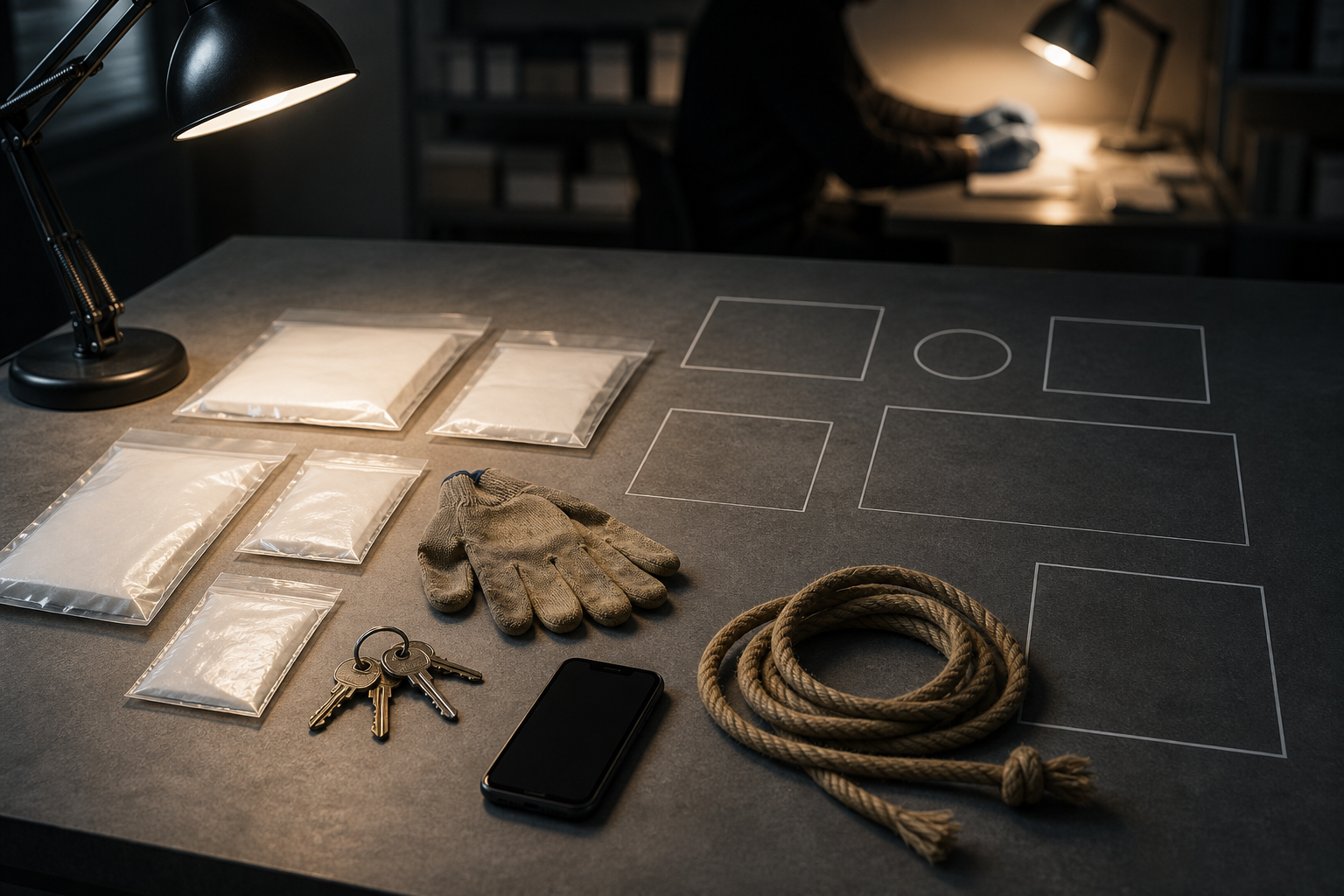
Police recovered three live cattle from the Bolero: two cows and a bull. They were reportedly tied in the cargo area. The animals were seized and transferred to a gaushala in Ferozpur Jhirka for care while the matter proceeds through court.
A country-made .315-bore pistol and two live cartridges were reportedly taken from Jabir. The firearm was to be sent to the Forensic Science Laboratory at Madhuban for ballistic examination. The Bolero was also impounded for examination, including fingerprints and possible links with earlier cases.
These recoveries give investigators physical evidence to test. They do not, by themselves, prove who fired each shot, whether the seized pistol was discharged during this encounter, where the cattle originated, where they were ultimately going, or whether the accused participated in earlier offences. Ballistics, scene evidence, witness accounts, vehicle records and the chain of custody matter precisely because those questions cannot be settled by repetition.
Police have initiated checks for possible antecedents involving cow slaughter, cattle smuggling, weapons and violent offences in Haryana, Rajasthan and Uttar Pradesh. That is an investigative lead, not an established criminal history. Unless an earlier case is identified through an official record, you should not describe Jabir as a repeat offender.
The case was reported as invoking attempt to murder, obstruction or assault against public servants, common intention, Arms Act provisions and Haryana’s cow-protection law. One record detail deserves particular caution: the cited FIR identifier is No. 247/2025 even though the incident is dated 4 August 2026. That year mismatch could be a reporting or record error. Until the official FIR is inspected, do not circulate the number as verified or rely on the reported section list for legal advice.
Why one stalled Bolero points to a larger enforcement problem
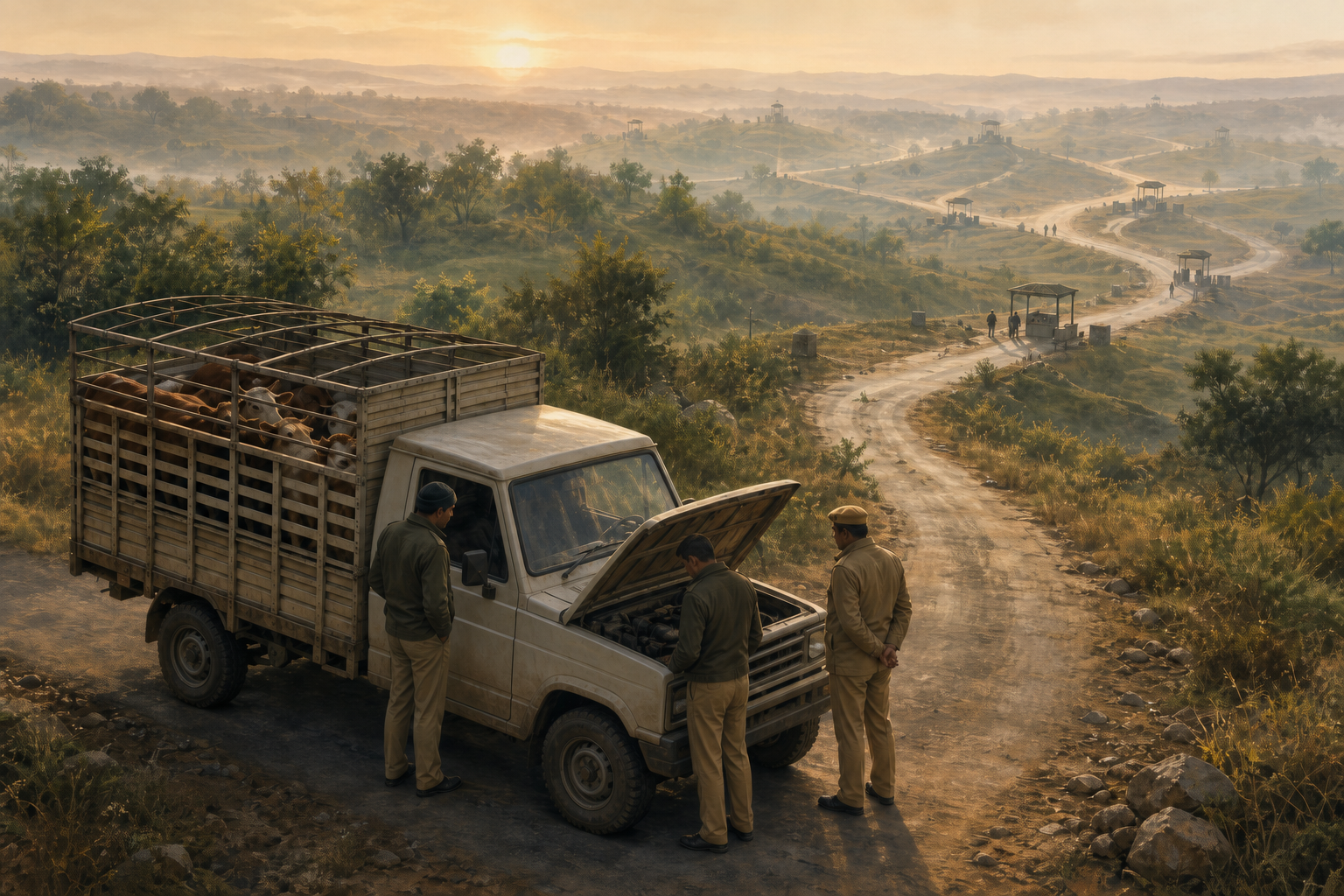
The location helps explain the operational difficulty. The Ferozpur Jhirka area sits near the Haryana-Rajasthan boundary, while hilly roads, fields and Aravali scrub can provide several ways to change direction or escape on foot. The wider corridor, including approaches connected with the Delhi-Mumbai Expressway, has repeatedly appeared in police action against suspected cattle transport.
The reported tally of seven major armed confrontations in fourteen months indicates a pattern serious enough to examine, although it should be understood as a reported count rather than an independently audited dataset. If weapons are repeatedly entering these encounters, roadside interception becomes a public-safety problem as well as a cattle-protection operation.
SP Arpit Jain said inter-state coordination was being used to examine procurement points, transit routes, possible slaughter locations and the final market chain. That is the right scale of inquiry. Stopping one vehicle can save the animals inside it, but it does not automatically identify whoever arranged the collection, financed the trip, supplied the vehicle, received the cattle or profited at the other end.
The most consequential evidence may therefore emerge after the encounter: ownership and usage records for the Bolero, call and movement evidence obtained lawfully, fingerprints, ballistic findings, connections among earlier case files, and information leading to the escaped accused. Watch whether those strands produce arrests and admissible evidence, rather than measuring success only by the number of encounter announcements.
For gau raksha, legality is part of the duty
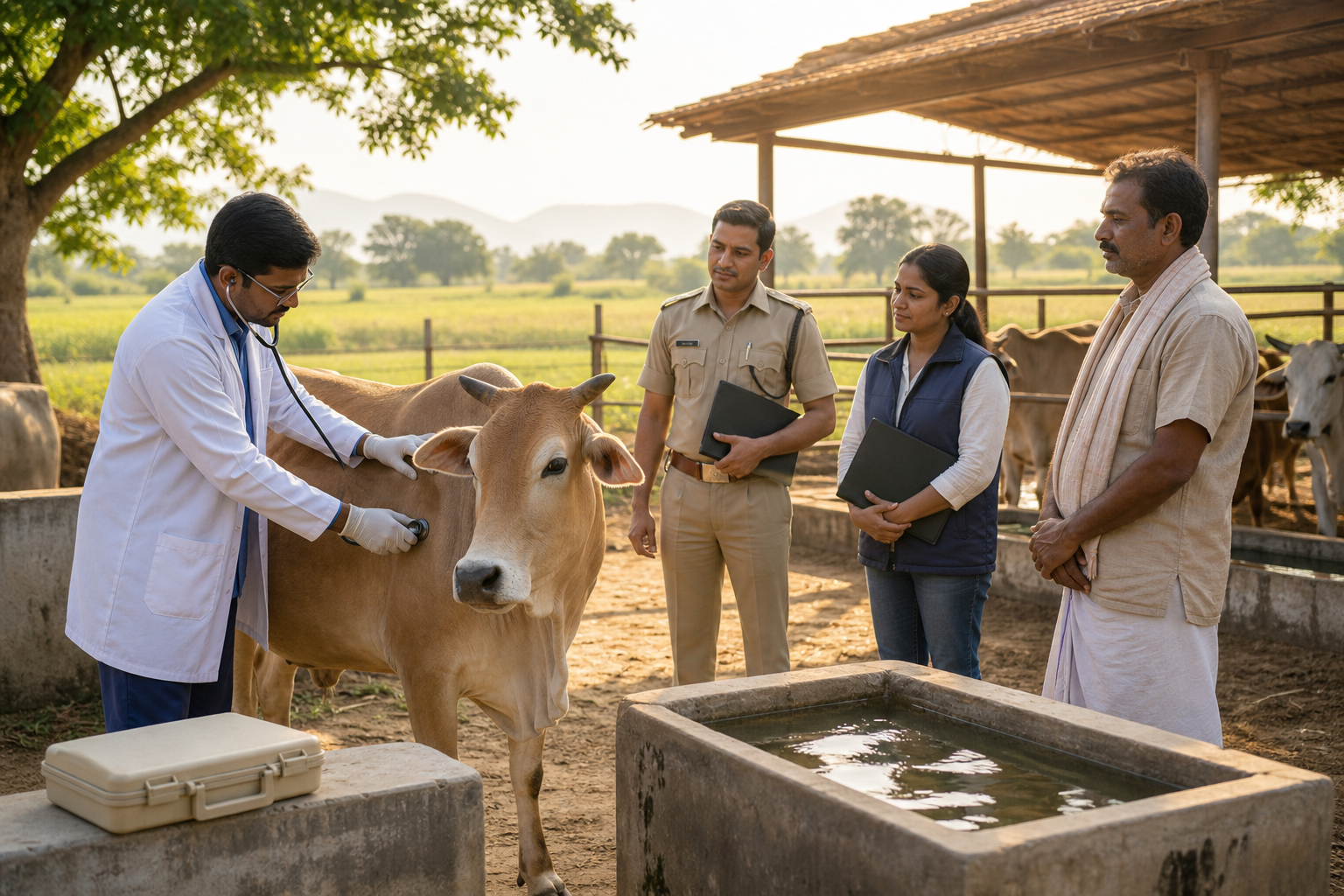
A Dharmic commitment to protecting cattle does not require you to abandon restraint. Ahimsa is not passivity, but neither is it permission for an untrained crowd to chase a vehicle, confront armed suspects or punish someone on the strength of a forwarded message. Lawful action protects animals while preserving evidence and reducing the chance that bystanders, police or accused persons are unlawfully harmed.
If you see suspected illegal cattle transport, keep your distance and contact the police. Note the time, direction of travel, location, vehicle description and registration number only when you can do so safely. Do not create a roadblock, pursue the vehicle or approach its occupants. The Beewa incident involved allegations of gunfire; a civilian intervention in comparable circumstances could end in injury and could also disrupt the official chain of evidence.
When sharing an update, preserve three distinctions. Say “police allege” when describing the firing and intended destination. Say “recovered” only for items the police recorded as seized. Say “pending” for ballistics, antecedent checks, vehicle linkages and the search for Sahun. Those few words let you support enforcement without converting accusation into conviction.
Do not turn two named accused into a verdict against a village, region or religious community. Community identity is not evidence of individual guilt. Collective blame also makes serious scrutiny harder by replacing questions about routes, financiers, vehicles and recipients with anger at people who have not been connected to the alleged offence.
If you want to know whether this operation produced more than an arrest, look for the next documentary milestones: an official and internally consistent FIR record, the ballistic result, the vehicle examination, Sahun’s apprehension or verified status, a charge sheet, and subsequent court orders concerning both the accused and the rescued cattle. These are better measures of institutional follow-through than a viral encounter clip or slogan.
Key takeaways
- Nuh police say a pre-dawn interception near Beewa village on 4 August 2026 became an exchange of fire after a Bolero allegedly breached a barricade.
- Jabir was arrested with a gunshot injury to his left knee; Sahun allegedly fired at police and escaped. No officer was reported injured.
- Police recovered three live cattle, a country-made .315-bore pistol, two live cartridges and the Bolero pickup.
- Ballistic findings, vehicle forensics, alleged prior-case links and the wider interstate chain were still under investigation.
- The reported FIR year does not match the incident year, so the official record should be checked before its identifier or legal sections are repeated as settled facts.
- Your useful role is to report safely, share claims precisely, reject collective blame and follow the case through forensic and judicial milestones.
The next meaningful development will not be another round of speculation. It will be a verifiable arrest, forensic result, charge sheet or court order. Direct your attention there, and let disciplined public scrutiny make gau raksha safer, more lawful and harder for an organised network to evade.
References
