

If you have received a message claiming that a Hindutva activist was stabbed to death in Nagpur, your first decision is not whether to forward it. First decide what the message contains: a confirmed fact, a working theory, or a communal accusation. Mixing those categories can endanger residents and weaken the demand for justice.
You do not have to choose between standing with the deceased activist and refusing to condemn an entire community before responsibility and motive are established. A disciplined response insists on safety, evidence, lawful accountability, and timely public information. It gives neither indifference nor rumour room to operate.
What is known about the Gittikhadan incident
On 24 January 2026, tension was reported in Gittikhadan after the alleged fatal stabbing of a Hindutva activist. Additional police patrols were deployed in the area.
Initial police inputs cited in local reporting treated the incident as a personal dispute with possible communal undertones. Those words describe lines of inquiry, not a settled finding. The motive remained unconfirmed while the investigation continued.
That is the responsible factual boundary. The stabbing allegation is one question. The motive is another. The resulting tension is a third. None can be used as automatic proof of the others.
If you are reading this after 24 January 2026, check the latest official communication from Nagpur Police and the district administration before making claims about arrests, charges, motive, or the present status of the case. An old screenshot remains old even when somebody forwards it today.
Key takeaways
- A Hindutva activist was reportedly killed in an alleged stabbing in Gittikhadan, but the motive had not been established.
- A personal dispute and possible communal undertones were both under consideration. Neither description was a final conclusion.
- Extra patrols show that authorities were managing a public-order risk; they do not prove why the crime occurred.
- You can demand a thorough investigation without circulating unverified names, accusations, photographs, or calls for retaliation.
- If danger is immediate, leave the area and contact the police or emergency services. Online verification comes later.
Separate the crime, the motive, and the communal aftermath

Communal disputes become harder to understand when three separate questions are compressed into one slogan. Keep them apart.
- What happened? This concerns the physical act, the identity of the deceased, the location, the sequence of events, and the evidence available to investigators.
- Why did it happen? This concerns motive. A personal grievance, communal hostility, political animus, or a mixture of factors cannot be established merely from the identities of the people involved.
- What happened afterward? This concerns public reaction: fear, gatherings, rumours, threats, police deployment, and the possibility of retaliatory violence.
A crime can produce communal tension before a communal motive has been proved. Equally, an early reference to a personal dispute cannot logically rule out every other factor while the investigation is incomplete. The honest answer may temporarily be that the motive is unknown.
This distinction protects the pursuit of justice. If activists attach an unproved motive to the case, opponents can use that overstatement to dismiss legitimate concerns about the killing itself. If authorities or commentators prematurely remove every possible communal dimension, public trust can also suffer. Evidence must decide the issue.
Watch the verbs used in viral messages. There is a substantial difference between police examining a possibility, police alleging a motive, and a court finding facts after evidence is tested. A message that silently changes one verb into another is not giving you an update. It is recruiting you into its conclusion.
Use a verification routine before sharing any claim

Speed feels useful during a tense incident, but an unverified forward can move faster than any later correction. Use the same short routine every time, including when a claim supports what you already suspect.
- Find the original item. A cropped screenshot, anonymous voice note, or copied paragraph is not an original record. Locate the official statement or the identifiable report from which the claim supposedly came.
- Check the date and locality. Confirm that the item concerns Gittikhadan and the same incident. Old videos and unrelated confrontations are often recirculated during periods of tension.
- Identify who confirmed each detail. Distinguish an official police update from a witness claim, an activist statement, and an anonymous social-media assertion. One does not automatically validate another.
- Look for the uncertainty words. Terms such as alleged, possible, initial, and under investigation carry essential information. Do not remove them when paraphrasing.
- Test images and video separately. Check whether earlier copies appear online and whether the surroundings match the claimed location. A real video from another place is still false evidence for this case.
- Ask whether sharing helps anyone. An official safety instruction, a request for a genuine witness, or a verified correction can be useful. Graphic images, communal abuse, and speculative lists of suspects generally are not.
If you personally recorded something relevant, keep the original file and note the approximate time and place. Give it privately to the police rather than editing it into a political montage. Some messaging platforms may compress files or remove useful metadata, so preserve the original on your device. Do not expose a witness publicly without that person’s informed consent.
If you encounter a direct threat or a call for retaliatory violence, preserve the account name, link, time, and an accurate screenshot. Report it to the platform and the police. Do not amplify it through an angry quote-post; that can distribute the incitement to a much larger audience.
Physical safety takes priority. Do not enter a tense locality merely to obtain footage or satisfy curiosity. Follow police movement instructions, avoid crowds whose purpose is unclear, and help children, older people, and anyone with limited mobility move away from a developing confrontation.
A Dharmic response can be restrained without becoming passive
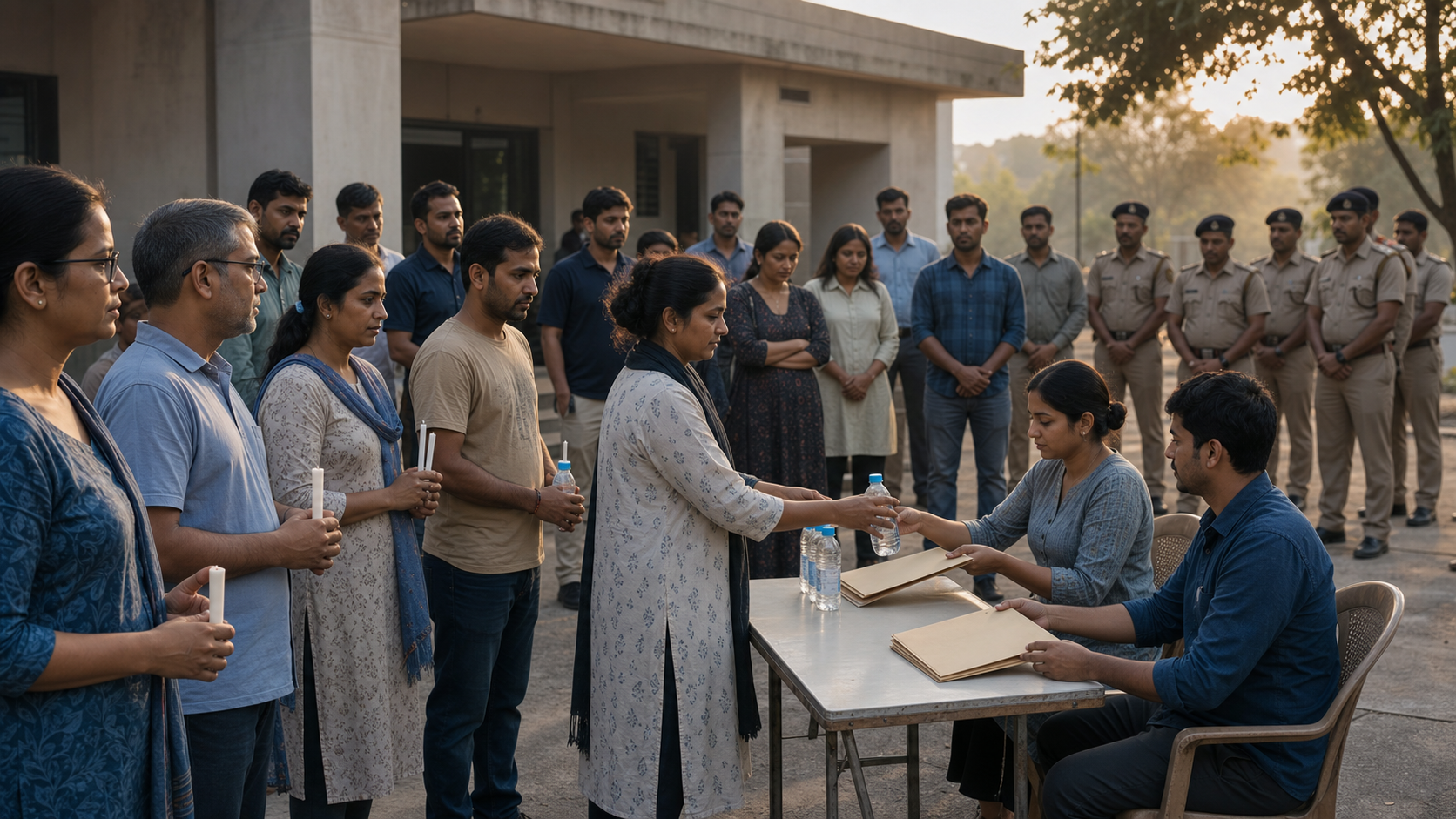
Calls for calm fail when they sound like an instruction to forget the victim or stop asking difficult questions. A credible peace appeal must name every duty: acknowledge the death, seek a prompt and impartial investigation, preserve evidence, hold the responsible person or persons accountable, reject retaliation, and correct false claims.
Ahimsa does not require political silence. It governs the means by which justice is pursued. You may organize, petition, question officials, assist lawful representation, and insist on transparent updates. Doxxing, threats, obstruction, collective punishment, and attacks on uninvolved people cross a different line. They create fresh victims without proving anything about the original crime.
Hindu, Buddhist, Jain, and Sikh community representatives in Nagpur appealed for calm, dialogue, and cooperation with the police. That unity becomes useful when it performs concrete work rather than producing ceremonial language.
- Assign one information lead. A neighbourhood group should have one person archive official updates with dates and links. Corrections should be posted as visibly as the original claim.
- Keep support separate from publicity. Offer practical assistance to the bereaved through trusted contacts. Do not pressure the family for photographs, statements, or political endorsements.
- Create a small contact chain. Trusted residents across communities can compare safety information and stop a rumour before it becomes a crowd. Keep the purpose narrow: verified facts, immediate risks, and corrections.
- Record questions for authorities. Ask about safety arrangements, the procedural status that can lawfully be disclosed, and when the next official update will be issued. Do not turn unanswered questions into invented answers.
- Set rules for public gatherings. Organizers should reject weapons, threatening slogans, communal abuse, and attempts to redirect a lawful demand for justice toward uninvolved homes, shops, or religious places.
A local organization that needs to speak before every fact is known can use wording such as this: Serious violence has been reported in Gittikhadan, and we mourn the deceased activist. We seek a prompt, impartial investigation and accountability under law. The motive has not yet been confirmed. Please rely on official updates and do not circulate unverified names, images, or calls for retaliation.
That statement does not prejudge the investigation, but it does not hide behind vagueness either. It identifies the harm, states the demand, marks the uncertainty, and tells supporters how to act.
If you want justice for the Nagpur activist, make your next action evidentiary and useful: verify one claim, preserve one relevant record, correct one false forward, or ask one precise question of the proper authority. Firmness disciplined by truth is harder to manipulate and far more difficult to ignore.
References
