
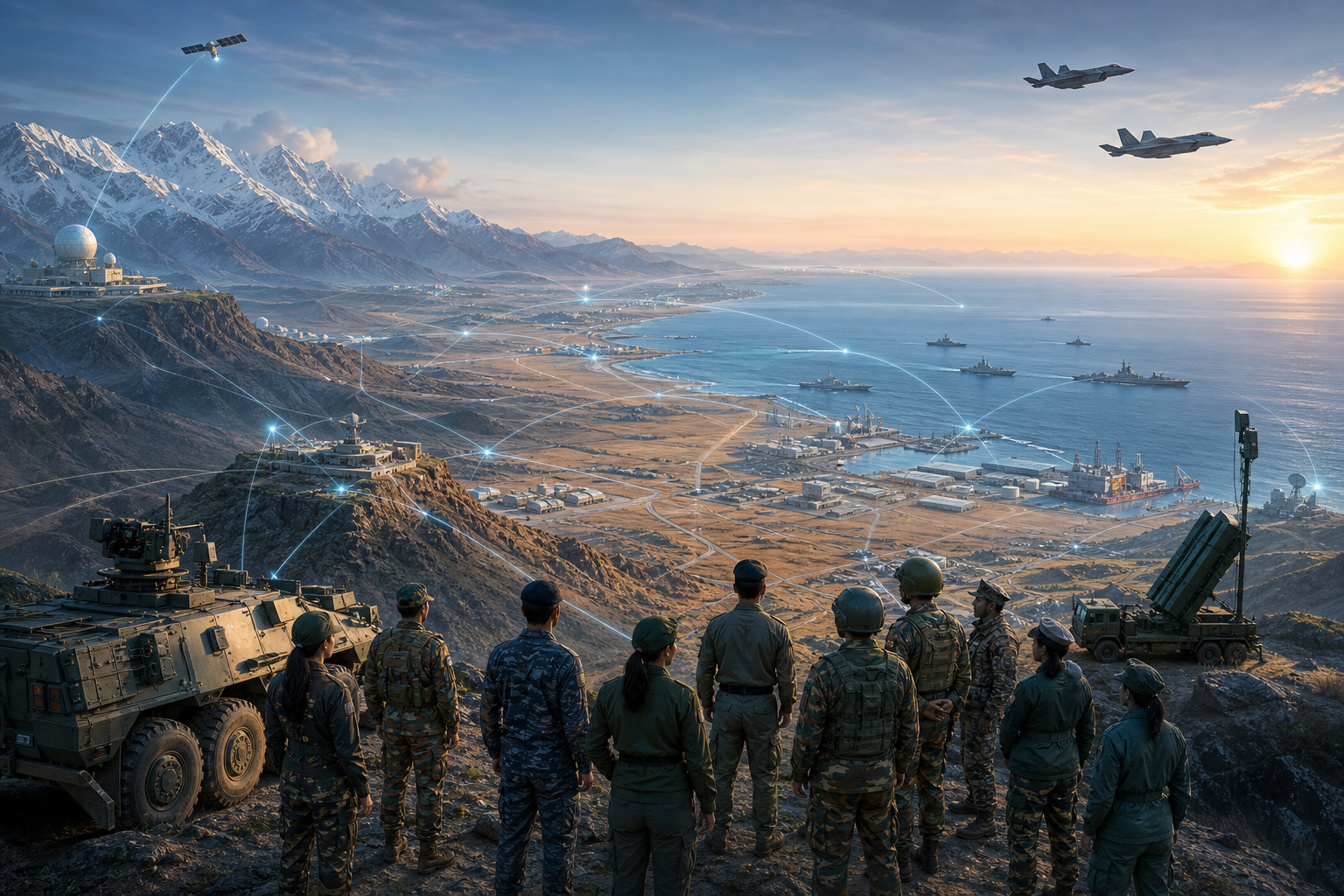
If you’re trying to decide whether India’s military modernisation is real, do not begin with the price of the latest acquisition or the number of platforms unveiled. Ask whether the armed forces can prevent coercion on an ordinary day, mobilise on either border without exposing the other, keep operating after the opening weeks, restore damaged networks and replace what a conflict consumes.
As India marks 80 years of independence and looks towards its centenary, you need a harder standard than modern-looking equipment. Viksit Bharat requires a military that is integrated, sustainable and technologically sovereign – and a public debate capable of distinguishing durable capability from an impressive announcement.
Start with the pressure India must actually withstand
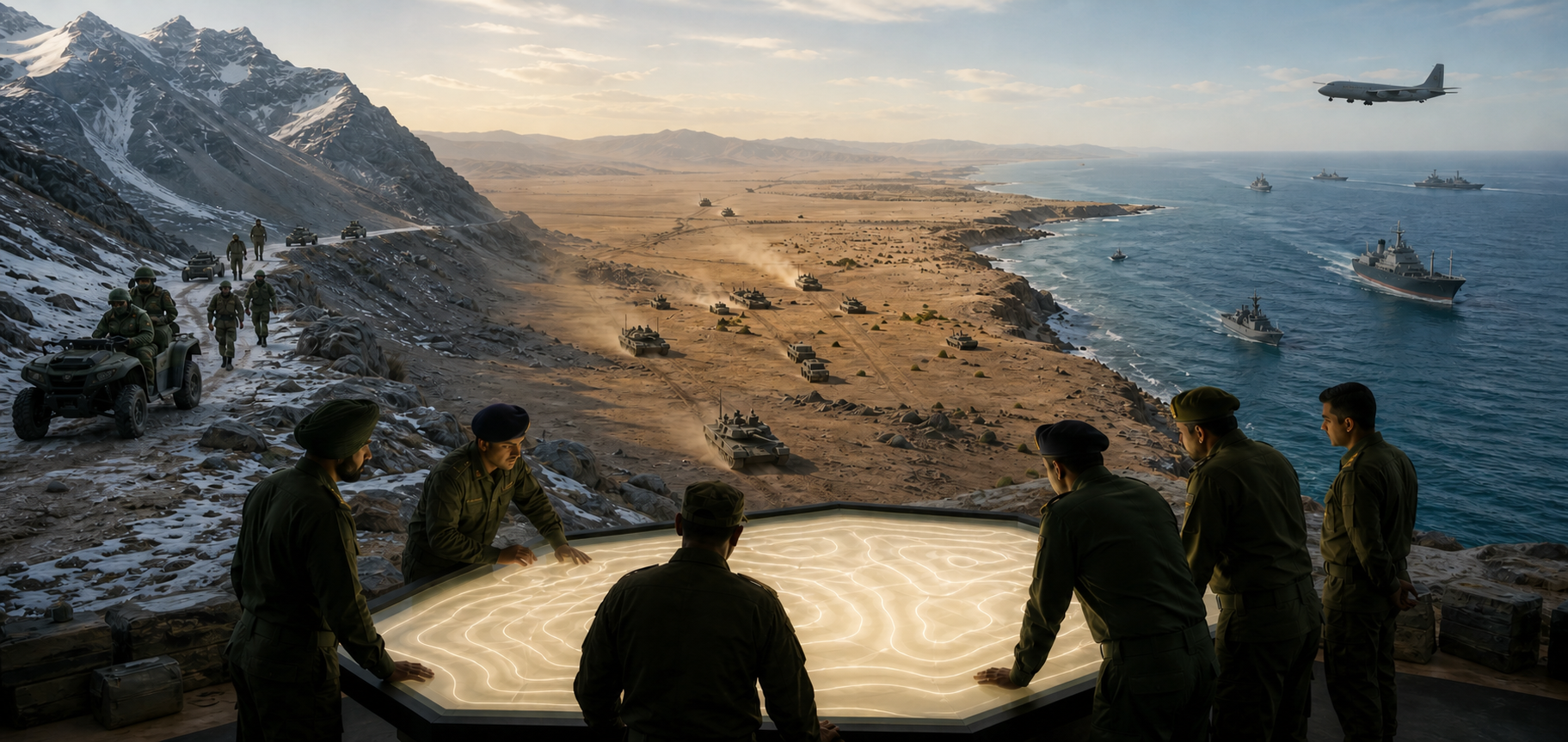
Geography sets the examination. Across the Line of Actual Control, India’s concern is an architecture developed over two decades: hardened positions, all-weather roads, forward airstrips and dual-use border villages capable of supporting a prolonged standoff. Galwan made the operational consequence visible. Infrastructure can enable rapid mobilisation and a sustained high-altitude presence without a crisis becoming a declared war.
On the western front, Indian planning must account for Pakistan’s conventional strike options as well as pressure applied through proxies. These are not two sealed problems. A crisis involving one adversary can change the calculations of the other, which is why the collusive-threat problem has to shape readiness, reserves and force design.
Collusion does not have to mean two armies following one timetable. It can be opportunistic: additional mobilisation, proxy violence, cyber disruption, economic pressure or an information campaign introduced while Indian attention is concentrated elsewhere. The purpose may be to divide forces, slow political decisions or raise the apparent cost of responding. Deterrence therefore has to work continuously, including below the threshold of declared war.
Translate the threat into four mission tests
- Continuous contest: Can India detect and attribute pressure early enough to respond before a disadvantage becomes permanent?
- Rapid crisis: Can forces, ammunition, fuel, communications and medical support reach the required location without leaving another front dangerously thin?
- Extended operations: Can combat power be repaired, rearmed and sustained after the first wave of activity?
- Recovery under disruption: Can command networks, transport links and critical infrastructure continue functioning after cyber intrusion or physical damage?
Use those tests when you assess any new platform or reform. If it solves a narrow equipment gap but does not improve performance in at least one real mission, it may be useful procurement, but it is not yet evidence of transformation.
Endurance matters more than the opening display
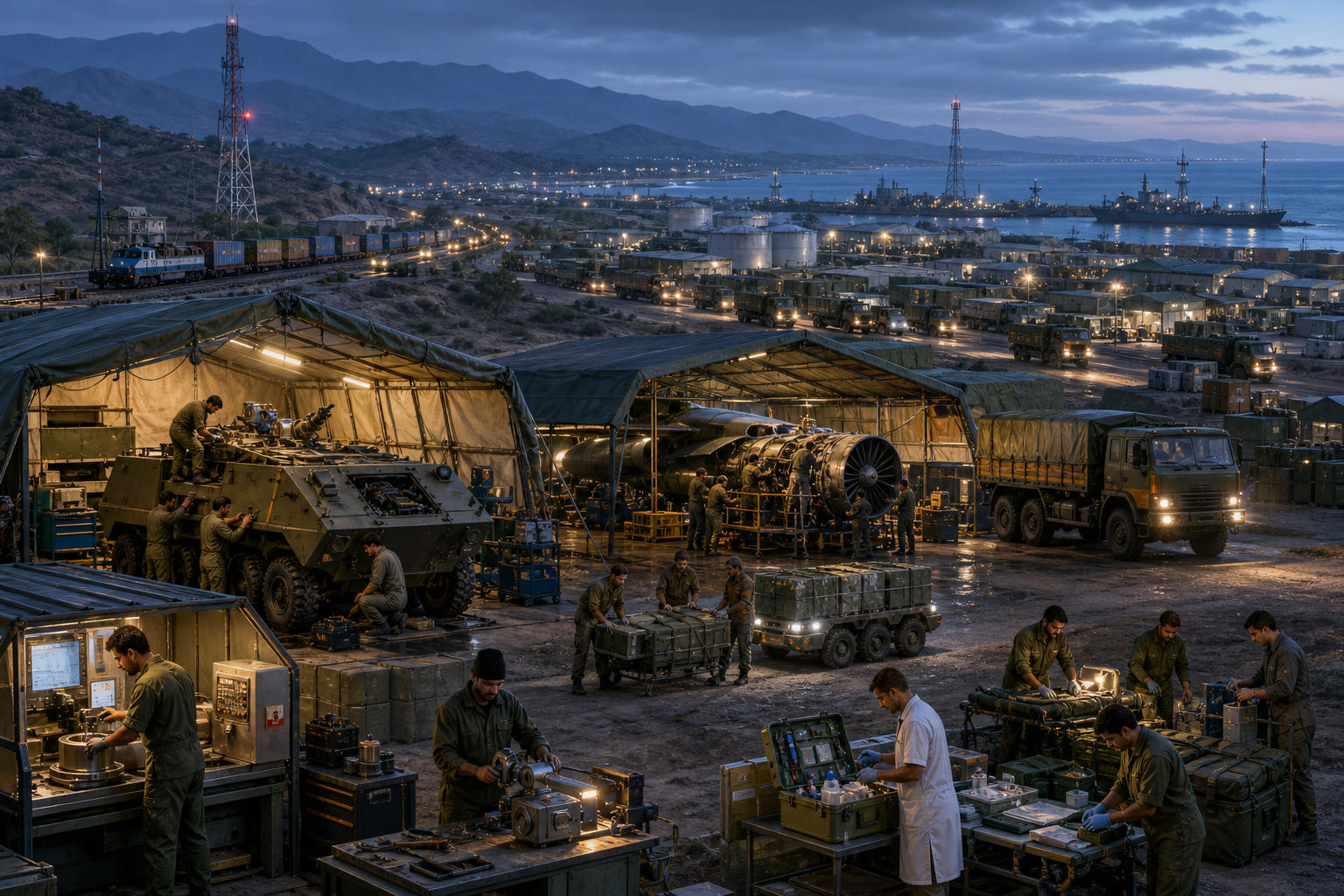
Aircraft, missiles and armoured vehicles are visible. Ammunition reserves, spare parts, repair capacity, fuel distribution and trained replacement crews are not. Yet the less visible system determines how long the visible one remains militarily useful.
War wastage reserves are stocks intended to cover expected consumption and losses during operations. Surge capacity is the ability to increase production, repair and delivery when normal demand suddenly becomes wartime demand. Indian planners now have reason to weigh both alongside new inductions: a force that exhausts essential ammunition in the third week cannot be rescued by impressive induction totals.
The right readiness question is not simply whether an item exists in inventory. It is whether the item is available where needed, compatible with the operating unit, protected from an initial strike and supported by a replenishment chain that can survive disruption.
- Stocks: Are reserves based on a collusive contingency rather than an isolated, short conflict?
- Distribution: Can essential supplies be dispersed, protected and moved through the last mile when preferred routes are unavailable?
- Repair: Are trained personnel, diagnostic tools, replacement modules and technical data available inside the support system?
- Surge: Can manufacturers increase output when suppliers, transport, power or digital networks are also under pressure?
- Validation: Have these assumptions survived a demanding exercise, or do they exist only in inventories and contracts?
Public accountability should not expose exact stock levels, deployment locations or vulnerabilities. It can still disclose whether critical readiness categories meet approved bands, whether replenishment contracts have been tested, whether repair times are improving and whether exercises revealed deficiencies that were subsequently closed. Secrecy about operational detail must not become secrecy about institutional performance.
Technological sovereignty is control over the bottlenecks

A technologically advanced military is not one that buys the greatest number of electronic systems. It is one that can integrate, secure, maintain and update those systems under Indian authority. The decisive question is what happens when an external supplier is unavailable, a data link is contested or urgent software changes are required during a crisis.
This makes self-reliance more exacting than final assembly in Bharat. An imported system can provide essential capability, and a domestically branded system can still conceal critical dependence. Sovereignty has to be measured at the bottleneck: the component, code, test facility, material, production tool or permission without which the larger capability stops working.
Air defence shows why the distinction matters. A launcher by itself is not an air-defence capability. The operational system includes sensors, communications, decision processes, interceptors, reloads, trained crews, maintenance and the ability to exchange information with other units. Modernising one node while leaving the network fragmented creates a sophisticated-looking weakness.
Apply five sovereignty gates before calling a system indigenous
- Integration authority: Can Indian teams connect the system to joint command, sensor and communications networks without waiting for an external gatekeeper?
- Update authority: Can critical software, threat libraries and security controls be inspected and changed when operational conditions evolve?
- Maintenance depth: Can faults be diagnosed and repaired domestically, including at the component and tooling level that matters during a crisis?
- Production depth: Can essential components and consumables be produced at scale, with alternatives for concentrated suppliers?
- Contested reliability: Has the complete system been tested with degraded communications, cyber interference, damaged infrastructure and disrupted logistics?
The same discipline should govern AI sovereignty. An AI label is not strategic autonomy if training data, secure computing, evaluation procedures or update rights remain outside Indian control. Ask who can retrain the system, who can audit its failure modes and who decides when a model is safe enough for an operational role.
Procurement should therefore reward lifecycle control, not merely delivery. Contracts and development programmes need to account for integration rights, domestic testing, spares, repair tooling, future upgrades and surge production from the beginning. Adding those requirements after induction is slower, more expensive and sometimes impossible.
Turn the 2047 vision into an accountable capability cycle
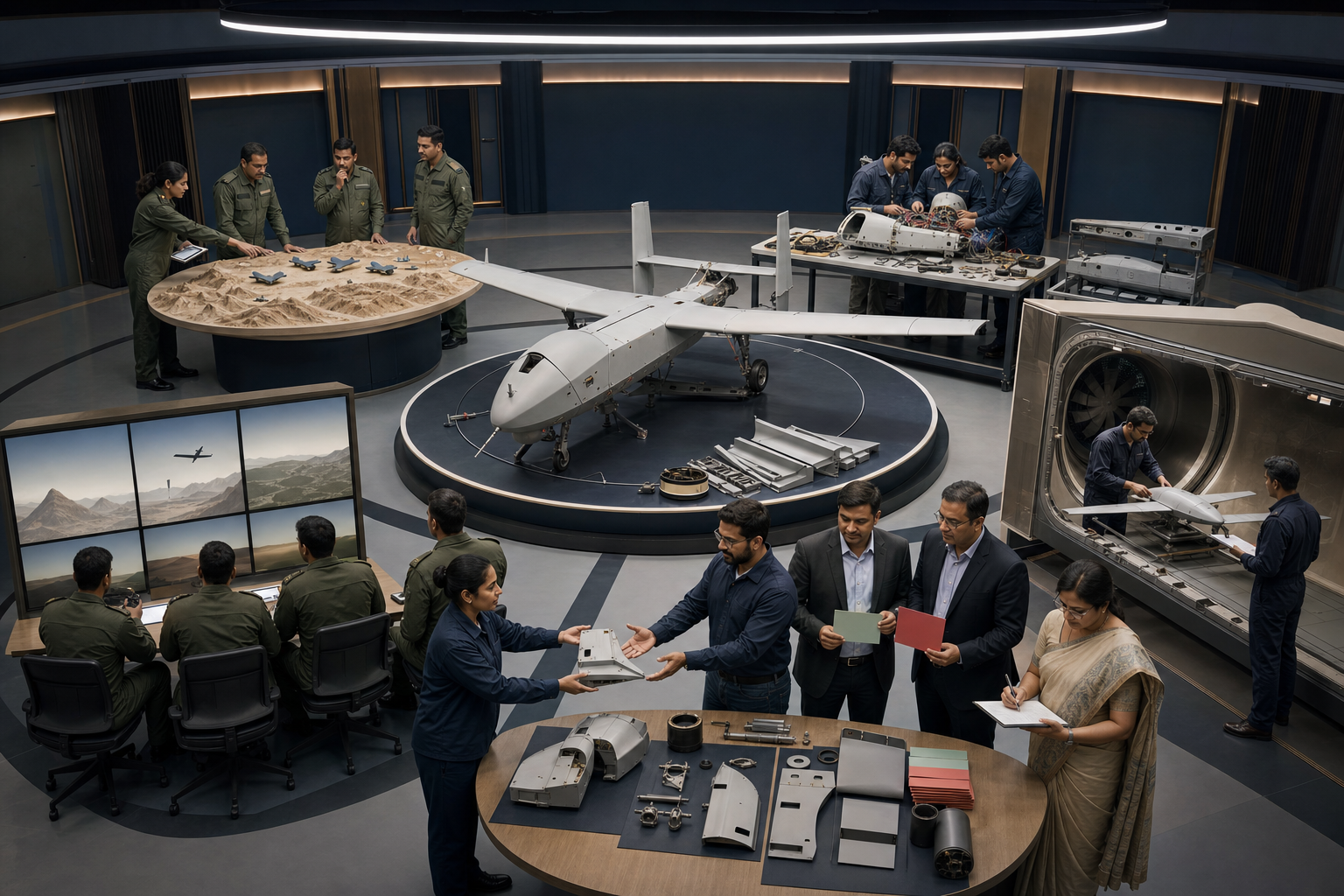
In March 2026, Headquarters Integrated Defence Staff issued Defence Forces Vision 2047: A Roadmap for a Future-Ready Indian Military, giving India a single publicly articulated transformation agenda tied to the centenary. Implementation now needs a visible chain from strategic problem to validated operational capability.
That chain should run in a fixed order: define the operational failure, assign a capability owner, establish joint requirements, acquire or develop the necessary system, train the people who will use and sustain it, test the whole arrangement under stress, record the deficiencies and fund their correction. Skipping a link produces familiar distortions – equipment without doctrine, networks that cannot exchange data, domestic production without dependable subcomponents, or reforms that exist on an organisation chart but not in an exercise.
| Planning clock | Question to answer | Evidence that matters |
|---|---|---|
| Immediate readiness | Can the current force respond and endure under collusive pressure? | Stress exercises, audited readiness bands, repair performance and tested replenishment arrangements |
| Next capability cycle | Which dependencies and operational gaps must be removed as systems are replaced or upgraded? | Joint requirements, integration milestones, production depth, alternate suppliers and trained support personnel |
| 2047 force design | What military structure will deter continuous grey-zone pressure and prevail if deterrence fails? | Joint operating concepts, resilient command networks, sustainable force structure and repeated mission-level validation |
Each major programme should have a baseline, a target date, a responsible institution, a validation event and a fallback if the preferred technology or supplier fails. These do not all need to be public in operational detail. The public version can still state whether a milestone was met, delayed, retested or re-scoped.
Budget spent is an input. Equipment delivered is an intermediate output. The result is a formation that can complete its mission as part of a joint force, remain supplied, survive network degradation and recover from losses. Unless evaluation reaches that level, India risks measuring procurement activity while assuming combat effectiveness.
Key takeaways: five tests for every defence announcement
- The collusive-pressure test: Does the change help India manage simultaneous or opportunistic pressure across more than one front?
- The endurance test: Can the capability remain armed, fuelled, repaired and crewed after the opening weeks?
- The sovereignty test: Does India control the critical code, components, tools, data and production permissions needed in a crisis?
- The integration test: Has the complete capability worked with other services and agencies under degraded conditions?
- The accountability test: Is there a dated milestone and non-sensitive evidence that demonstrates operational improvement?
For a civilisational state, credible defence is not an alternative to development. It protects the political independence, infrastructure, trade and social confidence on which development depends. Restraint carries weight when it is backed by the ability to deny an adversary an easy gain.
Your practical move is simple. Whenever a government, service or vendor announces a major reform or acquisition, ask three questions: What operational failure does it remove? Can it function through a collusive crisis and beyond the opening weeks? What non-sensitive evidence will prove that it works? If India’s public debate keeps returning to those questions, 2047 becomes a sequence of verifiable capabilities rather than a distant slogan.
References
