
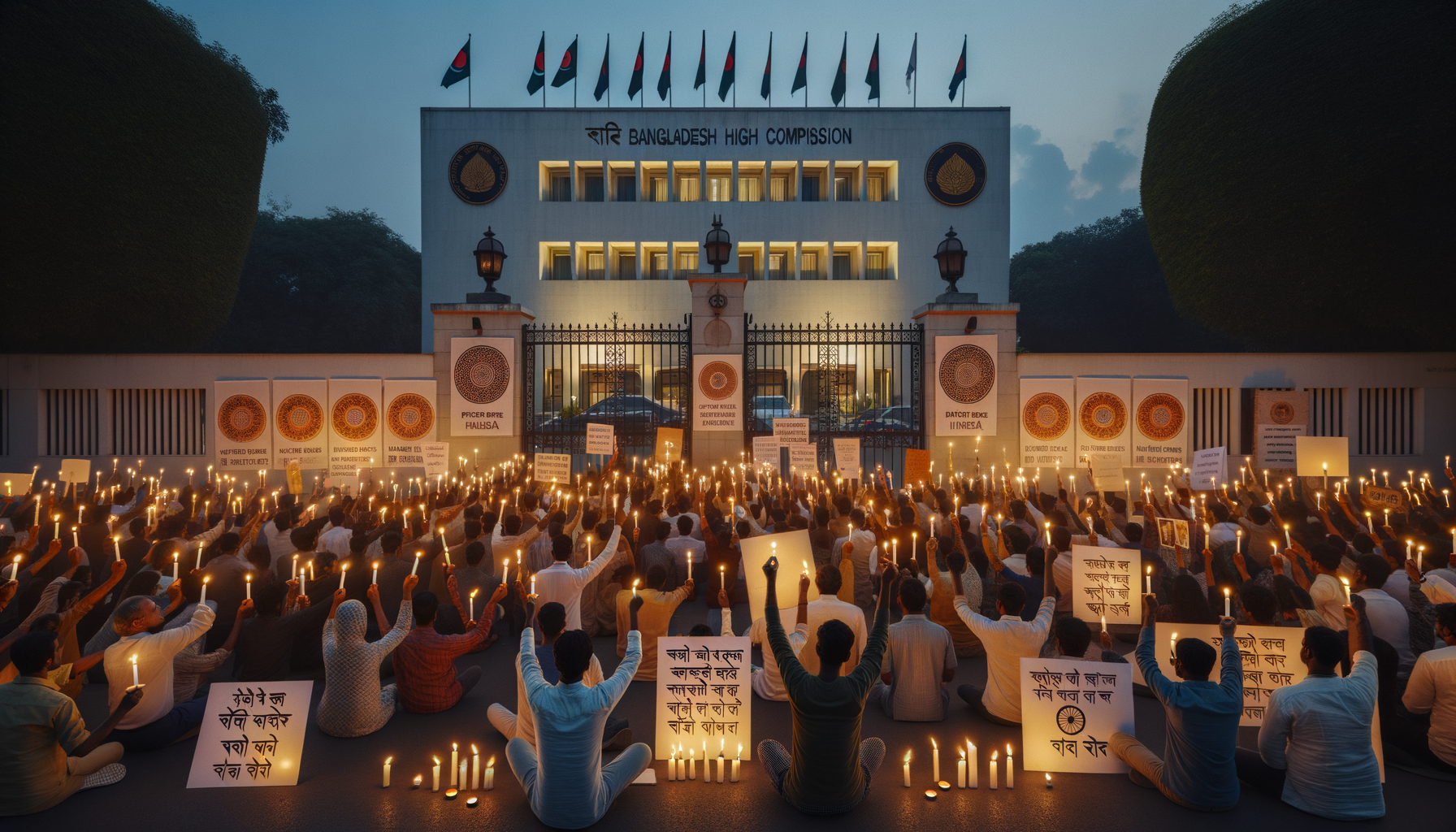
On 23 December 2025, hundreds assembled outside the Bangladesh High Commission in New Delhi to demand justice and accountability following reports of the lynching of Hindu man Dipu Chandra Das in Bangladesh. The demonstration, marked by disciplined crowds and vigil-style observances, centered on the call for #JusticeForDipuDas and the protection of Hindu minorities in Bangladesh through due process and the rule of law.
Participants highlighted the gravity of mob violence and its corrosive impact on civic trust, emphasizing the need for a transparent investigation, fair trials for perpetrators, and institutional safeguards for vulnerable communities. The core message focused on human rights, constitutional protections, and adherence to international norms as the most credible path to lasting security and justice.
Placards, candles, and measured slogans reflected a blend of grief and resolve. For many in the crowd, the loss felt personal, echoing stories of relatives and friends across the border and the fear that impunity can normalize future harm. Witnesses described a highly organized gathering that aimed to convert anguish into lawful, policy-focused advocacy.
A consistent theme was the insistence on dharmic unityframing solidarity across Hinduism, Buddhism, Jainism, and Sikhism as a moral compass for public life. Voices from civil society stressed that safeguarding one community’s dignity strengthens all, and that communal harmony must be advanced through nonviolence, empathy, and shared ethical principles.
Speakers urged calibrated diplomatic engagement between India and Bangladesh, encouraging New Delhi to raise the matter through official channels while recognizing Dhaka’s responsibility to ensure justice and to protect all religious minorities. Such engagement, they argued, should be rooted in cooperative problem-solving, regular human-rights review, and concrete steps to deter future incidents.
Calls for policy clarity were specific: robust witness protection, swift and impartial investigations, and public reporting on prosecutions. Advocates also pointed to preventive measurescommunity policing, early-warning mechanisms against mob mobilization, and education that promotes interfaith respectso that legal redress is matched by social resilience.
Beyond immediate accountability, the demonstration situated the case within broader India–Bangladesh relations, asserting that stable ties are best served by transparency and justice. The protest underscored a civic ethic: channeling collective pain into constructive, rights-based action while affirming that dignity, security, and harmony are non-negotiable for every community.
Inspired by this post on Struggle for Hindu Existence.
