

You may already believe that Kashmiri Hindus deserve justice. The harder question is what that justice must contain. Before you sign an appeal, contact a representative or amplify a campaign, you need to know whether the proposal can produce a safe and dignified future rather than another sympathetic statement.
Use four tests: truth, place, restored life and accountable delivery. A credible programme must acknowledge the wrong, establish secure conditions for community life, repair material and cultural losses, and bind public institutions to measurable action. If one of those elements is missing, rehabilitation remains incomplete.
Justice has four inseparable parts

A global signature campaign associated with Youth for Panun Kashmir has organised its case around four demands: parliamentary recognition of the Kashmiri Hindu genocide, a secure and viable homeland through Panun Kashmir, comprehensive rehabilitation, and a time-bound commitment from the Government of India. These demands are most useful when understood as one chain rather than four independent slogans.
- Recognition establishes the public record. The demand before Parliament is explicit: formally recognise the persecution and displacement of Kashmiri Hindus as genocide. Until Parliament takes such action, supporters should describe this accurately as a demand for recognition, not as a completed parliamentary determination. That distinction protects the credibility of the case. Recognition can then anchor documentation, remediation, restitution and institutional accountability rather than leaving displaced families treated merely as recipients of relief.
- Panun Kashmir gives the demand a territorial and communal dimension. The proposal is for a secure and viable homeland in which Kashmiri Hindu life can continue within India’s constitutional order. It should not be reduced to scattered housing allotments. At the same time, the name alone cannot substitute for institutional design. Any implementation plan must explain the proposed legal framework, security responsibilities, community participation and relationship to equal citizenship.
- Rehabilitation must restore a way of life. A durable programme has to address restitution, safety, housing, education, livelihoods, sacred spaces, cultural practices and the institutions through which a community transmits memory. Moving families without rebuilding these foundations would relocate people without rehabilitating them.
- Time-bound implementation converts sympathy into duty. A commitment becomes testable only when it identifies the responsible institutions, milestones, deadlines, reporting process and oversight mechanism. Without those elements, even a formally announced programme can remain indefinitely unfinished.
The four parts depend on one another. Recognition without remediation may remain symbolic. A homeland without schools, livelihoods and cultural institutions may remain unviable. Rehabilitation without durable security may reproduce fear. Timelines without transparent reporting and independent scrutiny may become administrative theatre.
A safe return must rebuild a community, not just housing
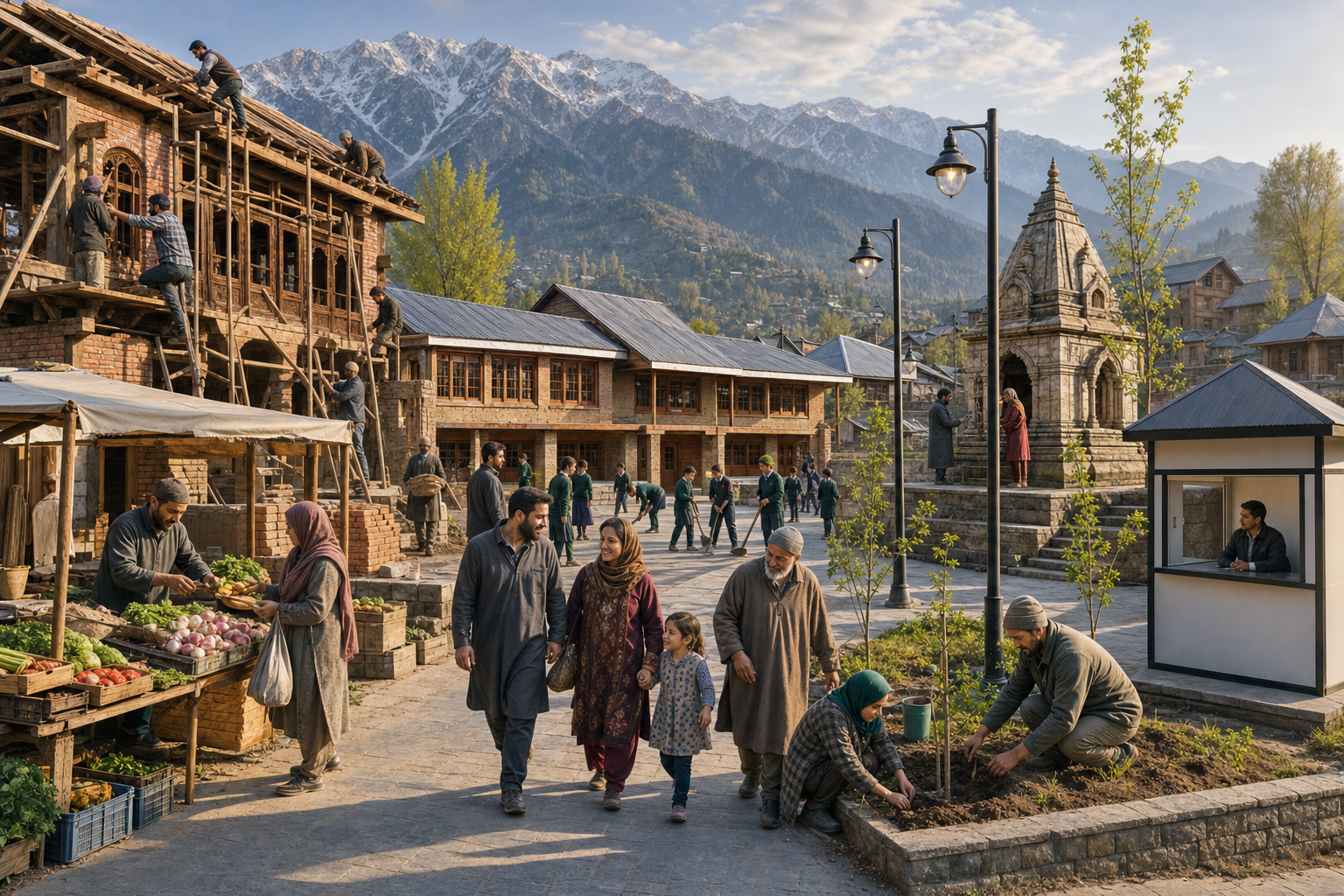
Return is not a transport problem, and rehabilitation is not a real-estate scheme. A family can receive keys to a dwelling and still lack the conditions needed to remain there. When you assess a proposal, look beyond the number or location of housing units and ask what daily life would actually require.
- Durable safety: Which public institutions are responsible for protection? What safeguards will continue after the initial return, and how will failures be reported and corrected? General assurances are not a security architecture.
- Restitution and remedy: Is there a clear process for documenting property, rights and cultural assets that were lost or left behind? Does the process explain how competing claims, damaged records and property that cannot simply be restored will be handled through lawful remedies?
- Education and livelihoods: Are schools, employment opportunities, transport and essential services available before or alongside relocation? Treating these as later phases transfers the risk of policy delay to returning families.
- Cultural continuity: Does the programme protect temples, sacred places, community institutions and the practices through which Kashmiri Hindu identity passes between generations? Cultural heritage is part of rehabilitation, not decoration to be added after construction.
- Community viability: Can families sustain social, religious and educational networks, or would they be dispersed in a way that leaves community life fragile? A collection of individual residences does not automatically recreate a living habitat.
- Agency and dignity: Are displaced Kashmiri Hindus participating in the design, implementation and review of the programme? Return imposed before credible conditions exist would not amount to dignified rehabilitation.
These questions also clarify why homeland restoration and rehabilitation cannot be separated. A homeland supplies the setting for collective continuity; rehabilitation makes that setting liveable. Each is weakened without the other.
Restitution should likewise be understood broadly. Property matters, but so do access, rights, institutions and heritage. Where literal restoration is impossible, a lawful programme still needs a transparent remedy. Otherwise the hardest cases disappear inside administrative language.
Make every public promise measurable
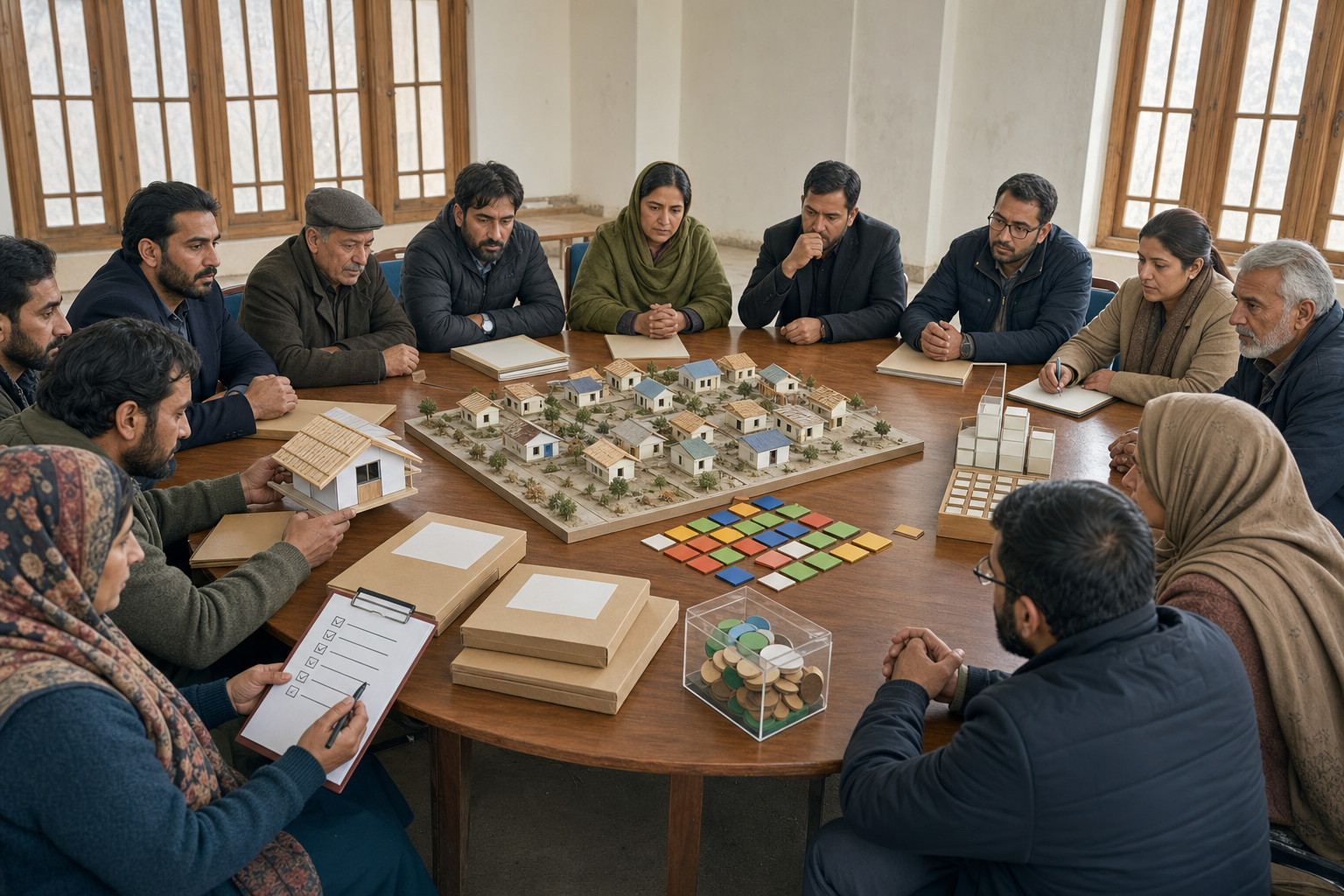
The demand for time-bound implementation is the most immediately testable part of the justice agenda. It lets you distinguish a policy commitment from an expression of concern. Whenever a minister, department, political party or advocacy organisation announces support, ask six questions.
- Who owns the decision? Name the ministry, department, legislative body or other institution responsible for moving it forward.
- What is the first verifiable deliverable? A committee, draft framework, claims mechanism, parliamentary motion or published implementation plan is an output. A promise to examine the issue is not.
- What is the deadline? A sequence without dates is an aspiration, not a time-bound plan.
- What evidence will be public? Progress reports, decisions, eligibility rules and implementation data should be accessible enough for affected families and citizens to examine.
- Who reviews performance independently? The institution implementing a programme should not be the only institution judging whether it succeeded.
- What happens when a milestone is missed? A serious framework identifies escalation, review or corrective action instead of allowing delay to become the default outcome.
You can track these answers on a single page. Use six fields: commitment, responsible institution, deliverable, deadline, published evidence and status. Update the record only when there is verifiable movement. This prevents repeated announcements from being mistaken for repeated progress.
Apply the same standard to every part of the programme. Parliamentary recognition needs a defined legislative route. Restitution needs a claims and adjudication process. Security needs named institutional responsibility. Cultural restoration needs an inventory, priorities and accountable custodianship. Rehabilitation needs outcomes that measure whether families can actually sustain life and community.
Turn solidarity into disciplined civic action
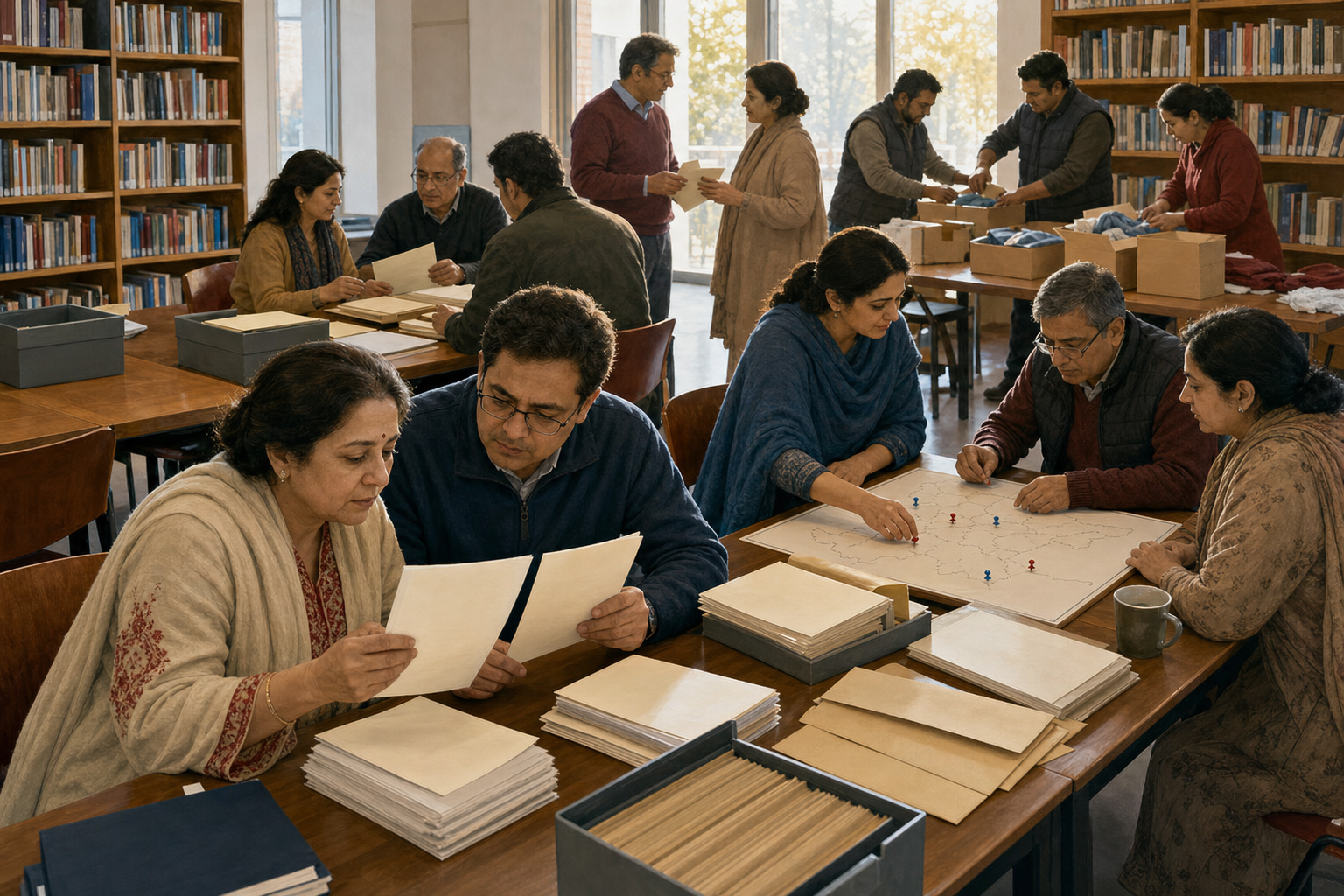
Civilisational justice must not become a synonym for vengeance. Its purpose is to protect people, preserve memory, repair loss and secure equal citizenship. That is why constitutional advocacy, careful language and verifiable demands are stronger than inflammatory rhetoric.
Hindu, Buddhist, Jain and Sikh communities can contribute through a shared dharmic commitment to truth, dignity and protection from persecution. Their role is to amplify the affected community’s claims, not to replace Kashmiri Hindu voices with a broader organisation’s preferred message. Solidarity becomes credible when the people whose return is being discussed remain participants rather than symbols.
- Read the full demand before endorsing it. Confirm that recognition, homeland restoration, comprehensive rehabilitation and time-bound implementation are all present. Do not circulate a shortened version that preserves the emotion while dropping the enforceable asks.
- Use legally and politically accurate language. Say that the campaign seeks parliamentary recognition of the Kashmiri Hindu genocide. Do not imply that the requested parliamentary action has already occurred.
- Send a specific request to your representative. Ask for parliamentary consideration of recognition and a published implementation roadmap covering a secure homeland, restitution, rehabilitation and institutional safeguards. Request named authorities, milestones, deadlines, public reporting, independent oversight and structured consultation with displaced Kashmiri Hindus.
- Use diaspora and dharmic networks for focused briefings. The campaign’s model includes on-the-ground gatherings, diaspora participation and digital mobilisation. A useful gathering should end with an assigned action: a signed representation, a meeting request, a documentation effort or a scheduled review of official responses.
- Preserve evidence responsibly. Family testimony, property material and records connected to temples or cultural institutions may be important to documentation. Obtain consent before publishing personal testimony, preserve context, keep original records secure and distinguish verified material from recollection that still needs corroboration.
- Refuse collective blame and unsupported claims. Exaggeration gives decision-makers an excuse to avoid the strongest documented case. Keep the focus on recognition, accountability, restitution, safety and institutional responsibility.
- Return to the same officials for an answer. Civic pressure rarely becomes accountable through a single letter or signature. Record the response, compare it with the requested deliverables and follow up when an institution offers sympathy without a route to action.
For citizens outside India, the institutional route will differ, but the discipline should remain the same. Ask community bodies and elected representatives to recognise the justice claim, support preservation of cultural heritage, and encourage transparent, rights-based action within India’s democratic and constitutional framework. Avoid presenting external pressure as a substitute for Kashmiri Hindu agency or Indian constitutional process.
Reconciliation has a place in a durable peace, but it cannot be credible when truth and accountability are treated as optional. A principled approach does not ask a displaced community to exchange memory for acceptance. It joins acknowledgement, remedy, security and coexistence in the same framework.
Key takeaways
- Support recognition as a defined parliamentary demand, and do not present the requested designation as though Parliament has already granted it.
- Treat Panun Kashmir as a specific secure-homeland proposal that still requires a clear constitutional, administrative, security and participatory design.
- Judge rehabilitation by whether it restores safety, restitution, education, livelihoods, sacred spaces, cultural continuity and viable community life.
- Reject implementation plans that omit a responsible institution, verifiable deliverables, deadlines, public reporting and independent oversight.
- Keep advocacy accurate, peaceful, constitutional and led by the needs and agency of displaced Kashmiri Hindus.
Your next useful step is simple: put the four headings – recognition, homeland, rehabilitation and accountability – beside the appeal or policy you are considering. Mark what is concrete and what remains unspecified. Endorse the case where it is clear, ask for the missing details where it is vague, and keep a dated record of every institutional response.
References
