
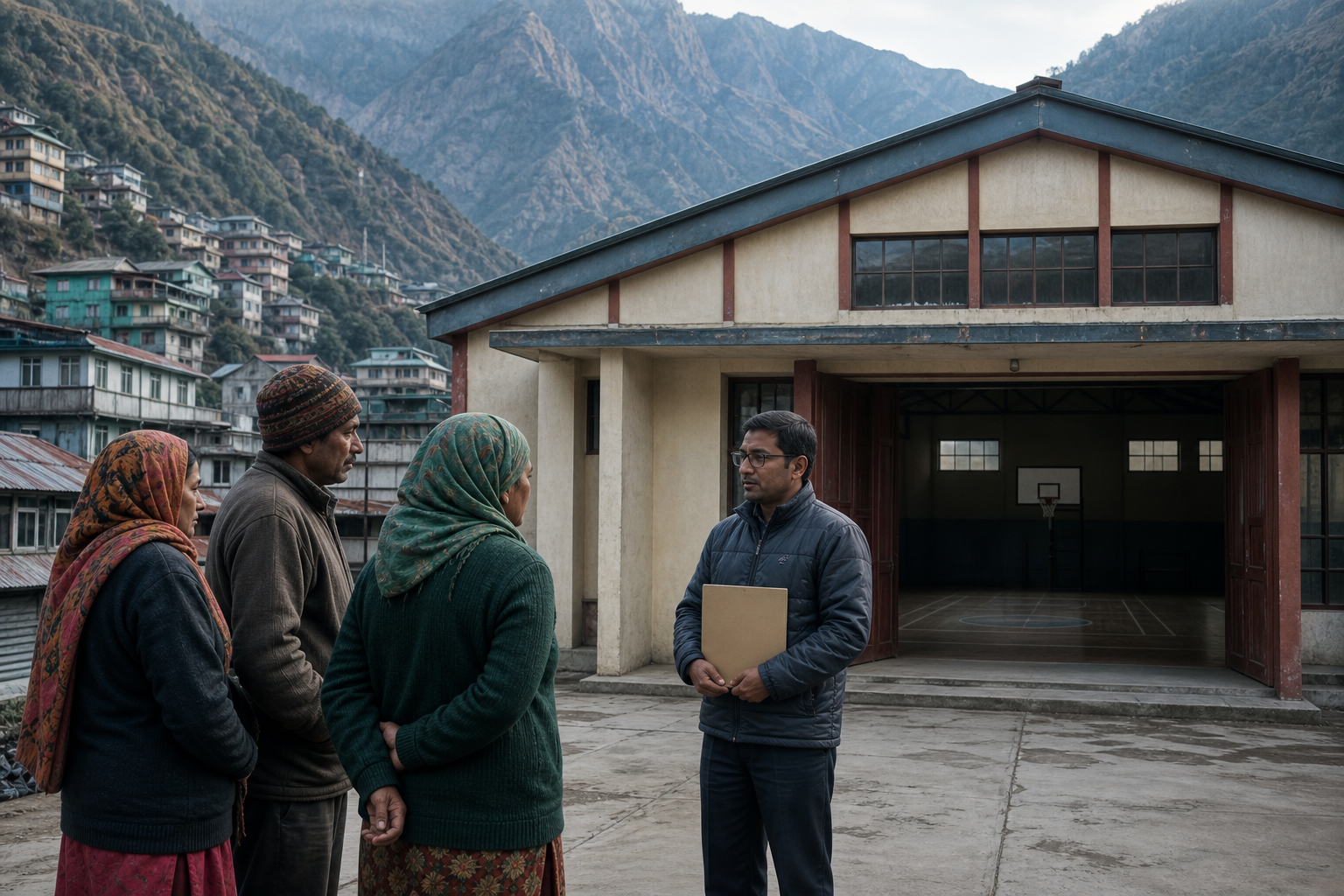
If a video from Joshimath has left you wondering whether a government sports building was quietly turned into a religious space, do not let its caption decide the case. Namaz was allegedly conducted in the public facility, prompting objections from local Hindu residents, but the material presently available does not establish an authoritative public finding about permission or wrongdoing.
You can defend Jyotirmath’s Dharmic character, the primary purpose of its civic buildings, and equality before the law without choosing between silence and provocation. The useful response is to establish what was authorised, test it against one rulebook, and demand a remedy proportionate to what the records actually show.
Key takeaways for a Joshimath resident
- Article 25 protects religious practice subject to public order, morality, health, and other fundamental rights. It does not create an automatic right to occupy a particular government building.
- State ownership does not automatically prohibit every temporary religious gathering. The decisive questions are permission, safety, duration, non-exclusive access, and equal treatment.
- A time-bound gathering in a multipurpose hall is not the same as permanent conversion, encroachment, or a change in the property’s legal character.
- The booking application, approval order, facility register, conditions of use, duty roster, and available footage matter more than a viral caption.
- If a rule was breached, seek documented administrative action. If permission was valid, examine whether the same terms would be available to every community and whether the building’s sports function was protected.
Separate worship, permission, and permanent conversion

Three different questions are being compressed into one emotionally charged allegation. Separating them is the first step toward a fair answer.
- Was a religious gathering held? A video may help establish that people assembled for prayer, but that fact alone does not establish whether the gathering was authorised.
- Was the public facility lawfully allocated? This depends on the competent authority, the booking or no-objection record, applicable safety and public-order requirements, and compliance with the stated conditions.
- Was there an attempt to obtain lasting control? Repeated exclusive possession, encroachment, stored religious fixtures, structural alteration, or obstruction of the building’s public purpose would raise a different and more serious issue than a temporary booking.
Article 25 of the Constitution protects freedom of conscience and religious practice, but the protection is qualified. It does not allow any Hindu, Muslim, Sikh, Jain, Buddhist, or other group to take over public property without following the rules. Articles 26 to 28 add important principles concerning religious autonomy and state neutrality, but they likewise do not erase the government’s duty to administer its property fairly.
The reverse claim also goes too far: a government building does not necessarily become unavailable for every time-bound community or religious event merely because the state owns it. A municipality may operate a multipurpose facility under a neutral booking policy. What it cannot legitimately do is grant informal privilege to one group, conceal the terms, displace the public without justification, or ignore restrictions it enforces against everyone else.
The Places of Worship (Special Provisions) Act, 1991, is not a shortcut for resolving this factual dispute. Its central concern is the religious character of places of worship as it stood on 15 August 1947. A properly authorised, one-time gathering in a multipurpose public hall is categorically different from converting that hall into a permanent place of worship. If residents allege conversion, they should identify evidence of permanence or exclusive control rather than relying on the prayer itself.
The word illegal should therefore follow the evidence, not precede it. It becomes supportable when the records show no required authorisation, a breach of capacity or safety conditions, discriminatory exclusion, displacement of scheduled public use, structural alteration, encroachment, or another violation of the governing rules.
Build a record before you build a case
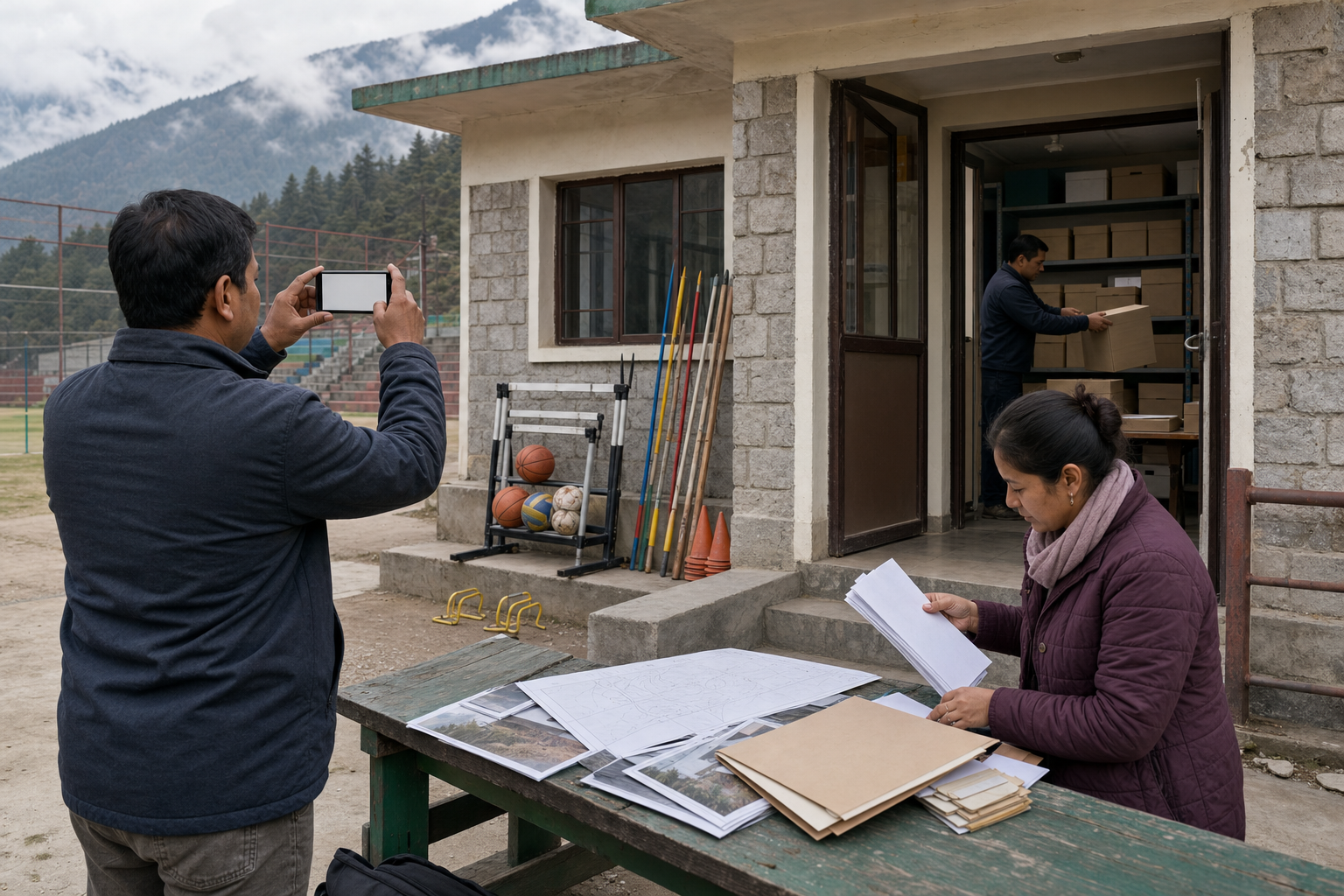
Hindu residents are entitled to ask hard questions about public property. Those questions become much harder for an administration to evade when they are narrow, dated, and directed at records that should already exist.
Ask for documents, not political explanations
Start with a written request to the facility manager or Nagar Palika. Identify the building and the incident date as precisely as you can. Ask for copies of:
- the booking application, request letter, or other communication seeking use of the building;
- the approval order, no-objection certificate, or written refusal, including the issuing authority;
- the facility booking-register entry and applicable fee record;
- the approved start and end times, occupancy limit, and conditions of use;
- any safety, noise, police, or district-administration clearance required for a gathering of that type and size;
- the sports or public activities scheduled for the same period and any record showing that they were cancelled, moved, or delayed;
- the duty roster, facility-manager report, available CCTV record, and post-event inspection or damage record;
- the written policy that governs religious, cultural, social, and private bookings at the facility; and
- the booking roster for a narrowly defined surrounding period, so that equal treatment can be examined without demanding an unmanageably broad search.
If an ordinary request produces no adequate answer, the Right to Information Act, 2005, provides a record-based route. Frame the application around identifiable documents. An RTI request is stronger when it asks for a certified copy of an approval order than when it asks an official to explain why a community was favoured. If a requested record does not exist, that absence may itself clarify whether the claimed permission can be substantiated.
Suggested wording: Please provide certified copies of the booking request, approval or no-objection order, fee record, conditions of use, facility-register entry, applicable safety and noise clearances, duty report, and written booking policy relating to use of the named sports building on the specified date and during the specified time window.
Use the video as a lead, not a verdict
Preserve the original link and the caption under which you first encountered it. Then check visible location markers, whether the footage contains a reliable date or time indicator, whether an earlier clip has been relabelled, and whether longer footage changes the context. Look for additional angles and on-record statements from the facility manager, Nagar Palika, district administration, or police. A short clip can show that an activity occurred; it usually cannot show the booking file sitting in an office.
Do not confront worshippers or attempt to remove people or objects yourself. That can create a public-order risk and expose you to legal consequences while leaving the administrative question unanswered. Where there is an immediate crowd, fire, structural, or access danger, notify the facility manager and police. If you have received an official notice, face police action, or intend to litigate, consult a qualified Indian lawyer; this civic checklist is not a substitute for advice on a pending case.
Once the records arrive, use a simple decision rule. If no required permission exists, request an administrative inquiry, restoration of the facility where necessary, and safeguards against repeat unauthorised use. If permission exists, verify who issued it, whether that authority was competent, whether every condition was observed, and whether comparable access is genuinely available to others. If the record remains ambiguous, press for a written factual bulletin before making a categorical accusation.
Demand one rulebook for every community
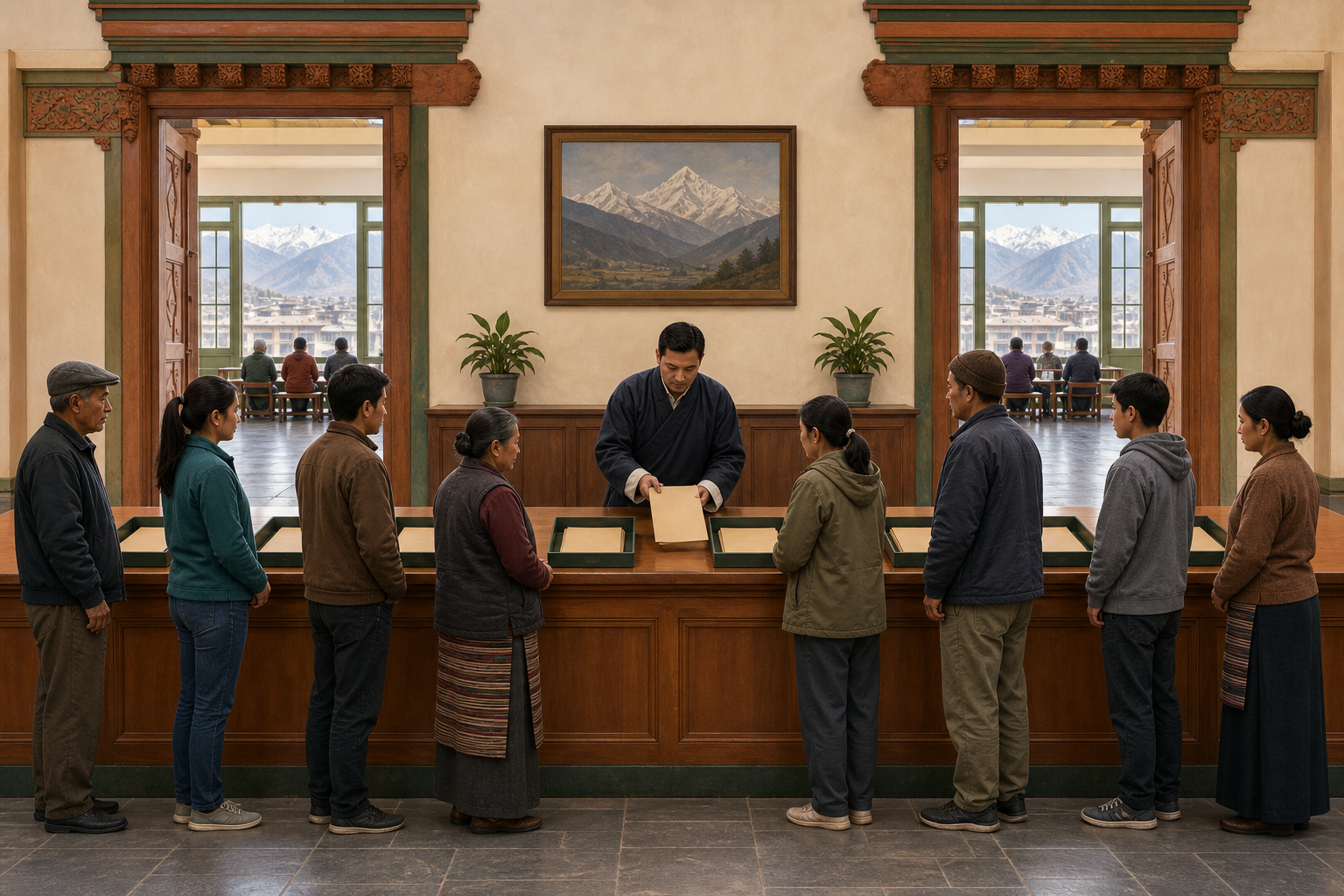
The strongest long-term remedy is not an informal assurance about this one incident. Joshimath needs a public rulebook that officials cannot quietly change according to the identity of an applicant.
- Publish the booking process. The form, fee schedule, permitted uses, approving authority, and standard conditions should be available at the facility and municipal office.
- Make the calendar visible. Weekly or monthly booking rosters reduce the suspicion created by closed-door allocations.
- Use a predictable allocation method. First-come-first-served booking can handle ordinary demand, with an impartial lottery for genuinely oversubscribed peak periods.
- Protect the building’s primary purpose. Youth training and scheduled sports should not be casually displaced. Community use should occupy clearly defined windows that preserve the facility’s core function.
- Put every permission in writing. The order should state the precise time window, occupancy cap, emergency-exit requirements, electrical-load conditions, noise restrictions, cleanup duty, and responsible organiser.
- Prevent de facto conversion. No group should make structural changes, store permanent fixtures, leave religious identifiers behind, claim recurring exclusive possession, or obstruct later public use.
- Require prompt restoration. The premises should be returned in their prior condition immediately after the approved event.
- Publish a rapid factual response. When controversy arises, the Nagar Palika and district administration should state what is known, what permission was issued, which conditions applied, and what remains under verification.
The same system should govern namaz, bhajan, satsang, kirtan, Sikh seva, Jain pratikraman, Buddhist gatherings, and secular community events. Equality is not achieved by allowing every demand. It is achieved by applying the same relevant criteria: lawful authority, facility design, public schedule, safety, noise, duration, and restoration.
The Noise Pollution (Regulation and Control) Rules, 2000, add another practical layer. Timing and acoustic restrictions matter in a Himalayan town, particularly around silence-sensitive or environmentally sensitive areas. A permission to assemble should never be read as permission to disregard noise controls.
Safety deserves unusual attention in Jyotirmath. The town has a constrained urban footprint, seasonal surges connected with travel toward Badrinath and Auli, and infrastructure already burdened by land-subsidence concerns. Occupancy limits, clear exits, electrical capacity, and any necessary load-bearing assessment are not bureaucratic decorations. An unsafe gathering remains unsafe regardless of the faith represented.
A standing communal-harmony committee can review utilisation records and resolve misunderstandings early, but it must not replace accountable administration. Community representatives can advise and communicate; authorised officials must still issue orders, preserve records, enforce conditions, and explain their decisions.
A Dharmic response is firm about truth and restraint
A pro-Hindu response does not require Hindus to dismiss their concern as intolerance. Public facilities belong to the whole civic community, and selective indulgence would be a legitimate grievance. It does require precision about what is being opposed: unauthorised use, unequal treatment, danger, displacement, encroachment, or permanent conversion. Naming the actual wrong makes a remedy possible.
Satya calls for verified facts. Nyaya calls for the same rule to be applied across communities. Ahimsa rules out threats, collective blame, and attempts to turn an administrative dispute into hostility against ordinary people. These principles reinforce one another. Restraint without accountability becomes passivity; accusation without evidence abandons truth.
Sarva Dharma Sambhava also should not be misunderstood as administrative surrender or as a demand that Hindus erase distinctions among traditions. In civic administration, it means equal regard under common rules. It protects a Muslim’s freedom to pray, a Hindu’s right to question preferential access, and every resident’s interest in keeping government property safe, non-exclusive, and faithful to its stated purpose.
Your next move should be a dated written request for the booking file and governing policy, copied to the district administration if necessary. Judge the event by that record, not by the loudest caption. If rules were broken, press for documented corrective action and equal enforcement. If they were followed, press for a transparent policy that preserves sports use and binds every future applicant. That is how Jyotirmath keeps public space public without sacrificing either Dharma or civic peace.
References
