
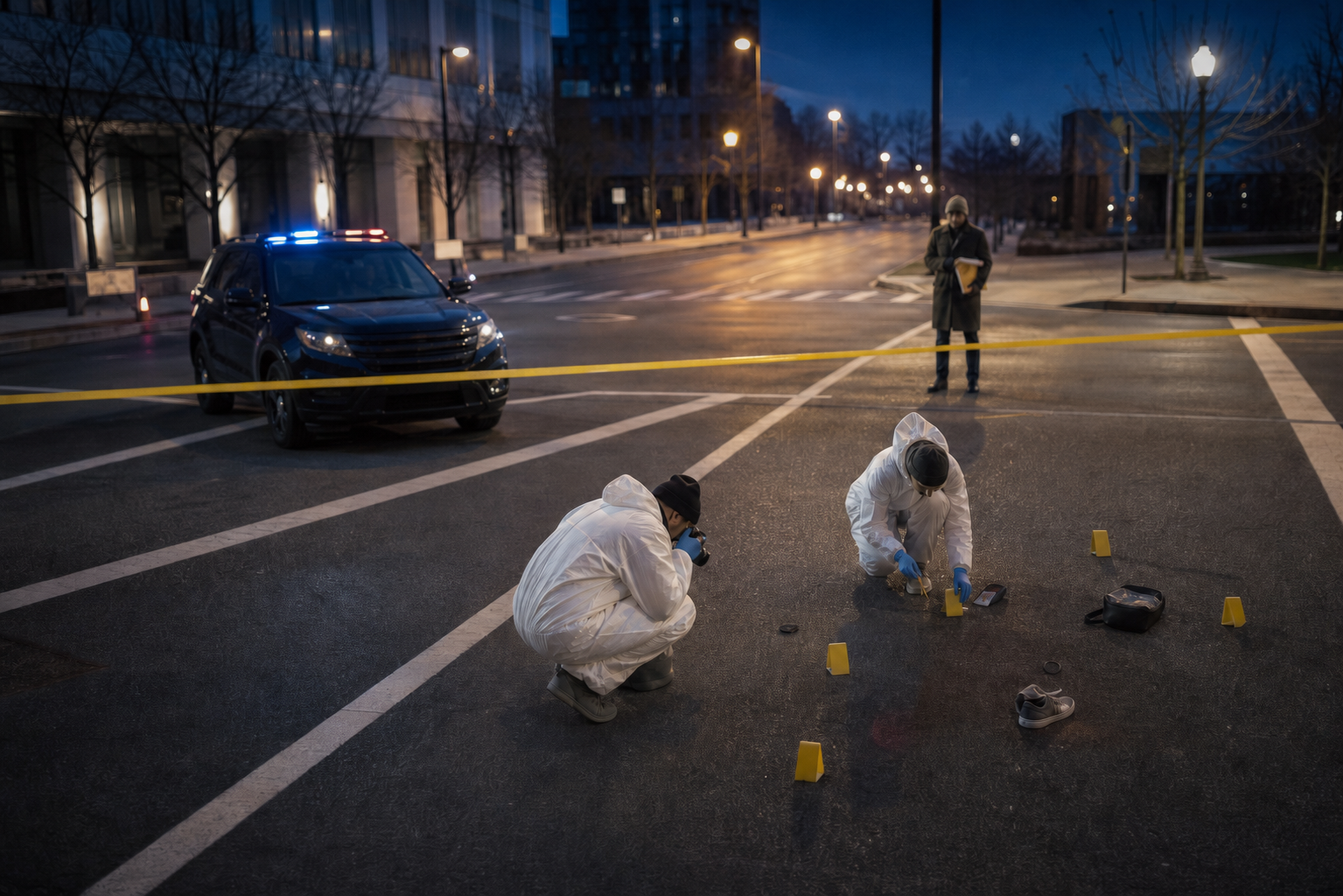
An encounter headline pressures you to choose a side before the evidence exists. If you care about protecting people threatened over belief, apostasy, or public speech, you may feel that asking hard questions of the police weakens the demand for security. It does not. A constitutional state must be able to protect a targeted citizen and account for every use of lethal force.
The practical response is to separate allegations, evidence, and findings. You do not have to pronounce anyone guilty or exonerate the state. You need to know what has been claimed, what can corroborate it, and which independent authority will test it.
Begin with three events, not one continuous story
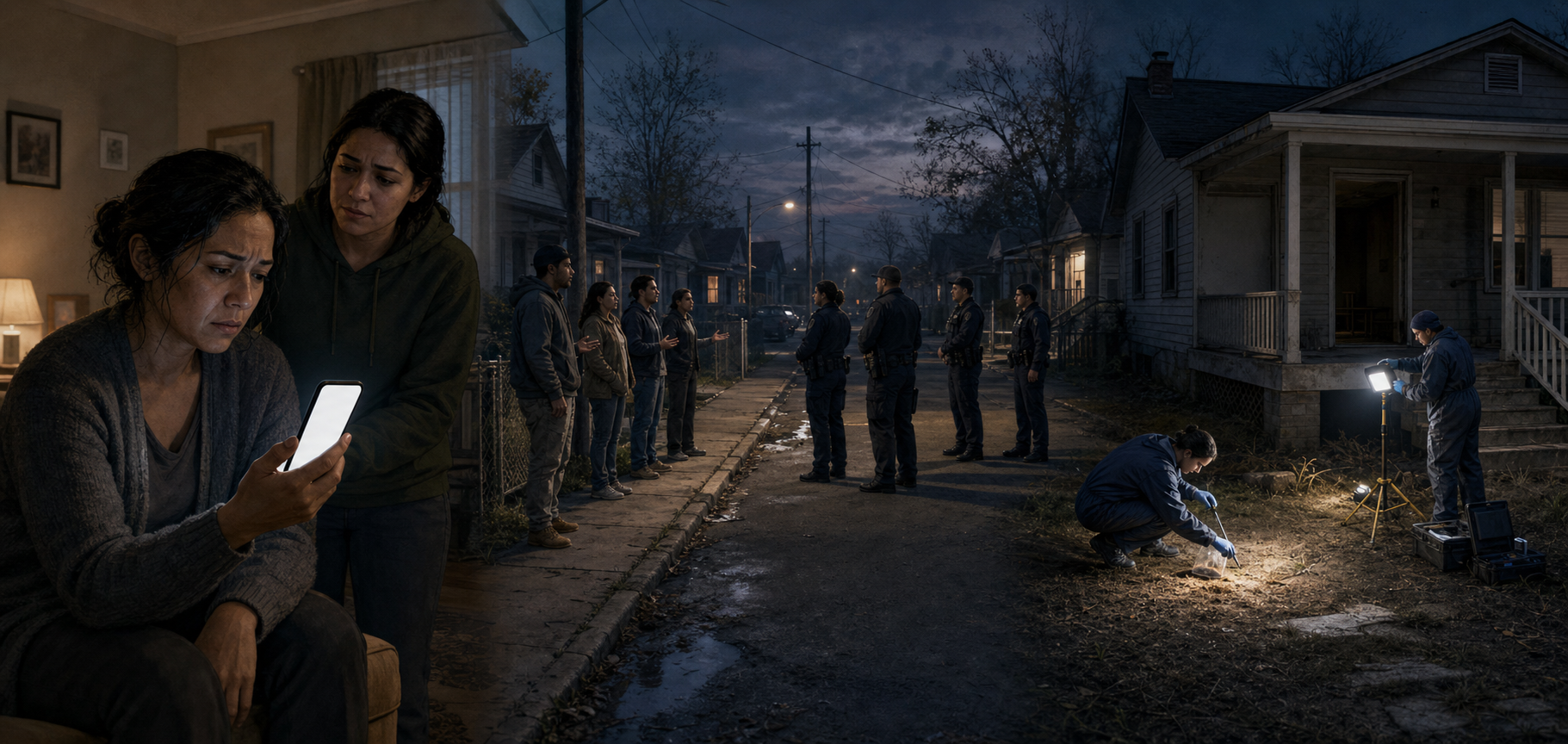
In the Saleem Wastik matter, police linked two encounters to the alleged stabbing attack. Zeeshan was reported killed in one confrontation, while Gulfam was reported critically injured in another. Those are preliminary claims associated with an active case, not judicial findings.
Three distinct questions therefore require three distinct bodies of proof:
- What happened to Saleem Wastik? Medical evidence, the original crime scene, witness accounts, CCTV, digital communications, weapon evidence, and proof of motive may bear on the alleged attack.
- What connected each suspect to that attack? Identity, presence, conduct, communications, recoveries, and corroborated witness testimony must establish the link. A police designation such as principal suspect is not itself proof.
- What happened during each police encounter? The officers’ account must be tested against the encounter scene, firearms, cartridge cases, projectiles, injuries, autopsy findings, electronic records, independent witnesses, and the documented reason force was used.
Do not let evidence from one question silently answer another. Strong evidence that a person participated in the stabbing would not, by itself, prove that later police firing was necessary. Serious doubts about an encounter would not erase the original attack or the victim’s right to protection. Guilt for the underlying offence and lawfulness of police force are separate determinations.
The same discipline applies to proposed criminal charges. Attempted murder, conspiracy, common intention, grievous hurt, weapons offences, or hate-related offences may be considered only where their required elements are supported by admissible material. A list of legal sections circulating online does not establish motive, participation, or guilt. The filed case record and the evidence supporting each allegation matter.
You can keep a simple claim ledger while following the case:
- Write the exact claim without strengthening its language.
- Identify who made it: police, victim, witness, lawyer, medical professional, forensic examiner, magistrate, or court.
- Mark its status: allegation, recorded recovery, preliminary medical fact, laboratory result, inquiry conclusion, or judicial finding.
- Note the independent material that could confirm or contradict it.
- Record the next procedural checkpoint instead of predicting the outcome.
This prevents a common error in fast-moving cases: repeating an official briefing, partisan assertion, or viral clip as though it had already survived examination.
Read the forensic record as a sequence, not a collection of dramatic objects
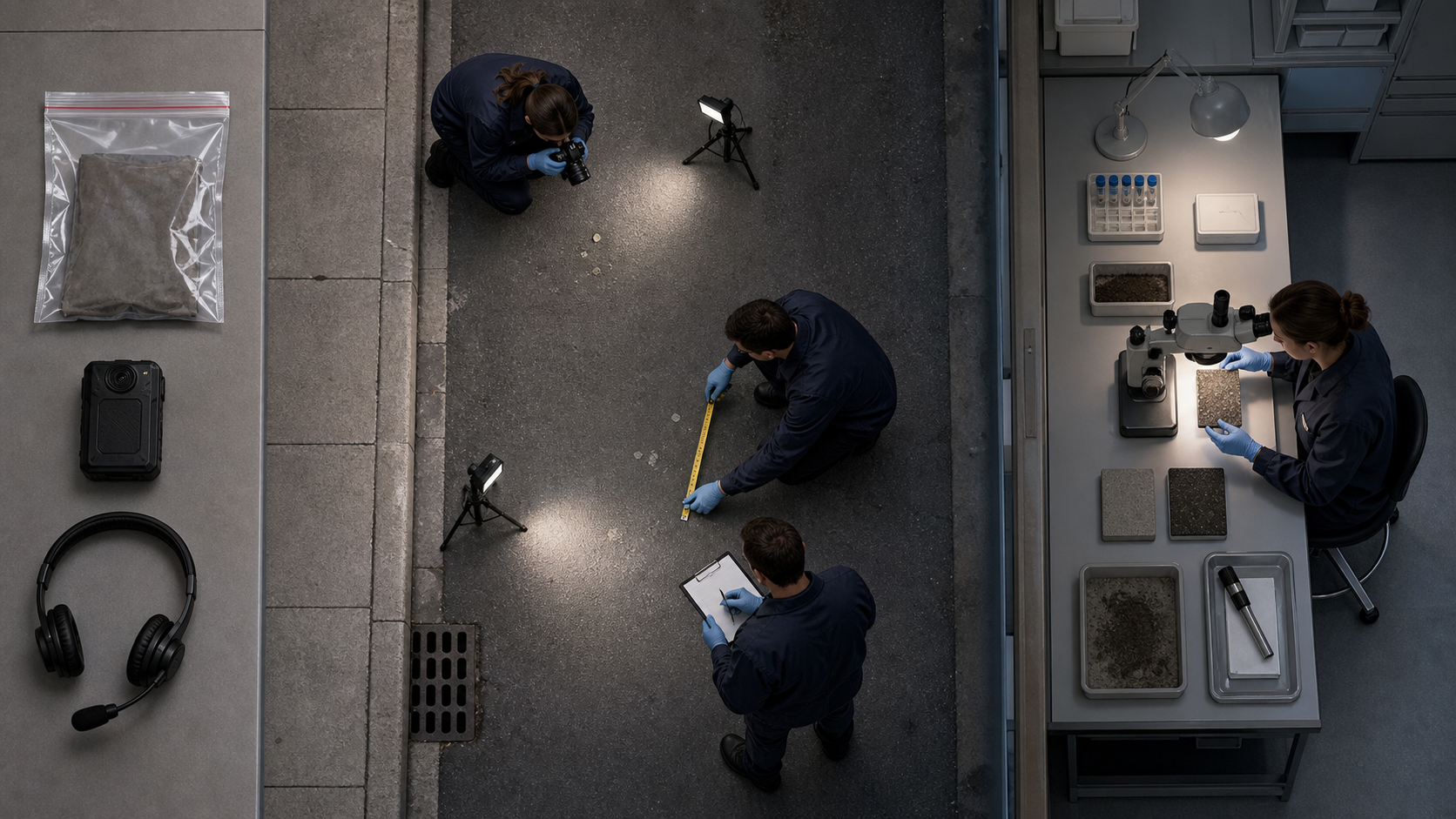
A recovered pistol, a bloodstain, or a fragment of CCTV can look decisive in isolation. It rarely is. Reliable reconstruction depends on how evidence was found, documented, sealed, transferred, examined, and compared with the competing accounts. Four evidence streams should converge.
Scene preservation and chain of custody
The encounter location should be photographed and videographed before material is moved. The position of bodies, weapons, cartridge cases, vehicles, blood patterns, impact marks, and other objects can help reconstruct movement and firing. Each exhibit needs an identifier, a recorded recovery location, a seal, and a custody trail through dispatch to an accredited forensic laboratory.
Chain of custody does not prove what an object means. It establishes that the item examined is traceably the item recovered. When that trail is incomplete, the laboratory may still produce a technical result, but confidence in its connection to the scene can be weakened. Ask for continuity, not merely for the announcement that something was recovered.
Ballistics, trajectories, and distance of fire
Firearm examination should address more than whether a weapon can discharge. Investigators must map cartridge cases and projectiles, examine recovered firearms, compare markings where possible, reconstruct trajectories, and assess whether injury characteristics are consistent with the estimated firing distance.
Gunshot-residue testing is another component, not a shortcut to a verdict. The record should show when and how samples were taken, how they were protected, and how the result fits the firearms, wounds, scene layout, and witness accounts. A residue result cannot carry an entire encounter narrative by itself.
The useful question is not simply, Was a gun found? Ask whether the location and condition of that gun, the discharged ammunition, the recovered projectiles, the trajectories, and the injuries describe the same sequence.
Autopsy and clinical evidence
A videographed autopsy can preserve observations that written summaries cannot fully convey. External and internal wounds, entry and exit characteristics, wound paths, injury patterns, and toxicology can test claims about direction, distance, position, and sequence. Medical evidence from an injured survivor is equally important because it provides another physical record of the confrontation.
An autopsy does not decide whether a shooting was legally justified. It establishes bodily facts that must be compared with the stated necessity for force. If the physical findings do not fit the operational account, investigators must explain the discrepancy rather than forcing the evidence into the first version announced.
Digital records and voluntary testimony
Call-detail records, tower information, lawfully extracted device data, CCTV along arrival and departure routes, body-camera footage where available, emergency calls, and control-room communications can place actions on a timeline. These records are most valuable when preserved promptly and compared with one another. A device or account must also be reliably connected to its user; possession cannot simply be assumed from a name on a screen.
Witness statements should be recorded promptly, but speed must not come at the expense of voluntariness. Investigators should distinguish what a witness personally perceived from what the witness later heard. Magistrate-recorded statements, protection for vulnerable witnesses, and careful separation of witnesses can reduce pressure and contamination.
No single stream should be asked to do all the work. Confidence rises when the scene, ballistics, medicine, digital timeline, and independent testimony converge without unexplained gaps.
Accountability can be tested through visible procedural checkpoints

India already has a concrete judicial benchmark for encounter deaths. In PUCL v State of Maharashtra (2014), the Supreme Court required steps that include prompt registration of an FIR, investigation independent of the officers involved, a magisterial inquiry, rigorous forensic work, and reporting to oversight authorities. Om Prakash v State of Jharkhand (2012) also made the central limit clear: if an encounter is found to be staged or otherwise unlawful, the officers responsible can face penal liability.
That framework does not begin by presuming either police guilt or police innocence. It begins from the reality that the state has used potentially lethal force and therefore owes the public an independently tested account. Articles 14 and 21 place equality, fair procedure, and protection of life at the constitutional centre of that examination.
When you assess an official update, use these six tests:
- Registration: Was an FIR concerning the death and use of force promptly registered, rather than treating the police version as a completed finding?
- Independence: Is a unit unconnected with the operation examining the officers, weapons, scene, and records? A different officer within the same operational chain may not provide meaningful distance.
- Magisterial scrutiny: Has the required inquiry begun, and will it examine the evidence rather than merely reproduce the first police account?
- Necessity: What imminent threat did officers say they faced? What material corroborates the presence and immediacy of that threat?
- Proportionality: Was the degree of force connected to the threat as it existed at that moment? The seriousness of an earlier alleged crime does not answer this question.
- Traceable disclosure: Are authorities identifying completed procedural steps, forensic submissions, and inquiry milestones without compromising witnesses or unreleased evidence?
The distinction between an inquiry existing and an inquiry being effective matters. A formal order is only the beginning. Independence must be operational, relevant material must be secured, officers’ statements must be tested, contradictions must be pursued, and conclusions must explain how the evidence supports them.
Claims of private defence require the same evidence-led treatment. An assertion that officers faced an imminent attack is legally relevant, but it is not self-proving. Investigators must compare it with the weapons, firing pattern, injuries, distances, positions, communications, and available alternatives at the scene. Necessity and proportionality are factual tests, not ceremonial phrases.
Free speech and public safety belong in this framework as well. Article 19(1)(a) protects expression, while Article 19(2) permits defined restrictions connected to matters such as incitement and public order. A creator should not face violence for discussing belief or reform. At the same time, protection of that creator cannot be made conditional on abandoning due process for an accused person. The state demonstrates its strength by fulfilling both duties.
Act in ways that protect people and preserve the investigation
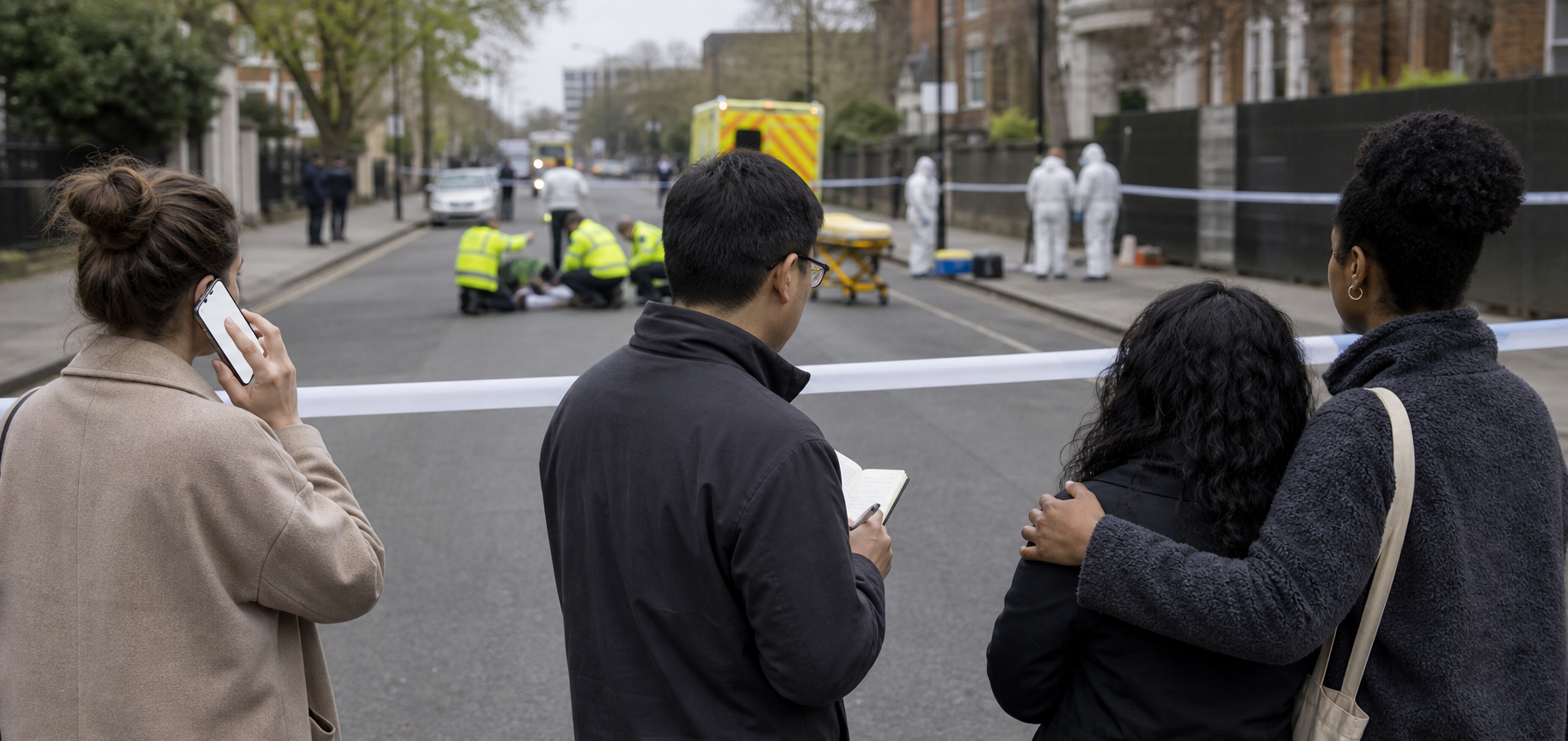
You may be following the matter as a concerned citizen, reporting on it, supporting a threatened creator, or helping a community respond. Your conduct can either protect the evidentiary process or add noise that becomes difficult to undo.
If you read, publish, or share updates
- Keep allegation language intact. Do not turn suspected, alleged, or police say into committed, confessed, or proved.
- Separate the alleged stabbing, the link to each accused person, and the lawfulness of each encounter in every headline or discussion.
- Do not circulate graphic images. They can harm families, expose witnesses, inflame retaliation, and detach visual material from its verified time and place.
- Prefer a link to the original public statement or filed record over a cropped screenshot. Record who issued it and when.
- Correct false information in the same channel where you amplified it. Quietly deleting a viral claim does not reach the people who already absorbed it.
- Wait for named forensic or inquiry findings before declaring that a weapon, video, or medical result proves the whole case.
If you are a witness, relative, or threat target
- If danger is immediate, move to a safer location and contact the police through 112. Do not confront the suspected threat.
- Preserve original messages, call logs, emails, voicemails, envelopes, and files. Do not crop, annotate, forward, or repeatedly convert the only copy.
- Write a dated account of what you personally saw or heard while your memory is fresh. Keep observation separate from later inference.
- Report specific threats and request an acknowledgement or reference number. A vague public complaint is harder to act on than a preserved threat with its account, timestamp, platform, and context.
- Limit real-time geotagging, vary exposed routines and routes, coordinate discreetly with venue organisers, review account access, and enable two-factor authentication.
- Use a qualified lawyer for decisions about statements, evidence submission, complaints, or court applications. Public commentary cannot substitute for advice based on the actual file.
Do not conduct your own confrontation, pursue a suspect, enter a restricted scene, or publish a witness’s identity. Those actions can create physical danger, expose someone to intimidation, and damage evidence. Preservation and lawful reporting are the safer contributions.
If you are helping lead a community response
Condemn the alleged stabbing and any proven intimidation clearly. Any use of the violent Sar Tan Se Juda slogan as a threat should be reported, investigated, and publicly rejected. Then draw an equally clear boundary against collective blame. Responsibility belongs to people whose conduct can be proved, not to an entire faith, neighbourhood, language group, or family name.
This is where ahimsa, samvad, and karuna become practical disciplines. Ahimsa rejects intimidation and retaliatory violence. Samvad keeps disagreement within speech and lawful civic action. Karuna protects victims, families, frightened witnesses, and uninvolved neighbours without confusing compassion with impunity.
A Dharmic commitment to nonviolence is not passivity before aggression. It supports firm protection, careful investigation, proportionate force, and punishment after proof. It also refuses to let justified concern for Hindu safety become permission for rumour, vengeance, or unreviewable state power. Accountability strengthens the legitimacy of law enforcement because a verified police action is more durable than a partisan presumption.
Key takeaways
- Treat the original alleged crime, the evidence against each suspect, and each police encounter as separate matters requiring separate proof.
- An official account begins the investigation; it does not complete it.
- Look for convergence among scene documentation, chain of custody, ballistics, medical findings, digital records, and voluntary testimony.
- Use FIR registration, independent investigation, magisterial scrutiny, necessity, proportionality, and traceable disclosure as your accountability checklist.
- Protect threatened speakers through rapid reporting, evidence preservation, route and venue precautions, reduced location exposure, and professional legal help.
- Condemn targeted violence without assigning collective guilt. Security with due process is a stronger position than choosing one at the expense of the other.
As the case develops, watch for the inquiry record, independent forensic results, protected witness evidence, and the final investigative report. Update your judgment only when the status of the evidence changes. The habit worth carrying into every future encounter case is simple: ask what supports each claim, who tested it independently, and which required checkpoint has actually been completed.
References
