
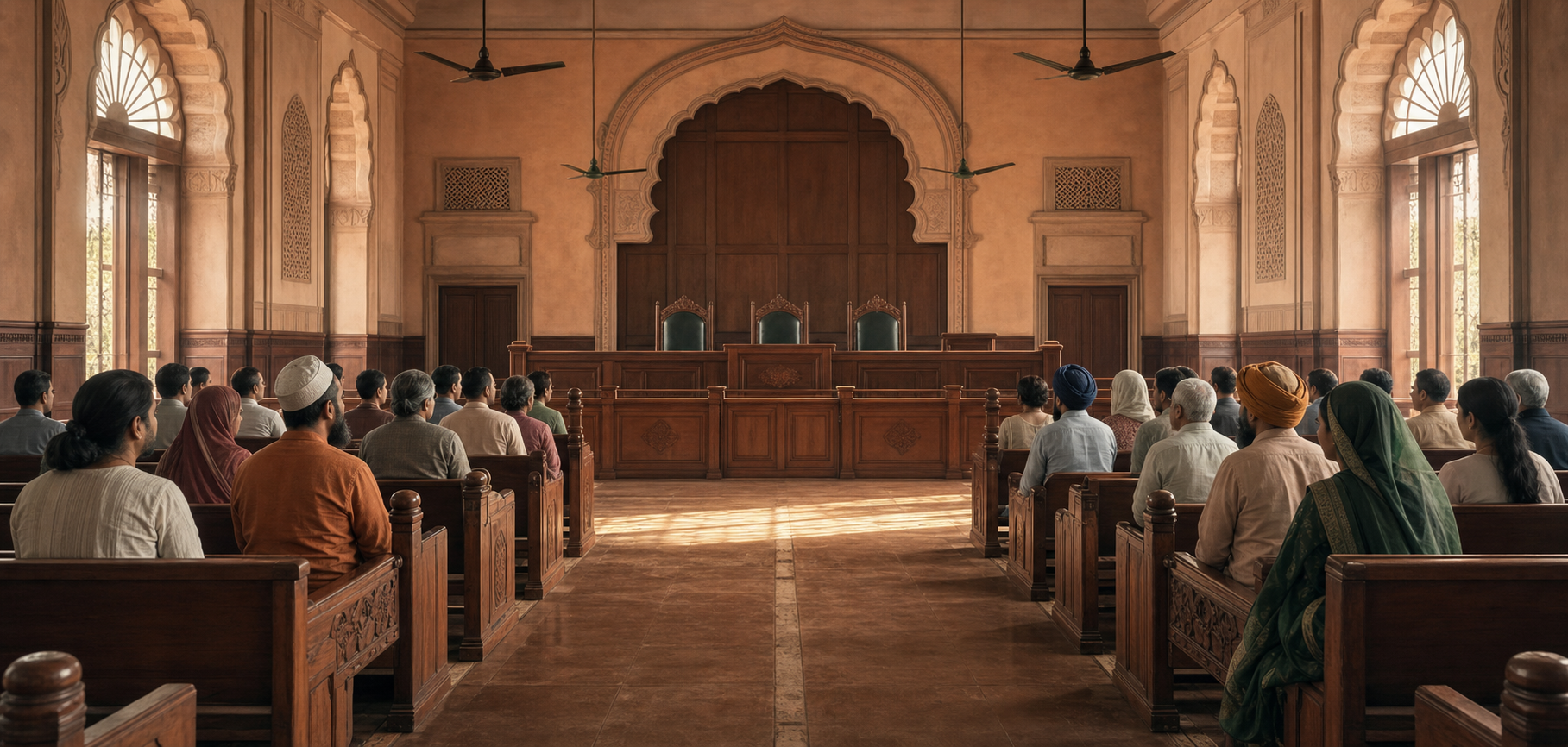
Religiously sensitive disputes often arrive in court wrapped in public anger, political pressure, and claims about constitutional rights. The two source reports considered here concern very different controversies, yet together they clarify what courts are supposed to separate: belief from regulated conduct, allegation from proof, and legal judgment from social approval.
That separation is the practical safeguard. It permits serious attention to religious freedom and community dignity without giving any practice immunity from ordinary law or allowing public emotion to substitute for evidence.
Different controversies, one demand for legal discipline
The report on Bombay High Court proceedings says the court directed the Maharashtra government to report on action against noise pollution from mosques and made clear that illegal loudspeakers cannot be claimed as a fundamental religious right. The article presents the dispute as an enforcement question: worship remains protected, but mechanical amplification must comply with permission requirements, noise limits, and rules governing its use.
The report on the Telangana special court concerns a different judicial task. It says MLA T. Raja Singh was acquitted in a case arising from alleged 2022 remarks about Prophet Mohammad because the prosecution did not substantiate the charges. On that account, the decisive issue was not whether the controversy had caused anger, but whether legally acceptable evidence proved the alleged offence.
These outcomes should not be compressed into a single slogan about courts and religion. The Bombay matter, as reported, concerns limits on the manner in which a religious activity affects others. The Telangana matter concerns the evidentiary foundation required before the state may impose criminal punishment. One tests the reach and enforcement of a generally applicable regulation; the other tests the prosecution’s proof.
Protected belief does not constitutionalize every method

The loudspeaker dispute illustrates the difference between a protected religious purpose and the particular instrument used to advance it. According to the source, the court relied on the view that loudspeakers are not integral to religious practice and that prayer cannot claim protection when amplified sound unlawfully disturbs other people. The report also notes that Article 25 protects religious profession and practice subject to public order, morality, health, and other constitutional provisions.
This distinction matters because amplified sound crosses property boundaries. The source places homes, schools, hospitals, places of worship, and workplaces within the same urban soundscape and describes noise as a shared environmental and health concern. On that reasoning, regulation addresses the external effect of amplification rather than the legitimacy of the prayer or belief behind it.
The broader principle is neutral in form. As the loudspeaker article argues, the same standards should govern mosques, temples, gurdwaras, churches, processions, political rallies, weddings, festival stages, and commercial events. Selective enforcement would turn an otherwise civic rule into a source of distrust. Consistent enforcement instead communicates that no religious or non-religious institution is exempt from laws protecting shared space.
An acquittal answers a legal charge, not every social question
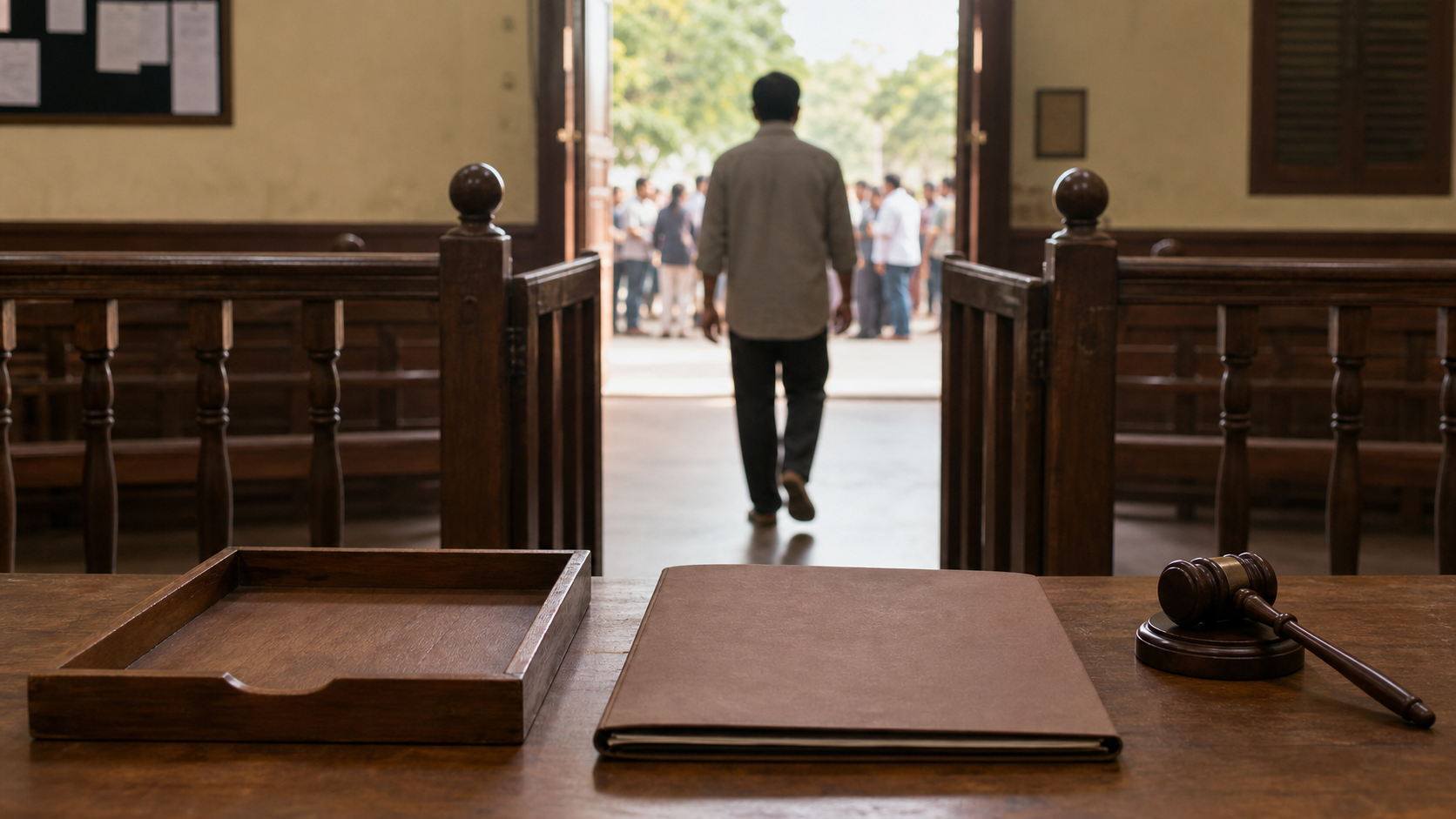
The Telangana report highlights a second distinction: failure to prove criminal liability is not the same as judicial endorsement of the disputed speech. The source says the prosecution did not meet the necessary evidentiary threshold. That finding resolves the legal case described in the report, but it does not require society to abandon ethical debate about political rhetoric, religious sensitivity, or responsible expression.
The article situates the dispute between Article 19(1)(a), which protects freedom of speech and expression, and the restrictions permitted under Article 19(2). It also identifies the kinds of questions that can become decisive in a speech prosecution: what was said, whether the accused made the statement, whether a recording or reproduction is authentic and complete, what context surrounded it, and whether the evidence establishes the ingredients of the charged offence.
Those inquiries are not indulgences granted to a prominent accused. They are protections that should apply to a public representative, journalist, activist, religious leader, or ordinary citizen alike. An emotionally powerful allegation may justify careful investigation, but its seriousness cannot repair missing proof. Conversely, political influence should not make a well-supported allegation disappear. Due process requires the court to resist both pressures.
Neutrality requires restraint from every institution

Read together, the reports show that judicial neutrality has two directions. Courts may uphold lawful restraints when conduct creates a regulated public impact, as the loudspeaker article describes. They must also restrain the punitive power of the state when a prosecution cannot establish its case, as the Telangana article reports. Religious sensitivity does not eliminate either responsibility.
The same logic assigns distinct duties across the legal system. Administrators must enforce permissions and limits consistently rather than acting only after a controversy becomes politically prominent. Investigators and prosecutors must preserve reliable material and connect it to the legal elements of an alleged offence. Courts must examine the resulting record without treating community anger, online circulation, or political allegiance as a substitute for law.
Public discussion also benefits from precise language. Saying that an unauthorized loudspeaker lacks constitutional protection does not mean that the underlying religion lacks protection. Saying that an accused person was acquitted for want of substantiated charges does not establish that every disputed statement was wise, respectful, or socially harmless. Accuracy about what a judgment does and does not decide reduces the risk that narrow rulings will be converted into sweeping communal claims.
Key takeaways for reading sensitive court rulings
- Identify the judicial question before interpreting the outcome: regulation of conduct and proof of criminal liability are different inquiries.
- Separate the protected religious or expressive interest from the particular method, external effect, or alleged offence under review.
- Treat an acquittal as a finding about the prosecution’s case, not automatically as approval of the disputed conduct or speech.
- Assess neutrality through consistent enforcement and consistent procedural protection across communities and political affiliations.
- Distinguish the court’s legal conclusion from the ethical and civic responsibilities that remain after judgment.
Future disputes will remain contentious, but clearer enforcement records, stronger evidence, and careful descriptions of judicial findings can keep religious sensitivity from overwhelming legal analysis. Courts are most credible when they protect devotion, expression, public peace, and due process through the same disciplined commitment to law.
References
- DharmaRenaissance Blog — Bombay High Court’s Powerful Stand: Illegal Loudspeakers Are Not Religious Rights
- DharmaRenaissance Blog — Telangana Court Acquits T. Raja Singh: Powerful Lessons in Due Process and Proof