

The reported damage to the Beeralingeshwara murti in Amblikoppa, Dharwad taluk, raises a practical question that extends beyond one village: what must sacred-site security protect when a shrine is simultaneously a place of worship, a cultural landmark and part of everyday community life?
The available account supports concern and a demand for investigation, but it does not establish an offender or motive. A useful response must therefore hold two principles together: the religious injury should be taken seriously, and accountability must remain evidence-based.
Key takeaways
- Local reports summarized by the source describe damage to a regularly worshipped Beeralingeshwara murti on the outskirts of Amblikoppa and a protest by distressed villagers.
- The identity and motive of the offender, the precise time and extent of the damage, and the status of any complaint or arrest were not established in the supplied material.
- Shrine security should protect worshippers, the murti, ritual continuity, physical evidence and community trust rather than relying on a camera or barrier alone.
- A credible response combines prompt investigation and proportionate safeguards with restraint, accurate public communication and decisions by the shrine’s custodians about ritual restoration.
What the Amblikoppa record establishes – and leaves open
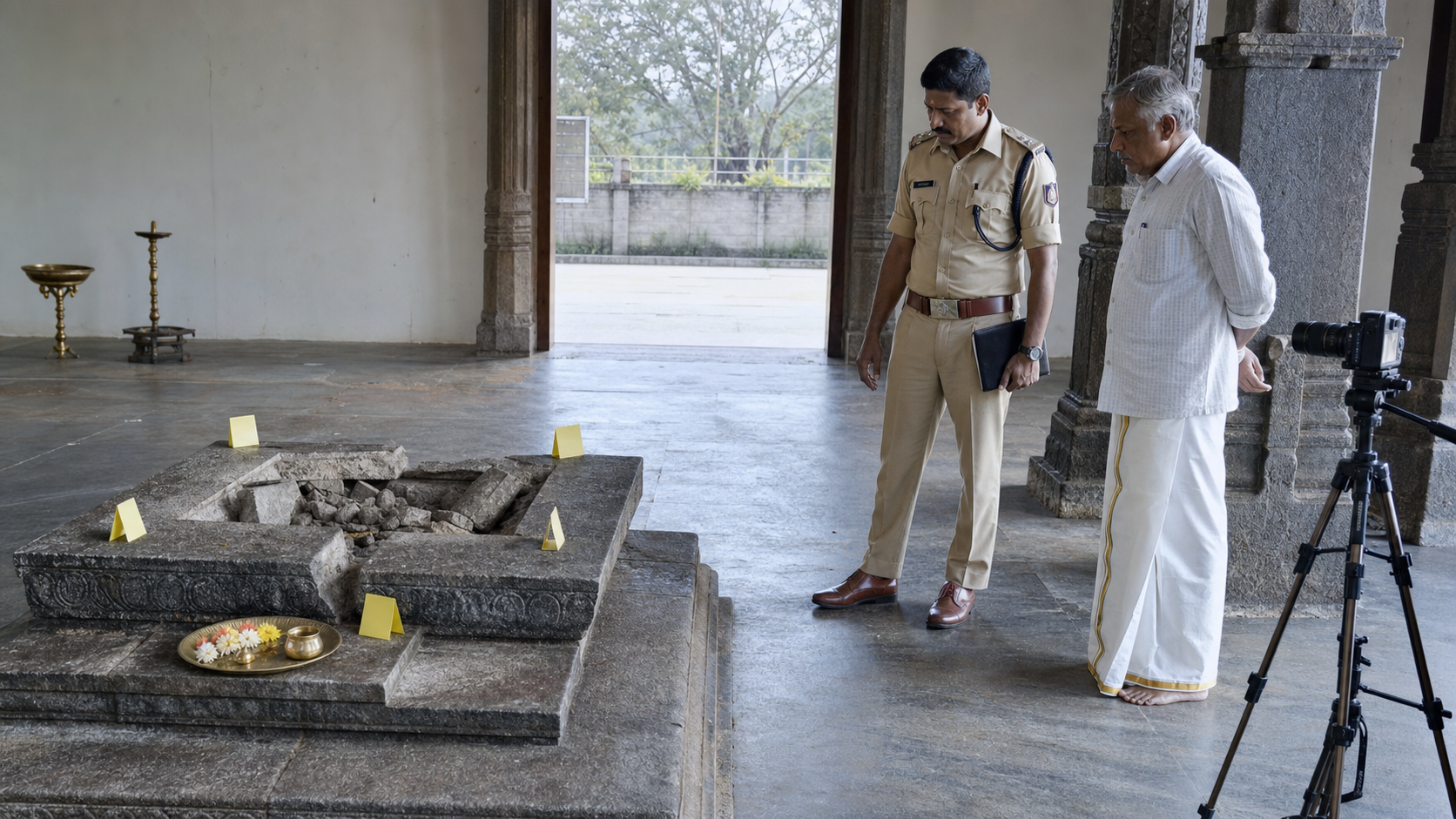
The supplied DharmaRenaissance Blog article brings together local coverage attributed to Prajavani, PublicNext and Kannada Prabha. According to that account, unidentified persons reportedly damaged a murti of Lord Beeralingeshwara at a devotional site on Amblikoppa’s outskirts. Villagers regularly offered prayers there, and one report described the murti as approximately 14 years old. Residents subsequently gathered to condemn the act and seek stringent legal action.
The deity’s name appears in the underlying coverage through several English transliterations, including Beeralingeshwara, Beerulingeshwara, Birlingeshwara and Biralingeshwar. The supplied article treats these as variations in rendering a Kannada name rather than evidence of several deities or locations. Beeralingeshwara is used here for consistency.
Equally important is what the record does not show. The supplied material does not identify an offender, determine a motive or specify the exact time of the incident. It also does not establish the murti’s material, the complete extent of the damage, the contents of a police complaint or whether anyone has been arrested. Those gaps are not minor editorial qualifications: they define the boundary between legitimate concern and an unsupported accusation.
Devotees can reasonably experience damage to a worshipped murti as an assault on their religious life even while investigators remain uncertain about criminal intent. Religious impact and legally provable motive are different questions. A responsible public account can recognize grief, disrupted worship and fear of recurrence without assigning blame to an individual or community before evidence supports it.
Sacred-site protection involves more than guarding property
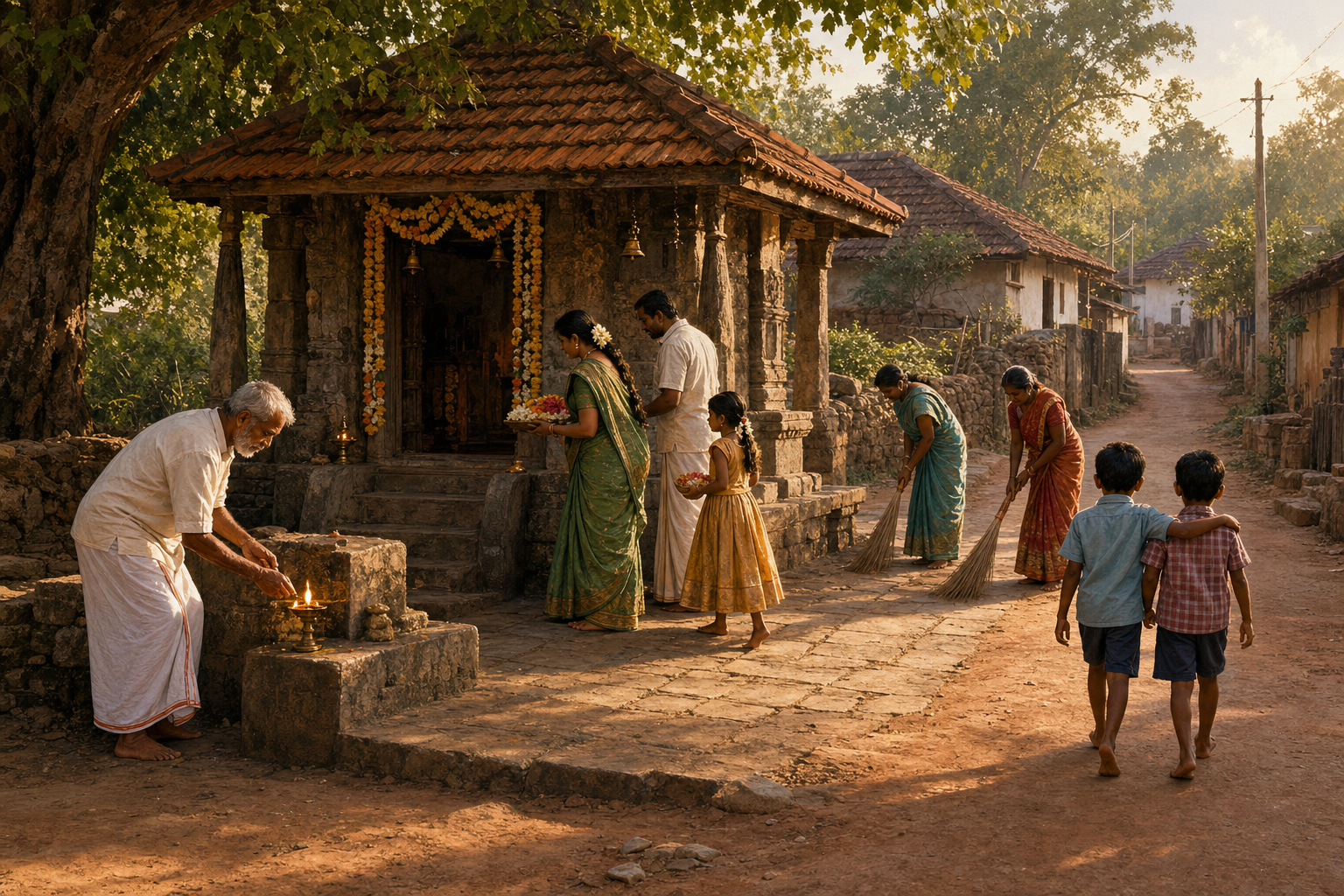
A security plan designed only around replacement value will misunderstand the object being protected. Within diverse Hindu traditions, a murti may be approached as a locus of divine presence through which worship and darshan occur. The precise consecration and ritual status of the Amblikoppa murti have not been reported, so those questions belong to the shrine’s custodians. Even so, regular devotional use makes disruption of worship a relevant form of harm alongside physical damage.
The supplied article also places Beeralingeshwara worship in a wider Karnataka context. Citing Karnataka Tourism, it notes an association between Dollu Kunitha and the worship of Sree Beeralingeshwara, understood in that tradition as a form of Lord Shiva, as well as links to Kuruba Gowda ritual traditions in North Karnataka. This background helps explain how worship may carry cultural memory through festivals, processions, music and collective participation. It does not prove that every Amblikoppa devotee shares the same community identity or ritual practice.
A village shrine can acquire significance through repeated presence rather than monumental scale or great age. A site passed during ordinary journeys and visited for prayer becomes part of a community’s mental and devotional map. Damage may consequently affect several connected interests: personal safety, access to worship, the integrity of the sacred object, confidence that the site will remain available and trust that authorities will respond impartially.
Indian jurisprudence can, in appropriate property-law circumstances, recognize a Hindu deity or murti as a juristic person represented by human custodians. As the source cautions, that doctrine serves defined legal and institutional purposes; it neither decides theology nor establishes the ownership, endowment status or legal personality of this particular shrine. The practical lesson is narrower: security planning should begin by identifying who is authorized to care for the site, make ritual decisions, retain records and communicate with public authorities.
A proportionate security architecture for a living shrine

The following framework is a general model, not a claim about measures already present or planned at Amblikoppa. Its aim is to reduce vulnerability without turning an accessible place of worship into an unwelcoming enclosure.
Document responsibility and normal conditions
Custodians and community representatives can first establish who opens, closes, maintains and inspects the site, as well as whom residents should contact when something appears wrong. A basic condition record, prepared with custodial consent, can document the murti and its immediate setting for maintenance and evidentiary purposes. Sensitive information about weak points, keys or periods of low activity should not be distributed publicly.
This baseline should respect both formal authority and lived use. Ownership documents, endowment arrangements and ritual responsibility may not rest with the same person. Clarifying each role before an incident reduces confusion over who may authorize repairs, give information to police or decide when worship can resume.
Use layered and maintainable deterrence
Physical measures should be selected according to the site’s setting, patterns of access and ritual requirements. Useful options can include adequate lighting, clear sightlines, regularly checked gates or low barriers where appropriate, visible contact information and reliable upkeep. Informal community observation can complement these measures, but it should not become vigilantism or intrusive scrutiny of legitimate visitors.
Cameras may assist deterrence and later investigation, but they are not a complete security system. Their value depends on placement, lawful and respectful use, dependable power, image quality, secure retention and someone being responsible for maintenance. A non-functioning camera can create false confidence, while careless circulation of footage can inflame suspicion or compromise an investigation.
Prepare an incident protocol before it is needed
When damage is discovered, the initial priorities are human safety, notification and preservation of the scene. Unless immediate danger requires intervention, people should avoid handling displaced material or crowding the affected area. Custodians and police should be informed promptly, while witnesses record only what they personally observed and keep speculation separate.
Public communication should confirm the minimum verified facts, identify an authorized contact and state clearly what remains unknown. Names, communal allegations and purported motives should not be circulated merely because they appear in messages or informal conversation. Fast communication is useful only when it prevents confusion rather than amplifying it.
Coordinate physical and ritual recovery
Forensic examination, physical repair and ritual restoration are related but distinct processes. Investigators may need the scene preserved, craftspeople may need to assess the damage, and the custodians may determine whether purification, repair, replacement or re-consecration is appropriate. Coordination can prevent well-intentioned cleaning or reconstruction from destroying evidence or bypassing the community’s ritual authority.
After immediate needs are addressed, an incident review can examine how the site was accessed, which safeguards worked, where communication failed and what changes are sustainable. The objective is not maximum fortification. It is dependable protection proportionate to the shrine’s circumstances and compatible with worship.
Accountability requires urgency, evidence and civic restraint
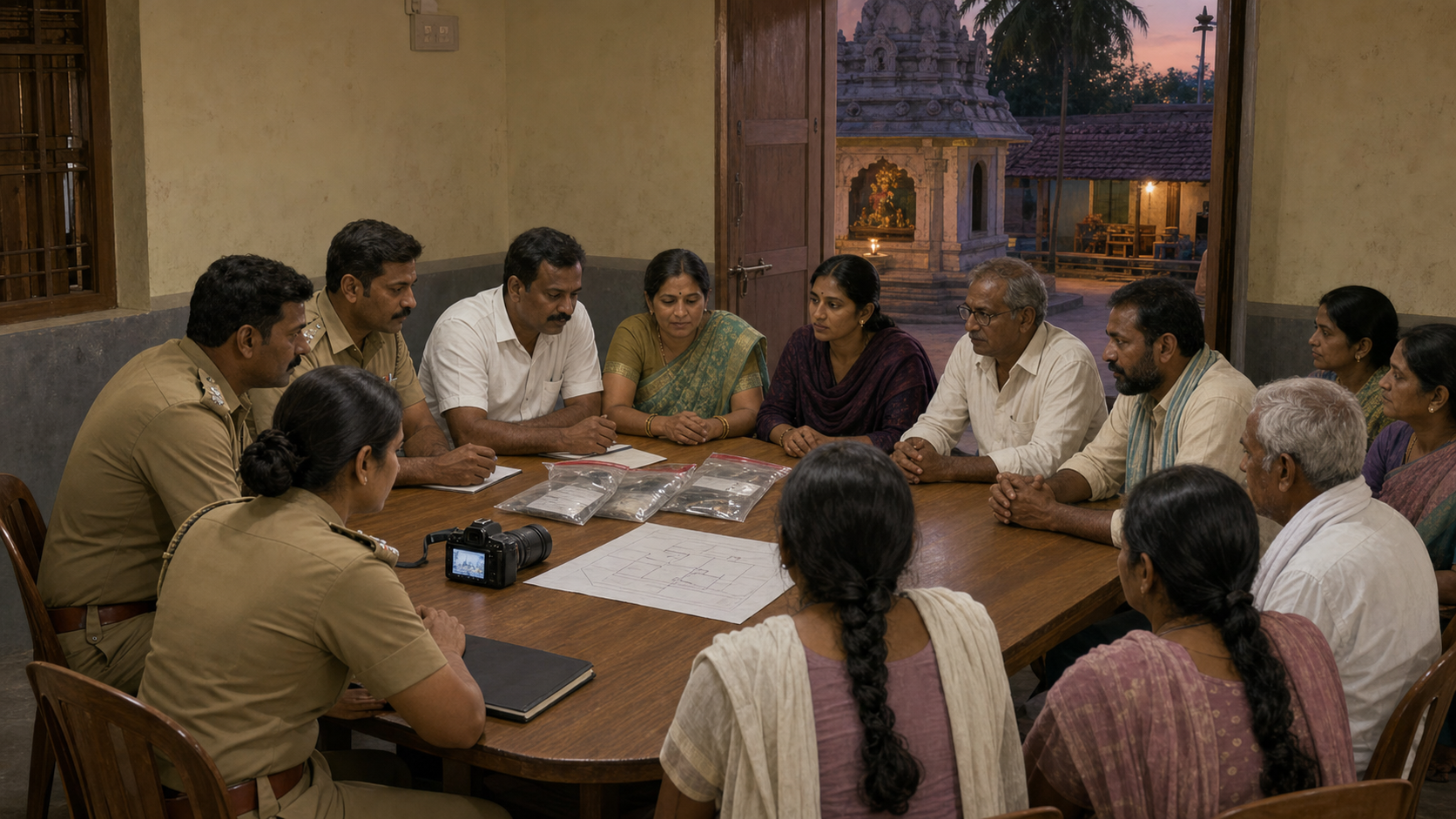
The constitutional and criminal-law discussion in the supplied source shows why sacred-site protection is both a religious-freedom issue and an ordinary duty of public administration. Articles 25 and 26 of the Constitution protect religious practice and religious institutions subject to constitutional limits including public order, morality and health. Protecting a Hindu shrine should therefore be understood as part of the state’s impartial responsibility toward lawful religious life, not as a discretionary concession.
The source identifies Section 298 of the Bharatiya Nyaya Sanhita, 2023, as addressing destruction, damage or defilement of a place of worship or an object held sacred when the required intention or knowledge is proved. It reports that the provision allows imprisonment of up to two years, a fine or both. It also discusses Section 324 on mischief and Section 299 on deliberate and malicious acts intended to outrage religious feelings. The applicability of any provision to Amblikoppa depends on admissible evidence and proof of its particular elements; the incident description alone cannot settle that question.
Prompt action and due process reinforce each other. Timely scene protection, witness accounts and properly retained recordings can improve an investigation, while premature claims can misdirect attention and expose uninvolved people to suspicion. A demand for stringent action is strongest when it means diligent investigation and punishment supported by proof, not a predetermined conclusion.
Peaceful collective action also has a legitimate role. Villagers can express grief, seek information and insist that the site’s religious significance be recognized. Discipline, rejection of retaliation and respect for lawful procedure protect the moral force of that demand and reduce the risk that a second injustice will follow the first.
The constructive next step for any similarly situated shrine is a locally owned security and response plan developed by custodians, devotees and relevant authorities. If that plan preserves openness to worship while improving documentation, deterrence, evidence handling and ritual recovery, sacred-site security can become a durable civic practice rather than a temporary reaction to damage.