

A family WhatsApp thread, campus debate or community meeting turns tense as soon as someone asks what Dharmic unity should mean. One side treats unity as agreement on everything. Another fears that any common identity will erase the distinct teachings of Hinduism, Buddhism, Jainism and Sikhism. You do not have to accept either choice.
You can affirm a particular spiritual path, recognize civilizational kinship with other Dharmic traditions and uphold equal Indian citizenship at the same time. The practical test is whether your idea of unity produces more truthfulness, service and trust – or merely a larger camp from which to distrust other people.
Keep three kinds of identity in their proper place

Confusion begins when three different kinds of belonging are forced into one label. A clearer approach distinguishes religious commitment, Dharmic kinship and civic membership.
- Your religious or philosophical path concerns doctrine, discipline, worship, authority and liberation. A Vaishnava need not abandon Vaishnava theology. A Sikh need not reinterpret the Guru Granth Sahib to fit a generic spirituality. Buddhists, Jains, Shaivas, Shaktas and other communities retain their own teachings, institutions and internal debates.
- Dharmic kinship concerns the civilizational space in which these paths have encountered one another. It permits cooperation without pretending that every tradition defines dharma, karma, liberation, non-violence or authority in exactly the same way.
- Indian civic identity concerns equal membership in a constitutional polity. It includes citizens who identify with a Dharmic tradition, citizens of other faiths and citizens with no religious affiliation. Civic rights cannot depend on accepting somebody else’s theology or cultural symbolism.
Before entering a disagreement, identify which layer is actually at issue. A debate about the nature of the self belongs primarily within philosophy and theology. A joint food-distribution effort belongs in the field of intercommunity cooperation. Access to a public institution belongs in the civic field, where equal treatment is the governing standard. Many needless conflicts arise because a doctrinal answer is imposed on a civic question, or because civic neutrality is mistaken for a demand that religious communities dilute their convictions.
This distinction also prevents a common error in discussions of Hindu unity. A stronger Hindu society does not require every sampradaya to become culturally interchangeable. Nor does solidarity among Dharmic communities require Buddhists, Jains or Sikhs to accept a label they do not use for themselves. Durable unity respects self-description. It asks communities to cooperate through consent, not classification.
Turn shared values into observable civic habits
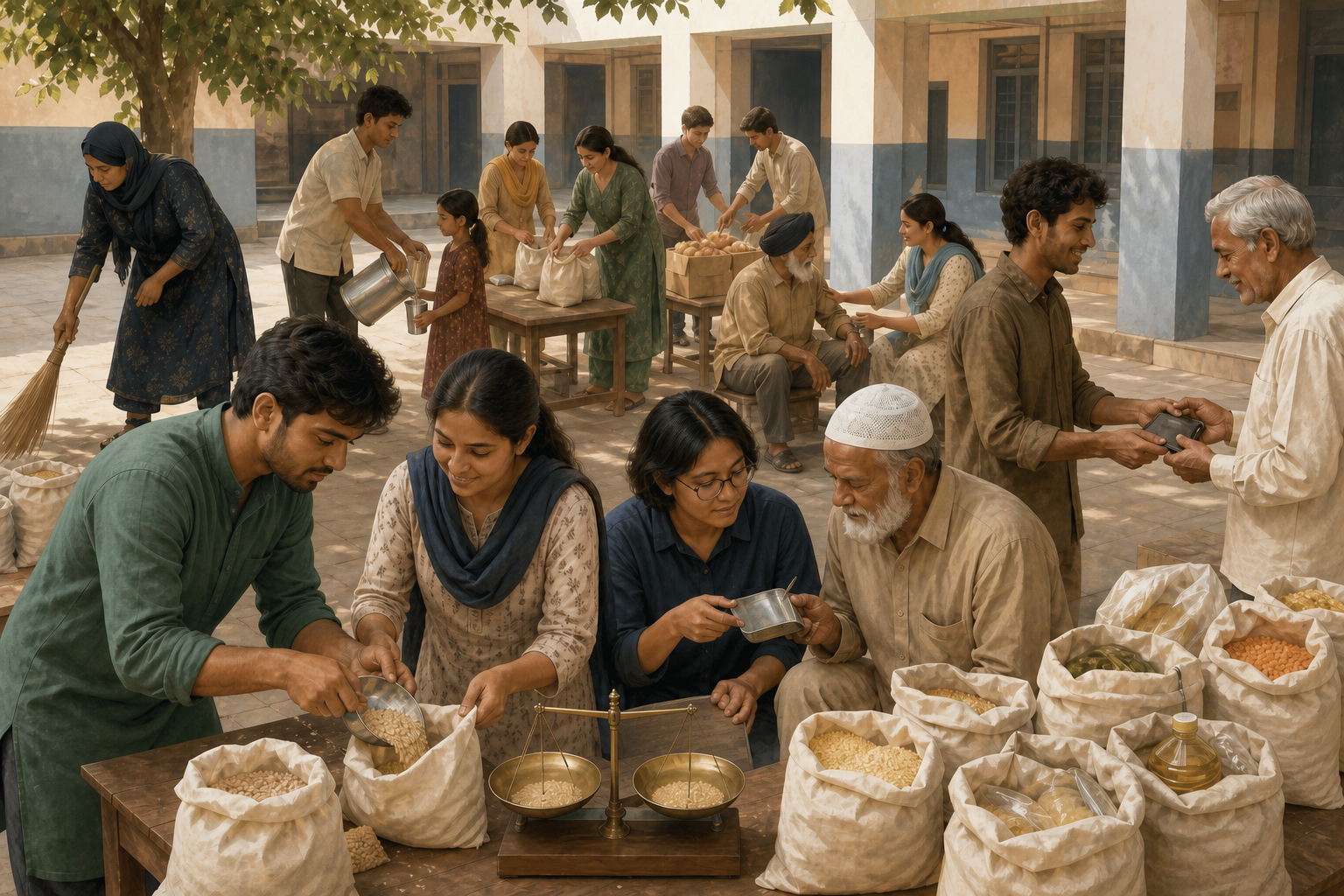
Words such as satya, ahimsa, seva, karuna and samvaad can provide a shared ethical vocabulary. They should not be used to claim that four complex traditions are secretly identical. Their meanings and doctrinal importance vary. Their civic value lies in what they ask participants to do.
- Satya: Verify a claim before repeating it. Apply the same standard to information that favors your group as you apply to information that harms it.
- Ahimsa: Reject physical intimidation, but do not stop there. Public humiliation, dehumanizing labels and reckless accusations can prepare the ground for further harm.
- Seva: Work together on a need that no organization can honestly monopolize – meals, tutoring, disaster assistance, elder support or neighborhood cleanliness.
- Karuna: Ask what fear, injury or memory is shaping the other person’s response before assuming malice. Understanding a response does not oblige you to agree with it.
- Samvaad: Create a conversation in which people can disagree, request evidence, correct errors and leave without being declared enemies.
A value becomes credible when it constrains your own side. Satya that exposes only an opponent’s falsehood is factional convenience. Ahimsa that condemns an adversary’s aggression but excuses threats from an ally is branding. Seva that turns beneficiaries into props is publicity. The discipline of applying a principle inwardly is what converts moral language into civic character.
You can test a proposed unity initiative with three questions. What will participants do together? Which differences are they free to retain? What conduct will be unacceptable even when it benefits the organizers’ preferred side? If the answers are vague, the initiative is probably seeking emotional alignment rather than dependable cooperation.
Practice vigilance without manufacturing suspicion
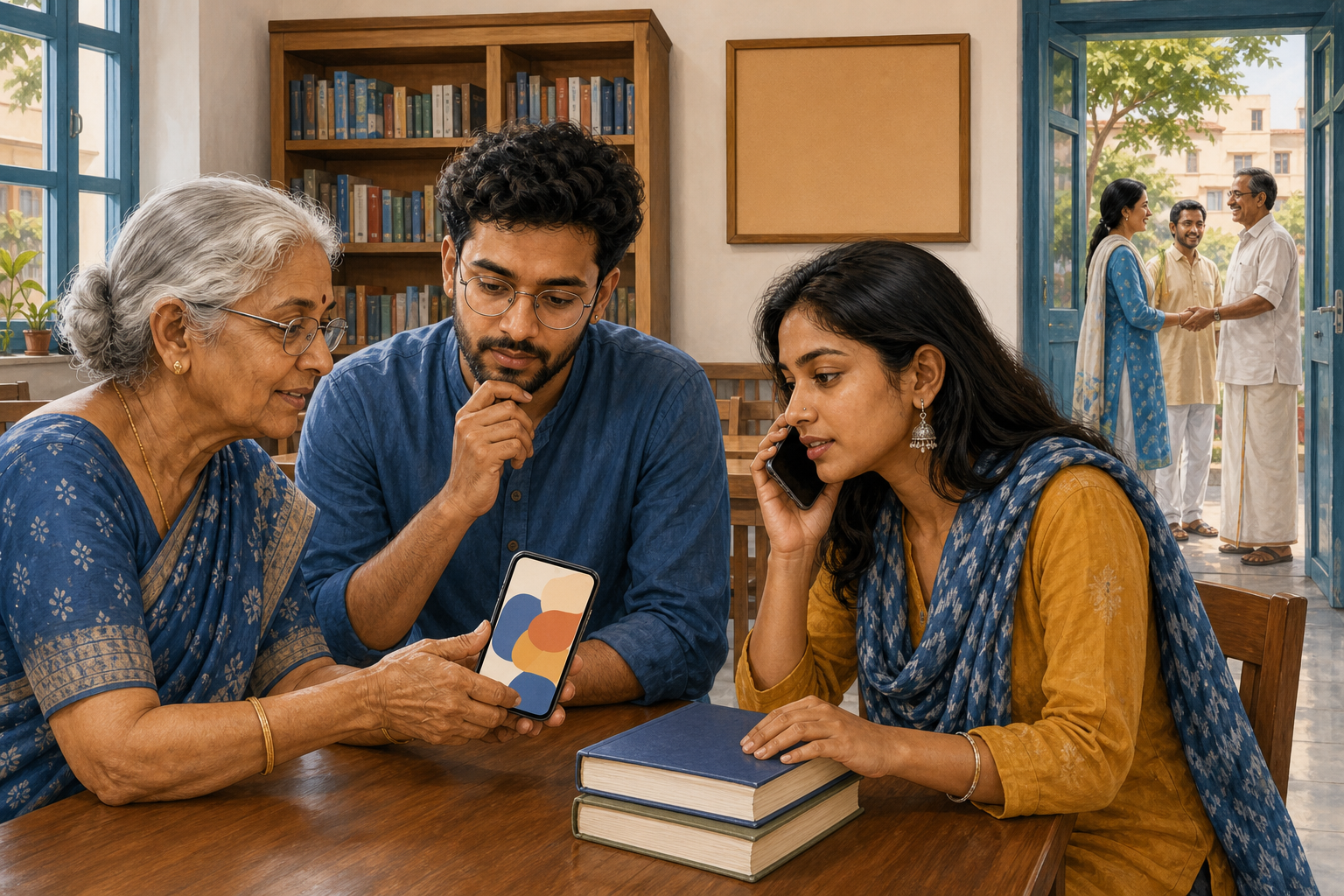
Communities have legitimate reasons to protect institutions, preserve traditions and notice organized hostility. The danger begins when vigilance ceases to be a method and becomes a mood. In that mood, an unfamiliar person looks guilty, a cropped video becomes proof and an unverified message feels urgent because it confirms an existing fear.
Constructive vigilance separates verified facts from rumor and channels concern into dialogue, mentorship, seva and neighborhood peace work. That is more demanding than forwarding a warning, but it is also more protective. Rumor consumes trust inside the community it claims to defend.
Use this five-step check before sharing a communal allegation:
- State the exact claim. Remove the commentary and ask what event is actually alleged to have happened.
- Find the earliest available evidence. A screenshot of another message is not an origin. For a video, look for the fuller recording, location and context rather than relying on its caption.
- Separate observation from interpretation. A recording may show words or actions. It does not automatically establish the motive, identity or organization attributed to the people involved.
- Mark the claim honestly. Use three categories: verified, unresolved or false. Do not quietly treat unresolved as probably true.
- Correct through the same channel. If you sent a false or misleading claim to a group, send the correction to that group. A private change of mind does not repair a public error.
Do not convert one person’s misconduct into a verdict on an entire religious, linguistic or caste community. Deal with the individual act, the available evidence and any institution demonstrably involved. Collective blame may feel like alertness, but it makes innocent neighbors responsible for conduct they neither committed nor controlled.
Leadership carries a stricter duty. An administrator of a temple group, gurdwara committee, sangha network or youth organization should establish a simple rumor protocol before a crisis: who verifies a claim, who contacts the institution concerned, who speaks publicly and how a correction will be issued. Without that procedure, the most agitated person often becomes the unofficial spokesperson.
Build local unity that can survive disagreement
Unity built only for a rally or photograph disappears at the first serious disagreement. Local cooperation needs recurring work, named responsibilities and rules that remain in force when emotions rise.
A community can start with a four-week cycle:
- Week one – map the participants. Invite one reliable contact from the Dharmic institutions present locally. Where possible, include Hindu organizations of different sampradayas, a gurdwara, Jain and Buddhist groups, youth representatives and someone experienced in ordinary civic work. Ask each participant how the organization describes itself; do not assign an identity on its behalf.
- Week two – define one shared problem. Choose a concrete local need rather than drafting a grand declaration. Specify who is affected, what help is missing and what result the group can reasonably deliver.
- Week three – run one service action. Assign roles, a date, a budget if needed and a method for protecting beneficiaries’ dignity. Keep religious participation voluntary and do not attach partisan or conversion conditions to assistance.
- Week four – review conduct as well as output. Record what was completed, where coordination failed, whether any group was misrepresented and which commitment should continue next month.
The first project should be small enough to finish. A completed tutoring session with a clear follow-up date builds more trust than an ambitious conference that generates speeches but no shared responsibility. Scale after participants have learned how one another communicate, approve decisions and handle mistakes.
Give the group a short written charter. Five commitments are enough:
- We will not ask participants to blur or surrender their religious convictions.
- We will verify serious allegations before circulating them.
- We will not use collective blame or dehumanizing language.
- We will provide service without requiring religious or partisan conformity.
- We will respect equal citizenship, constitutional processes and peaceful disagreement.
Then create the less visible mechanisms that make those promises real: rotating facilitation so one institution does not permanently control the agenda; a contact tree for urgent verification; youth mentorship that joins cultural learning to public service; and a neighborhood peace committee that already knows whom to call when tension rises. These are practical forms of ethical leadership, community trust and shared responsibility.
Measure the quality of the relationship, not just attendance. Did participants return after the first event? Was a factual correction accepted without a rupture? Did smaller communities have meaningful roles? Was the promised task completed? Could participants disagree on doctrine without withdrawing cooperation? Those questions reveal whether unity has acquired institutional depth.
Let national symbols invite belonging, not police it
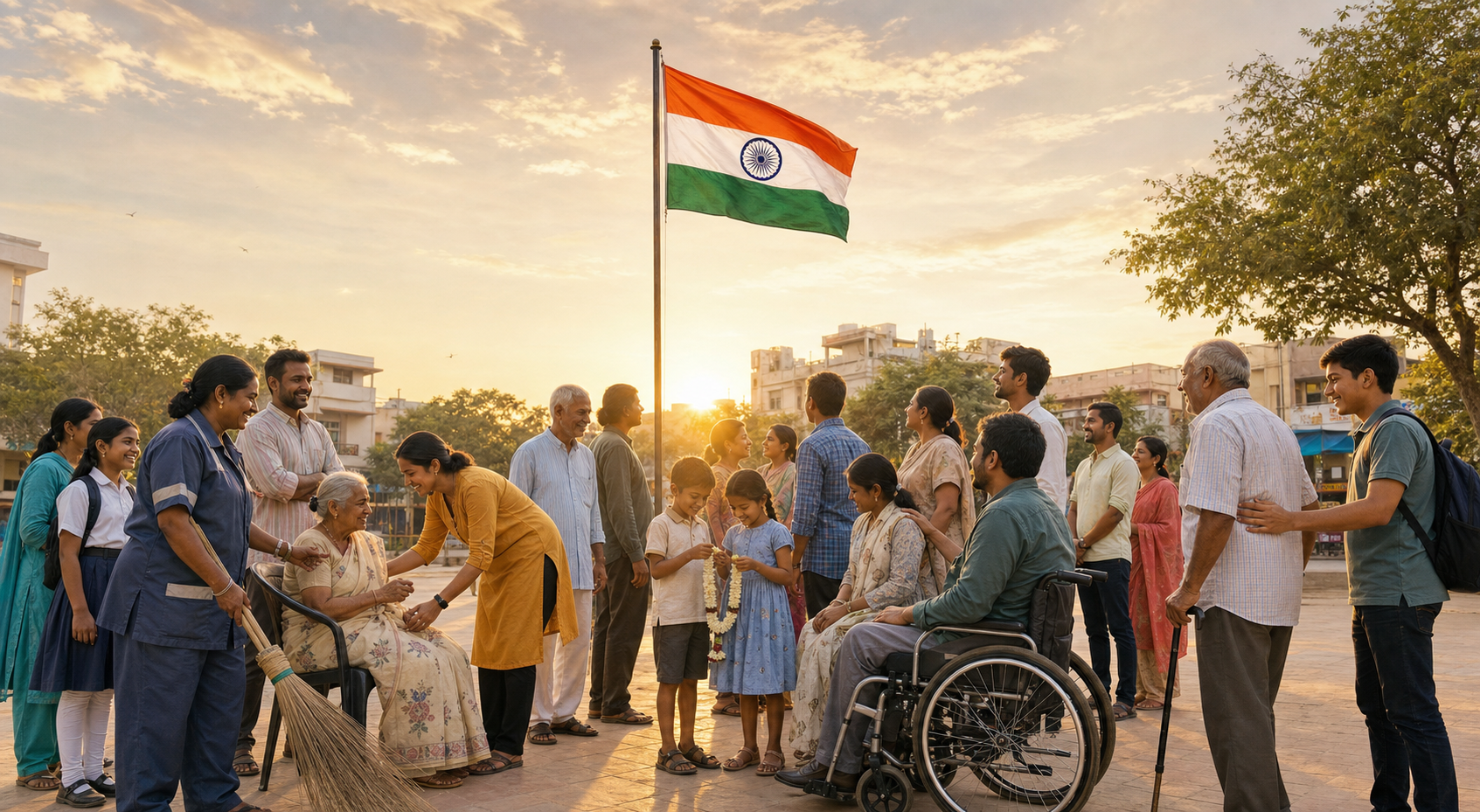
Indian civic identity also lives through songs, stories and public memory. Vande Mataram offers a useful example because it carries devotion, anticolonial courage and constitutional recognition. It was composed around 1875, incorporated into Anandamath in 1882, sung by Rabindranath Tagore at the Indian National Congress in 1896 and carried into the Swadeshi movement of 1905. In 1950, the Constituent Assembly adopted its first two stanzas as the National Song.
A symbol with that history deserves context rather than casual deployment. It can evoke the motherland as a nurturing civilizational home and recall people who used song to sustain courage under colonial rule. Yet no public symbol strengthens unity when it is turned into a trap: perform enthusiasm in the prescribed way or have your belonging questioned.
If you are planning a school, civic or community observance, use five safeguards:
- Teach before performing. Explain when the song emerged, how it entered the freedom movement and why the first two stanzas hold constitutional recognition.
- Provide the text and a translation. Let participants understand what they are hearing rather than treating pronunciation as proof of patriotism.
- Distinguish civic meaning from compulsory theology. People may honor India while differing over devotional imagery and its place in their own practice.
- Do not convert visible participation into a loyalty test. A confident civic culture can explain its symbols without searching the room for suspects.
- Join remembrance to responsibility. Pair the ceremony with a service activity, constitutional discussion or local history session so patriotism is expressed through duty as well as performance.
The same method applies to other contested symbols. Establish the history accurately. State the civic purpose. Leave room for conscientious difference. Refuse intimidation from either side. A plural country does not become cohesive by emptying its inheritance of meaning; it becomes cohesive by sharing that inheritance without turning one interpretation into the price of citizenship.
Key takeaways
- Religious identity, Dharmic kinship and Indian citizenship overlap, but they are not interchangeable.
- Unity does not require doctrinal sameness or the imposition of an umbrella label on communities that describe themselves differently.
- Satya, ahimsa, seva, karuna and samvaad matter civically when they govern conduct, especially toward opponents and allies who are wrong.
- Vigilance should produce verification, correction and accountable institutions – not rumor, collective blame or permanent suspicion.
- National symbols unite most credibly when people receive historical context, freedom of conscience and an invitation to translate belonging into service.
At your next community meeting, resist the temptation to begin with a declaration about civilization. Begin with one shared task and a five-line charter governing how participants will speak, verify and serve. Complete the task, review it honestly and meet again. Indian civic identity becomes sturdy through that repeated practice: rooted people cooperating without pretending to be identical.
References
- Hindu Jagruti Samiti – Virat Hindu Dharmasabha: T. Raja Singh urges vigilant, compassionate unity across dharmic paths
- Hindu Jagruti Samiti – Vande Mataram at 150 (1875-2025): The stirring anthem that forged India’s unity
