
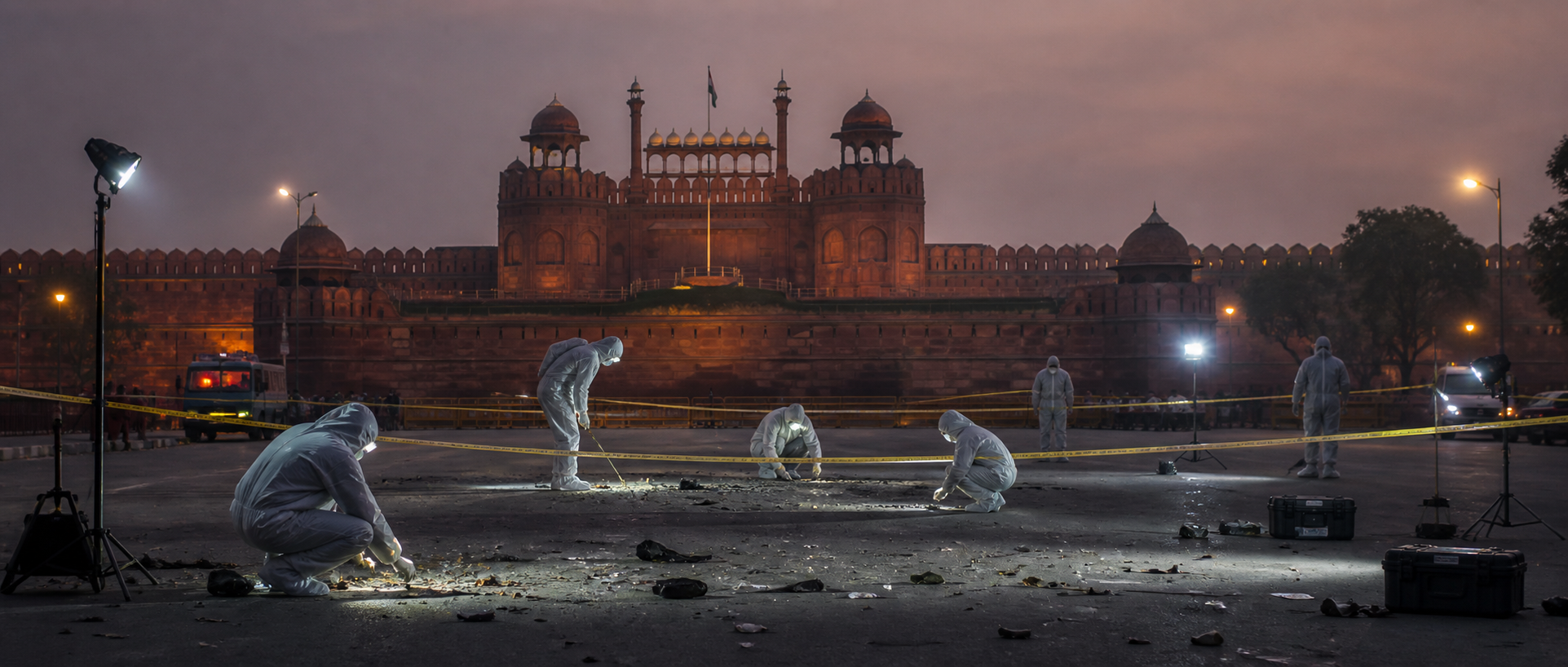
If you came looking for a clean answer about who carried out the Delhi Red Fort blast, the honest answer is that the public facts set out so far do not establish one. What they do support is a disciplined way to separate confirmed facts, investigative leads and claims that remain unproven.
The explosion occurred near the Red Fort, not necessarily within the monument itself. Preliminary reporting placed the death toll at at least nine and the number injured at around twenty. A case was registered under key provisions of the Unlawful Activities (Prevention) Act, or UAPA. Those facts establish the human scale and national-security seriousness of the incident. They do not, by themselves, establish the perpetrator, organisation, motive or method.
Start with an evidence ledger, not a ready-made narrative
The most reliable way to follow a terror investigation is to keep three columns in your mind: established, suspected and unresolved. Trouble begins when an investigative possibility is repeated as though it were already a forensic finding.
| Question | Present status | What the status does not prove |
|---|---|---|
| Where did the explosion occur? | In a high-footfall area near Delhi’s Red Fort. | Shorthand such as “Red Fort blast” should not be used to invent a more precise location. |
| What was the human cost? | At least nine deaths and around twenty injuries were reported preliminarily. | A preliminary count is not necessarily the final official total. |
| Why was UAPA invoked? | Investigators were treating a possible terror dimension seriously. | Invoking a law is not a judicial finding that any named person or group is guilty. |
| What does the circulated video show? | It appears to show a possible suspect in a car shortly before the explosion. | Appearance, identity, intent and responsibility still require authentication and corroboration. |
| How was the device triggered? | A suicide operation and remote triggering were among the possibilities being examined. | Neither mechanism had been established by the preliminary information. |
The UAPA decision matters because it signals a counterterrorism inquiry and enables a coordinated national-security response. It is still a procedural and legal step, not a substitute for evidence. You can demand urgency from investigators without pretending that urgency has already answered the central questions.
The same discipline applies to labels. Until attribution is supported by forensic, digital and testimonial evidence, a confident communal or ideological label is a claim, not a conclusion. Repeating it more often does not increase its evidentiary value.
A defensible case must turn fragments into one timeline
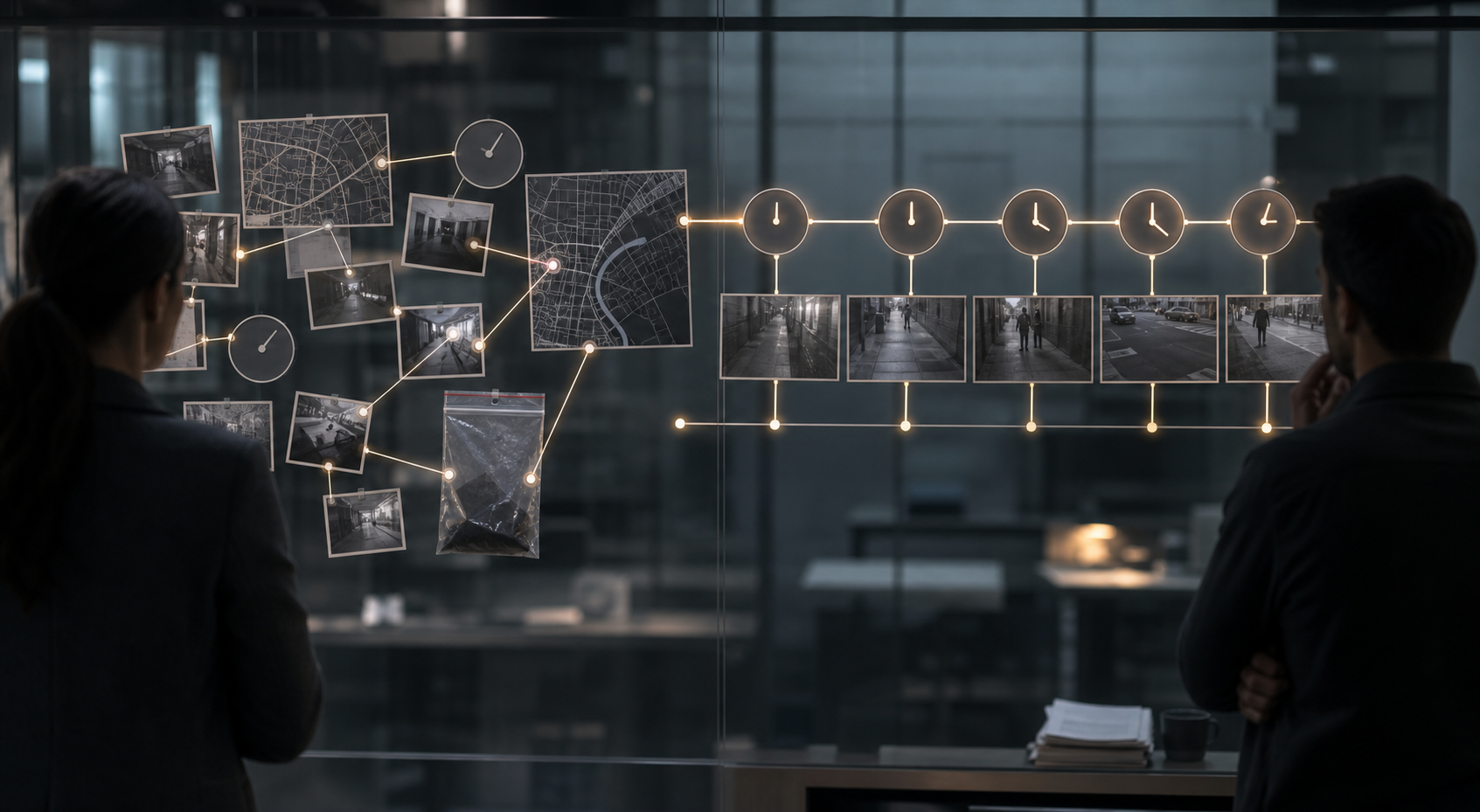
An explosion produces many fragments of information at once: damaged material, residue, vehicle debris, camera footage, phone records and witness recollections. None should be interpreted in isolation. A defensible conclusion emerges when independent lines of evidence converge on the same sequence.
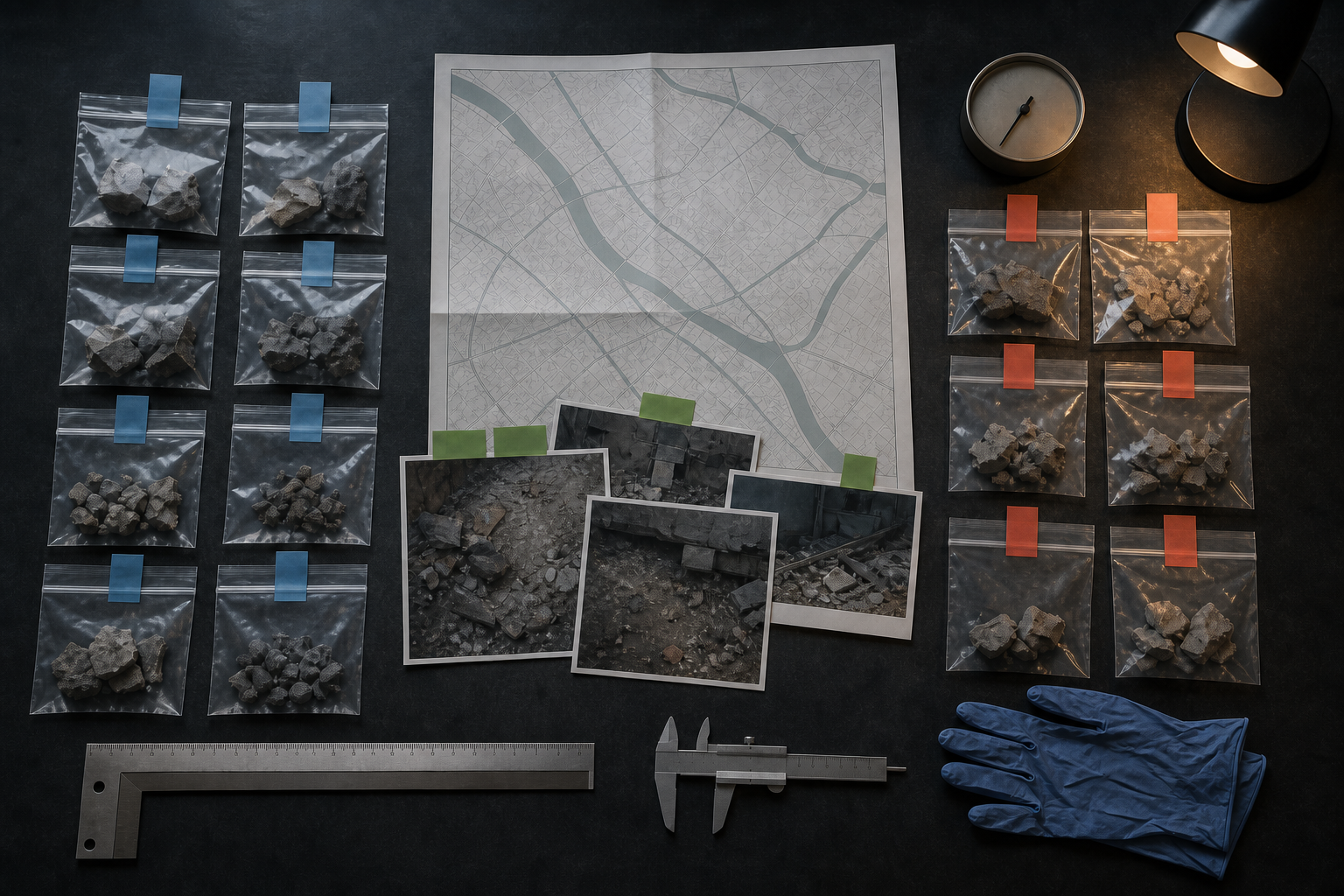
- Preserve and map the scene. Investigators must document where relevant objects were found before movement, weather, crowds or emergency work alter the scene. This protects both the inquiry and the rights of anyone later accused.
- Examine residue and device remnants. Chemical traces and surviving components can help narrow the nature of the explosion, the construction of the device and possible triggering method. A laboratory indication still needs to be connected to the wider timeline.
- Build a continuous CCTV sequence. One dramatic clip may show only seconds. Investigators need footage from before and after the explosion, ideally across multiple cameras, to establish movements, gaps and whether the clip’s time and location are authentic.
- Align communications data with physical events. Calls, messages and device-location information can reveal relevant contacts or coordination when lawfully obtained and properly contextualised. A contact entry or a device near a location is a lead; it is not automatic proof of participation.
- Test every claim against the whole record. A theory becomes stronger when the scene evidence, video chronology and communications pattern agree. If one line contradicts another, the contradiction must be resolved rather than edited out of the public story.
When an update appears, ask whether it actually moves the case from a lead to a corroborated finding. Words such as “appears,” “suspected” and “being examined” signal an open question. “Forensically matched” or “independently corroborated” would describe a stronger evidentiary position, but even those findings must be assessed in context and tested through due process.
This is also why the original video file matters more than a forwarded copy. Recompression, cropping and added captions can remove timing information, obscure surrounding events or create a misleading sequence. A viral clip may be useful evidence, but virality is not authentication.
Four unresolved questions will determine what the blast means
The investigation should be judged by whether it answers four different questions. An answer to one must not be stretched into an answer to all four.
- What physically caused and triggered the explosion? The reported possibilities included a suicide operation and a remotely triggered device. Device remnants, residue and a synchronised video timeline are needed to distinguish between them.
- Who controlled the vehicle or device at the decisive moment? Footage appeared to show a person in a car shortly before the blast, but the clip’s authenticity, context and relationship to the explosion still had to be established. Identifying a person in an image is not the same as proving that person’s role.
- Was this an individual act or part of an organisation? Attribution requires evidence of intent, preparation, logistical support or coordination. Association alone cannot carry that burden. Investigators must distinguish meaningful operational links from ordinary or incidental contact.
- Was there a preventable security failure? A crowded location near a national landmark makes this question unavoidable. A serious review should identify what warning information existed, what protective measures were in place and whether a specific failure affected the outcome. The occurrence of an attack alone does not prove negligence, just as the absence of an obvious warning does not make review unnecessary.
Keep these questions separate as the case develops. A confirmed triggering method would not identify an organisation. An identified occupant would not automatically prove motive. An arrest would not establish guilt. A prosecution would still have to connect the accused to the act with admissible evidence.
How to handle the next viral clip or arrest claim
The interval between an explosion and verified attribution is where rumours acquire false certainty. You cannot conduct the investigation yourself, but you can avoid contaminating public understanding or harming an innocent person.
Key takeaways
- Read the verb. “Appears,” “may have,” “suspected” and “confirmed” describe different levels of certainty. Do not rewrite the first three as the fourth when forwarding a claim.
- Look for the full sequence. A short clip may omit what happened immediately before or after it. Captions, arrows and dramatic music add persuasion, not evidence.
- Separate recognition from attribution. A visible face, number plate or vehicle can create a lead. It does not, by itself, prove control of a device, intent or membership in an organisation.
- Distinguish legal stages. Being questioned, detained, arrested, charged and convicted are not interchangeable. Use the exact status reported and do not promote an allegation into a verdict.
- Treat casualty figures as preliminary when they are described that way. Repeat the qualification along with the number. Removing it makes the claim more certain than the underlying information.
- Preserve original evidence. If you possess relevant footage or photographs, keep the unedited original, note when and where it was recorded, and provide it privately to the appropriate authorities. Public editing or mass forwarding can strip useful context and expose uninvolved people.
Do not travel to a cordoned area to obtain content, touch an unattended object or interfere with emergency work. Do not publish an unverified person’s home address, phone number or family details. Those actions can endanger you, compromise evidence and inflict irreversible harm on people who may have no connection to the attack.
If a claim identifies an entire religious community from a name, appearance or unverified screenshot, stop there. Collective blame does not help investigators distinguish perpetrators from bystanders. It also makes the public easier to manipulate with fabricated material.
Dharmic resolve requires truth, seva and lawful accountability
A Dharmic response is neither passive nor credulous. Seva directs attention to the dead, the injured and their families. Karuna prevents human suffering from becoming material for spectacle. Ahimsa restrains retaliatory hatred while still permitting firm action to protect society and bring offenders to justice.
- Put victims before narratives. Share verified hospital or assistance information, respond to authenticated requests for blood donation, and avoid circulating graphic images that turn suffering into content.
- Correct rumours within your own circle. A calm correction in a family or community group can prevent an unsupported claim from becoming accepted memory. Include the corrected fact rather than merely repeating the inflammatory allegation.
- Demand evidence without demanding delay. Scene preservation, forensic analysis, CCTV review and communications analysis should proceed with urgency. Their conclusions should still be open to scrutiny and due process.
- Reject the false choice between security and harmony. Communal harmony does not require silence about terrorism. It requires precise attribution. If the evidence establishes an ideological or organisational role, it should be stated plainly and prosecuted lawfully. Until then, confidence cannot replace proof.
For the next update you encounter, apply a three-line test: What has actually been established? What evidence supports it? What changed since the previous status? If the claim cannot answer those questions, do not help it travel. That small act of restraint protects the investigation, the innocent and the public’s ability to recognise the truth when it is finally established.
References
