
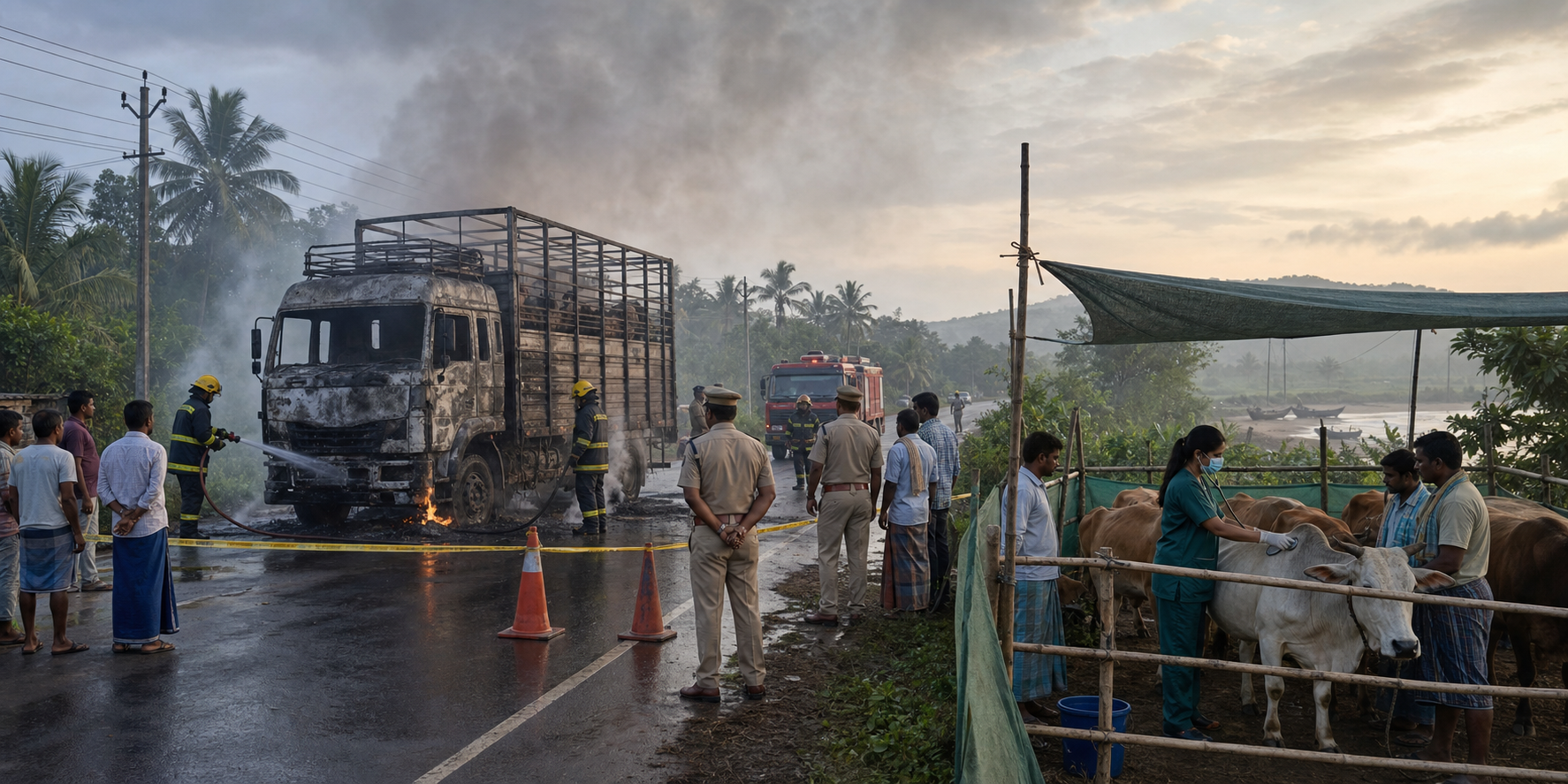
If a burning cattle vehicle appears in your feed, the first pressure you feel is to choose a side. Resist it. Your immediate questions should be narrower: What has actually been verified, was the consignment lawful, did anyone mistreat the animals, and who committed the reported violence?
Those questions require separate investigations. A suspected transport violation does not give a crowd authority to punish a driver or burn a vehicle. Equally, an attack on a vehicle does not exempt its operator from animal-welfare and transport laws. Keeping both principles intact is how you defend cattle, human life, and the rule of law at the same time.
Separate the transport question from the attack
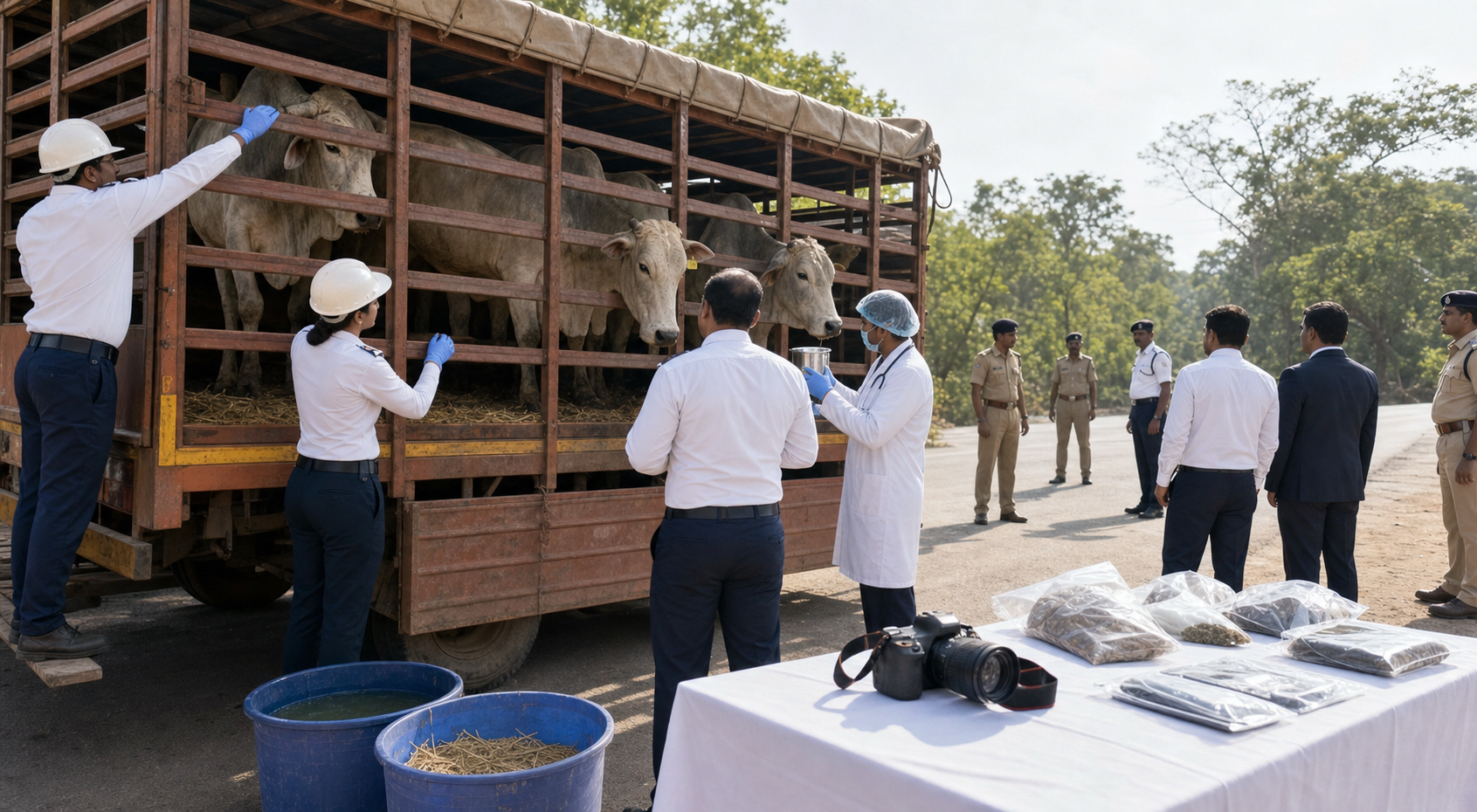
The public record concerning Balasore remains preliminary. On May 3, 2026, a vehicle allegedly carrying cattle was reportedly set ablaze by a crowd. The driver was reported to have escaped without physical injury, and police investigation was ongoing. That limited record does not establish whether the consignment violated any law, who started the fire, what motivated the people involved, or whether the incident was organised.
This uncertainty changes how you should speak about the case. Use descriptions such as reported arson, alleged cattle transport, or suspected violation until an authorised investigation establishes more. Calling someone a smuggler, trafficker, arsonist, or communal conspirator on the strength of a forwarded clip turns an allegation into a verdict. It can also intensify a local situation before police have secured witnesses and evidence.
For legal purposes, cattle transport is not automatically unlawful. The Orissa Prevention of Cow Slaughter Act, 1960 restricts cow slaughter and regulates connected conduct, but it does not criminalise bona fide transport that complies with applicable law. The Prevention of Cruelty to Animals Act, 1960 and the Transport of Animals Rules address how bovines are moved, including space, ventilation, rest, feed, water, veterinary fitness, and documentation. The Motor Vehicles Act, 1988 and allied rules separately govern matters such as loading, permits, vehicle fitness, and driver qualifications.
The practical test is not simply whether cattle were inside a truck. Investigators must ask several different questions and collect evidence appropriate to each one.
| Question | Evidence that matters | Lawful decision-maker |
|---|---|---|
| Was the purpose and destination lawful? | Consignment records, proof of destination, permits, and other relevant documents | Police and competent authorities, with liability ultimately determined through due process |
| Were the animals transported humanely? | Veterinary fitness, available space, ventilation, feed, water, rest arrangements, and the animals’ condition | Police, animal-husbandry officials, and other empowered authorities |
| Did the vehicle and driver comply with road-transport requirements? | Loading, vehicle fitness, permits, and driver qualifications | Police and transport authorities |
| Who committed violence or arson? | Witness accounts, original recordings, location and time data, fire-scene evidence, and the sequence of events | Police investigators and the courts |
No private crowd is the decision-maker in any row of that table. Even strong evidence of cruelty or prohibited activity creates a duty to report the matter and preserve evidence, not a licence to assault, destroy property, obstruct a highway, or impose punishment.
Both tracks may produce accountability. If transport offences are proved, proportionate legal penalties can follow. If arson or other mob violence is proved, those responsible can be prosecuted independently. One alleged wrong does not erase the other. Anyone directly involved should obtain advice from a qualified lawyer rather than treating general information about these laws as an assessment of personal liability.
If a crowd forms, protect life before proving your case
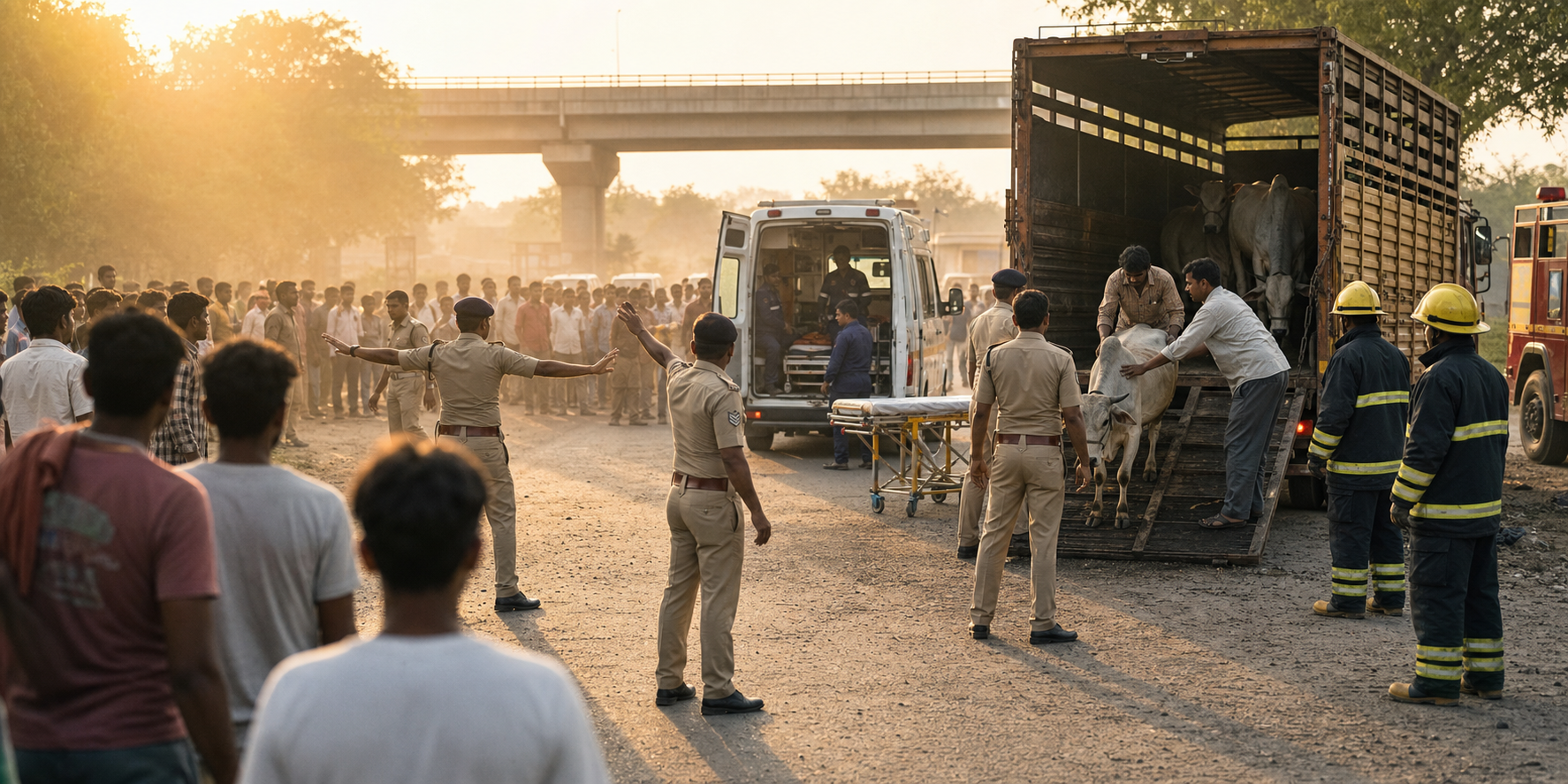
A roadside confrontation can move from accusation to fire within minutes. The fuel carried by a vehicle, frightened animals, blocked traffic, and people filming at close range create several hazards at once. Your first objective is therefore disengagement and emergency response. Documentation matters, but it comes after immediate safety.
If you are driving or accompanying the consignment, use this sequence:
- Do not try to force the vehicle through people. If movement remains possible, head toward a safe, well-lit public location without endangering pedestrians or other traffic. Do not stop to debate allegations with a growing crowd.
- Contact police or the district control room immediately. Give the road name, nearest landmark, direction of travel, vehicle identification, approximate crowd size, and whether people or animals are trapped. Share live GPS location with your dispatch centre if that system is available.
- Call fire services if there is smoke, flame, or spilled fuel. Move away from the vehicle and warn bystanders. Do not return for papers, cargo, or footage once a fire has begun, and do not attempt to fight a fuel-fed fire without the correct equipment and training.
- Present compliance records to authorised officials. Permits, consignment notes, veterinary fitness certificates, and proof of destination should be readily available. Keep duplicate copies with the operator or dispatch centre so the entire record is not lost with the vehicle.
- Preserve evidence after reaching safety. Retain original dash-camera files, GPS logs, calls, messages, photographs, and videos. Do not crop, caption, compress, or overwrite the originals before investigators receive them.
If you are a witness, call the authorities instead of joining the confrontation. Give a precise location and describe actions rather than assigning identities or motives. Record only if you can do so from a safe place. A clear account of who blocked the road, who approached the driver, and when the fire appeared is more useful than commentary added after the event. Do not release animals into moving traffic; tell emergency responders how many animals may be inside and where the enclosure can be accessed.
Do not post names, registration details, faces, or communal claims merely because they are circulating in a messaging group. Forward the original material privately to investigators when requested. Public redistribution can expose witnesses, invite retaliation, distort the timeline, and make unverified content look authoritative.
Operators should prepare before a sensitive consignment leaves, not after a driver sends a distress call. A workable dispatch check should cover:
- The compliance file: permits, consignment note, veterinary fitness certificate, proof of destination, vehicle-fitness records, and driver qualifications.
- Animal welfare: adequate space and ventilation, arrangements for feed and water, planned rest intervals, and a check against overcrowding.
- The route: known crowd-formation points, safer travel times, well-lit fuel and rest stops, and suitable lay-bys where a vehicle can wait without blocking traffic.
- Communications: GPS tracking, a driver panic function where available, a 24×7 dispatch contact, and current police, fire, veterinary, animal-rescue, and legal-assistance contacts.
- Fire readiness: properly maintained extinguishers suitable for fuel fires and staff trained to know when first response is possible and when evacuation is the only safe choice.
In districts where cattle movements have previously attracted crowds, operators can notify the appropriate control room before departure. That does not replace a permit or immunise a consignment from inspection. It gives authorities a chance to plan lawful checks and respond more quickly if a rumour begins to travel faster than the vehicle.
Judge the State response by specific legal duties
The Supreme Court’s directions in Tehseen S. Poonawalla v. Union of India (2018) provide a practical standard for evaluating official action against mob violence. States were directed to use district-level nodal officers, preventive and response arrangements, prompt registration of cases, impartial investigation, victim-compensation mechanisms, and accountability for official dereliction. The motive attributed to a crowd does not remove those duties.
If you are a resident, journalist, lawyer, or community representative seeking accountability in Balasore, ask operational questions:
- Has the district nodal officer responsible for preventing mob violence been activated, and is one office clearly coordinating the response?
- Has a prompt case been registered for the reported violence, with the suspected fire scene, original digital material, and witness accounts preserved?
- Are the driver, nearby residents, and other witnesses able to give statements without intimidation?
- Are police, transport, and animal-husbandry authorities examining the consignment through separate, competent checks rather than assumptions about the driver’s community?
- Are public updates distinguishing confirmed facts from allegations in plain Odia and English?
- Where loss or injury qualifies, has the applicable victim-compensation process been considered without waiting for public pressure?
- Will any failure to prevent the crowd, respond promptly, or preserve evidence receive an independent review?
A credible investigation must be even-handed without becoming artificially symmetrical. The evidence may establish a transport offence, an act of cruelty, a road-transport breach, mob violence, several of these, or none of them. Officials should not invent a transport case to rationalise an attack, and they should not ignore genuine welfare evidence because an attack occurred.
Prevention also needs visible ownership. Balasore lies on busy coastal and inter-district routes where livestock moves for dairy, agriculture, and related livelihoods. Administrations can reduce friction through predictable joint inspections by police, transport, and animal-husbandry officials; patrols at known interception points; rapid access for fire and ambulance services; and pre-arranged veterinary rescue support. Consistent official checks leave less room for rumours that no lawful authority is watching.
Monthly, privacy-respecting prevention data can make that work measurable. Useful figures include patrols at identified hotspots, compliant consignments checked, distress calls answered, community meetings held, and false rumours corrected. Such a dashboard should assess institutional performance, not publish the identities or movements of private citizens.
Cow protection loses its dharmic basis when it becomes punishment

Concern for cattle is neither irrational nor inherently communal. Cattle carry religious significance and sustain agricultural, dairy, and household livelihoods. Humane treatment, lawful oversight, and action against cruelty are legitimate forms of gau seva. The decisive question is how that concern is expressed.
Ahimsa cannot mean compassion for an animal coupled with indifference to a driver, passenger, witness, or family living beside the road. Karuna cannot depend on the presumed identity of the person in danger. Dharma requires evidence, proportion, and rightful authority; seva requires protection of those exposed to harm. Hindu, Buddhist, Jain, and Sikh ethical vocabularies approach these duties differently, but none turns rage, humiliation, or arson into a substitute for justice.
This is not an argument for passive cow protection. It is an argument for work that actually protects cattle:
- Document suspected cruelty from a safe place and report the vehicle, location, direction, and observable conditions to police or animal-husbandry officials.
- Support veterinary care, shelters, feed, water, rescue capacity, and lawful rehabilitation instead of funding roadside interception.
- Train volunteers to recognise transport requirements and to communicate evidence accurately, while making it explicit that they may not stop, search, seize, threaten, or punish.
- Create local peace committees that include Hindu priests, Buddhist monks, Sikh granthis, Jain representatives, neighbourhood associations, women, transport workers, and youth groups.
- Prepare short, verified rumour-control messages in Odia and English with the district public-relations office before the next incident occurs.
- Reject retaliatory mobilisation and collective blame, even when a violation or attack has genuinely been proved against particular individuals.
A mixed committee is useful because the first minutes of a crisis are local. A trusted priest may reach one group; a transporter, women’s association, or youth-club organiser may reach another. Their message should be identical: do not gather at the scene, do not forward unverified claims, give evidence to police, and allow veterinary and emergency personnel through.
Firm enforcement is compatible with this dharmic restraint. A lawful case based on preserved evidence is stronger than punishment delivered by a crowd. It protects innocent people from accusation, makes conviction of actual offenders more defensible, and prevents cow protection from being discredited by conduct that violates ahimsa.
Key takeaways
- The Balasore account remains preliminary: a vehicle allegedly carrying cattle was reportedly burned, the driver reportedly escaped without physical injury, and the investigation was ongoing.
- Cattle transport is not unlawful merely because cattle are present. Purpose, documentation, animal-welfare conditions, loading, vehicle fitness, and driver compliance require evidence-based examination.
- A suspected transport or cruelty offence never authorises private punishment. Report, document, and disengage; police and courts determine liability.
- If a crowd or vehicle fire develops, move to safety, contact police and fire services, provide an exact location, and preserve original records after the immediate danger has passed.
- Authorities should be judged against the preventive, investigative, compensation, and accountability measures set out in Tehseen S. Poonawalla.
- Gau seva is most credible when it produces humane transport, veterinary care, lawful reporting, and protection for animals and people alike.
Your next useful act depends on your role. Before forwarding a clip, verify it and remove any unproved identity claim. Before dispatching cattle, audit the documents, welfare arrangements, route, and emergency contacts. If you lead a local organisation, identify the district nodal officer and establish a rumour-control chain now. The next roadside crisis will move quickly; lawful preparation must already be in place.