
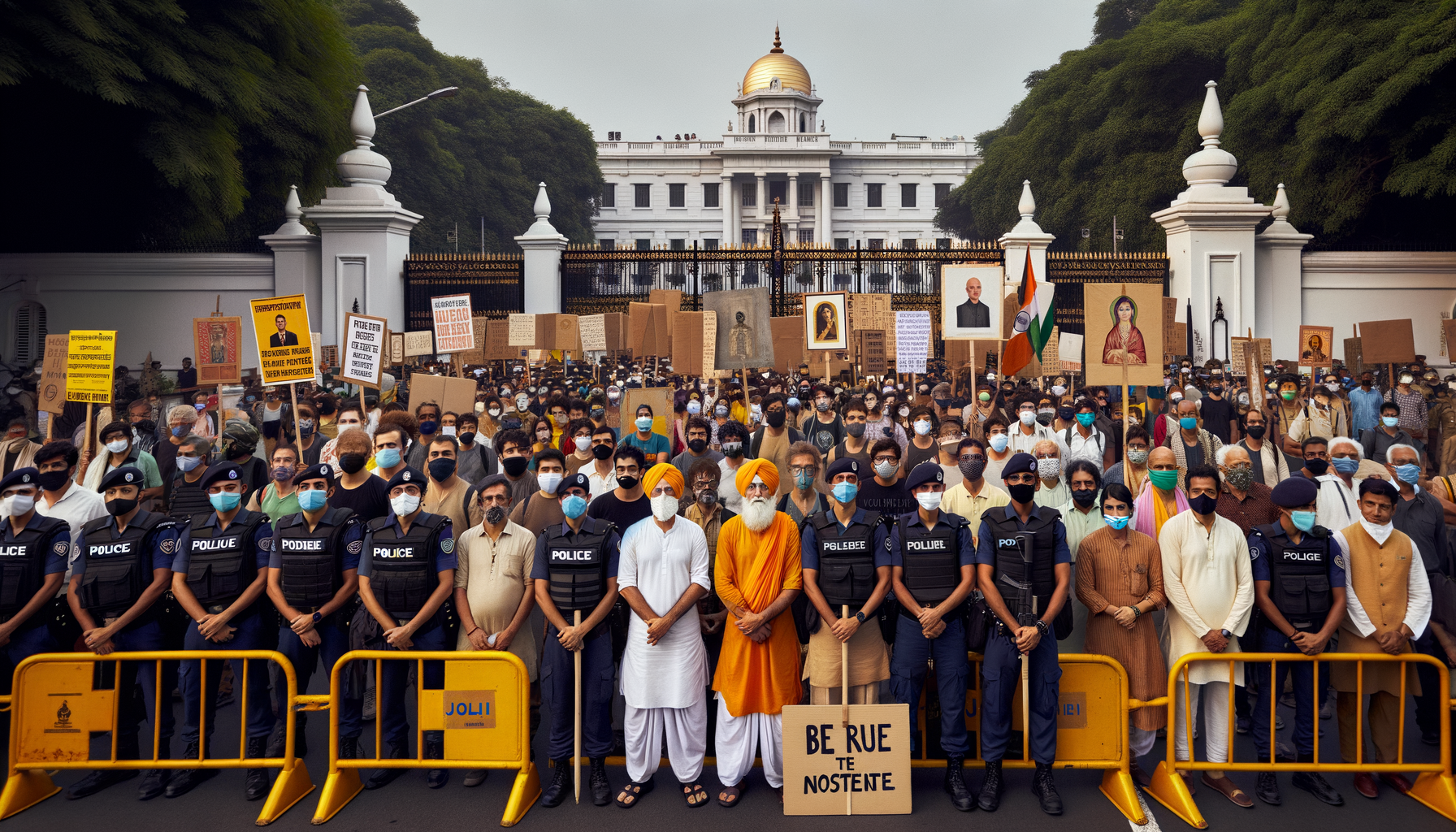
On December 23, 2025, protests intensified near the Bangladesh Deputy High Commission in Kolkata following reports of the killing of Hindu youth Dipu Chandra Das in Bangladesh. Demonstrators gathered with placards and chants calling for #JusticeForDipuDas, urging a transparent investigation and accountability from the relevant authorities. The atmosphere was charged yet focused on dignity and due process, reflecting a broad appeal for human rights and the protection of vulnerable communities.
According to eyewitness accounts and local reports, police conducted a lathi-charge when the crowd pressed against security barricades, briefly disrupting traffic and leading to scattered injuries that required first aid. Order was restored after a short period, and the vicinity was secured to ensure public safety. The incident highlighted the delicate balance between the right to peaceful assembly and the maintenance of law and order in a dense urban setting.
Context surrounding the case of Dipu Chandra Das remained central to the mobilization. Advocates emphasized that the matter requires a swift, impartial, and transparent probe under Bangladesh’s legal framework, with full accountability for any perpetrators identified by the investigation. For many civic participants, the protest signaled solidarity with Hindu minorities in Bangladesh and a broader commitment to fundamental rights, equal protection, and justice without delay.
The demonstrators’ core demands were clear: a credible investigation into the killing, protection mechanisms for at-risk minority communities, and proactive diplomatic engagement to uphold human rights commitments. In line with established international norms, participants urged that due process, witness protection, and regular public updates be prioritized to build confidence and deter future attacks. They also sought constructive bilateral communication to address cross-border concerns while respecting national sovereignty.
For many residents of Kolkata, the gathering evoked shared memories of civic responsibility and collective conscience. Representatives and well-wishers from Hindu, Buddhist, Jain, and Sikh communities stood together, underscoring dharmic unity and an insistence on nonviolence. Their presence conveyed a common ethic: injustice against any community erodes the moral fabric of all, and solidarity across dharmic traditions strengthens social harmony.
Community leaders and organizers reiterated the importance of restraint, verifiable information, and lawful conduct, cautioning against language or actions that could inflame communal tensions. The emphasis on peaceful expression aligned with constitutional freedoms and mirrored the larger call for empathyfor the bereaved family, for affected communities, and for bystanders whose safety depends on responsible civic action.
Advocates proposed a set of practical steps: an independent and time-bound investigation in Bangladesh; witness and victim protection; public transparency about investigative milestones; and cross-border institutional cooperation to prevent targeted violence. They also recommended community outreach, legal aid accessibility, and responsive grievance mechanisms that enable minorities to report threats safely and effectively.
As the day concluded, the message from Kolkata remained consistent: justice for Dipu Chandra Das through due process, tangible safeguards for Hindu minorities in Bangladesh, and regional stability grounded in human rights. Calls for accountability, peaceful protest, and intercommunity solidarityechoed through keywords such as Kolkata protest, Bangladesh Deputy High Commission, lathi-charge, human rights, and #JusticeForDipuDasframed the event as part of a wider effort to protect lives, uphold the rule of law, and reinforce unity across dharmic traditions.
Inspired by this post on Struggle for Hindu Existence.
