
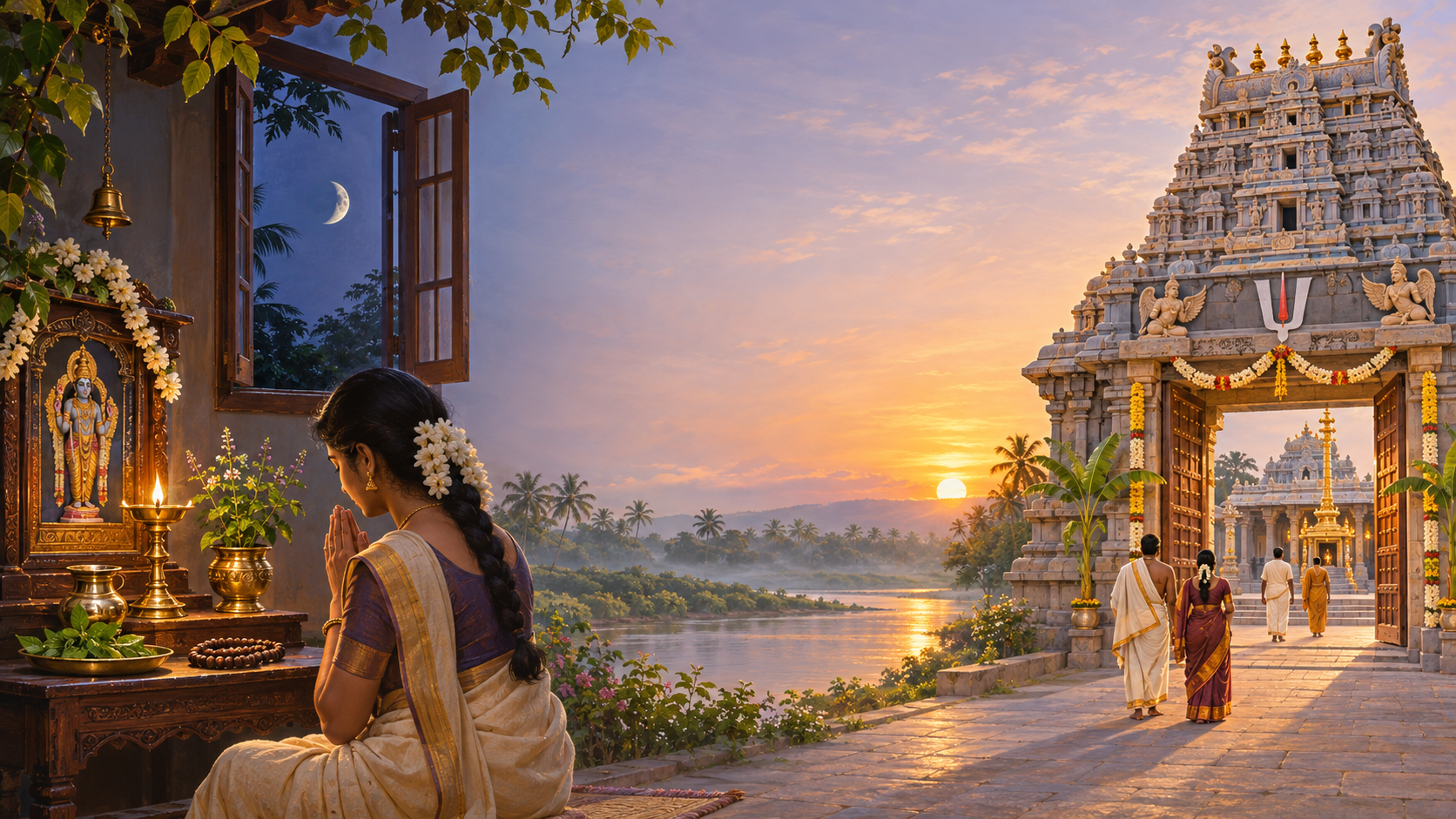
If you are arranging leave, planning a temple visit, or coordinating a family vrata, reserve two dates in December 2026: December 4 and December 20. The first is a Krishna Paksha Ekadashi, while the second is Vaikunta Ekadashi.
Keep those dates in your calendar, but do not copy fasting or parana times from another city. Ekadashi follows a lunar tithi rather than a midnight-to-midnight civil date, so your local panchang and sampradaya should settle the final timing.
The two December 2026 Ekadashi dates
| Planning date | Panchanga position | What you should do |
|---|---|---|
| Friday, December 4 | Krishna Paksha Dashami continues until 1:58 AM on December 4, after which Krishna Paksha Ekadashi begins in most regions. | Reserve December 4 for the vrata, then confirm the date and parana window for your location. |
| December 20 | Vaikunta Ekadashi falls on December 20. It is Dhanur Masa Shukla Paksha Ekadashi and Margashirsha Shukla Ekadashi in Telugu, Kannada, and North Indian Hindi calendars. | Confirm your temple’s programme early if you hope to attend in person. |
The 1:58 AM boundary listed for December 4 is not a universal clock time for every country. Treat it as the tithi sequence behind the date, not as a time that can be transferred unchanged to Toronto, London, Singapore, or another city.
The two calendar descriptions attached to December 20 are not two competing observances. Dhanur Masa Shukla Paksha Ekadashi and Margashirsha Shukla Ekadashi are regional calendar descriptions of the same Vaikunta Ekadashi date.
Why your local panchang gets the final say
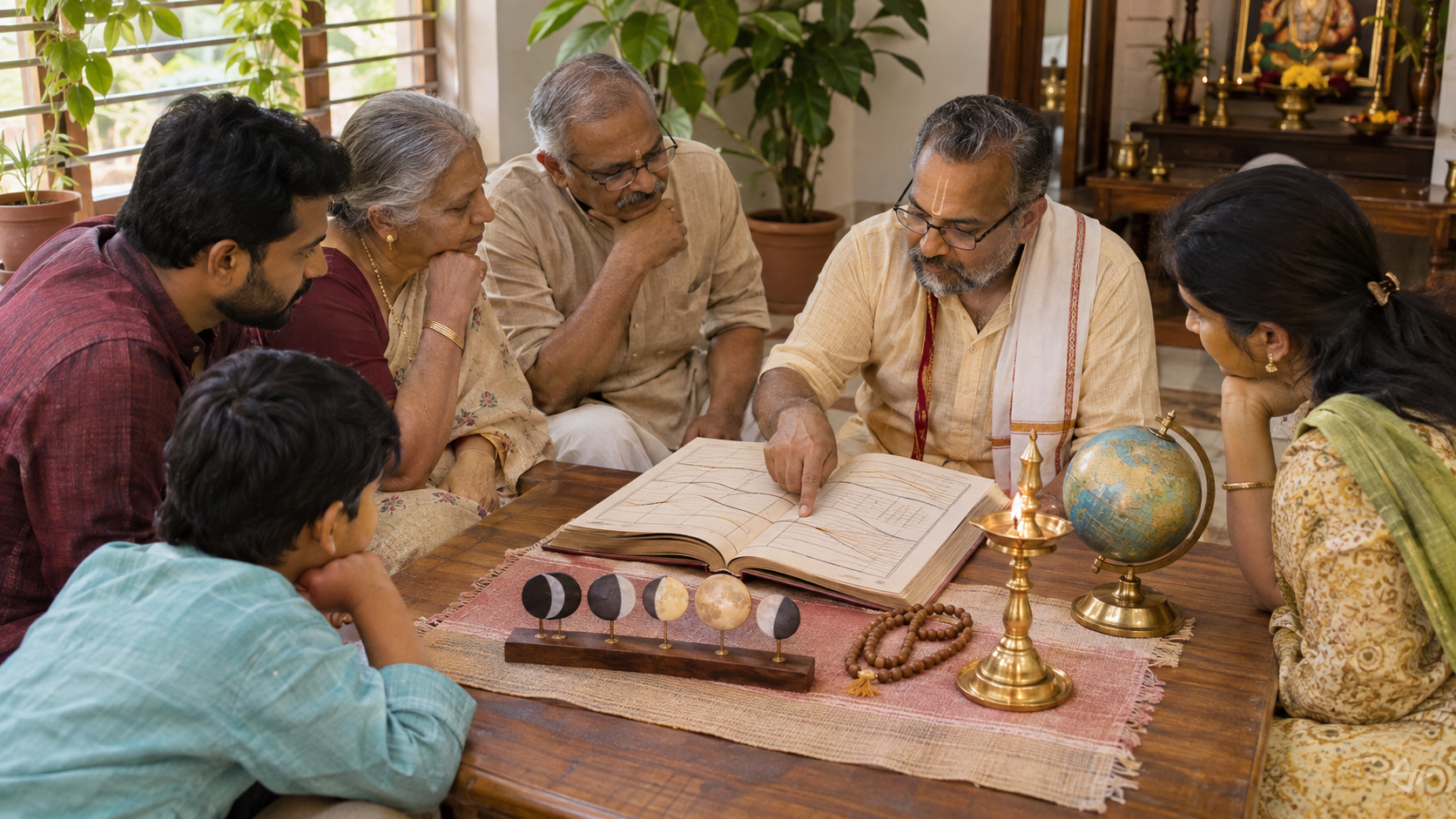
A tithi is a lunar-day unit. It can begin or end at any hour of a civil date, which is why an Ekadashi entry may include part of Dashami or Dwadashi on the same numbered date. Location also matters because sunrise and local tithi timings are not identical everywhere.
Regional and sampradaya calendars can also apply their observance rules differently at a tithi boundary. A date shown for most regions is therefore a strong planning date, but it is not permission to ignore the calendar followed by your family, guru, or temple.
- Set your panchang to the city where you will actually observe the vrata, not your ancestral town or a default Indian city.
- Use the calendar followed by your family or sampradaya. If you regularly attend a temple, use that temple’s published date rather than mixing several online calendars.
- Confirm three items together: the local observance date, the temple programme if you are attending, and the parana window.
- Write the city and time zone beside any timing you save. A screenshot without its location can become misleading when it is forwarded to relatives elsewhere.
If you live outside Bharat, an India-based panchang can help you identify the festival context, but you should not assume that its clock times govern your location. Ask your local temple a direct question: “Which date and parana time are you following for our city?”
Give each Ekadashi its own observance plan
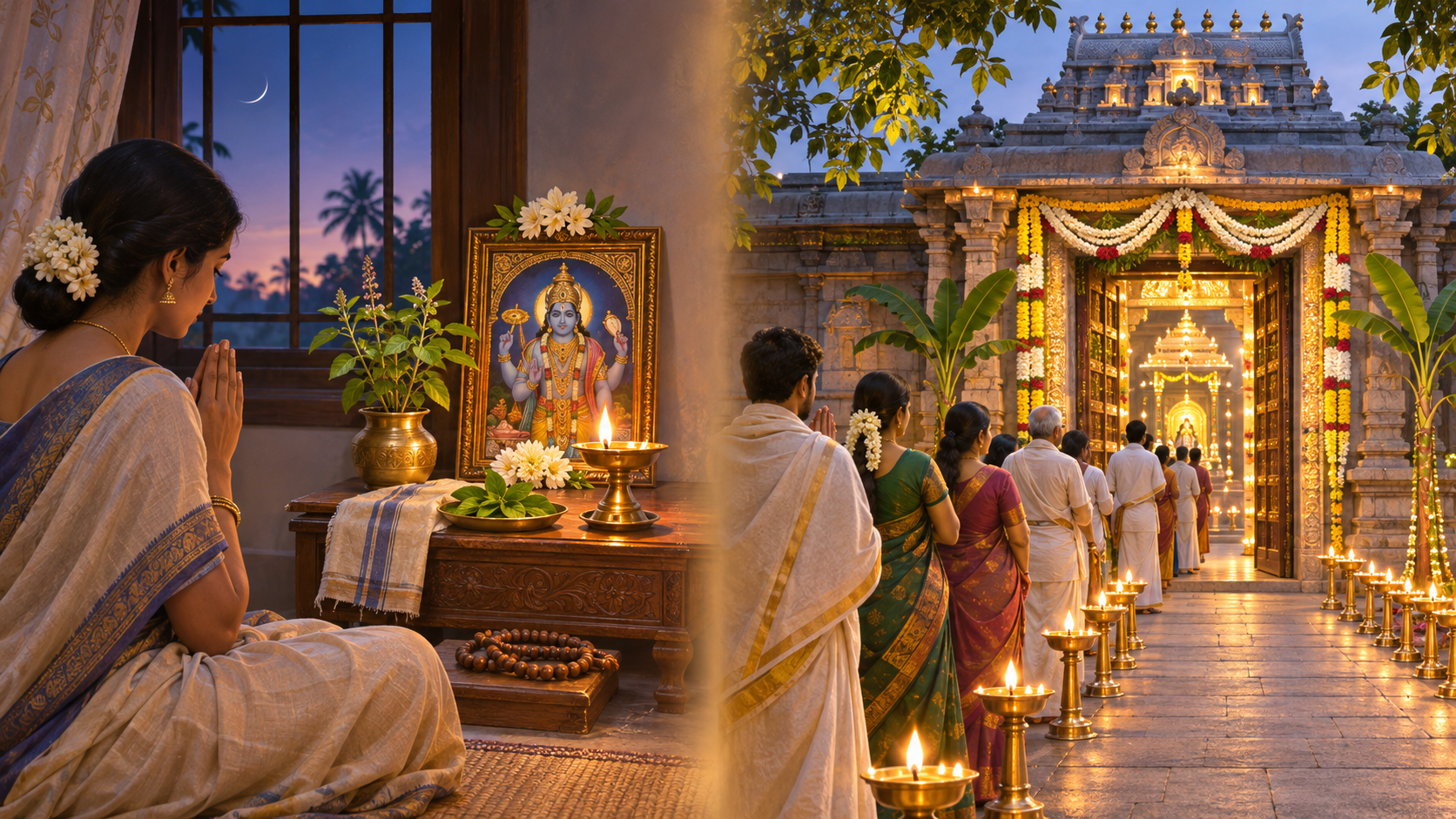
December 4: Krishna Paksha Ekadashi
The December 4 observance belongs to the waning, or dark, half of the lunar cycle. Once your local date is confirmed, decide the form of your vrata before the day begins. A clear sankalpa is more useful than improvising restrictions midway through the fast.
- The evening before: settle the food discipline you will follow, check family responsibilities, and protect a realistic period for sadhana.
- During Ekadashi: give the day a devotional centre through puja, nama-japa, scriptural reading, kirtan, quiet reflection, or seva appropriate to your tradition.
- Before the vrata ends: verify the local parana window rather than guessing from the end of the civil date.
If work or caregiving prevents a temple visit, do not let the entire observance collapse into a question about food. Choose a defined period without avoidable entertainment or digital distraction and direct that time toward remembrance, study, or service.
December 20: Vaikunta Ekadashi
Vaikunta Ekadashi deserves extra logistical preparation if you plan to attend a temple. Do not assume the regular opening schedule will tell you everything you need to know. Contact the temple and ask about the local observance date, darshan hours, entry arrangements, accessibility, any registration required for services, and the parana guidance it will follow.
If you cannot attend in person, you can still build a coherent home observance around your sampradaya’s practice. Set a sankalpa, reserve uninterrupted time for Bhagavan, follow the food discipline that is customary and safe for you, and complete the vrata using the locally confirmed parana time.
Do not let the special name of Vaikunta Ekadashi turn the day into a contest over severity or public display. Temple darshan, fasting, japa, and seva should support remembrance. The logistical plan exists to protect that purpose.
Choose a vrata you can complete safely and sincerely
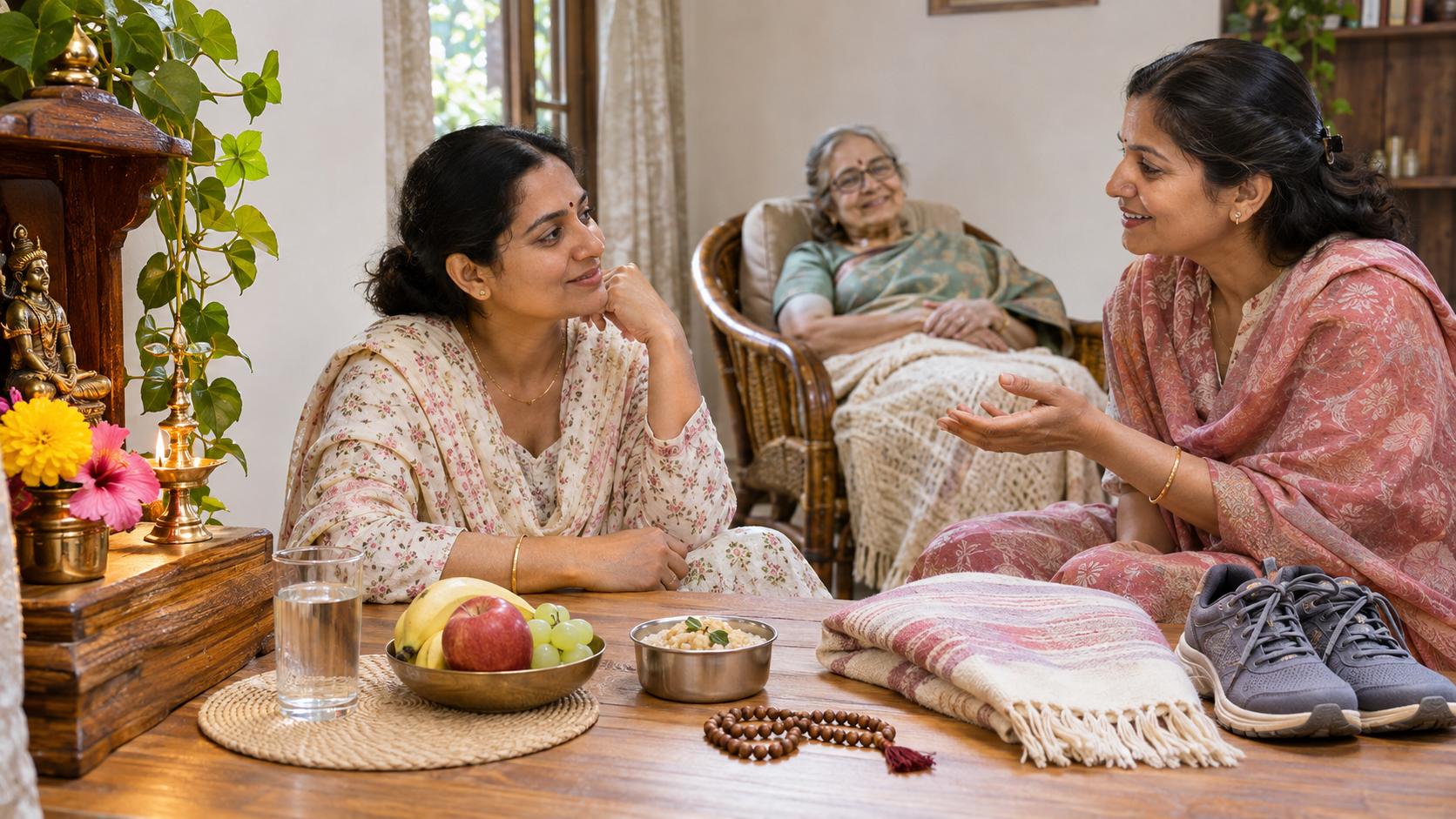
Ekadashi is not governed by one universal food protocol across every Hindu household and sampradaya. Follow the standard you have actually received rather than assembling a stricter practice from unrelated social-media instructions.
- If you already observe Ekadashi, follow your established household, guru, or temple discipline and confirm only the date-specific timing.
- If this is your first vrata, ask what your tradition permits before promising an extreme fast. A vow you understand and can complete is better than an improvised restriction abandoned through the day.
- Children, frail older adults, pregnant or breastfeeding people, and anyone managing diabetes, an eating disorder, an acute illness, or medication that must be taken with food need additional caution.
- Do not stop or delay prescribed medicine in order to fast. Ask the prescribing clinician what is medically safe, and ask a trusted spiritual guide how the vrata may be modified.
- If a food fast is not safe for you, seek guidance on an appropriate form of restraint and place greater emphasis on prayer, japa, study, charity, or seva.
The practical test is straightforward: your vrata should deepen attention to Dharma without creating preventable harm. Health limitations do not need to become either a source of shame or an excuse to abandon the devotional purpose of the day.
Key takeaways
- Reserve Friday, December 4 for Krishna Paksha Ekadashi and December 20 for Vaikunta Ekadashi.
- On December 4, Dashami lasts until 1:58 AM in the cited calendar context, with Ekadashi following in most regions.
- December 20 is identified as both Dhanur Masa Shukla Paksha Ekadashi and Margashirsha Shukla Ekadashi under the relevant regional calendar conventions.
- Confirm the vrata date and parana window using a panchang calculated for the city where you will observe.
- For Vaikunta Ekadashi, check temple arrangements well before December 20 rather than relying on regular opening hours.
- Choose a form of fasting that follows your tradition and is safe for your health; never alter prescribed medication merely to intensify a fast.
Create both calendar entries now. Add the note “confirm local date and parana” to each one, and add “check temple arrangements” to December 20. That small preparation leaves the observance itself free for what matters: disciplined, attentive remembrance.
References
- Hindu Blog – December 4 2026 Tithi – Panchang – Hindu Calendar – Good Time – Nakshatra – Rashi
- Hindu Pad – Vaikunta Ekadashi 2026

Leave a Reply
You must be logged in to post a comment.