
If you came here because the claims about Kurla are multiplying faster than the verified facts, the useful question is not which side sounds angriest. It is what must be investigated now, what the available information actually establishes, and what you should avoid repeating as fact.
You do not have to choose between supporting the Hindu couple and insisting on evidentiary discipline. The responsible response is to take the alleged sexual touching and violence seriously, demand a complete police investigation, examine the claimed institutional connection, and refuse to turn suspicion into collective guilt.
Four different claims must not be collapsed into one

The Kurla case contains several layers of information with different evidentiary weight. Keeping them separate does not weaken the demand for justice. It prevents the strongest allegations from being buried under claims that have not yet been substantiated.
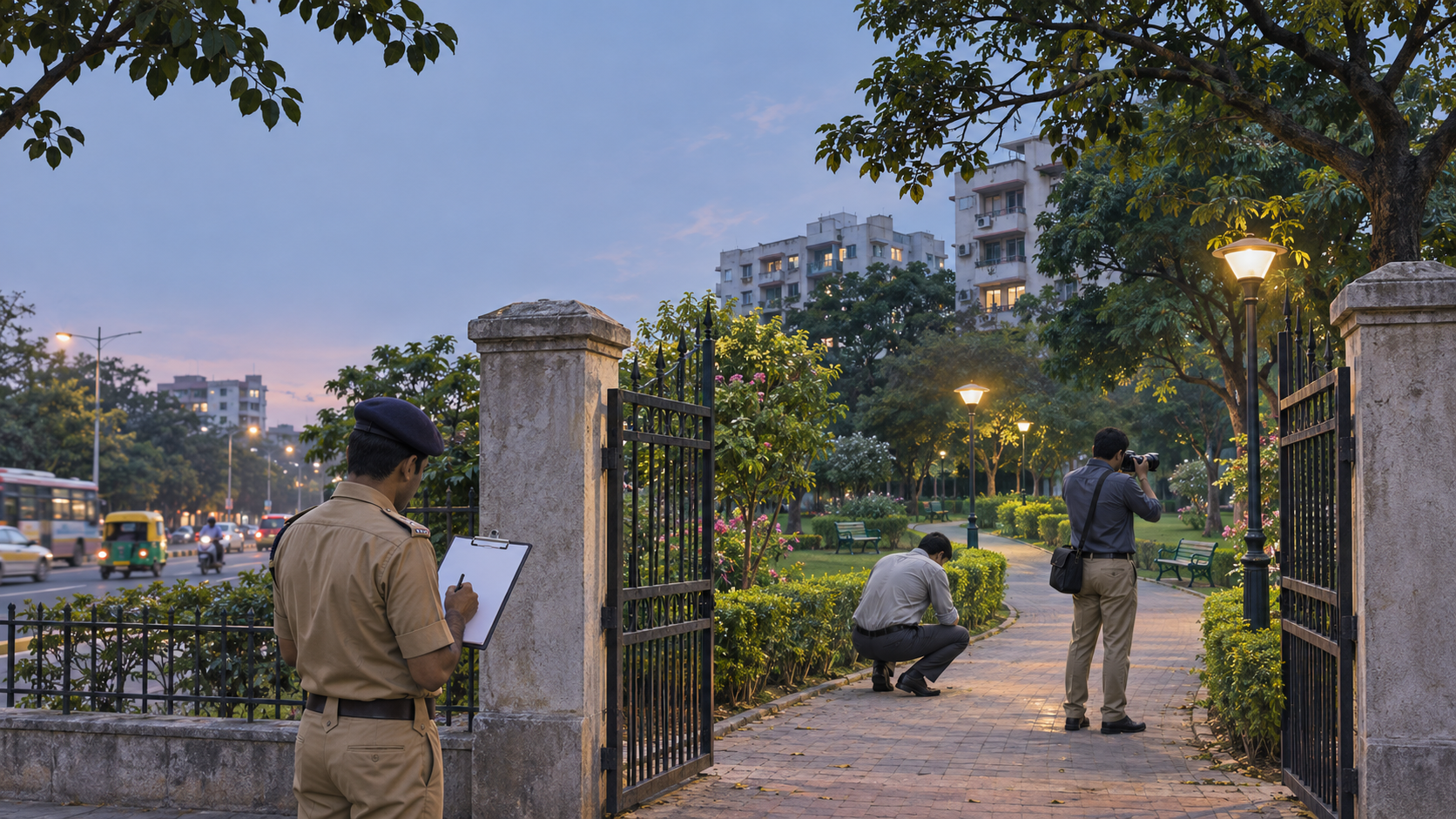
- The reported confrontation and police response: A Hindu couple was reportedly surrounded at Pramod Mahajan Garden, behind Phoenix Marketcity in Kurla, at about 4 pm on 20 November. The group was accused of making lewd remarks, carrying sticks, striking the young man and throwing a large stone. Police detained eight people described as juveniles, while the Juvenile Justice Board sent six, reportedly aged 12 to 15, to an observation home until 4 December. These are the basic incident and procedural details presently in circulation.
- The couple’s more serious allegations: The woman later alleged that boys, including children appearing to be eight or nine, touched her private parts. The man alleged that he was hit 25 to 30 times with stones, sticks and metal knuckle-dusters, including blows to the head. The couple also described a threat to fetch a country-made pistol and alleged that adults were waiting near the gate to intervene if they resisted. These are grave victim allegations requiring corroboration and a recorded police response, not judicial findings.
- The claimed madrassa connection: When asked whether the boys came from a madrassa, the young man expressed a belief that they did. The wording conveyed uncertainty. No enrolment record, attendance record, institutional identification or evidence of direction by madrassa staff has been disclosed in the information available here.
- The condition and legality of adjoining structures: Municipal officials separately examined damaged fencing, encroachments or structures along the retaining wall, sanitation problems and the garden’s poor condition. Those civic issues may have contributed to an unsafe environment, but they do not by themselves prove who committed the assault or whether any institution organised it.
Each layer needs its own evidence. Proof that an assault occurred would not automatically prove institutional direction. Proof that a nearby structure lacks approval would not prove that its occupants were involved. Conversely, uncertainty about the institutional connection must not be used to dismiss the couple’s allegations of violence and sexual touching.
The gap between the allegations and the FIR needs an answer

The reported FIR invokes Bharatiya Nyaya Sanhita provisions relating to unlawful assembly, hurt, insult and intimidation, but reportedly contains no sexual-offence provision. That is the first concrete discrepancy investigators should explain. It does not establish a cover-up on its own, but it is too important to wave away.
An FIR is an opening record of alleged criminal conduct, not a final verdict or an immutable list of charges. The practical question is whether the woman’s allegation was given to police, when it was given, how it was recorded, and what investigative steps followed. If a material allegation emerged after the first complaint, investigators should record the additional statement and assess the applicable law rather than treating the initial wording as the limit of the case.
A credible review should answer these specific questions:
- Was the alleged touching described in the couple’s first statement? If not, when was it first reported, and has a supplementary statement been recorded?
- What injuries were medically documented, especially the alleged blows to the young man’s head?
- Were the stick, stone or alleged knuckle-dusters recovered or otherwise identified?
- Was video from the park, its entrances, adjoining roads and nearby establishments promptly sought and preserved?
- Were independent visitors, guards, vendors or other people near the garden identified as witnesses?
- Can the alleged adults at the gate be identified through video, witness descriptions or other lawful investigative means?
- What records support the ages attributed to each accused person?
- Did investigators examine the claimed madrassa connection, and what evidence supported or contradicted it?
Questions about age must be handled with the same discipline. Online suspicion that some accused may be adults is not proof of falsified age documents. The answer should come from formal age-determination records and the process followed by the Juvenile Justice Board. Placement in an observation home is a procedural step; it is neither a conviction nor a declaration that the allegations are minor.
If you are supporting the couple, press for these answers rather than circulating increasingly dramatic versions of the event. A written request, an acknowledged complaint and advice from a qualified lawyer or legal-aid service will do more for the case than an unverified social-media thread.
A madrassa link must be proved, not inferred from proximity
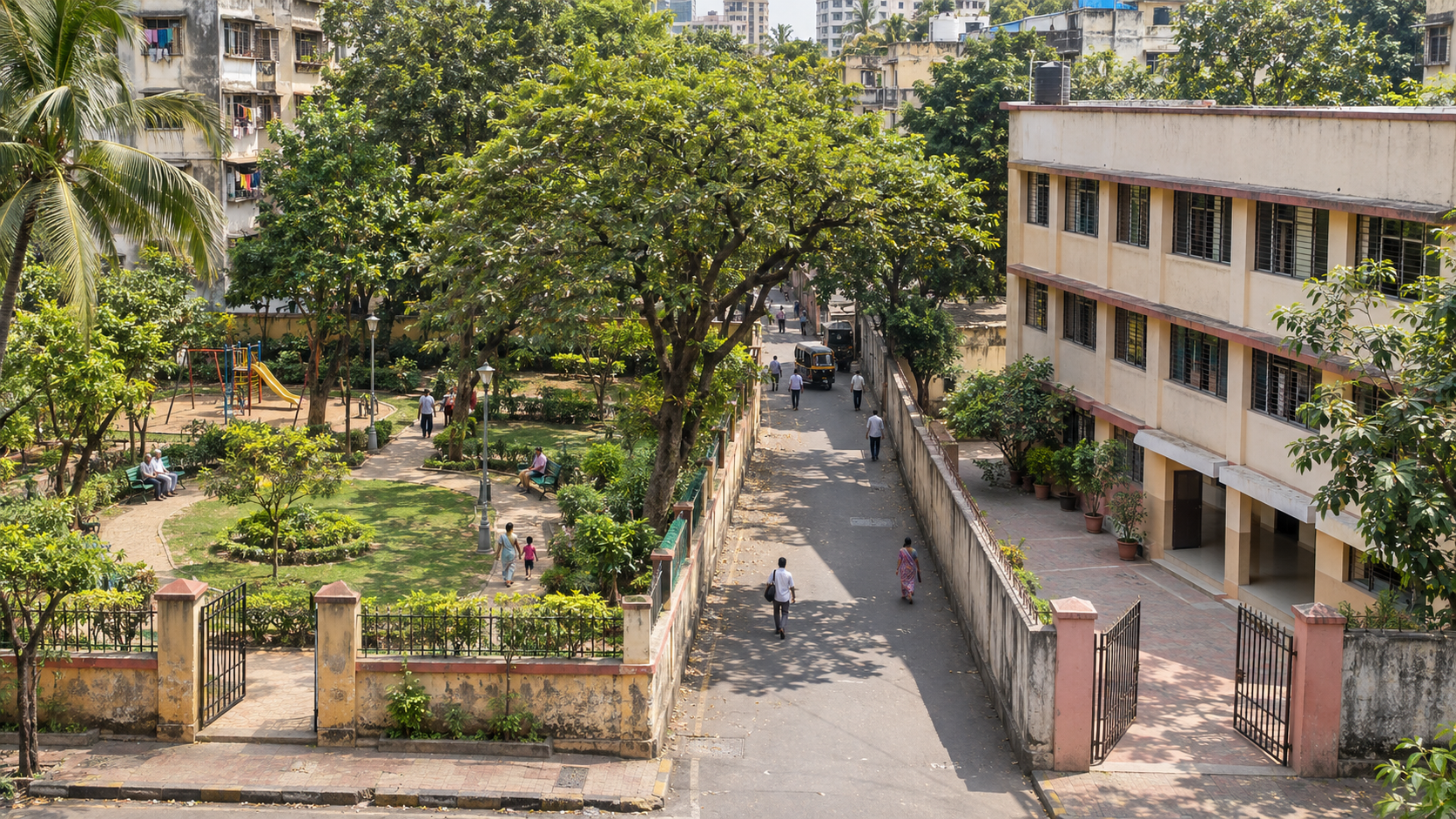
The institutional allegation needs particular care because it can change a criminal case into a communal confrontation. The disclosed basis begins with the young man’s belief that the boys came from some madrassa. That may be a lead worth investigating, but it is not yet identification.
BJP MP Kirit Somaiya has alleged that a three-storey madrassa behind the park was built illegally and has demanded its demolition. On 25 November, the Brihanmumbai Municipal Corporation served notices under Section 488 of the Mumbai Municipal Corporation Act on occupants or owners of 25 structures along the garden’s retaining wall, requiring them to produce approved plans and occupation certificates. These municipal notices and the demolition demand must be understood accurately.
A notice requiring documents is not the same as a final determination that every structure is illegal, and it is not itself a demolition order. More importantly, an unauthorised building would be a municipal violation; it would not establish that its institution taught, directed or concealed violence.
A serious investigation of the claimed link should look for named, checkable evidence:
- Which institution is being identified, and by whom?
- Were any accused enrolled there or present there on the day of the incident?
- Do attendance records, lawful identification procedures or video evidence support that connection?
- Did any teacher, administrator or other adult know of, encourage, facilitate or attempt to conceal the alleged conduct?
- Were the adults allegedly waiting at the gate connected to the accused or to any nearby institution?
If evidence establishes an institutional role, authorities should investigate responsible adults, supervision failures and any incitement without hesitation. If the evidence establishes only that some accused studied there, that fact still would not prove institutional direction. If no connection is established, the claim should not be repeated as settled.
A pro-Hindu response is strongest when it refuses both minimisation and exaggeration. Hindu safety is not protected by making claims that cannot survive scrutiny. It is protected by recording offences fully, following evidence wherever it leads, holding responsible individuals accountable and maintaining credibility when communal pressure is highest.
The garden’s condition is a separate public-safety failure
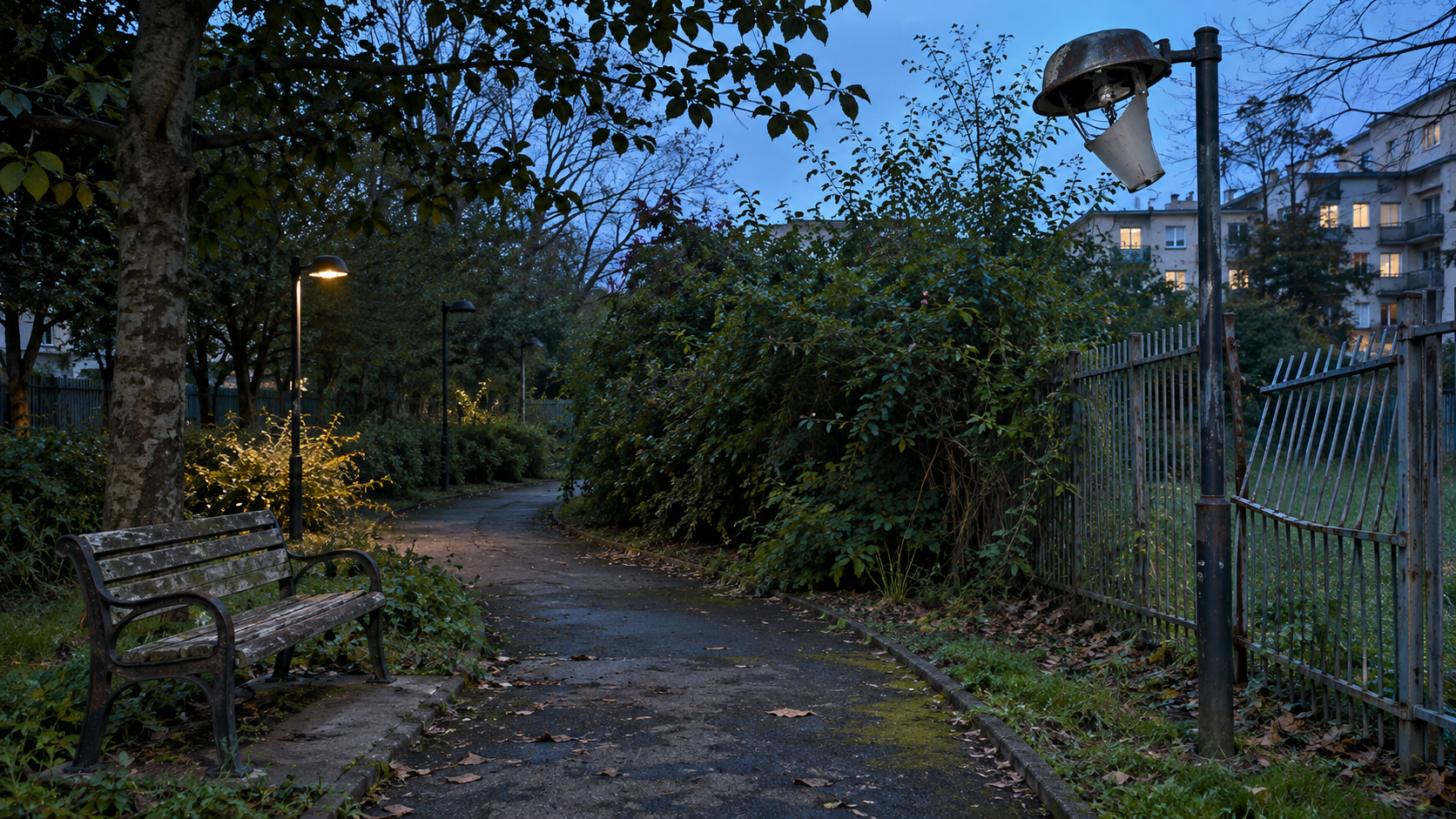
The criminal allegations should not obscure a preventable civic problem. A municipal inspection reportedly found damaged iron fencing on the slum-facing boundary, permitting unsupervised entry. Sewage, wastewater and garbage from the adjoining settlement were also reportedly entering the garden. The garden remained dilapidated despite Rs 70 lakh said to have been spent on maintenance over two years, prompting a call to blacklist the contractor.
These conditions matter even if no broader conspiracy is ever proved. Broken boundaries make access harder to monitor. Poor maintenance signals that rules are not enforced. Wastewater and garbage reduce legitimate public use, leaving the space easier for groups to dominate. A public garden can become informally controlled long before any authority formally recognises the danger.
Residents and community organisations can make four narrow demands that are easy to track:
- Repair and inspect the boundary: Ask the BMC for a written completion date for fencing repairs, identification of all unauthorised entry points and a follow-up inspection record.
- Audit basic security: Request an assessment of entrances, lighting, guards, emergency-contact signage and camera coverage. Where cameras already exist, ask who maintains them and how incident footage is preserved.
- Account for maintenance spending: Seek the work scope, payments, inspection reports and performance action connected to the reported Rs 70 lakh expenditure. Blacklisting should follow documented contractual failure, not substitute for examining it.
- Resolve sanitation and structure notices lawfully: Ask for a timetable covering wastewater, garbage and the document-verification process for the 25 structures. Enforcement should be even, recorded and subject to the required legal process.
Do not organise confrontations at the park or enter adjoining premises to investigate on your own. That can endanger witnesses, contaminate evidence and create fresh offences. Document conditions from lawful public locations, submit written complaints and let authorised investigators establish identities and affiliations.
Key takeaways and the next safe steps
- The couple’s allegations of sexual touching, repeated blows, a firearm threat and adults waiting at the gate are serious and require specific investigative answers.
- The reported omission of a sexual-offence provision from the FIR warrants scrutiny, but the FIR is not the final legal determination.
- The claimed madrassa connection remains an allegation unless enrolment, identification, video, witness or institutional evidence establishes it.
- BMC notices concerning 25 structures address planning documents; they do not prove criminal involvement or amount automatically to demolition orders.
- Broken fencing, sanitation failures and unexplained maintenance outcomes can be pursued immediately, regardless of how the criminal case develops.
If you witnessed the incident
Preserve the original photo or video file rather than editing, cropping or adding captions to it. Write down what you directly saw, the approximate time, where you were standing and what you heard. Separate direct observation from anything another person later told you. Give material to investigators and retain a copy where lawful. Do not publish names, faces or personal details of people being treated as children.
If you are helping a victim
Prioritise immediate safety and medical attention, especially after a reported head injury. Preserve medical records, photographs of injuries, clothing and copies of complaints or statements made available to the victim. If a material allegation was omitted or inaccurately recorded, seek prompt advice from a qualified criminal lawyer or legal-aid service about the proper way to supplement the record. Do not confront suspected attackers or institutions.
If you are speaking as a concerned citizen
Use precise language: say that the couple alleged sexual touching, that police reportedly detained eight juveniles, and that a madrassa connection has been claimed but not established in the disclosed material. Ask police about evidence preservation and the recording of every allegation. Ask the BMC for deadlines, inspection records and spending accountability. Keep acknowledgement numbers and follow up in writing.
You can support the couple without declaring every disputed claim proved. You can demand investigation of a possible institutional connection without blaming an entire religious community. And you can insist that no public park in Bharat be treated as the private territory of any gang. That combination – courage, accuracy and proportionate action – is the response most likely to produce justice rather than another cycle of allegation and retaliation.
References

Leave a Reply
You must be logged in to post a comment.