

If Govardhan has become a beautiful image on your altar, a name in kirtan, or a destination you hope to visit, the harder question remains: what are you meant to learn from Govardhan? The Gaudiya Goswami tradition directs you beyond spiritual sightseeing and toward relationship – how a place becomes inseparable from Krishna, how reverence matures into seva, and how longing is disciplined by humility.
That shift matters. You can collect facts about Vraja and remain unchanged. But when you read Govardhan as a school of bhakti, even your ordinary duties can become preparation for entering sacred geography with the right consciousness.
From a holy hill to a school of bhakti
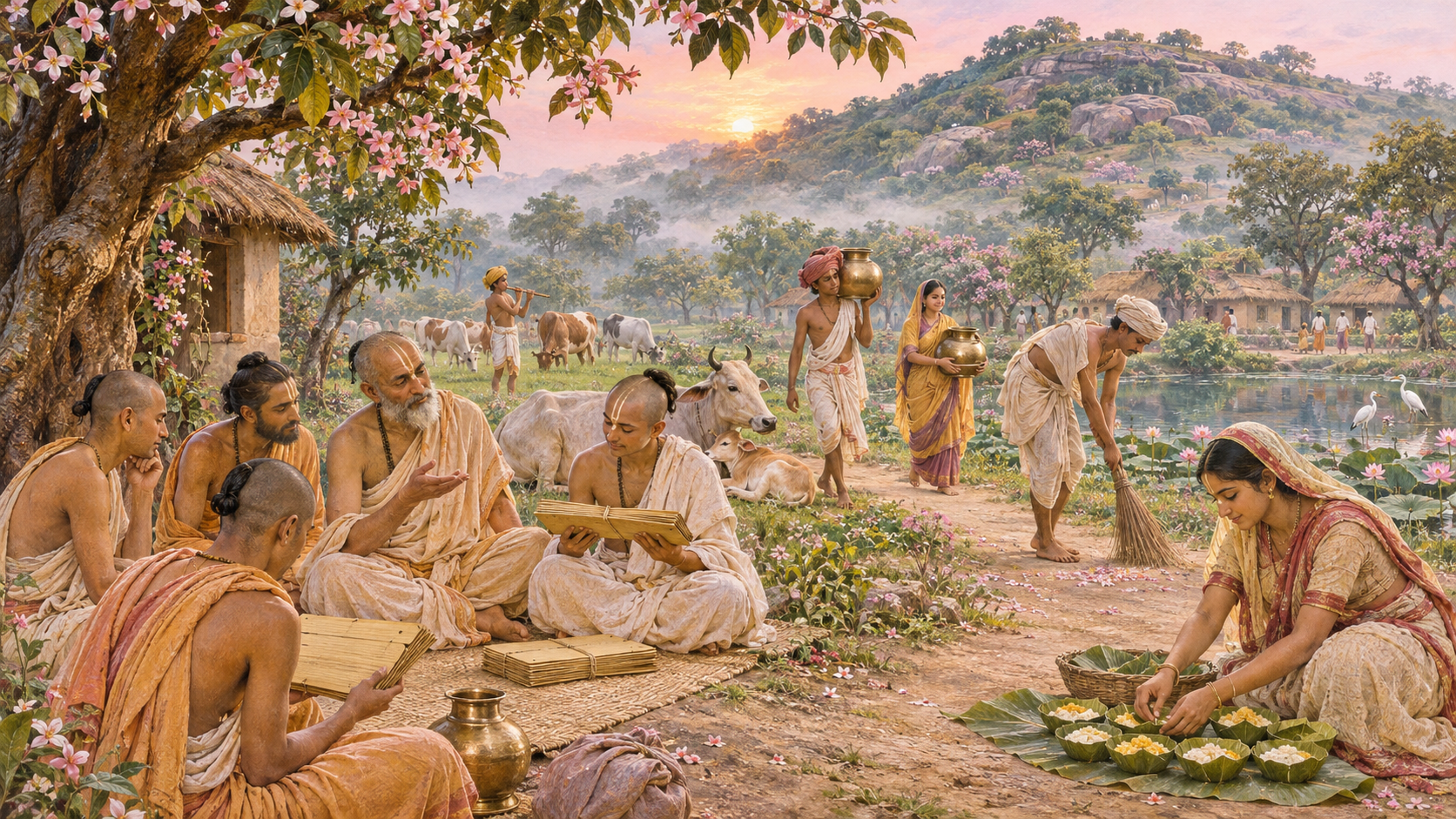
Govardhan is not merely the setting of a divine event. In Gaudiya devotion, sacred geography participates in Krishna’s relationships. The hill, paths, pastures, water, trees and places of shelter are remembered because they support life with Krishna in Vraja. Geography becomes theology expressed through service.
This prevents three common reductions:
- Govardhan as a map: If you concentrate only on locations, pilgrimage becomes an itinerary and success means covering every stop.
- Govardhan as a miracle: If you remember only Krishna lifting the hill, you may admire divine power without noticing the intimate community that receives Krishna’s protection.
- Govardhan as a feeling: If you seek devotional emotion without disciplined conduct, reverence becomes private sentiment rather than seva.
The Goswami-shaped vision holds these dimensions together. Govardhan is a place connected with Krishna’s lila, an object of reverence, a model of service and a spiritual shelter. You begin to find the hidden treasures of the Goswamis’ teaching on Govardhan when you stop asking only what happened there and ask what kind of devotee this sacred place is training you to become.
Three questions reveal the Goswami lens
What does Govardhan reveal about Krishna?
The Govardhan lila reveals more than divine strength. Krishna stands within a community of cows, friends, elders and families. His greatness is present, but it is encountered through protection, affection and belonging rather than distance alone.
When you read or hear about Govardhan, notice where your attention goes. If you see only supernatural power, look again for relationship. Who depends upon Krishna? Whom does Krishna protect? How does danger draw the residents of Vraja closer to him? Those questions move you from admiration of God toward attention to the loving bonds that Gaudiya bhakti prizes.
What kind of service does Govardhan embody?
Govardhan serves without demanding the centre. The sacred landscape provides pasture, water, shade, nourishment and places in which Krishna’s relationships can unfold. Its importance lies not in competing with the lila but in supporting it.
This gives you a precise test for your own seva: does your contribution help devotion flourish, or does it make you the subject of the activity? Cleaning a shrine, preparing food, caring for a gathering place, protecting a sacred environment or helping another person practise may appear ordinary. Govardhan teaches you to notice the spiritual value of support that does not seek applause.
What response does Govardhan ask from you?
The appropriate response is not possession. You do not master Govardhan by accumulating photographs, place names, stones, quotations or claims of spiritual intimacy. The response is service shaped by reverence.
After studying a teaching about Govardhan, ask what it requires of your conduct. Perhaps it calls for less self-display, more care for a shared sacred space, better attention during prayer, or steadier service when nobody notices. If a teaching produces fascination but no practical obligation, you have probably stopped reading too soon.
How to study Govardhan without collecting slogans
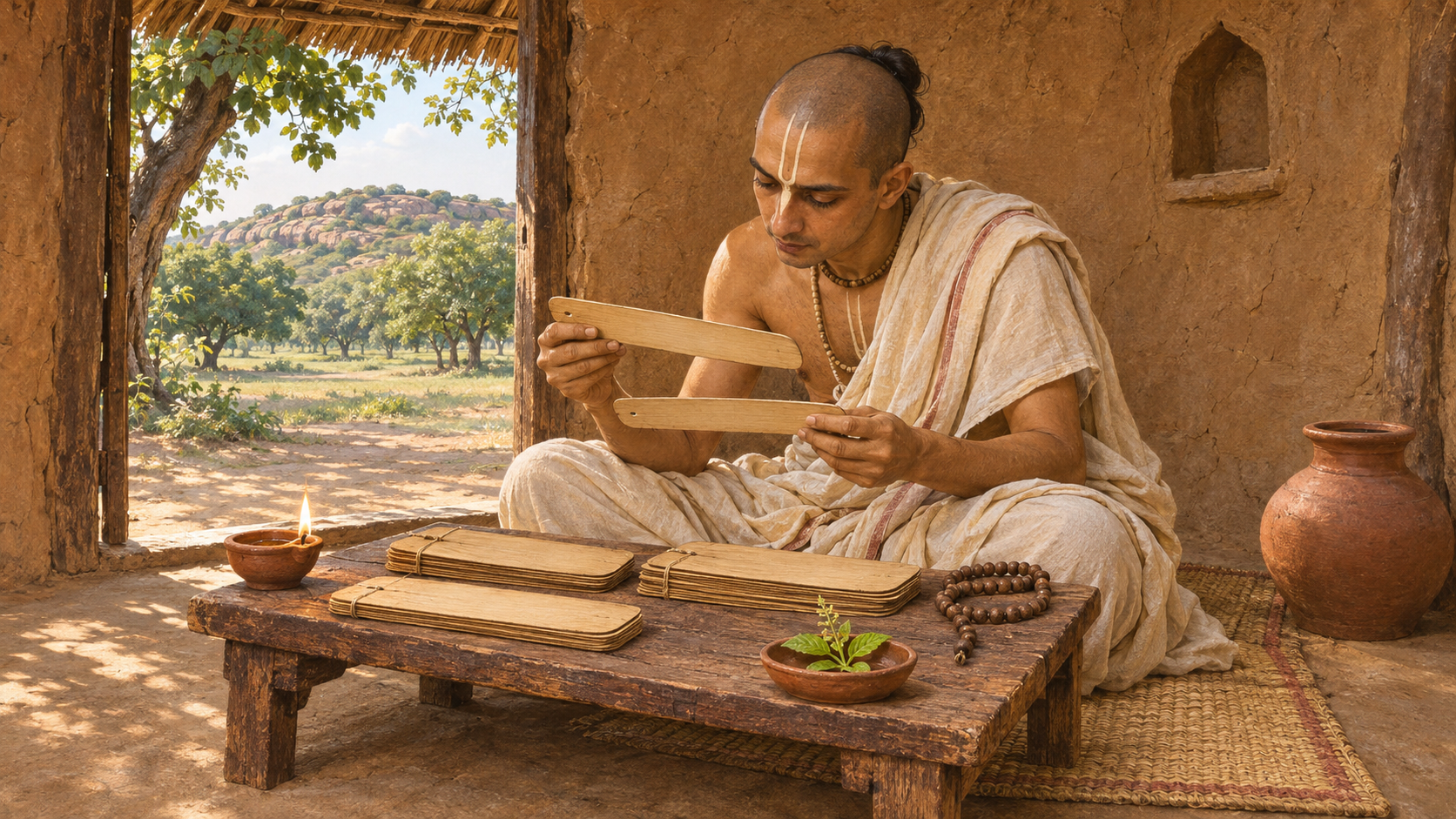
Devotional language can be repeated long before it is understood. Words such as mercy, longing, shelter and intimacy sound familiar, but each carries a discipline. A careful reading practice helps you receive the Goswamis’ vision without turning elevated language into decoration.
- Read for relationships before extracting a message. Identify Krishna, Govardhan, the residents of Vraja and the speaker. Ask who serves, who shelters, who longs and who receives grace.
- Distinguish description from aspiration. A passage may describe an exalted devotional state rather than your present attainment. Let it direct your aspiration without pretending that you already possess the state it describes.
- Keep lila and conduct connected. After reading, write down one quality of service the passage reveals. If you cannot name one, return to the passage instead of rushing onward.
- Use a trusted devotional context. Read an edition and explanation rooted in the Gaudiya tradition you actually follow. Isolated lines can lose their theological setting, especially when terms of relationship or devotional mood are flattened into general English.
- Test understanding by its fruit. Sound engagement should make you more reverent, teachable and willing to serve. If it produces spiritual superiority, entitlement to sacred things or contempt for less-informed devotees, something has gone wrong in the reading.
This method also helps when you hear a lecture. Instead of trying to retain every detail, listen for the movement from identity to relationship to practice: who Govardhan is, how Govardhan relates to Krishna, and what that relationship asks you to become.
Carry Govardhan into daily practice and pilgrimage

You do not need to wait for travel before responding to Govardhan. Begin with a small daily discipline. Bring Govardhan to mind, remember one quality of service associated with the sacred hill, and translate that quality into a concrete action. Offer support without seeking credit. Clean something used in worship. Help nourish another person’s practice. Care for a place rather than merely using it.
Keep the action close to the remembrance. If you postpone the practical response indefinitely, devotional thought remains separate from life. The point is not to imitate the external form of Govardhan but to learn Govardhan’s orientation: make yourself useful to Krishna’s service and to those trying to remember him.
If you visit Govardhan, let that same orientation govern your pilgrimage:
- Walk as a pilgrim, not as a collector trying to complete an attraction list.
- Regulate speech, photography and distraction so that other people’s worship is not turned into your spectacle.
- Keep the path and surrounding places clean. Sacredness is not honoured by leaving waste for somebody else to remove.
- Respect temples, residents, cows and fellow pilgrims as participants in a living sacred landscape, not as scenery.
- Do not remove stones or other natural objects as casual souvenirs. Receive guidance from a trustworthy devotional authority before undertaking practices involving sacred objects.
- If fatigue, crowds or logistics disturb your plan, treat the interruption as a test of patience rather than permission to become harsh.
A journey to Govardhan can deepen remembrance, but distance does not excuse passivity. The real preparation is learning how to approach: without entitlement, without performance and with a readiness to serve.
Key takeaways
- Read Govardhan as sacred relationship and service, not merely as geography or the site of a miracle.
- Ask what Govardhan reveals about Krishna, what service Govardhan embodies and what response that service requires from you.
- Do not confuse descriptions of exalted devotion with a claim that you have already attained it.
- Judge your understanding by its effect on conduct: humility, attentiveness and unadvertised seva are better evidence than devotional vocabulary.
- On pilgrimage, protect the sanctity of the place through restraint, cleanliness and respect for living worship.
Your next step is smaller than a pilgrimage
Choose one Govardhan teaching that you already trust and keep it beside your regular reading or chanting. Each time you return to it, ask: what form of service does this reveal, and where can I practise that service today? Complete that action before searching for another teaching.
If your knowledge of Govardhan grows while your willingness to serve remains unchanged, begin again with the relationship at the centre. If remembrance makes you more attentive to Krishna, more careful with sacred places and more willing to support devotion quietly, the Goswami lens is beginning to shape the way you see.
References

Leave a Reply
You must be logged in to post a comment.