
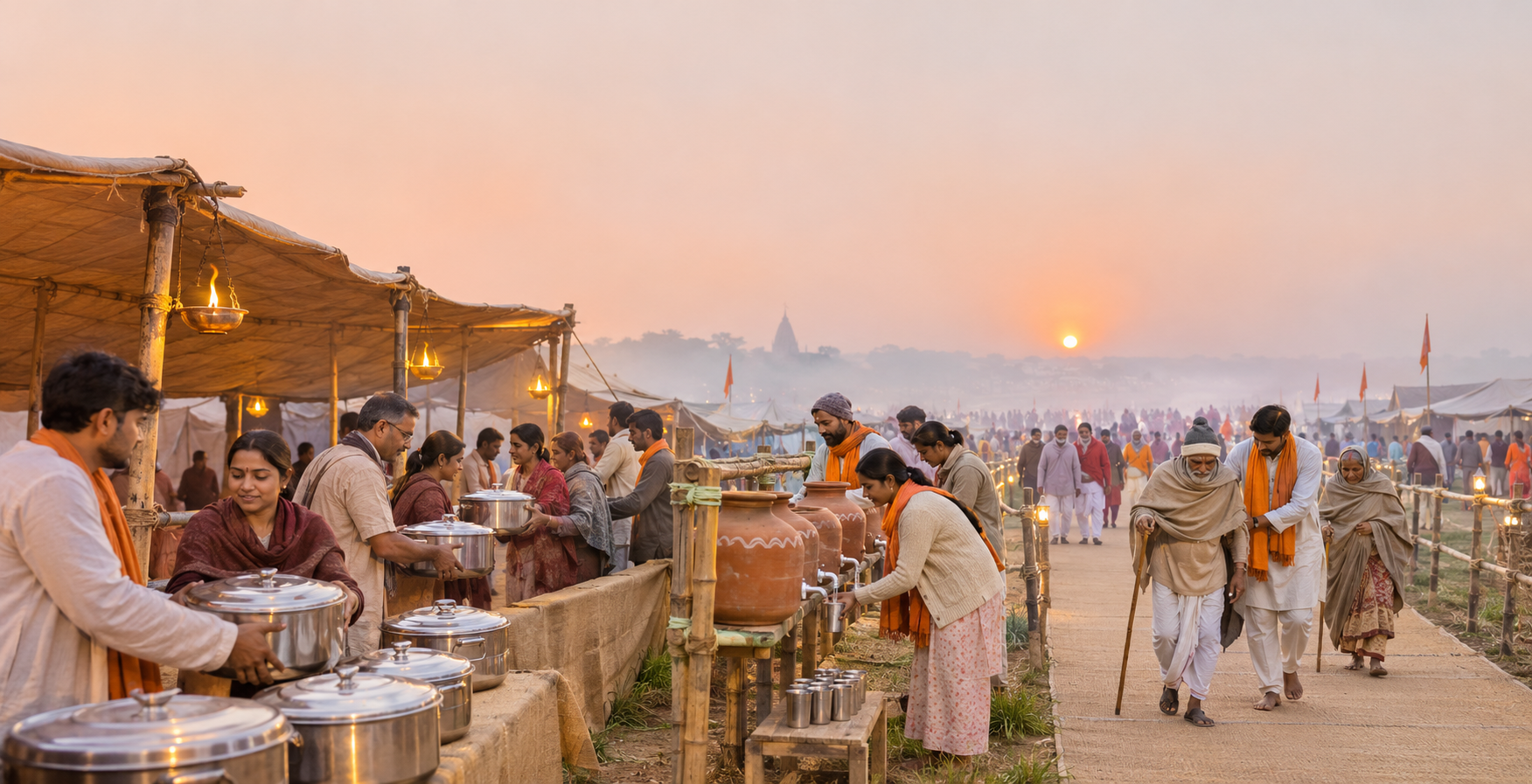
You may arrive at Kartik Yatra hoping for a deeply personal pilgrimage. Yet one of the most meaningful choices before you is practical: will you only move through the yatra, or will you help make the journey possible for someone else?
The scale makes that question urgent. During Kartik Yatra 2026, devotees served 12,000 yatris every day. At that level, good intentions must become dependable action. You serve best when you accept a clear assignment, protect the shared flow and complete the unglamorous work without making yourself the centre of it.
At yatra scale, reliability becomes a form of seva

A large pilgrimage is held together by repeated acts that may look ordinary: giving directions, arranging a queue, distributing what has been prepared, keeping a passage clear, cleaning a shared area and guiding a yatri to the right person. Each task is small in isolation. When thousands of people depend on the same system, however, a missed handover or an improvised instruction can obstruct many others.
This changes how you should understand devotee service. Seva is not merely the activity happening behind the spiritual programme. It creates the conditions in which yatris can participate with attention rather than confusion. Order, cleanliness, timeliness and courtesy are therefore not separate from devotional intent. They are how that intent becomes useful to another person.
Sincerity still matters, but sincerity alone does not tell you where to stand, which route must remain open or who has authority to solve an unusual problem. Before beginning, get three points clear: what outcome you are responsible for, who is coordinating the area and what lies outside your role. These boundaries do not diminish seva. They prevent several sincere volunteers from pulling the same situation in different directions.
Prepare for an assigned role, not an imagined experience
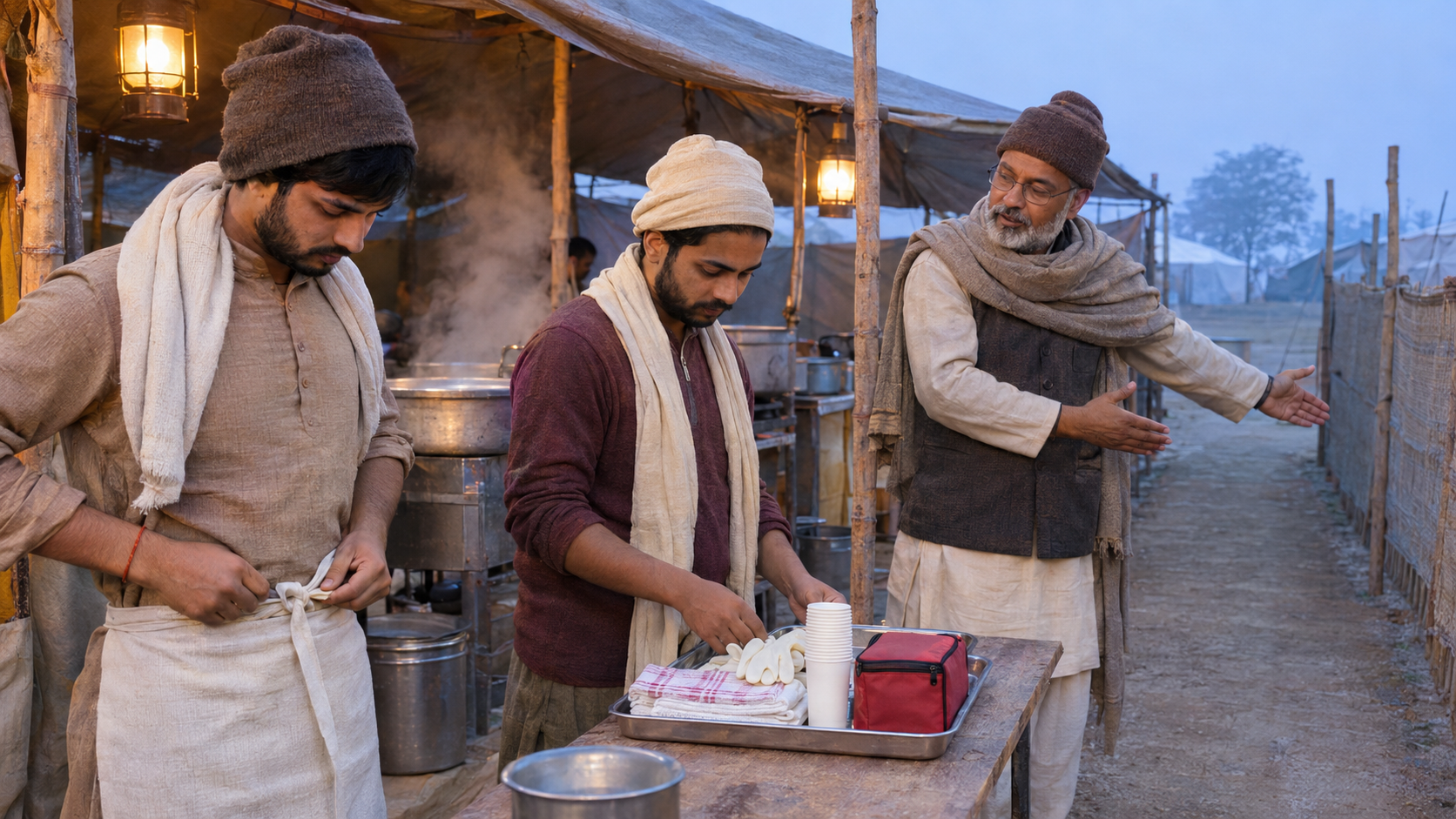
Do not arrive assuming that the task you prefer will be the task most needed. Contact the organisers or volunteer coordinator before travelling if a registration channel is available. Ask concrete questions rather than offering a vague promise to help.
- What is my assigned location, reporting time and expected period of service?
- Who is the coordinator for that area, and where do I check in?
- Does the role involve extended standing, walking, lifting, heat, noise or crowd contact?
- What clothing, identification or personal items should I bring?
- What is the procedure for a lost person, injury, blocked route or other urgent concern?
- Who relieves me, and what information must I pass to that person?
Answer the physical-demand question honestly. Accepting a role that you cannot safely sustain does not help the yatra. If you have limited mobility, cannot stand for long or need regular breaks, tell the coordinator before the assignment is made. A seated information task, record-keeping duty or another appropriate role may be more useful than repeatedly leaving a position that must remain covered.
If you arrive without an assignment, report to the designated volunteer point and wait for direction. Do not create your own queue, redirect pilgrims or move supplies simply because an area looks busy. You may be seeing only one part of a larger arrangement. Ask, receive the instruction and repeat it back so that the coordinator can correct any misunderstanding before it reaches the yatris.
Serve cleanly when pressure rises
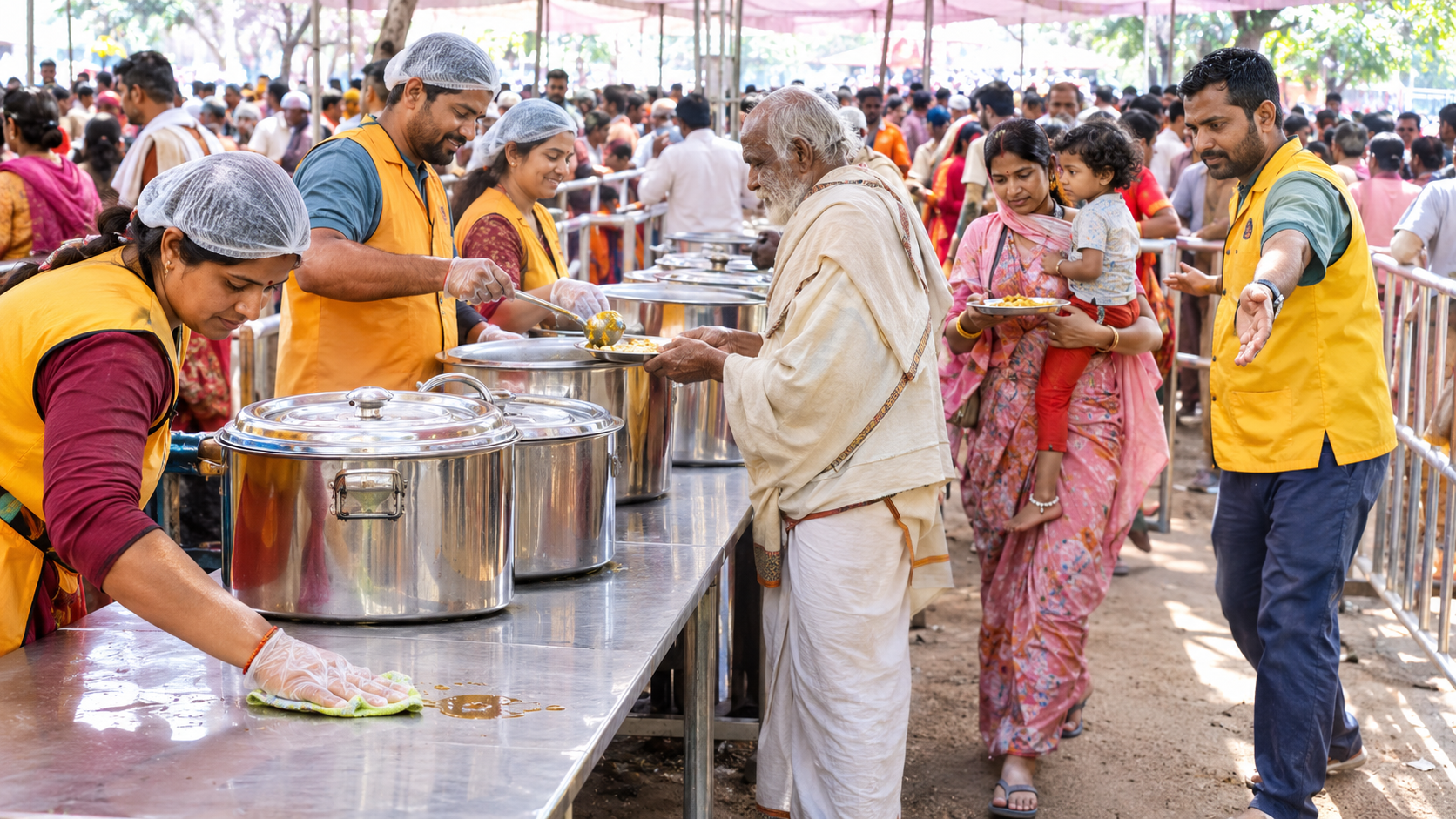
The real test of your preparation comes when several people need help at once. Pressure encourages volunteers to speak faster, promise more and leave their posts to solve the most visible problem. That instinct can create a second gap while addressing the first. Use a simple discipline instead.
- Stay with the assigned function. If you must leave, inform the coordinator or obtain relief first. A post that appears quiet may still be essential to the route.
- Protect movement. Keep entrances, exits, passages and service points clear. If a yatri needs a longer conversation, guide the person to the side before continuing.
- Give one verified instruction. If you do not know the answer, say so and connect the person with someone who does. Confident guesswork travels quickly through a crowd.
- Report with precision. State the exact location, the immediate problem and the kind of assistance required. Avoid speculation about causes or blame.
- Preserve dignity. Ask before touching a person’s body, bag or mobility aid. Do not photograph a distressed yatri or turn another person’s difficulty into devotional publicity.
- Escalate beyond your competence. A medical concern belongs with the designated medical team or emergency response, not with an unqualified volunteer offering a diagnosis.
- Finish the handover. Tell your replacement what remains unresolved, what supplies are running low and which instruction is currently in force.
Calm service does not mean passive service. It means acting promptly without spreading uncertainty. When instructions change, use the coordinator’s current direction rather than defending the method you began with. The purpose is not to prove that your approach was correct. It is to keep the collective work coherent.
Watch your speech as carefully as your task. A brief, respectful instruction is easier to follow than a lecture delivered in the middle of a queue. Address the next necessary action: where the yatri should go, what must be kept ready or whom the person should meet. Correction can be firm without becoming humiliating.
A yatri can lighten the service burden too
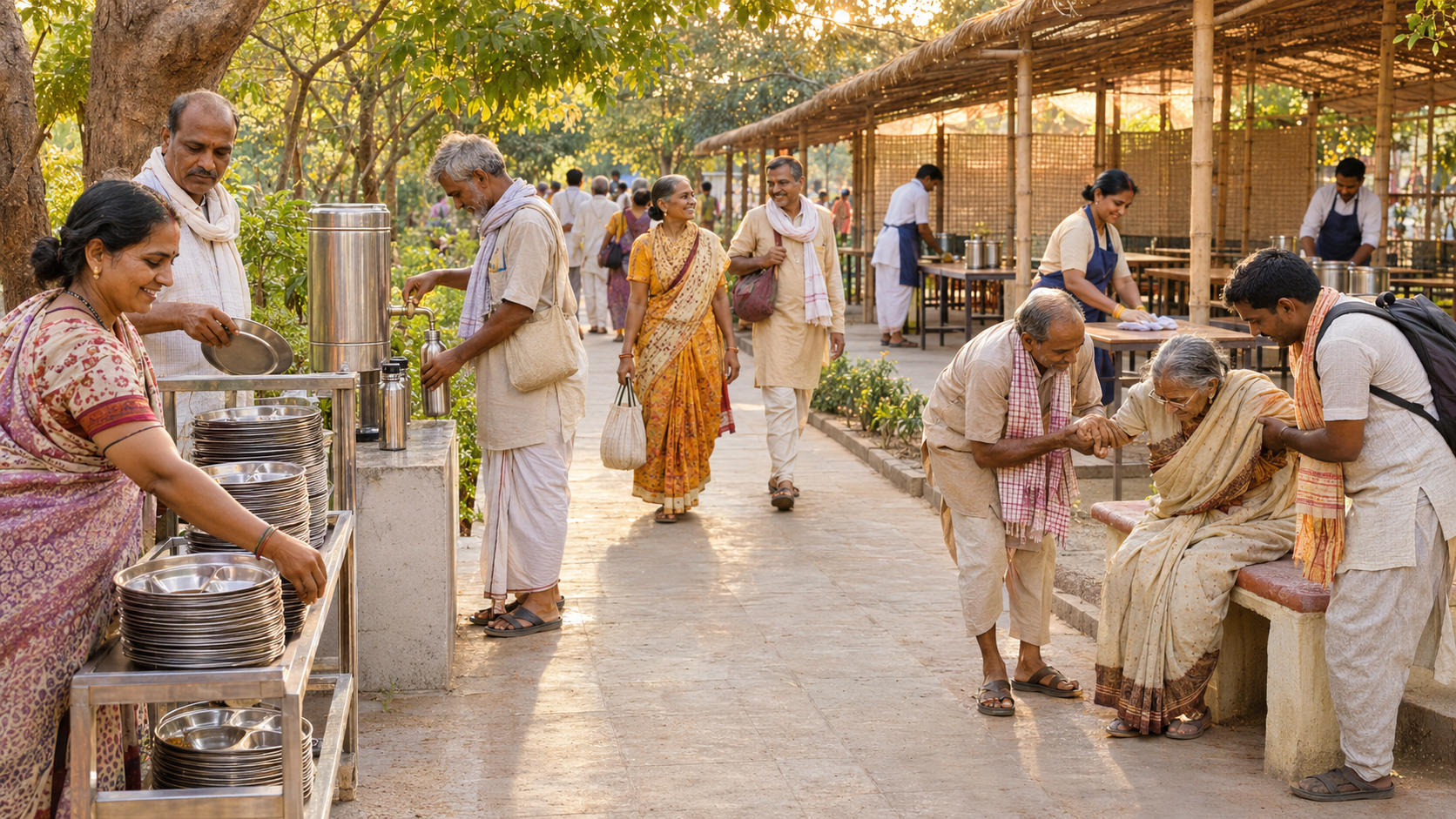
You do not need a volunteer badge to support the yatra. Every participant affects the people behind them. When you understand that, ordinary consideration becomes a form of cooperation with the devotees serving the pilgrimage.
- Read posted directions before reaching the front of a service point.
- Keep tickets, identification or other requested items ready rather than searching for them when your turn begins.
- Take only what you will use. Avoid collecting extra items merely because they are available.
- After receiving what you need, move away from the counter or passage before reorganising your belongings.
- Keep your group together and agree on a meeting point before entering a busy area.
- Place waste only in the designated location and leave shared spaces ready for the next yatri.
- Report a spill, obstruction, separated person or other concern with an exact location.
- Follow the same queue and access instructions expected of everyone else. Personal urgency does not automatically justify creating difficulty for those waiting.
Gratitude should also respect the work. A short acknowledgement is enough when a volunteer is managing a line or distribution point; a long conversation can wait until the rush has passed. If you have criticism, distinguish an immediate safety or access problem from feedback that can be offered later. Urgent problems should be reported at once. General suggestions are more useful when a coordinator has time to record and evaluate them.
This is one of the quiet lessons of a large yatra: the boundary between server and served is porous. A volunteer may later join the pilgrims, and a yatri can make the volunteer’s work easier through discipline. Both are participating in the same shared undertaking.
Key takeaways for your next Kartik Yatra
- Before you travel: confirm your assignment, coordinator, reporting point and physical requirements.
- When you arrive: check in and repeat the instruction back instead of acting on an assumption.
- While serving: stay within your role, keep shared routes clear and give only verified directions.
- When something exceeds your role: report the exact location and request the appropriate help.
- At the end of a shift: hand over unresolved matters and current instructions before leaving.
- When attending as a yatri: make each service point easier for the person behind you to use.
Your next step can be taken before the journey begins. Ask the organisers where dependable help is needed, then prepare for that actual duty. If you attend only as a yatri, choose the same standard in another form: move attentively, follow the shared arrangement and leave every place easier for the next person to enter.
References

Leave a Reply
You must be logged in to post a comment.