
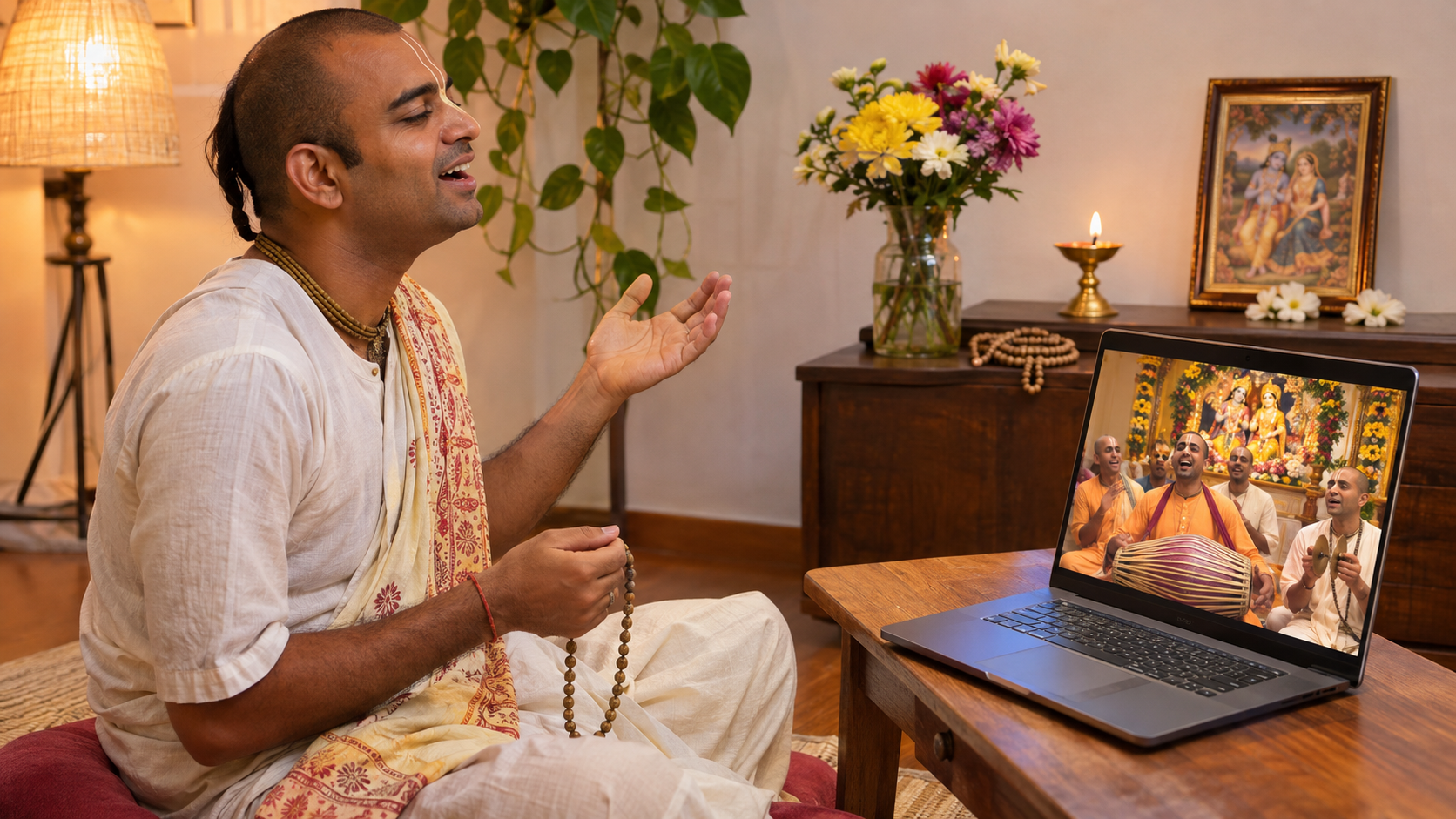
You have found an ISKCON event marked live, but the practical question comes next: should you simply watch, chant along, or wait until you can visit a temple? The answer depends less on the screen than on what you intend to do with the time.
Choose the right kind of event, prepare your surroundings, and participate instead of consuming it as background media. A live feed can then support your sadhana without asking you to pretend that online access is the same as physical presence.
Match the event to the devotional need in front of you
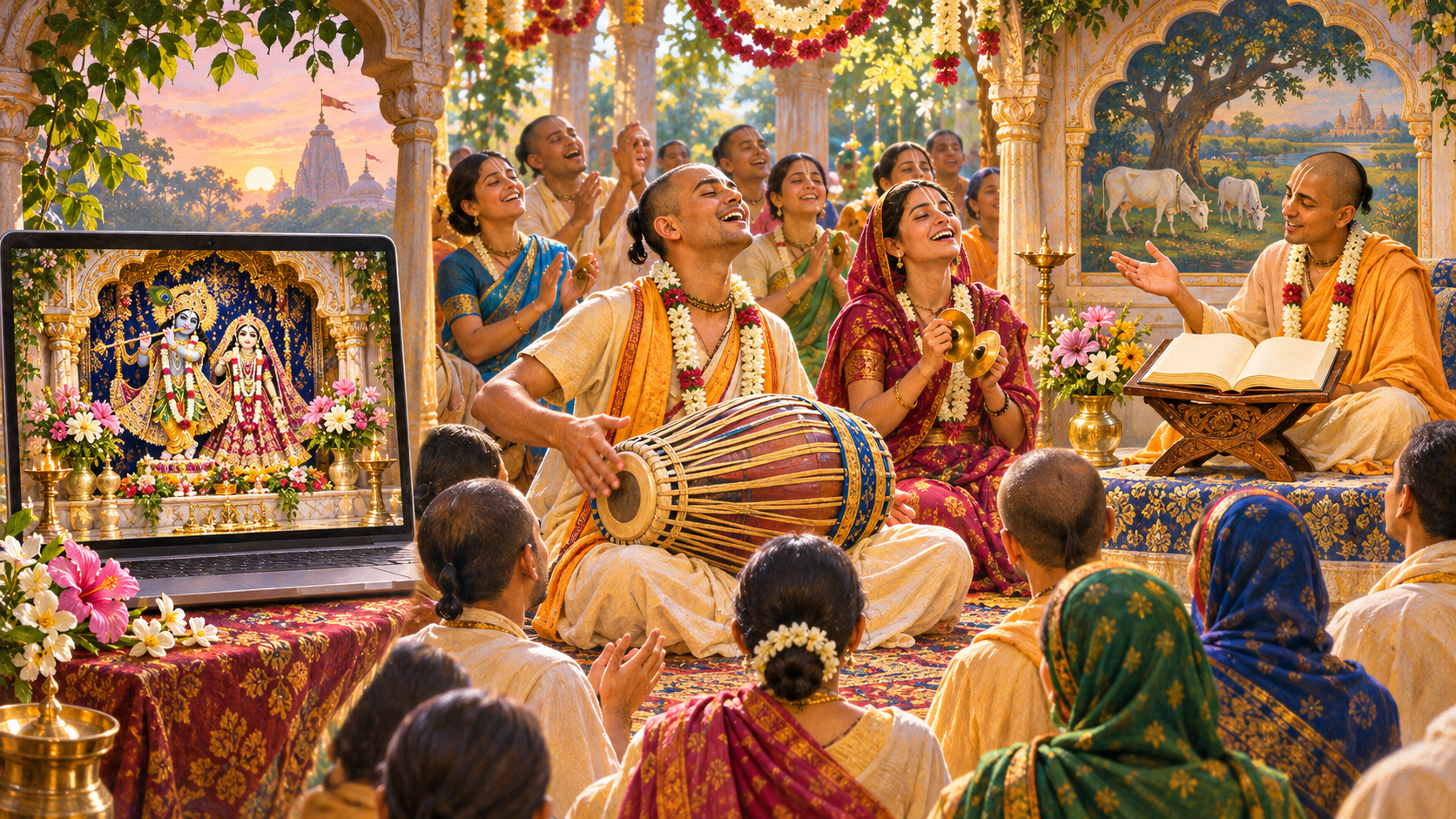
ISKCON live programming does not come in a single form. You may encounter a Philadelphia event presented simply as live, a New York harinam dated 14 November 2026, or a named festival session such as Madhura Mahotsava 2026 Day 2 at ISKCON Chennai with HH BB Govinda Swami Maharaj. These formats place your attention in different devotional settings.
- Choose a temple-origin broadcast when you want a connection to the rhythm and atmosphere of a particular ISKCON community. Read the event description rather than assuming that every temple feed contains the same programme.
- Choose harinam when you want to join the outward-facing practice of chanting sacred names in public. The street setting matters: this is devotional witness carried beyond the temple walls, not merely music recorded outdoors.
- Choose a festival session when you can give sustained attention to a named programme, teacher, or kirtan leader. Let the name help you find the event, but keep your attention on the devotional practice rather than turning the participant into a celebrity.
Ask what you need before pressing play. Do you want continuity with a temple community, the public energy of harinam, or focused participation in a festival programme? Can you chant aloud where you are? Can you remain present for the announced programme? These questions are more useful than choosing whichever thumbnail happens to appear first.
Live participation offers simultaneity: you know that a community is gathering while you are listening. It does not automatically make the experience deeper than a replay. If the local event time conflicts with sleep, family duties, work, or safe travel, use a recording when one is available. Being live is a practical aid to attention, not a test of devotion.
Prepare before the broadcast begins

Most online distraction is decided before the chanting starts. If you enter through a social feed with notifications active, the same platform that carries the kirtan will keep asking you to leave it. Remove that friction in advance.
- Confirm the event date, the city named in the announcement, and the corresponding time where you live. Do not assume that an event listed for New York, Philadelphia, or Chennai is displayed in your time zone.
- Open the direct event page before settling down. Check whether the broadcast is upcoming, already live, or finished, especially when an announcement has travelled through several social channels.
- Test the sound at a clear, comfortable level. Kirtan depends on hearing the lead and response; overwhelming volume does not make participation more devotional.
- Silence notifications, close unrelated tabs, and move the comments or recommendation feed out of view when the platform allows it.
- Choose a stable place where you can sit, stand, or chant without repeatedly adjusting the device. Keep any devotional items you normally use nearby, but do not turn an elaborate setup into a condition for beginning.
- If you share the room, tell others that you intend to participate. Invite them without pressuring them, and agree on an arrangement that respects both the practice and the household.
If your circumstances permit only fragmented attention, be honest about that. Listening during routine work may still be meaningful, but it is not the same exercise as setting aside undivided devotional time. Save the focused programme for a setting in which you can actually respond.
Participate as a practitioner, not a spectator
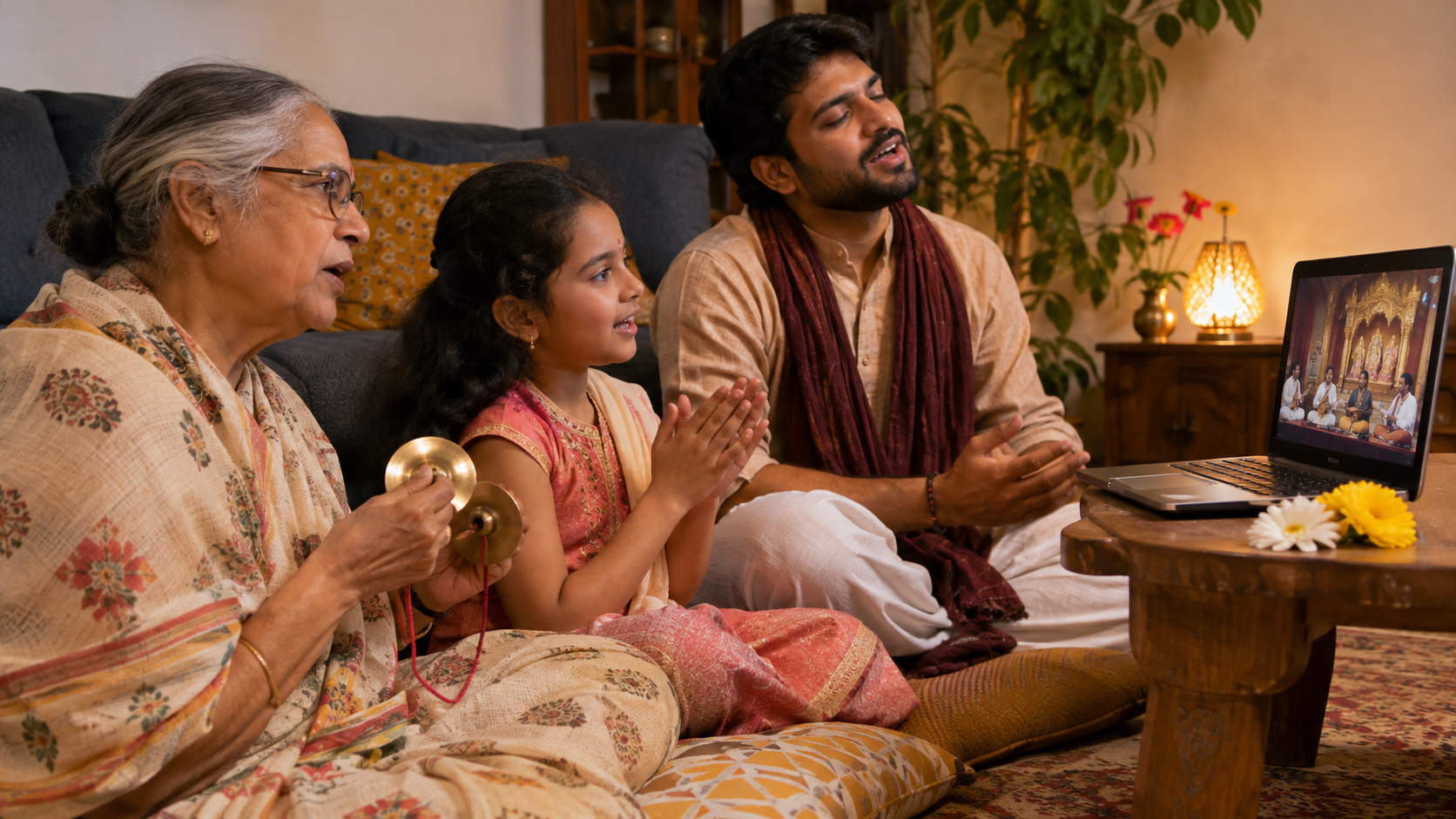
A screen quietly encourages spectatorship. Kirtan asks for something different: attentive listening followed by response. You do not need a trained voice, familiarity with every melody, or a public display of enthusiasm. You do need to stop treating the event as content that must entertain you.
- Begin with a simple sankalpa, or intention. State plainly why you are joining: to chant attentively, steady the mind, reconnect with a community, or learn how a devotional gathering unfolds.
- Listen closely when a melody or refrain is unfamiliar. Enter the response after you can follow it instead of struggling to anticipate the lead.
- Chant aloud when your surroundings allow. If they do not, remain inwardly attentive rather than splitting your attention between the event and another feed.
- Let natural pauses remain pauses. Reaching for messages whenever the sound softens trains the mind to leave precisely when attention could deepen.
- During a spoken segment, listen for a teaching you can carry into practice. Constant transcription can become another form of distance; note the point after it has landed.
- When the programme ends, resist the platform’s immediate recommendation to watch something else. Close the stream deliberately and sit with the transition before returning to ordinary tasks.
Each format also asks for a different kind of attention. During harinam, do not reduce passersby or the public setting to spectacle. Attend to the act of bringing sacred sound into shared space. During a temple broadcast, notice the discipline of communal continuity without claiming that the device has replaced a temple visit. During a festival programme, receive artistic excellence in the service of bhakti without judging the entire event by musical novelty.
Technical problems may interrupt the sound, picture, or connection. Fix what you can, but do not let irritation become the central experience. If the feed remains unusable, step away and continue the devotional practice available to you. The platform is carrying the gathering; it is not the object of the gathering.
Key takeaways
- Choose a temple stream, public harinam, or festival programme according to the kind of participation you can genuinely offer.
- Verify the event’s city, date, time zone, and live status before arranging your day around it.
- Prepare the room and device so notifications, comments, and autoplay do not direct your attention.
- Listen and respond as a participant; do not judge the gathering only by production quality or musical preference.
- Let the event lead to a repeatable practice, a local relationship, or a specific change in how you use devotional time.
Carry the live event into your regular practice
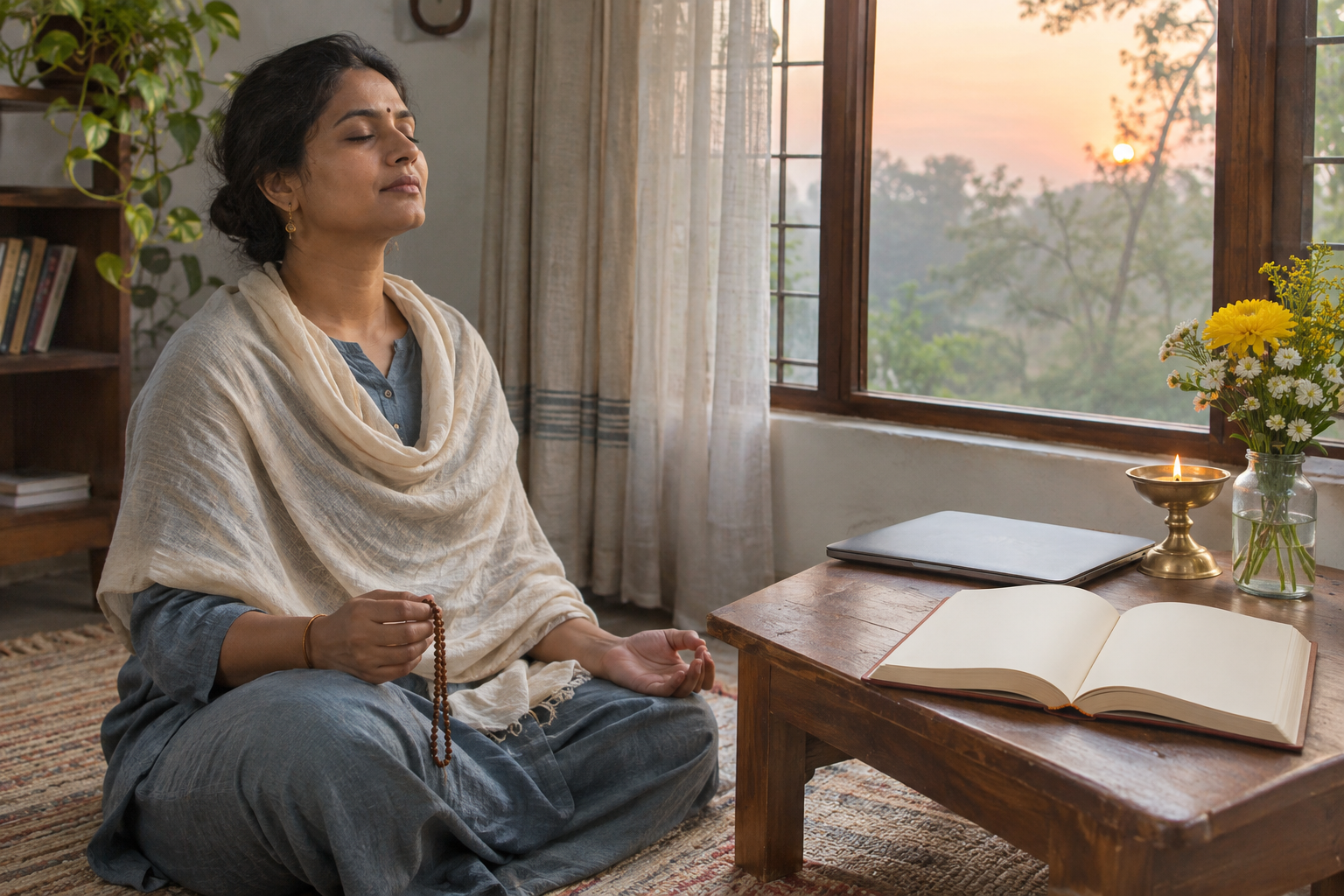
The value of a devotional broadcast becomes clearer after the stream closes. Emotion during kirtan can be welcome, but intensity is not a reliable measure of spiritual progress. A quieter event may leave you with a more durable practice than a dramatic one.
- Record the event name and the practice you intend to continue. Write an action, not merely an impression: return to attentive chanting, revisit a teaching, or find the next gathering of the same community.
- Create a recurring place in your routine for kirtan or attentive listening. Consistency matters more than collecting links to programmes you never enter fully.
- If the broadcast awakened interest in community life, look for an ISKCON temple or congregation you can contact locally. Ask about the programme before attending so you understand whether it is worship, kirtan, discourse, harinam, or a festival gathering.
- When sharing a live event, send the direct link with enough context for the recipient to understand what it is. A devotional gathering deserves better than a contextless clip chosen only for novelty.
- If you are new to the vocabulary or practice, ask the organiser a precise question. Clarifying how to participate is better than silently assuming that everyone else already knows.
At the next live event, make a modest commitment: choose the format deliberately, clear space for it, respond when the chanting invites response, and protect the transition back into daily life. The aim is not to say that you watched devotional content. It is to leave having practiced.
References
- Dandavats – ISKCON PHILADELPHIA is live
- Dandavats – NYC Harinam Live Nov 14 2026 in New York
- Dandavats – HH BB Govinda Swami, Madhura Mahotsava 2026 Day 2, ISKCON Chennai

Leave a Reply
You must be logged in to post a comment.