
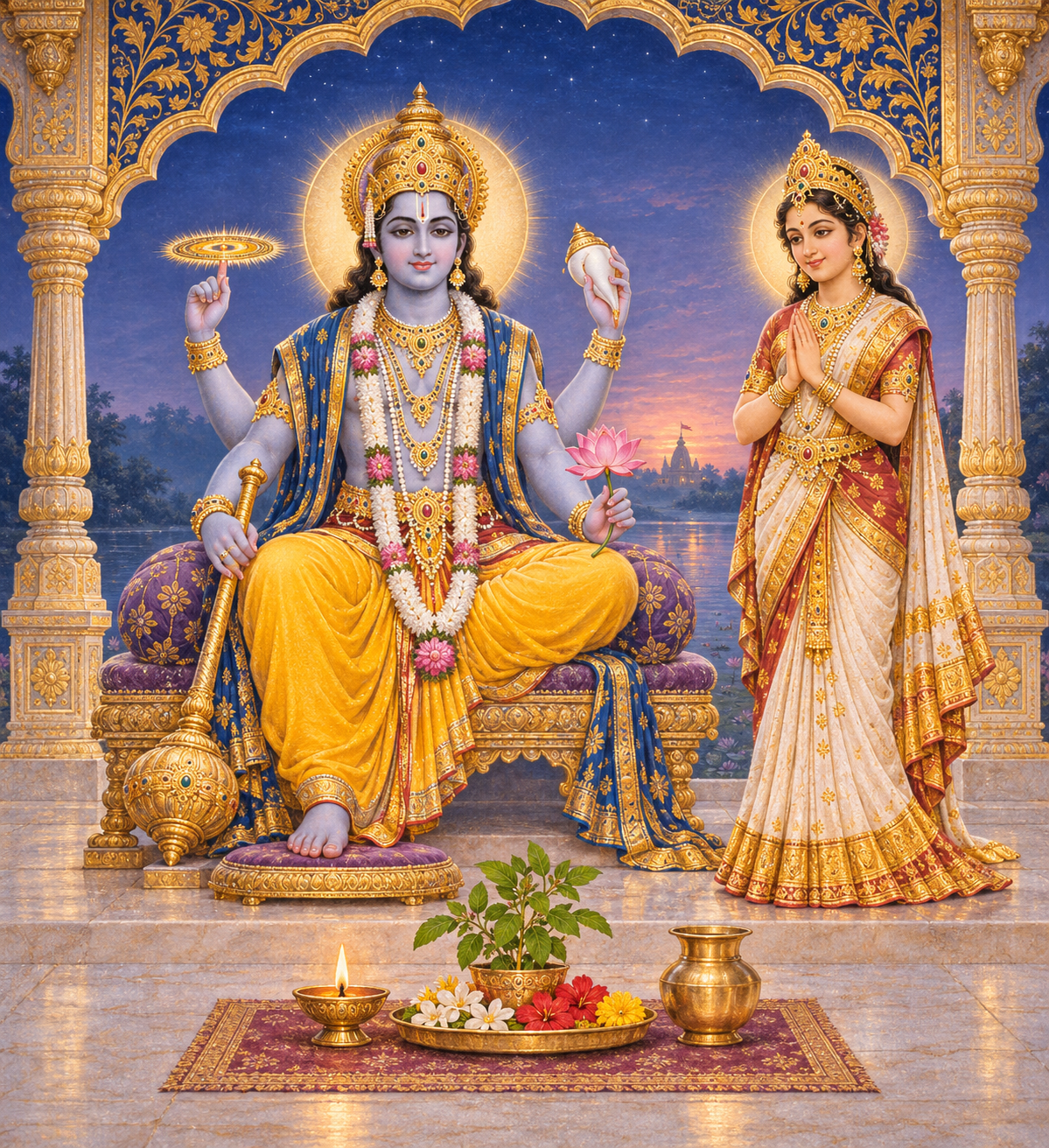
Your panchanga says Utpanna Ekadashi or Utpatti Ekadashi, and you want to know what you should actually do. Keep the centre of the vrata clear: worship Sri Vishnu, listen to the appearance story of Ekadashi Devi, discipline food and conduct according to your capacity, and complete the observance on Dwadashi.
Two decisions should be made before the day arrives. Confirm the correct date and parana time for your location, then choose a form of fasting that you can keep safely and peacefully. A modest vow completed with attention is better than a severe one that ends in illness, anger, or abandonment.
Why this Ekadashi is called Utpanna

Utpanna means arisen, manifested, or born. The name remembers the appearance of Ekadashi Devi as divine Shakti rather than treating Ekadashi as nothing more than the eleventh square on a lunar calendar.
In the Bhavishyottara Purana dialogue, Arjuna asks Sri Krishna about the importance of Ekadashi vrata. Krishna answers through the account of the asura Mura and the manifestation of the Devi:
- Mura becomes a powerful adversary of the devas, and Sri Vishnu confronts him.
- After the struggle, Vishnu withdraws to rest. Mura sees this as an opportunity to attack.
- At that vulnerable moment, a radiant feminine power manifests from Vishnu.
- The Devi faces Mura and destroys him before he can strike the resting Lord.
- Vishnu awakens, recognizes her power, and gives her the name Ekadashi.
- She receives the boon that sincere observance of her tithi will become a means of purification and spiritual merit.
The turning point is not simply that a demon is defeated. Mura attacks when vigilance appears to have fallen away, but protective Shakti is already present. Ekadashi therefore represents alertness arising precisely where heedlessness expects to win.
You do not have to reduce the Devi to a psychological metaphor to learn from the katha. Its devotional and ethical meanings can stand together. Ekadashi is worshipped as sacred presence, while Mura can also help you recognize aggression, appetite, resentment, gossip, or distraction in your own conduct. Choose one such tendency before the vrata and refuse to feed it for the day. That makes listening to the katha part of the vow rather than a ritual formality.
Confirm the date from a local panchanga
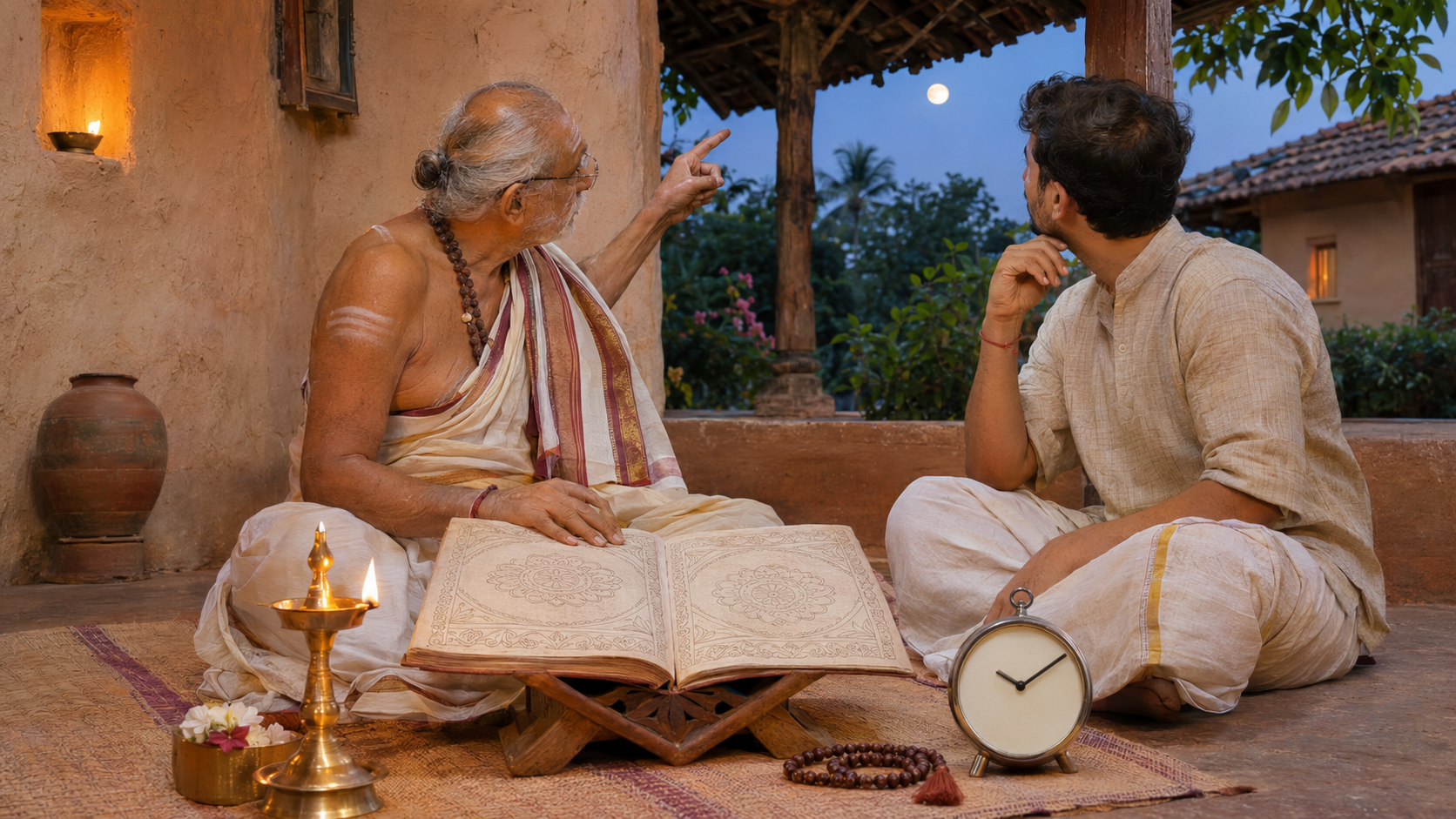
Utpanna Ekadashi is observed on the eleventh lunar day of the waning fortnight in Margashirsha or Kartika. The two month names reflect regional lunar-calendar conventions; they do not indicate two separate festivals.
A tithi does not necessarily begin at midnight or last for one civil day. Its clock times can also differ by location. That is why a forwarded festival image, an overseas calendar, or a date copied from a previous year is not enough.
- Use a panchanga or temple calendar calculated for your city and the relevant year.
- Look for Krishna Paksha Ekadashi under the name Utpanna or Utpatti Ekadashi.
- Record the civil day on which your tradition keeps the fast.
- Record the Dwadashi parana window at the same time. Do not wait until the morning after the fast to search for it.
- If your family, temple, or sampradaya follows a particular calculation, stay consistent with that tradition instead of combining dates from unrelated calendars.
Two trustworthy calendars can occasionally assign the vrata to adjacent civil days because their observance rules differ. When that happens, the practical question is not which calendar can be declared universally wrong. Ask which one follows your lineage and is calculated for your location.
A practical observance from Dashami to Dwadashi
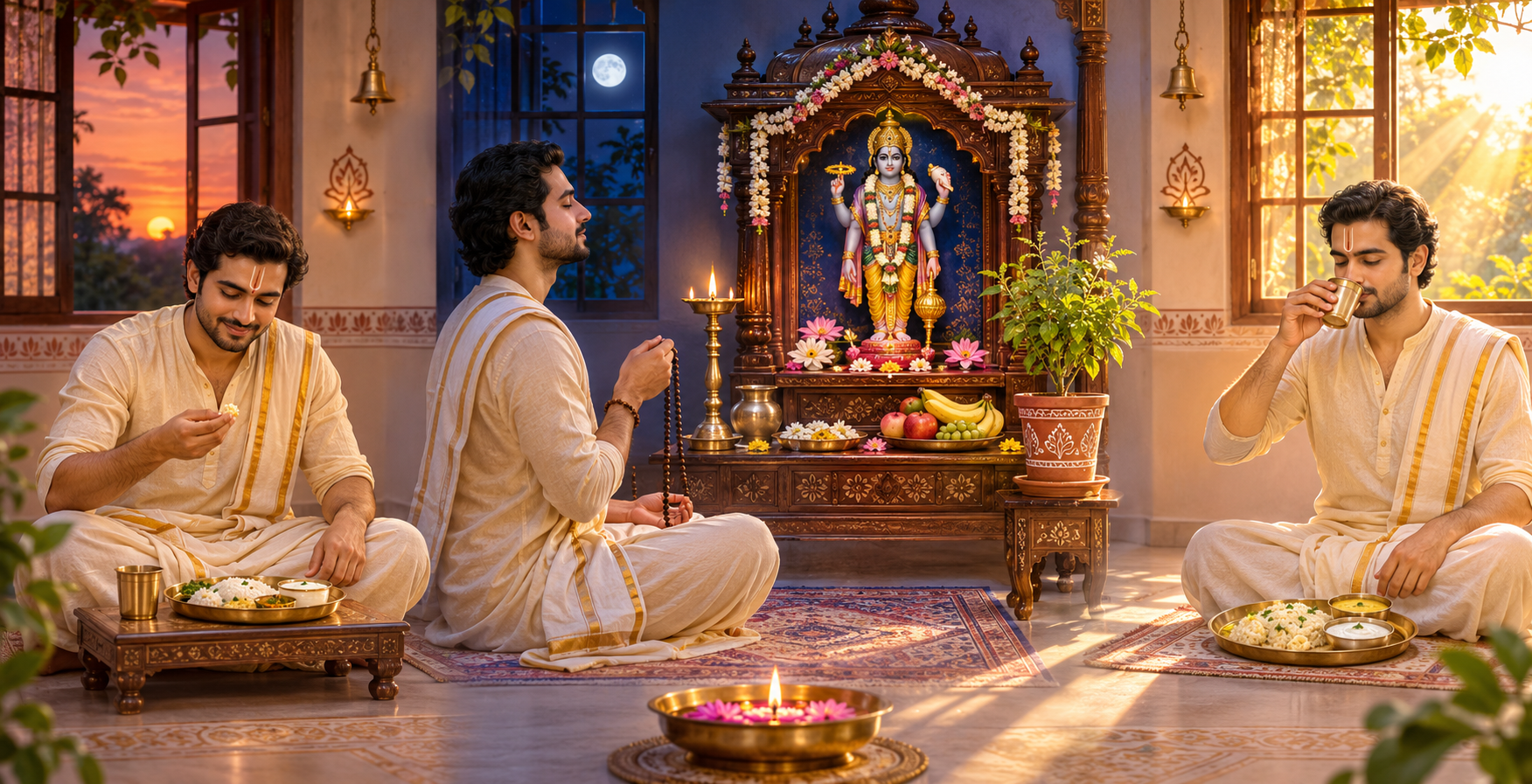
On Dashami: decide the vow before hunger decides it for you
Use the preceding day to prepare. Note the Ekadashi date and parana window, settle on your level of fasting, and arrange the few things needed for puja. Take a simple sattvic meal rather than overeating in anticipation of the fast. The aim is to enter Ekadashi with steadiness, not with a food hangover.
Your sankalpa should be specific enough to keep. A plain-language version can be:
On this Utpanna Ekadashi, I undertake a vrata to Sri Vishnu according to my capacity. May my food, speech, actions, and attention become disciplined, and may I complete the observance properly on Dwadashi.
A suggested personal sankalpa, not a prescribed liturgical formula
If your family or guru has given you a customary sankalpa, mantra, or food rule, follow that instead.
On Ekadashi: keep the worship simple enough to remain attentive
- Bathe and clean the place of worship as your circumstances permit.
- Place an image or murti of Sri Vishnu, Narayana, Krishna, or your customary Vishnu form on the altar.
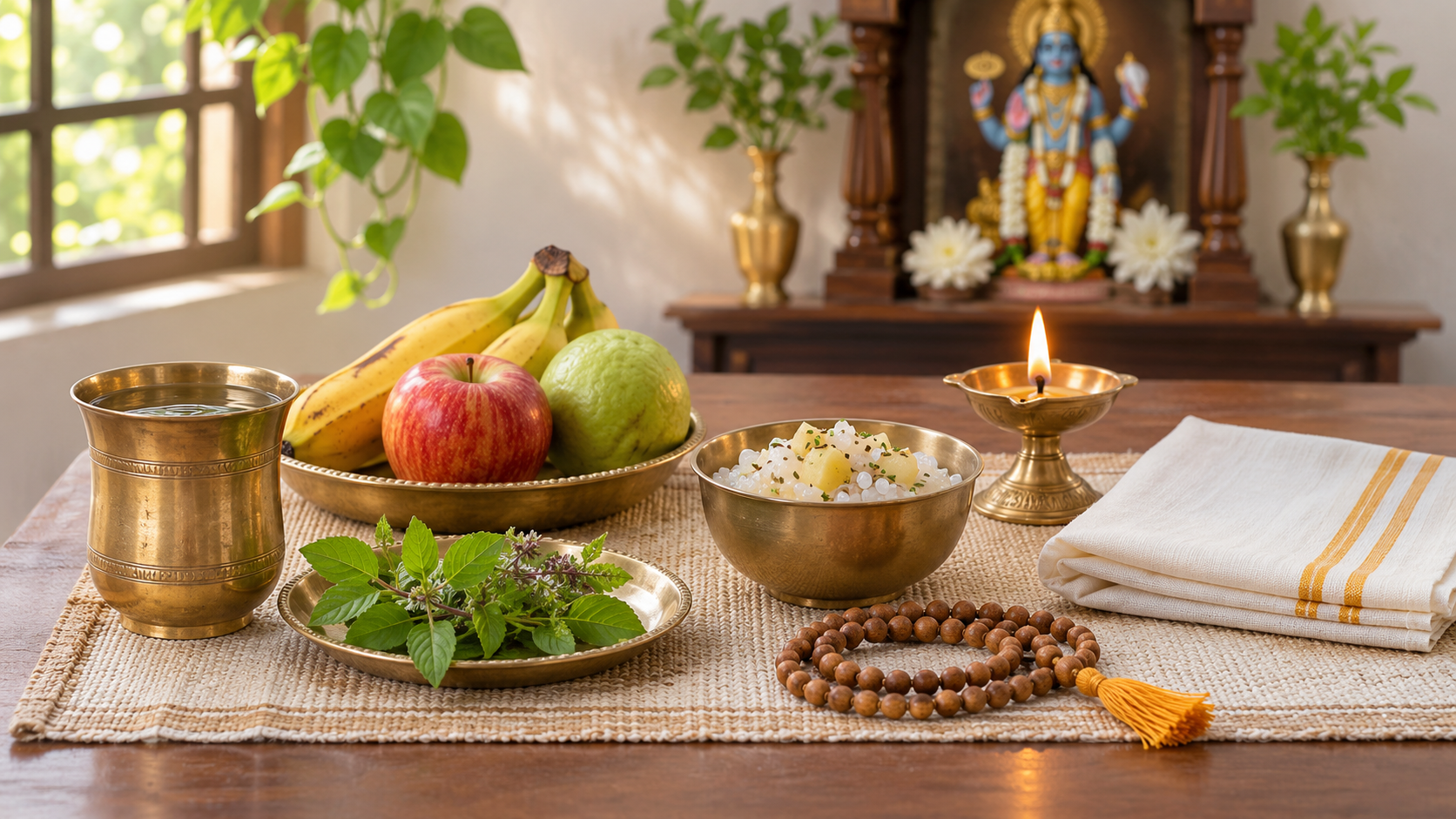
- Light a lamp and make the sankalpa. Offer water, flowers, fruit, or other simple items available in your household. If offering tulsi is part of your practice, include it.
- Recite your customary Vishnu mantra or repeat the divine name. A shorter period of attentive japa is more useful than a large count performed mechanically.
- Read or listen to the Utpanna Ekadashi katha. Pause at the moment Ekadashi Devi manifests and remember the tendency you resolved not to feed.
- Keep the chosen food discipline without turning the day into continuous discussion of permitted recipes.
- Guard speech as deliberately as food. Avoid quarrels, ridicule, gossip, and needless harshness.
- In the evening, perform aarti or sit for quiet prayer. A night vigil may be kept where it belongs to your tradition and capacity, but it should not make driving, work, caregiving, or other responsibilities unsafe.
You do not need an elaborate altar. One lamp, a sincere offering, Vishnu nama-japa, the katha, and disciplined conduct form a coherent household observance. If work or caregiving limits your time, decide in advance on a brief morning practice and a brief evening practice. Protect those two appointments rather than waiting for an uninterrupted day that may never come.
Choose a fast that serves the vrata
Households observe Ekadashi at different levels. These can include a complete fast, water, fruit or milk, foods permitted by the family’s Ekadashi custom, or a medically modified diet. Rules about grains, pulses, spices, and prepared foods vary, so use the standard of your own sampradaya rather than constructing a menu from several internet lists.
A nirjala fast without food or water is not a test that everyone must pass. If you have diabetes, are pregnant or breastfeeding, are recovering from illness, have a history of an eating disorder, or take medicine that depends on food or fluids, seek qualified medical guidance before restricting intake. Do not stop prescribed medicine for a vrata. Children, frail older adults, and anyone who becomes unwell should not be pressured into severe fasting.
When food restriction is unsafe, preserve the vow through simple meals, worship, japa, katha, charity, and restraint of harmful habits. The spiritual discipline is larger than the menu.
On Dwadashi: complete rather than merely stop
Parana is the deliberate completion of the fast on Dwadashi. Use the local time you recorded before Ekadashi. Offer gratitude to Sri Vishnu, conclude the sankalpa, and break the fast gently with food appropriate to your health and tradition.
Do not extend the fast through the prescribed parana period merely to make it look more austere. Completion at the proper time teaches a different discipline: obedience to the vrata rather than attachment to personal displays of endurance. Where it is customary and feasible, share food or make a charitable offering after parana.
Keep these common mistakes out of the vrata
- Do not select the date from the month name alone. Confirm the observed day and parana window for your location.
- Do not make the severest fast your first decision. Choose the level after considering health, work, caregiving, and established family practice.
- Do not spend Ekadashi recreating a feast from technically permitted ingredients. Simplicity is part of the restraint.
- Do not police another person’s plate. Members of one household may need different levels of fasting while sharing the same worship.
- Do not preserve food discipline while abandoning discipline of speech. A day of fasting accompanied by anger and humiliation has missed the katha’s practical demand.
- Do not treat the evening as the end of the observance. Keep the Dwadashi parana commitment that was included in your sankalpa.
The easiest way to test your observance is to ask what became quieter. If only the kitchen changed while resentment, distraction, and self-display remained fully fed, the vrata needs rebalancing. If appetite became simpler and attention moved toward Sri Hari, the form is doing its work.
Utpanna Ekadashi questions answered
Are Utpanna Ekadashi and Utpatti Ekadashi different?
No. Both names are used for the Ekadashi that commemorates the appearance of Ekadashi Devi. Your regional calendar may prefer one name.
What should I do if my family calendar and an app show adjacent dates?
Check whether both are calculated for your location and whether they follow the same observance tradition. Prefer the established calendar of your family, temple, or sampradaya. Do not take the fasting day from one calendar and the parana time from another without confirming that their rules agree.
Can I observe Utpanna Ekadashi if I cannot fast completely?
Yes. Set a safe food discipline and give greater attention to puja, Vishnu nama-japa, the katha, charity, and restraint of speech and harmful habits. State the modified form honestly in your sankalpa instead of promising a level you cannot safely complete.
What is the minimum meaningful home observance?
Confirm the date, make a sincere sankalpa, offer a lamp and simple worship to Sri Vishnu, hear the Utpanna Ekadashi katha, keep an appropriate food and conduct discipline, and perform parana on Dwadashi. Add further ritual only when it helps attention rather than replacing it.
Before Dashami, write down three things: your observed Ekadashi date, the form of fasting you will keep, and the Dwadashi parana window. Then choose the one habit you will stop feeding when you remember Mura. Those decisions turn Utpanna Ekadashi from a date you notice into a vrata you can actually complete.
References
- Hindu Pad – Utpanna Ekadashi Vrat Vidhi | Procedure of Utpanna Ekadashi Pooja
- Hindu Pad – Utpatti Ekadashi Vrat Katha | Story of Utpanna Ekadashi

Leave a Reply
You must be logged in to post a comment.