
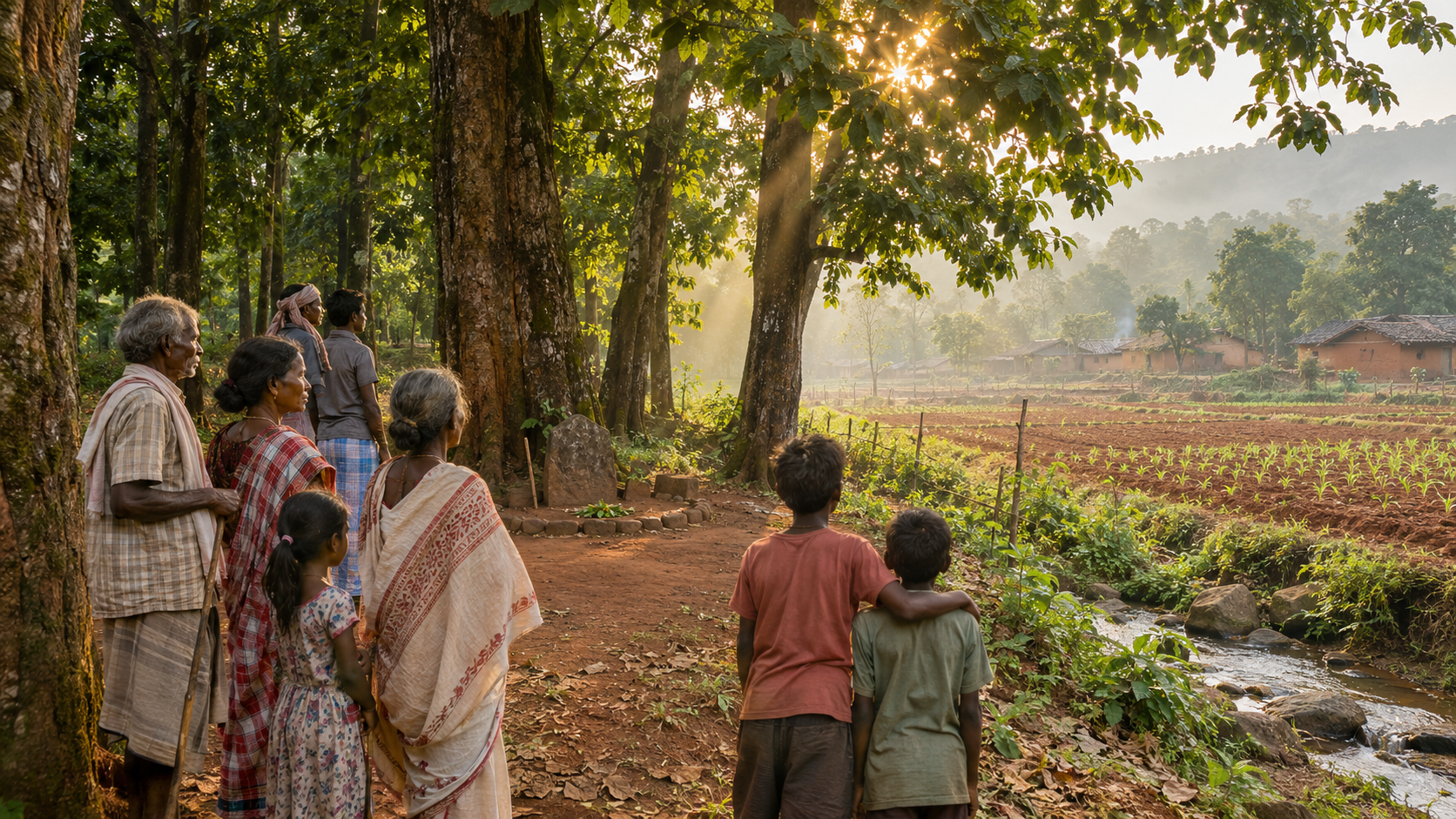
If you are trying to decide whether the argument over Sarna faith in Jharkhand is really about religion or land, reject the choice. The two issues require separate evidence, but they meet in the life of the same community. A people can retain its religious name while losing the land, security and continuity that allow inherited practices to survive.
The death of tribal leader Nisha Bhagat has made that connection urgent. It has also created a danger: serious allegations may be absorbed into party politics before anyone establishes what happened. You should judge the response by records, investigative findings and protection on the ground—not by the volume of competing statements.
Why Sarna faith and tribal land meet in the same struggle
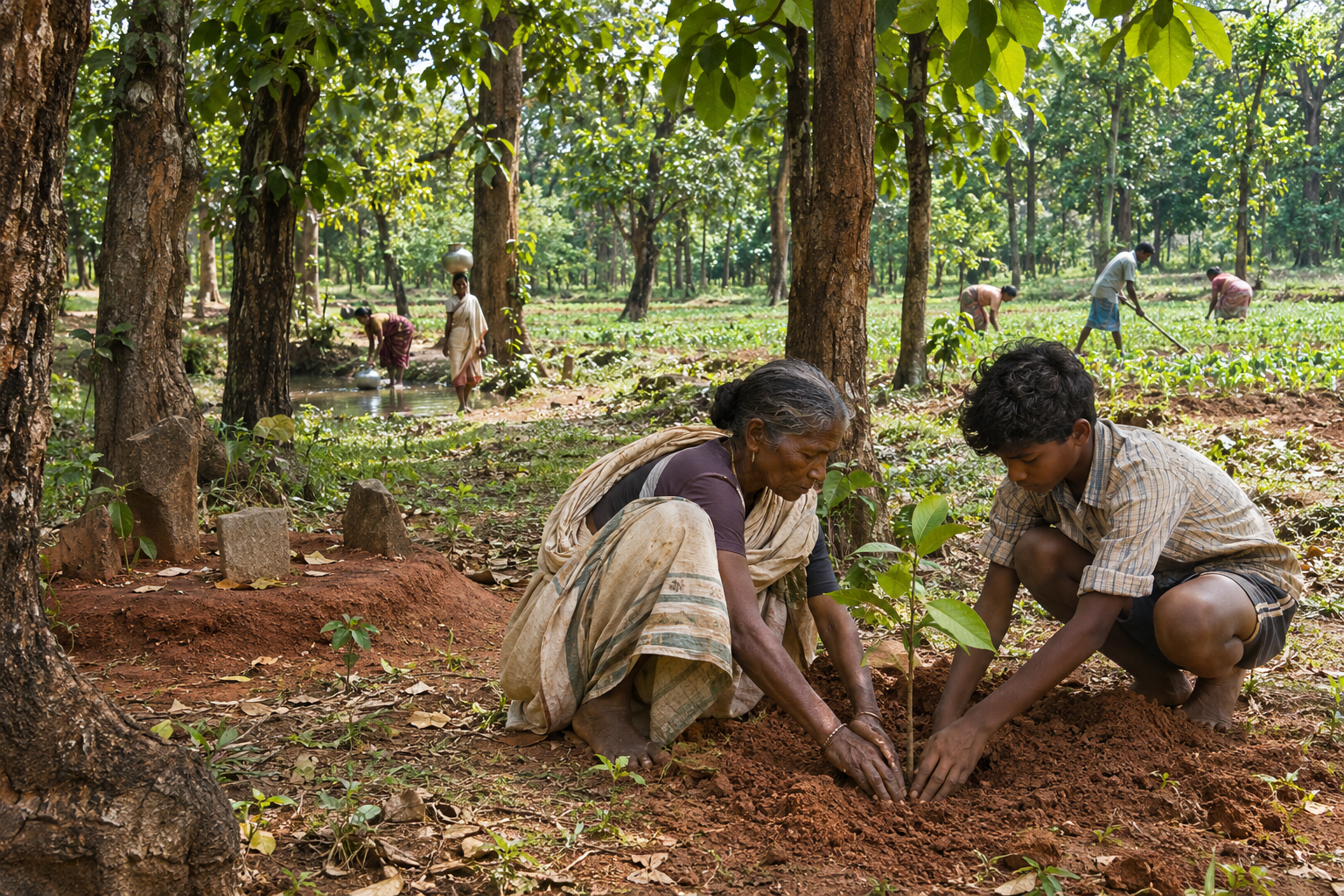
For a land-rooted tradition, territory is more than a marketable asset. It supports community continuity, collective memory and the transmission of customs between generations. When a tribal family loses control of land through coercion, fraud or unlawful occupation, the injury can therefore be economic, social and cultural at once.
This does not mean every land dispute is automatically a religious attack. Nor does a claim about conversion prove that a land transfer was improper. Treating those conclusions as interchangeable makes a fair inquiry harder, not easier.
Three questions should be kept distinct:
- Who has lawful title or possession? This requires land records, transaction documents, official entries and the history of the parcel.
- Was pressure used? Alleged threats, deception, coercion or organised interference require their own witnesses, communications and contemporaneous complaints.
- What happened to religious freedom? Claims involving conversion or obstruction of Sarna practice must be tested through evidence about consent and conduct, not assumed from a person’s identity.
The issues can interact without becoming identical. That distinction protects Sarna communities from real coercion while also protecting an investigation from conclusions that outrun the evidence.
What the Nisha Bhagat case establishes—and what remains alleged

Nisha Bhagat was a tribal leader whose death by suicide has become the focus of demands for a wider inquiry. Former Jharkhand chief minister Raghubar Das has described her as active in protecting Sarna-Sanatan culture and opposing religious conversion. He has also connected her death to reported concerns in her final video about occupation of tribal land and pressure from land mafias.
Those are grave allegations. They are not yet findings against any named person. A responsible public position must hold both truths at once: the claims deserve a thorough investigation, and no unverified claim should be presented as a proven chain of responsibility.
Chief Minister Hemant Soren has announced a CBI investigation. That is an official step, not the completion of justice. The announcement does not tell the public which allegations fall within the inquiry, whether earlier complaints existed in an actionable form, how officials handled them, or whether anyone failed in a duty to respond.
When you encounter a new claim about the case, place it on an evidence ladder:
<!– wp:list {
Leave a Reply
You must be logged in to post a comment.