

If you are approaching Srila Prabhupada’s disappearance day and wondering what a faithful observance should actually contain, begin with a sharper question: what should change in your service after you remember him?
His final months should not become a hunt for dramatic details or supposed hidden messages. They are an invitation to hear carefully, distinguish memory from interpretation, and let gratitude mature into disciplined seva. Several of his disciples have shared inspiring recollections centred on those final months. Their memories can bring you close to the human relationship between spiritual master and disciple, but closeness must lead back to teaching and practice.
Why the final months require careful remembrance
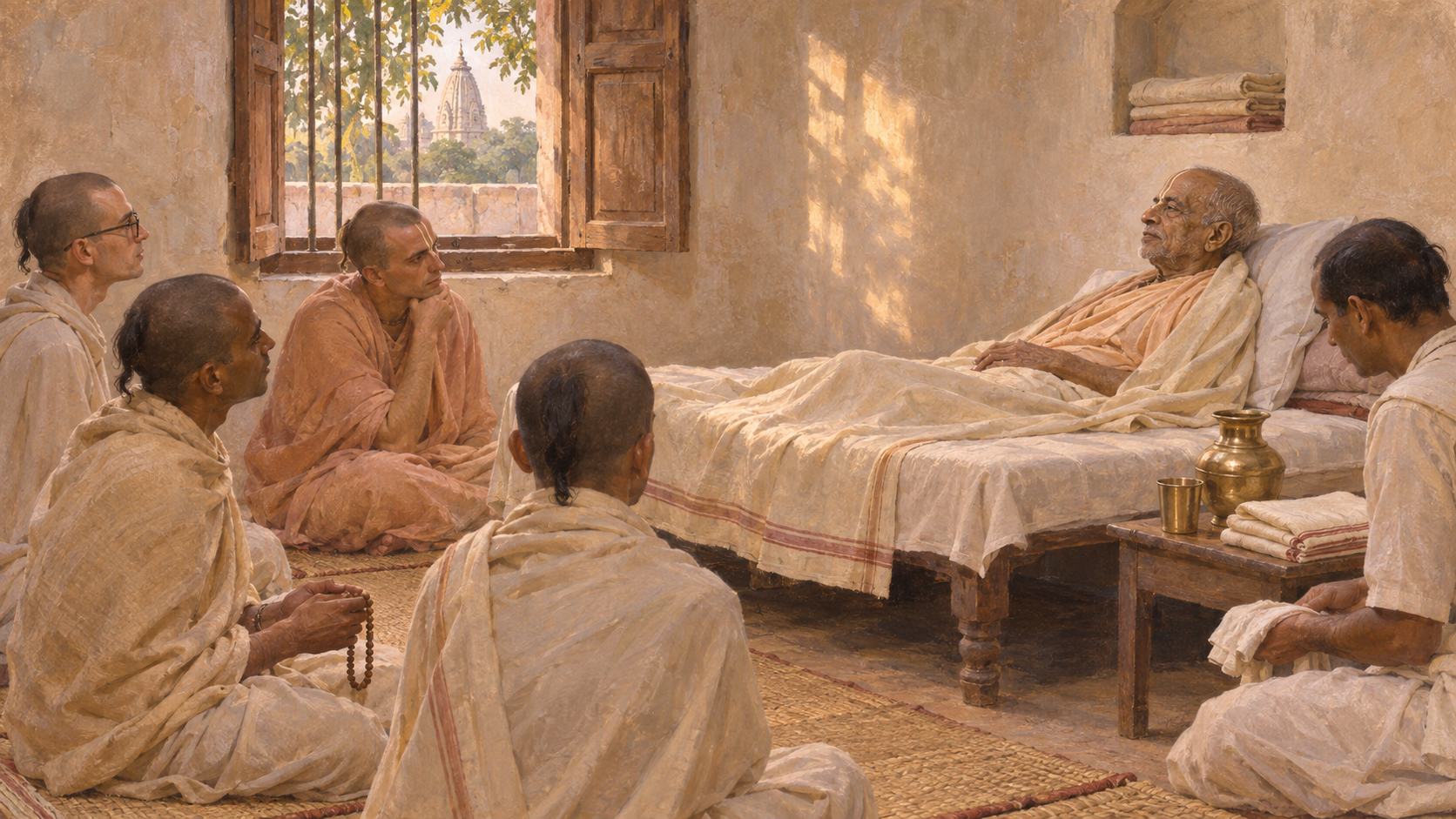
Endings concentrate attention. A gesture, conversation, silence, or act of service may appear especially significant when remembered from the closing period of a revered teacher’s earthly presence. That significance is real for the disciple who carries the memory, but it does not make every remembered detail a universal command.
You can honour these accounts more faithfully by keeping three levels distinct:
- Historical memory: what the disciple remembers happening.
- Devotional meaning: what that moment came to mean within the disciple’s relationship with Srila Prabhupada.
- General instruction: the principle that can responsibly guide devotees beyond that particular time and relationship.
The distinction prevents two opposite mistakes. One is to reduce sacred remembrance to detached biography. The other is to turn an intimate recollection into a rule that the narrator never presented as a rule. Ask first what happened, then what it meant to the person remembering it, and only then what it may ask of you.
In Gaudiya Vaishnava language, disappearance does not mean that the acarya has become irrelevant or that the relationship of guidance has ended. It marks separation from embodied presence while directing disciples back to vani, the spiritual master’s instruction. Remembrance is therefore not an attempt to live in the past. It is a test of whether the teaching remains active in the present.
How to hear disciples’ recollections without making folklore
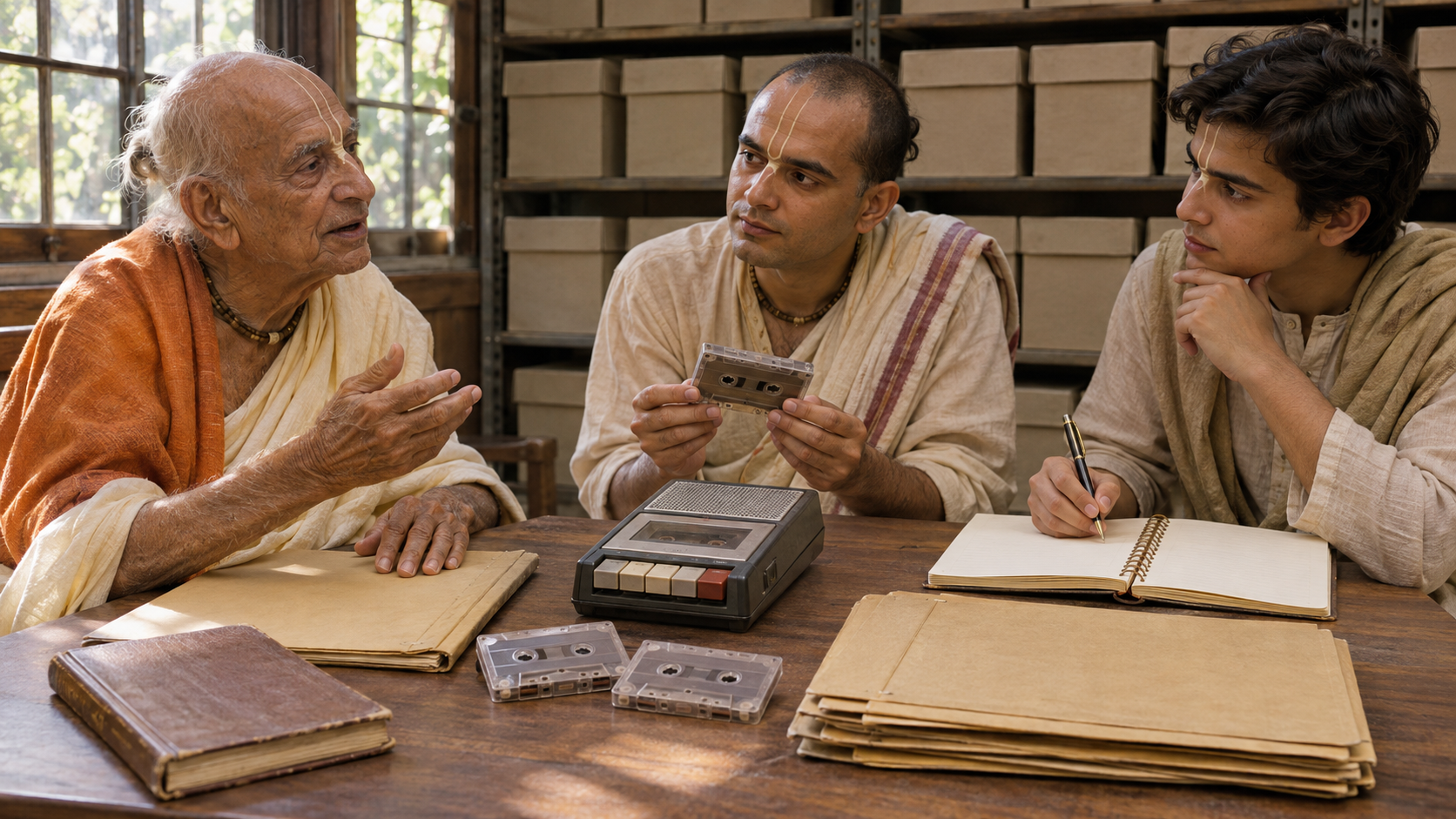
Devotional memory is personal testimony. Its strength lies partly in that personal character: one disciple may remember tenderness, another urgency, another correction, and another the gravity of service. You do not need to flatten those voices into a single mood. You do need to hear each one on its own terms.
Keep a page beside you while listening and answer these questions in order:
<!– wp:list {
Leave a Reply
You must be logged in to post a comment.